

Maddy summaryHR 6603, the No Technology for Terror Act, requires export licenses for certain foreign-made items destined for Iran if they were produced using U.S. technology or equipment. Specifically, it targets foreign goods that are direct products of U.S.-origin technology (as defined by the Commerce Control List) and are sent to Iran or used in Iran’s production of controlled items. The law applies to exporters of technology, equipment, or components but includes limited exceptions for food, medicine, and communications services. It expands existing U.S. export control rules to cover foreign-produced items made with U.S. technology, effective 120 days after enactment. The bill does not address terrorism directly but aims to restrict technology transfers to Iran under existing export frameworks.
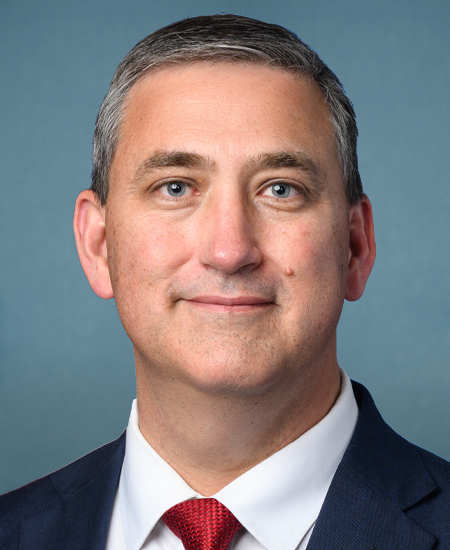
Rep. Nathaniel Moran
Sponsored bills
Maddy summaryHR 5947 terminates specific U.S. waivers and licenses related to Iran, ending a 2023 waiver that allowed funds transfer from South Korea to Qatar. It prohibits the Treasury Department from reissuing similar waivers or licenses for the same purpose and blocks the President from granting Iran access to certain designated financial accounts established under prior laws. The bill directly affects U.S. foreign policy implementation by restricting how Treasury handles Iran-related financial transactions. It enacts concrete policy changes by ending existing authorizations and preventing future approvals for Iran to access specific accounts.
Maddy summaryHR 4691 requires the President to submit detailed reports to Congress before terminating Iran sanctions, waiving sanctions for specific individuals, or making significant changes to U.S. foreign policy toward Iran through licensing actions. Congress then has 30 days (or 60 days for reports submitted between July 10 and September 7) to review these reports, during which the President cannot implement the proposed action without congressional approval. If Congress passes a joint resolution of disapproval, the President cannot proceed with the action for 12 days after the resolution passes, or 10 days after a presidential veto. This bill applies to actions involving sanctions under multiple laws, including the Iran Sanctions Act of 1996 and the Comprehensive Iran Sanctions Act of 2010. It does not change the sanctions themselves but establishes a formal review process for executive branch decisions affecting them.
Maddy summaryThe Second Chance Reauthorization Act of 2024 extends funding for existing federal reentry programs through 2029, replacing previous 2019-2023 funding periods. It specifically adds new provisions requiring state and local reentry projects to include peer recovery services, substance use disorder treatment, case management, overdose reversal medications, and reentry housing. These changes directly affect state/local governments, prisons, and nonprofit organizations administering reentry services for people returning to communities after incarceration. The bill does not create new programs but continues and refines current initiatives focused on reducing recidivism through evidence-based support.
Maddy summaryHR 5530, the VA Emergency Transportation Access Act, prevents the Department of Veterans Affairs (VA) from lowering payment rates for specialized transportation used by veterans and eligible individuals (like ambulances or wheelchair vans) without strict requirements. It mandates that any rate change that could reduce access to care must first undergo a detailed review analyzing economic impacts on the VA and transportation industry, and ensure the new rate covers actual costs. The VA must also develop a formal process for rate changes and consult with industry experts, veterans' groups, and healthcare agencies before implementing such changes. This bill directly affects veterans relying on specialized transportation for medical care, particularly those in rural or underserved communities, by safeguarding their access to necessary emergency transport services.
Maddy summaryHRES 1127 is a symbolic House resolution commemorating the 45th anniversary of the Taiwan Relations Act (TRA) and reaffirming U.S. policy toward Taiwan. It does not create new law but formally reiterates the U.S. commitment to Taiwan under the TRA framework, including regular defense transfers to support Taiwan's self-defense and advocacy for Taiwan's meaningful participation in international organizations. The resolution highlights longstanding U.S.-Taiwan cooperation on trade, security, education, and global challenges like public health and cybersecurity. It specifically calls on the Secretary of State to advance Taiwan's international engagement and supports existing programs like the Taiwan Fellowship Program and the American Institute in Taiwan. As a procedural resolution, it expresses congressional support for current policy without altering legal obligations.
Maddy summary# Summary of Proposed WIOA Amendment This document proposes significant amendments to the Workforce Innovation and Opportunity Act (WIOA), with key changes including: 1. **YouthBuild Program Enhancement**: - Increased annual funding authorization to $108,150,000 - New performance reporting requirements - Added focus on opioid-related training and services 2. **New Reentry Employment Opportunities Program** (Section 172): - Creates a competitive grant program for justice-involved individuals - Requires evidence-based practices and performance metrics - Includes specific requirements for recidivism reduction - Defines "eligible adult" (age 25+) and "eligible youth" (age 14-24) 3. **Strengthening Community Colleges Program** (Section 173): - Creates new grant program with $65,000,000 annual funding - Requires industry partnerships for workforce development - Mandates evidence-based program design - Focuses on recognized postsecondary credentials and career pathways 4. **Performance Accountability System**: - Enhanced data collection and reporting requirements - New requirement for making data available in "linked, open, and interoperable data formats" - More detailed performance metrics for all programs 5. **Funding Increases**: - Increased authorizations for multiple programs: - Native American programs: $61,800,000 annually - Migrant and seasonal farmworker programs: $100,317,900 annually - Technical assistance: $5,000,000 annually - Evaluations and research: $12,720,000 annually 6. **Administrative Changes**: - New consultation requirement with labor organizations for on-the-job training - Revised definitions (e.g., "English language learners" changed to "English learners") - New requirements for public reporting of matching funds 7. **Data Infrastructure**: - New "Workforce Data Infrastructure" provisions (Section 174) - Requirements for interoperable data systems - Focus on credential registries and data sharing The proposed amendment emphasizes data-driven decision making, industry-aligned training, performance accountability, and expanded opportunities for underserved populations including justice-involved individuals, opioid treatment participants, and individuals with barriers to employment.
Maddy summaryH.J.Res. 116 seeks to block a Department of Labor rule finalized on January 10, 2024, which aimed to clarify how businesses classify workers as employees or independent contractors under the Fair Labor Standards Act (FLSA). If passed, this resolution would prevent the rule from taking effect, directly affecting businesses that use independent contractors and their workers, who rely on FLSA protections for minimum wage and overtime pay. The bill uses a specific congressional process (under Chapter 8 of Title 5, U.S. Code) to disapprove the rule, rather than creating new policy. This action would maintain the existing classification standards until a new rule is established.
Maddy summaryThis bill establishes new eligibility rules for women's and girls' amateur sports by defining "female" and "male" based on biological sex at birth. It prohibits individuals designated as male under these definitions from participating in athletic competitions designated for females, women, or girls. The law amends existing U.S. Code provisions to add this requirement, directly affecting athletes and organizations managing female-designated teams. The key change is a clear ban on male-identified participants in female sports, replacing previous eligibility standards with biological sex criteria.
Maddy summaryHR 7736, the CONSENT Act, creates a civil remedy for individuals 18+ who receive unsolicited sexually explicit images or videos without their consent. It allows victims to sue senders in federal court for statutory damages up to $500 or compensation for emotional distress, plus attorney fees and injunctions to stop further transmissions. The bill explicitly excludes third-party platforms (like social media), medical/educational uses, and 18+ websites from liability. It defines "machine-manipulated media" (including AI-generated content) as covered under "visual depictions" and includes special protections for minors, allowing them to use initials in court filings. The law does not affect existing criminal penalties for non-consensual sharing.