

Maddy summaryHR 7747, the Federal Judiciary Stabilization Act of 2024, reclassifies existing federal district court judgeships in specific jurisdictions under a new section of law (28 U.S.C. § 133). It directly affects the courts in Hawaii, Kansas, Missouri, Alabama, Arizona, California, Florida, New Mexico, North Carolina, and Texas by updating their authorized judge counts, such as adding 4 judgeships for Hawaii and increasing California's Central District to 28. The bill modifies the official table in federal law to reflect these new numbers without creating new permanent positions. It authorizes necessary funding to implement these changes. This is a procedural adjustment to judgeship authorizations, not a policy change affecting the public.
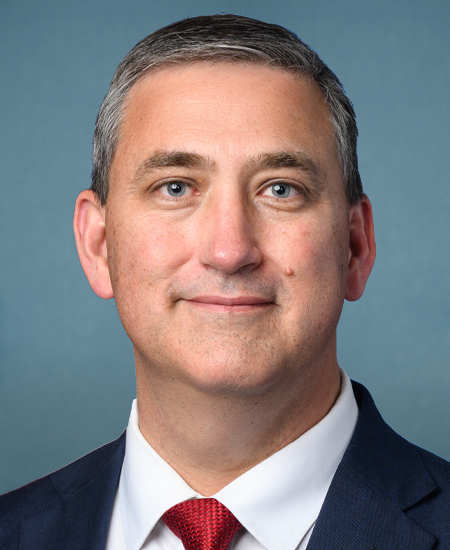
Rep. Nathaniel Moran
Sponsored bills
Maddy summaryHR 6591, the Encouraging Success Act, requires the Small Business Administration (SBA) to regularly update the asset and net worth limits for individuals qualifying as "economically disadvantaged" under the SBA's 8(a) business development program. This affects small business owners seeking eligibility for the 8(a) program, which provides federal contracting opportunities. The bill mandates the SBA reassess these thresholds annually after enactment and every four years thereafter, adjusting for inflation and economic changes through a standard rulemaking process with public comment. The SBA must use existing funding to implement these updates without requiring new appropriations.
Maddy summaryThis bill directs the Secretary of State to actively use U.S. diplomatic resources, including the voice and influence of U.S. diplomats and officials at the International Boundary and Water Commission, to advance efforts ensuring Mexico complies with the 1944 water treaty. It requires U.S. officials to work toward establishing reliable water delivery agreements under the treaty for the Colorado, Tijuana, and Rio Grande rivers. The key mechanism is mandating diplomatic engagement to address Mexico's compliance with treaty obligations, aiming to secure predictable water flows for U.S. users. The bill affects U.S. diplomatic operations and water management coordination with Mexico, focusing on treaty implementation rather than new water infrastructure.
Maddy summaryHR 4039 prohibits U.S. State Department and USAID funds from supporting programs involving goods made in Xinjiang, China - whether wholly or partially produced there. It blocks funding for contracts, policies, or activities using such goods unless the Secretary of State specifically authorizes it after proving no forced labor was used (with clear evidence) and providing 15 days' notice to congressional leaders. The law directly affects U.S. foreign assistance programs that might source materials from Xinjiang. It aligns with existing U.S. trade law definitions of forced labor and creates strict barriers to using Xinjiang-sourced goods in U.S. international programs.
This joint resolution nullifies the final rule issued by the Animal and Plant Health Inspection Service (APHIS) titled Importation of Fresh Beef From Paraguay and published on November 14, 2023. The final rule allows for the importation of fresh (chilled or frozen) beef from Paraguay into the United States under certain conditions. The United States prohibits or restricts the importation of certain animals and animal products to prevent the introduction of various animal diseases, including foot-and-mouth disease (FMD). In response to a request from Paraguay to allow the importation of fresh beef from Paraguay into the United States, APHIS conducted a risk analysis. APHIS concluded that fresh beef could be safely imported from Paraguay, provided that certain conditions are met. These conditions include that (1) FMD has not been diagnosed in the exporting region within the previous 12 months; (2) the meat originated from premises where FMD has not been present during the lifetime of any bovines slaughtered for U.S. meat export; and (3) APHIS may periodically conduct on-site evaluations and subsequent inspections of the slaughter facilities, records, and operations.
Maddy summaryThis bill restricts how credit reporting companies share homebuyers' credit reports during mortgage applications. It prevents companies from sending these reports to third parties (like marketers) just because a lender requested them for a mortgage. Only specific entities can receive the reports: the mortgage lender who originated the loan, the company servicing the loan, or the bank holding the homebuyer's account. This directly protects homebuyers' privacy by limiting unauthorized sharing of their financial data.
Maddy summaryHR 7170, the Victims' VOICES Act, amends federal restitution law to require courts to reimburse specific expenses for individuals who assume a victim's legal rights (such as family members or advocates). It mandates that defendants pay for lost income, childcare, transportation, and related costs directly tied to attending court proceedings, participating in investigations, or accompanying victims to necessary medical care, therapy, or rehabilitation. The bill focuses on concrete reimbursement for out-of-pocket expenses incurred during legal and medical processes, rather than creating new programs. This change directly affects those stepping into a victim's role during criminal cases, ensuring they are financially supported for essential participation.
Maddy summaryThe Death Tax Repeal Act would eliminate the federal estate tax and generation-skipping transfer tax for estates of people who die on or after the bill's enactment date, and for generation-skipping transfers made after that date. It would also establish a new $10 million lifetime gift tax exemption (adjusted annually for inflation) and replace the existing gift tax rate schedule with a revised structure. These changes would primarily affect high-net-worth individuals and their heirs, as the estate tax and gift tax typically apply to large estates or gifts exceeding the new exemption threshold. The bill's provisions would take effect on the date of enactment, with transitional rules for the year the bill is signed into law.
Maddy summaryThe RIFLE Act of 2024 changes how the federal government handles violations by firearms licensees, affecting gun dealers and manufacturers who hold federal licenses. It creates a graduated penalty system where non-willful violations require the Attorney General to work with licensees to fix issues before taking action, while willful violations may lead to license suspension or revocation only after proper notice, hearing, and evidence of continued noncompliance. The bill establishes new procedures for administrative hearings, defines "willful" violations more clearly, and gives licensees 90 days to liquidate inventory after license expiration or revocation, with extensions possible for reasonable cause. These changes aim to create a more transparent process for addressing violations while maintaining public safety standards.
Maddy summaryHRES 957 is a non-binding House resolution introduced by Rep. Moran on January 11, 2024. It expresses disapproval of the Biden administration's border policies, condemns the claimed national security and public safety crisis along the southwest border, and urges President Biden to end those policies. The resolution does not create new laws or change enforcement practices - it solely states the House's position through symbolic language. It was referred to the Judiciary and Homeland Security committees for review but has no legal effect. The resolution reflects the views of its sponsors but does not alter border policy or affect any specific group.