Maddy summaryThis bill authorizes the U.S. Mint to produce commemorative $5 gold and $1 silver coins marking the 25th anniversary of the September 11, 2001, terrorist attacks. The coins must feature designs honoring victims and first responders (including the inscription "Never Forget") and will be sold only during 2027-2028. All surcharges ($35 per gold coin, $10 per silver coin) collected from sales will fund the National September 11 Memorial and Museum at the World Trade Center, with no net cost to the federal government. The coins are legal tender but primarily intended for collectors, not circulation.
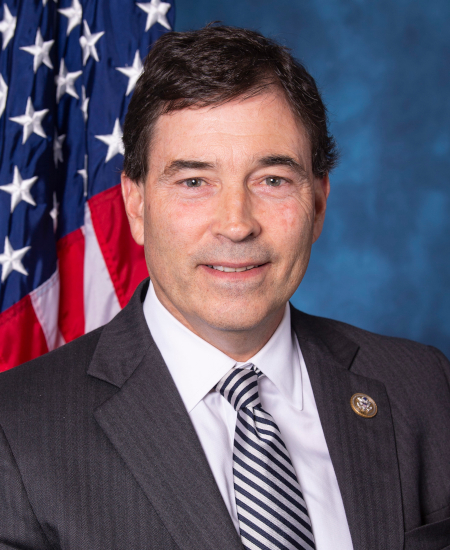
Rep. Troy Balderson
Sponsored bills
This concurrent resolution expresses support for law enforcement officers. It also appreciates the contributions and recognizes the sacrifices of law enforcement officers.
This resolution expresses support for police officers and other law enforcement personnel. The resolution further recognizes law enforcement officers across the United States in the pursuit of preserving safe and secure communities; the need to ensure that such officers have the equipment, training, and resources necessary to protect their health and safety while they are protecting the public; and the law enforcement community for acts of sacrifice and heroism. The resolution expresses condolences and appreciation to the loved ones of each law enforcement officer who has made the ultimate sacrifice in the line of duty.
Maddy summaryThe Connected Vehicle Security Act of 2026 restricts the importation, sale, and manufacture of vehicles and related technology from specific countries, including China, Russia, Iran, and North Korea, to address national security concerns. The law defines prohibited items as connected vehicles, their software, and hardware components and sets different effective dates, with vehicle bans starting in 2027 and hardware restrictions beginning in 2030. A government official can grant exceptions for specific items after reviewing security risks and notifying Congress, while the agency must publish annual reports on enforcement actions and compliance.
Maddy summaryThis bill requires federal agencies to analyze indirect economic costs on small businesses when creating new rules, including costs affecting businesses that interact with regulated entities (like suppliers or partners). It creates a new process allowing small businesses to petition the Small Business Administration's Chief Counsel to review agency certifications claiming a rule won't significantly impact them. Agencies must then provide detailed cost analyses, publish guidance online for small business feedback, and face penalties if they fail to cooperate with reviews. The bill does not change existing regulations but adds new review steps for small business input.
Maddy summaryThis resolution expresses support for designating May 2026 as Motorcycle Safety Awareness Month. It recognizes the role of motorcycles in transportation and highlights the importance of rider safety education, proper licensing, and wearing protective gear. The bill also encourages all road users to share the road safely with motorcyclists.
Maddy summaryHR 4214 requires the Environmental Protection Agency (EPA) to publish final implementing regulations and guidance for new or revised national air quality standards at the same time as the standards themselves. This affects developers seeking preconstruction permits for facilities like factories or power plants, as the new standards cannot be applied to permit reviews until the EPA provides this guidance. The bill also includes a specific provision delaying the application of the 2024 PM2.5 air quality standard to certain permit applications if they meet timing conditions related to the EPA's final designation of affected areas. It does not change the air quality standards or pollution limits themselves, but ensures permit applicants receive clear guidance alongside new rules. The bill focuses on procedural timing for EPA rulemaking to streamline the permitting process.
Maddy summaryHR 4690, the Reliable Federal Infrastructure Act, repeals specific energy efficiency standards for federal buildings. It directly affects federal agencies and buildings subject to the repealed standards under Section 305(a)(3)(D) of the Energy Conservation and Production Act (42 U.S.C. 6834(a)(3)(D)). The bill removes these standards from federal law, stating they "shall have no force or effect," and updates related provisions in the Energy Independence and Security Act of 2007 to eliminate references to the repealed standards. This is a procedural repeal focused solely on removing existing requirements, not creating new infrastructure or policy.
Maddy summaryThe SECURE Data Act establishes a comprehensive federal privacy framework that grants consumers specific rights to access, correct, delete, and opt out of the sale of their personal data, while requiring companies to provide clear privacy notices and implement reasonable data security measures. It directly affects large businesses and data brokers that process significant amounts of consumer information, mandating that these entities obtain explicit consent for sensitive data and prohibiting discrimination against individuals who exercise their privacy rights. The legislation creates a registration system for data brokers, allows for enforcement actions by the Federal Trade Commission and state attorneys general, and preempts conflicting state laws to ensure a uniform national standard.
Maddy summaryThis House Resolution recognizes the efforts and public safety contributions of linemen and the important role they play in maintaining the nation's energy infrastructure. It expresses support for designating April 18, 2026, as "National Lineman Appreciation Day" and acknowledges linemen as first responders.