Maddy summaryThe Peace Corps Reauthorization Act of 2023 makes several key updates to support Peace Corps volunteers. It increases readjustment allowances from $125 to $375, establishes protocols for safely returning volunteers whose service was interrupted by catastrophic events, and improves health care provisions including mental health services. The bill extends noncompetitive hiring eligibility for returning volunteers for up to three years and implements a zero-tolerance policy for illegal drug use. It also adds protections against retaliation for volunteers who report issues related to waste, fraud, or safety concerns. These changes aim to better support volunteers before, during, and after their service.
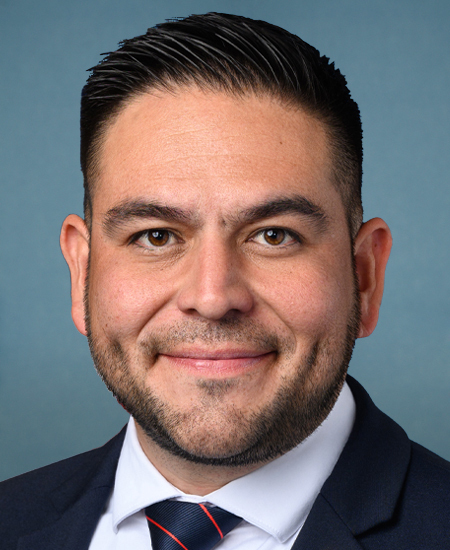
Rep. Gabe Vasquez
Sponsored bills
Maddy summaryThis bill establishes pay equity for federal firefighters by adjusting how their retirement benefits are calculated and setting a standard workweek. It requires retirement annuities to include overtime hours worked as part of a firefighter's regular schedule (e.g., overtime during standard shifts), rather than excluding them. The bill also mandates a maximum 60-hour regular workweek for federal firefighters, set by the Office of Personnel Management within one year of enactment. These changes directly affect federal firefighters, aiming to improve pay comparability with municipal firefighters and other federal employees while supporting recruitment and retention.
Maddy summaryThe Richard L. Trumka Protecting the Right to Organize Act of 2023 strengthens workers' rights to organize unions by making it harder for employers to interfere with organizing efforts. Key provisions include changing the definition of "employee" to make it more difficult to classify workers as independent contractors, prohibiting employers from threatening to permanently replace striking workers, and requiring employers to provide voter lists for union elections. The bill also creates a new electronic voting system for union elections, strengthens whistleblower protections for workers reporting labor violations, and increases penalties for unfair labor practices. These changes directly affect workers seeking to form unions, employers who may interfere with organizing, and labor organizations. The bill aims to make it easier for workers to exercise their right to collective bargaining under the National Labor Relations Act.
Maddy summaryThe RISEE Act of 2023 creates a National Oceans and Coastal Security Fund to support coastal communities and ecosystems. It allocates 37.5% of offshore wind revenue directly to eligible coastal states using a formula based on tidal shoreline length, coastal population density, and distance from offshore wind projects. States must use these funds for coastal protection, habitat restoration, infrastructure, or fisheries research, with strict annual reporting requirements to the Department of the Interior. The bill prohibits using these funds for litigation or creating marine monuments, ensuring resources directly support coastal community needs.
Maddy summaryHR 724, the Arctic Refuge Protection Act, repeals the existing oil and gas program for the Arctic National Wildlife Refuge in Alaska and designates approximately 1.56 million acres of the refuge's coastal plain as federal wilderness. This bill directly affects the Arctic Refuge by permanently prohibiting oil and gas leasing and development in that specific area. The key mechanism is adding the designated land to the National Wilderness Preservation System under the Wilderness Act, requiring it to be managed for its natural conditions. This change legally protects the area from future fossil fuel extraction activities.
Maddy summaryHR 1088, the Shirley Chisholm Congressional Gold Medal Act, authorizes a posthumous Congressional Gold Medal to honor Congresswoman Shirley Chisholm, the first African-American woman elected to Congress (1968) and the first Black candidate for a major party's presidential nomination (1972). The bill directs the Treasury Secretary to design and strike a gold medal featuring Chisholm's image, which will be presented by Congress and then permanently displayed at the Smithsonian Institution. Duplicate bronze medals may be sold to the public to cover production costs, with proceeds deposited into the U.S. Mint fund. This bill commemorates Chisholm's legacy and achievements without creating new laws or affecting any current policies.
Maddy summaryThe HELP Copays Act (HR 830) changes how health insurance plans calculate patient cost-sharing. It requires that payments made by third parties (like pharmacies, charities, or discount programs) toward medical costs count toward a patient's deductible, copay, or out-of-pocket limit. This directly affects insured individuals who receive financial assistance, discounts, or product vouchers for healthcare expenses. The law ensures these external payments reduce the patient's actual out-of-pocket costs more quickly, aligning with existing Affordable Care Act and Public Health Service Act requirements.
Maddy summaryThis bill authorizes a single Congressional Gold Medal to honor all U.S. Army Dustoff crews who served during the Vietnam War (1962-1973). It recognizes their critical role in evacuating nearly 900,000 wounded personnel, including U.S., South Vietnamese, and allied forces, under extreme combat conditions. The medal, designed with input from the Secretary of Defense, will be presented to the U.S. Army Medical Department Museum for permanent display. Duplicate bronze medals may be sold to cover costs, but the primary action is the commemorative recognition of these crews' service.
Maddy summaryHR 1002, the "Saving the Civil Service Act," restricts how federal government positions can be moved between competitive hiring (where most federal jobs are filled through merit-based exams) and non-competitive "excepted service" positions. The bill prevents agencies from moving positions out of the competitive service unless they fit specific schedules in place as of September 2020, requires Office of Personnel Management (OPM) approval for certain transfers, and mandates employee consent for any position transfer between service types. It also limits the number of employees that can be moved from competitive to excepted service during a presidential term - capping it at 1% of an agency's workforce or five employees, whichever is greater. The bill directly affects federal employees and agencies by making it harder to shift positions out of the competitive hiring system without strict oversight.
Maddy summaryThis bill amends the Food and Nutrition Act to allow Puerto Rico to transition from its current block grant nutrition assistance program to the federal Supplemental Nutrition Assistance Program (SNAP), aligning it with how states like Hawaii and Guam operate. Puerto Rico must submit a transition plan to the U.S. Department of Agriculture within 60 days, which the agency must review and approve within 180 days. The bill extends Puerto Rico’s existing block grant funding for up to five years or until the transition is complete, whichever comes first, and requires annual progress reports to Congress. This change directly affects Puerto Rico residents currently receiving nutrition assistance under the block grant, potentially providing them with benefits consistent with the SNAP program.