

Maddy summaryThis bill establishes new safety and medical requirements for "unified boxing organizations" (UBOs), which are boxing groups that manage title belts and rankings without separate sanctioning bodies. It directly affects UBOs and boxers under their contracts by mandating comprehensive medical screenings (including annual physicals, brain MRIs, and pregnancy tests for female boxers), requiring two ambulances and three physicians at ringside during matches, and providing boxers with mandatory health insurance covering $25,000 in injury costs. Key provisions include strict anti-doping testing protocols (with no cost to boxers), prohibitions on boxers betting on matches, and UBOs covering all medical expenses. The bill also requires UBOs to register publicly with the Federal Trade Commission and adhere to updated industry standards for boxer compensation and safety.
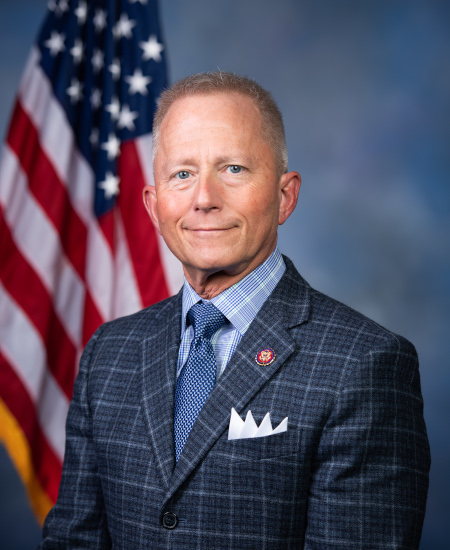
Rep. Jefferson Van Drew
Sponsored bills
Maddy summaryThis bill, known as the Stop Taxing Our Power Act, prevents states from collecting fees specifically to fund the Regional Greenhouse Gas Initiative Energy Efficiency Program. It directly affects state governments that currently use charges to support this regional climate initiative, which operates across several northeastern and mid-Atlantic states. The legislation removes the authority for states to impose these particular charges, effectively cutting off a funding source for the program. The bill does not address other ways the program might be funded or alter the program's overall goals, focusing solely on prohibiting state-imposed charges for this specific purpose.
Maddy summaryHR 5688, the Non-Domiciled CDL Integrity Act, changes rules for issuing commercial driver's licenses (CDLs) to people who don't live in the state where the license is issued. It allows states to issue CDLs to foreign nationals with lawful U.S. immigration status and work-related visas (valid for up to one year or until their stay ends), requiring states to verify status before issuing and keep records for two years. For residents of U.S. territories like Puerto Rico, it requires proof of U.S. citizenship or permanent residency before issuing CDLs, with similar verification and record-keeping rules. The bill directly affects commercial drivers from foreign countries and U.S. territories seeking CDLs in states where they are not residents.
Governing Unaccredited Representatives Defrauding VA Benefits Act or the GUARD VA Benefits Act This bill imposes fines on individuals for soliciting, contracting for, charging, or receiving any unauthorized fee or compensation with respect to the preparation, presentation, or prosecution of any claim for Department of Veterans Affairs benefits. The attempted commission of such offenses is also punishable by fine.
Maddy summaryThis bill exempts H-1B visa holders working in healthcare from a presidential restriction that requires a $100,000 payment for entry into the United States. It directly affects foreign medical professionals and healthcare workers who hold H-1B nonimmigrant visas. The legislation removes the additional fee requirement for these workers while limiting any fees that may be charged to the standard amount already established under immigration law. The bill defines healthcare workers using the existing definition from the Affordable Care Act and was introduced in the 119th Congress in March 2026.
Enhanced Iran Sanctions Act of 2025 This bill imposes sanctions on certain foreign persons (individuals and entities) that are involved in Iran's petroleum sector as well as certain associated persons. The bill also requires or authorizes actions to facilitate the enforcement of sanctions on Iran. Specifically, the bill requires the President to impose visa- and property-blocking sanctions on any foreign person that, after the bill's enactment, knowingly engages in any transaction related to the processing, export, or sale of oil, condensates, gas, liquefied natural gas, or other petrochemical products in whole or in part from Iran. The President must also impose sanctions on certain foreign persons associated with a sanctioned individual or entity. For example, the President must sanction the subsidiaries and corporate officers of a sanctioned business. The bill provides certain exceptions to these sanctions, including specifying that sanctions do not apply to the importation of goods or to conducting or facilitating transactions for humanitarian assistance. The Department of State must establish an interagency working group that shall seek to establish a multilateral contact group to coordinate international efforts to enforce sanctions on Iran. The bill expands the State Department rewards program to authorize a reward payment to any individual who furnishes information leading to the identification of a person (1) subject to sanctions under this bill, or (2) that has attempted or is attempting to evade sanctions under this bill.
Maddy summaryThis bill, known as the Improving Dental Administration Act of 2026, would allow certain state laws about dental benefits to override federal rules under the Employee Retirement Income Security Act. It directly affects states that have their own regulations governing dental insurance and benefit plans for employees. The key provision creates an exemption that takes effect 18 months after the bill is enacted, permitting state laws related to dental benefit administration to apply even if they differ from federal requirements. The exemption only applies to state laws that do not conflict with existing federal laws in the Employee Retirement Income Security Act.
Maddy summaryThis bill would require infant formula manufacturers to conduct standardized testing for specific pathogens and microorganisms in both their facilities and finished products. It mandates that companies report positive test results to the FDA within one business day and retain records of these findings for inspections. The legislation also requires the FDA to notify congressional committees within one business day of receiving positive test results or issuing certain inspection classifications. Additionally, the bill establishes clear inspection standards that apply to all infant formula products regardless of where they are made.
Maddy summaryThis bill, titled the No Federal Tax Dollars for Illegal Aliens Health Insurance Act of 2026, amends the Affordable Care Act to restrict the use of federal taxpayer funds for health insurance coverage. It directly affects states that receive funding under the ACA and individuals seeking health insurance coverage through federal programs. The key provision prohibits states from using pass-through funding to pay for health insurance or related benefits for individuals who are not U.S. citizens, nationals, or lawfully present aliens. Additionally, the bill requires the Secretary of Health and Human Services to rescind any existing waivers that would have allowed such funding for unauthorized individuals had the new restrictions been in place at the time of approval.
Maddy summaryThis bill, known as the AI Fraud Accountability Act, makes it a federal crime to use artificial intelligence or other technology to create realistic digital impersonations of real or fictional people for the purpose of defrauding others of money, documents, or other valuable items. The law applies to communications across state lines and foreign borders, and it allows for criminal penalties including fines and up to three years in prison, along with the forfeiture of assets used to commit the fraud. In addition to criminal provisions, the bill gives the Federal Trade Commission authority to enforce these rules as unfair or deceptive business practices and requires the creation of a working group to develop technical best practices for detecting and preventing digital impersonation fraud. The legislation also establishes mechanisms for international cooperation with foreign law enforcement agencies to combat cross-border fraud and includes a safeguard protecting parody, satire, and journalism from being classified as illegal impersonation.