Maddy summaryThis resolution expresses the sense of the House of Representatives that open water lifeguards qualify as first responders and emergency response providers. It recognizes their essential, lifesaving work and reaffirms their role in protecting lives, property, evidence, and the environment.
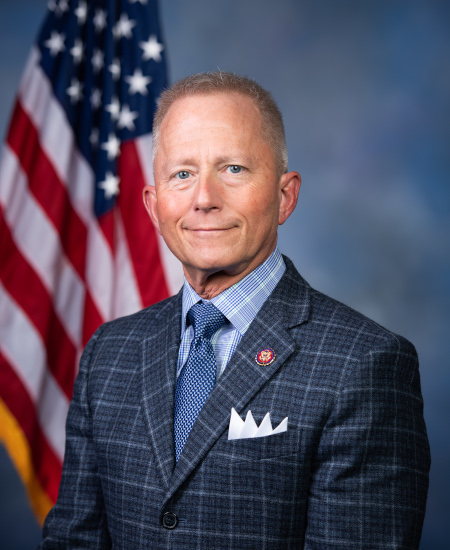
Rep. Jefferson Van Drew
Sponsored bills
Maddy summaryHR 8350, the "No Taxes on Utility Bills Act," amends the Internal Revenue Code to create a new federal income tax deduction. This bill allows taxpayers to deduct from their taxable income all taxes and state-mandated surcharges that appear on their gas or electric utility bills. This change directly affects individuals and businesses who pay these utility bills, potentially lowering their federal tax liability. The new deduction would apply to taxable years beginning after the bill becomes law.
Maddy summaryThe ALERT Act (HR 7613) requires the Federal Aviation Administration to improve aviation safety through several key measures. It mandates the evaluation and potential implementation of enhanced collision avoidance systems (ACAS-Xa) for commercial aircraft and ACAS-Xr for rotorcraft, with specific deadlines for rulemaking and installation. The bill establishes committees to develop recommendations for safety technology requirements, requires safety risk assessments for air traffic controllers, and addresses operational procedures at high-traffic airports like Ronald Reagan Washington National. These provisions affect air carriers, air traffic controllers, rotorcraft operators, and Department of Defense aircraft operations. The act aims to enhance situational awareness and reduce midair collision risks through technology upgrades and improved safety protocols.
Maddy summaryThe Save Money, Save Lives Act removes a budget neutrality requirement that previously limited certain Medicaid demonstration projects. This change directly affects state and local health programs that use Section 1115 waivers to test innovative healthcare delivery methods. By repealing the specific budget neutrality provision, the bill allows these programs to operate without the strict financial constraints that were previously in place. The legislation also rescinds the funding that had been set aside for enforcing this requirement.
Maddy summaryThe Enhanced Cybersecurity for SNAP Act of 2026 requires states to transition from magnetic stripe to chip-enabled EBT cards within 4-5 years, with specific deadlines for new cards and reissuing existing cards. It mandates states to provide multiple user interfaces for managing EBT accounts - including mobile-friendly web portals, text messaging, voice services, and nondigital options - all available 99% of the time in required languages. The bill requires states to provide real-time transaction notifications, access to historical transactions for the past year, and fraud reporting capabilities to SNAP recipients, while prohibiting PIN/password requirements that conflict with federal cybersecurity standards. It eliminates fees for replacing cards due to malfunction, fraud, or required upgrades and requires states to replace damaged or lost cards within 3 business days. Additionally, the bill includes a grant program to help retailers upgrade to chip-compatible payment terminals in areas with limited grocery access.
Maddy summaryThis bill creates a new commemorative military service medal called the Agent Orange Veterans Service Medal to honor veterans who received compensation for herbicide exposure during the Vietnam War. The medal will be designed by the Department of Defense and issued to living veterans or provided to next-of-kin for deceased veterans who meet specific eligibility criteria. Eligible recipients include those who receive compensation under existing Vietnam-era herbicide exposure laws or who are officially recognized as Vietnam-era herbicide-exposed veterans. The bill establishes an application process for veterans and their families to request the medal through the Department of Defense.
Maddy summaryThe FETCH Act of 2026 expands funding from federal Byrne grants to support police dog programs across the United States. This legislation allows law enforcement agencies to use these funds for acquiring, training, and caring for police dogs, including expenses for veterinary care, medications, food, equipment, and housing. The bill also permits funding for retired service dogs, covering post-service medical needs and administrative costs. Directly affected entities are police departments that operate K9 units and seek financial assistance for canine-related operational expenses. The act amends existing federal crime control statutes to explicitly include police dog programs as eligible uses of Byrne grant money.
Maddy summaryThis bill requires group health plans and health insurers that cover obstetrical services to also cover infertility and iatrogenic infertility treatments, including procedures like in vitro fertilization and egg freezing. It defines infertility as the inability to achieve pregnancy after 12 months of unprotected intercourse or after standard medical treatment, and iatrogenic infertility as fertility damage caused by medical procedures such as chemotherapy or radiation therapy. The legislation establishes coverage standards that cannot be more restrictive than those applied to other medical benefits, prohibits penalties against providers for offering these services, and requires annual compliance reporting to the federal government.
Maddy summaryHR 6194, the Protecting Americans from Russian Litigation Act of 2025, prevents U.S. persons (individuals or businesses) from facing civil lawsuits in U.S. courts related to complying with U.S. sanctions or export controls. It blocks the enforcement of foreign court judgments or arbitral awards where the claim arose from actions taken to comply with U.S. sanctions, or where foreign courts based jurisdiction on those sanctions. The law requires federal or state courts to dismiss such cases and applies broadly to all U.S. sanctions, not just those targeting Russia. Exceptions include lawsuits related to terrorism, torture, or contractual disputes resolved under U.S. courts or arbitration.
Love Lives On Act of 2025 This bill extends entitlement for various benefit programs and services for surviving spouses of deceased members of the Armed Forces or veterans. The bill provides that the remarriage of a surviving spouse must not bar the furnishing of dependency and indemnity compensation or special pension benefits to such spouse. Additionally, the Department of Defense may not terminate the payment of an annuity for a surviving spouse under the Survivor Benefit Plan solely because the surviving spouse remarries. The bill also expands the definition of a dependent under TRICARE to include a remarried widow or widower whose subsequent marriage has ended due to death, divorce, or annulment.