This bill moves portions of four counties encompassing the Fort Bragg Military Reservation and Camp Mackall from the Middle District to the Eastern District of North Carolina.
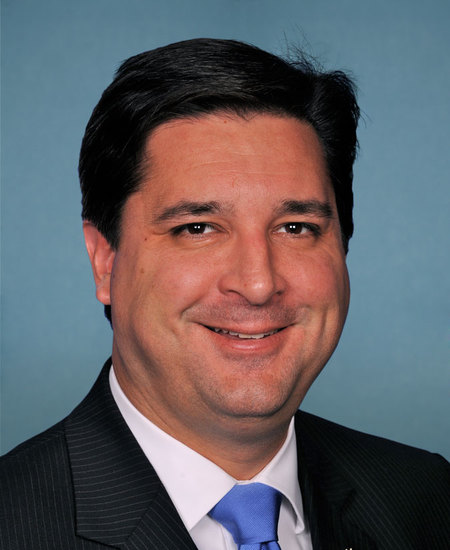
Rep. David Rouzer
Sponsored bills
Regulations from the Executive in Need of Scrutiny Act of 20 21 This bill revises provisions relating to congressional review of agency rulemaking. Specifically, the bill establishes a congressional approval process for a major rule. A major rule may only take effect if Congress approves of the rule. A major rule is a rule that results in (1) an annual effect on the economy of $100 million or more; (2) a major increase in costs or prices for consumers, individual industries, government agencies, or geographic regions; or (3) significant adverse effects on competition, employment, investment, productivity, innovation, or the ability of U.S.-based enterprises to compete with foreign-based enterprises. In addition, the bill establishes a congressional disapproval process for a nonmajor rule. A nonmajor rule may only take effect if Congress does not disapprove of the rule.
Foreign Influence Transparency Act This bill addresses foreign influence in higher education and in certain other academic, religious, and artistic pursuits. Current law exempts from foreign agent registration requirements a person engaging in activities in furtherance of religious, scholastic, academic, or scientific pursuits or of the fine arts. The bill specifies that this exemption applies only to those activities that do not promote the political agenda of a foreign government. Under current law, an institution of higher education (IHE) must disclose to the Department of Education (ED) a gift or contract that is from a foreign source and is valued at $250,000 or more, considered alone or in combination with all other gifts from or contracts with the foreign source. The bill instead requires an IHE to disclose such a gift or contract that is valued at $50,000 or more, considered alone or in combination with all other gifts or contracts. An IHE must include in its disclosure report the contents of any such contract and make the contents available for public disclosure. Additionally, an IHE that enters into an agreement with a Confucius Institute (i.e., a cultural institute directly or indirectly funded by the Chinese government) must immediately make available the full text of the agreement to the public, ED, and Congress. Finally, the bill prohibits an IHE that does not comply with these disclosure requirements from enrolling foreign students under the Student and Exchange Visitor Program.
Sarah's Law This bill requires U.S. Immigration and Customs Enforcement (ICE) to detain an alien who is unlawfully present in the United States and has been charged with a crime that resulted in the death or serious bodily injury of another person. ICE shall make reasonable efforts to obtain information about the identity of any victims of the crimes for which such alien was charged or convicted. ICE shall provide the victim, or a relative or guardian of a deceased victim, with information about such alien, including name, date of birth, nationality, immigration status, criminal history, and a description of any related removal efforts.
Jump-Start the Economy with Jobs Act This bill requires each state that offers pandemic unemployment assistance (PUA) or pandemic emergency unemployment compensation (PEUC) to condition benefit eligibility for a long-term unemployed individual on an employer's confirmation that work is unavailable for the unemployed individual. Specifically, each state unemployment agency must request confirmation from the unemployed individual's most recent employer that the individual's position is not available at the time of the request. Unless the employer provides this confirmation, the state must terminate the individual's PUA or PEUC. The bill's provisions apply only to long-term unemployed individuals who have received PUA or PEUC for more than 30 weeks of unemployment.
This resolution calls on the Office for Civil Rights within the Department of Education and state attorneys general to assist elementary and secondary schools in complying with existing civil rights laws and investigate and enforce such laws. In addition, the resolution condemns the practice of requiring teachers to receive education in critical race theory as a condition of certification.
This bill prohibits any executive agency from contravening Executive Order 13950 (Combating Race and Sex Stereotyping), except as such order relates to contractors and grant recipients.
Wastewater Infrastructure Improvement Act of 2021 This bill sets forth requirements and establishes incentives to control water pollution. Specifically, the bill reauthorizes and revises several existing grant programs that address water pollution, including grants concerning implementing state water quality improvement programs, increasing the resilience of public wastewater utilities to man-made or natural disasters, recycling wastewater or stormwater, constructing sewer overflow and stormwater management projects, and supporting the clean water state revolving fund. In addition, the bill revises requirements concerning the National Pollutant Discharge Elimination System (NPDES) permit program of the Environmental Protection Agency (EPA). The bill allows the EPA to issue certain NPDES permits to states or municipalities for up to 10 years (currently, 5 years).
Stop CRT Act This bill grants Executive Order 13950 the force and effect of law. That order prohibits federal agencies and contractors from advancing specified policies or training related to race or sex.
Help Wanted Act This bill eliminates certain work search exceptions and flexibilities in the Pandemic Unemployment Assistance (PUA) program. Specifically, the bill prohibits states participating in PUA from modifying unemployment work search requirements on an emergency basis to respond to COVID-19. The bill also eliminates a requirement that states be flexible regarding work search requirements for individuals who are unable to search for work because of COVID-19. Similarly, the bill makes individuals who decline to work on the basis of safety concerns related to COVID-19 and claimants who quit working as a direct result of COVID-19 ineligible for PUA.