Maddy summaryHR 4966 prohibits grocery stores from selling items at "grossly excessive prices," defined as 120% or more above the average market price over the previous six months (with exceptions for unavoidable cost increases like supply chain issues). It bans using facial recognition or personal data to set different prices for individual customers (e.g., adjusting prices based on shopping history) and requires clear signage if facial recognition is used. Stores over 10,000 square feet must replace electronic shelf labels with physical price tags. The Federal Trade Commission enforces these rules, allowing consumers to seek $3,000 per violation or actual damages, with penalties for willful violations.
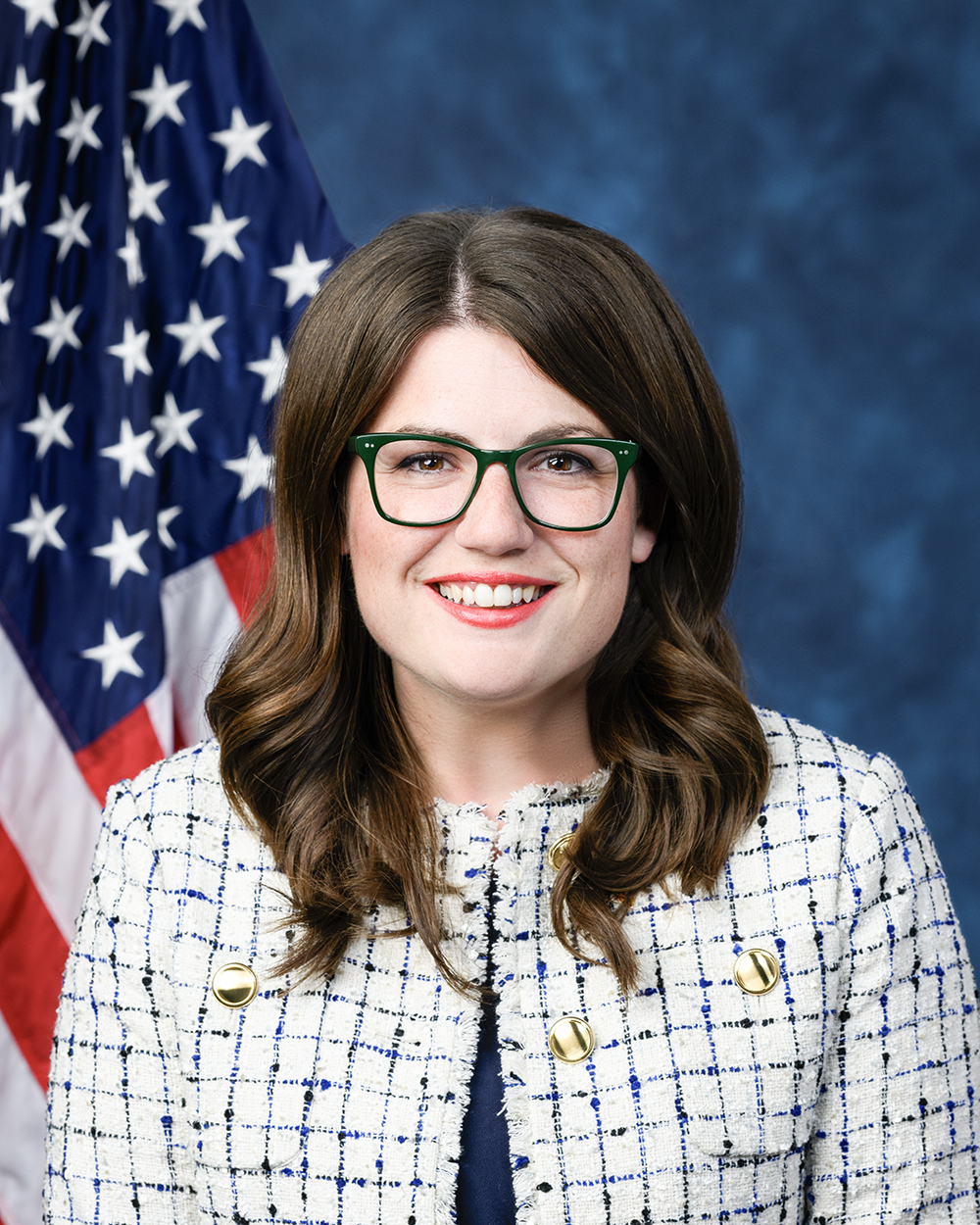
Rep. Sarah Elfreth
Sponsored bills
Maddy summaryHR 4917, the Expanding the VOTE Act, amends the Voting Rights Act to increase language access for voters. It expands the definition of "voting materials" to include digital formats and requires states to provide language assistance (both written and oral) for minority language groups, with special provisions for American Indian and Alaska Native languages when written translations aren't feasible. The bill creates grants to help jurisdictions provide voting materials in languages that don't currently trigger Section 203 coverage, and mandates a study on lowering population thresholds for language assistance requirements. This directly affects states, local election jurisdictions, and voters who speak minority languages, including those in communities not currently covered by existing language access rules.
Youth Voting Rights Act This bill expands voting access for youth. Specifically, the bill establishes a private right of action to enforce the Twenty-Sixth Amendment, which prohibits denying or abridging the right to vote based on age. Further, the bill authorizes the Department of Justice to enforce the Twenty-Sixth Amendment against age-based restrictions for voting by mail. Additionally, the bill directs each state to designate as voter registration agencies all offices within public institutions of higher education (IHEs) that provide assistance to students, implement a preregistration process to allow minors who are 16 years or older to register to vote in federal elections that take place when or after the preregistered individual turns age 18, and ensure the availability of polling places on campuses of IHEs (with the availability of waivers). The bill prohibits durational residency requirements for voting in all federal elections. Currently, this prohibition applies only to voting for the offices of President and Vice President. States and local jurisdictions with voter identification requirements must treat IHE-issued student identification cards as voter identification. The Election Assistance Commission (EAC) must make grants to states to increase the involvement of individuals under age 18 in public election activities. The Government Accountability Office must report to Congress on trends related to voter registration, absentee voting, and provisional voting. The EAC must also collect and make publicly available certain data from states.
Maddy summaryThe Election Mail Act (HR 4915) establishes new standards for handling voting-by-mail materials in Federal elections. It requires the Postal Service to process absentee ballots the same day received, add postmarks showing mailing dates, and treat election mail as first-class with free postage for completed ballots. States must provide ballot return envelopes with tracking barcodes and accept mailed ballots postmarked on election day if received within 7 days. These provisions apply to Federal elections starting in 2026, with some requirements taking effect sooner.
Maddy summaryThe Time Off to Vote Act requires employers with 25 or more employees to provide two hours of paid leave for federal elections. Employees can use this leave to vote in person, return mail-in ballots, or perform other voting activities during open polling hours. Employers may set the specific two-hour window (excluding lunch breaks) but cannot deny the leave, retaliate against employees who take it, or cause loss of accrued benefits. Violations could result in civil penalties up to $10,000 per violation, enforced by the Department of Labor.
Maddy summaryHR 4909 requires federally assisted housing providers and mortgage lenders to include a uniform voter registration information statement with key documents. It mandates that public housing agencies, rental voucher programs, and multifamily housing owners provide this statement to tenants when signing leases or submitting income forms. Mortgage lenders must include it in writing within 5 business days of a loan application. The statement, developed by the Consumer Financial Protection Bureau and available in English and 10 common languages, explains voter registration options but does not require individuals to register. This affects renters in federally assisted housing and mortgage applicants.
Unhoused Voter Opportunity Through Elections Act or the Unhoused VOTE Act This bill expands voter registration and voting access for unhoused individuals. The bill specifies that no state or political subdivision may deny or abridge the right of any U.S. citizen to vote because the citizen resides at or in a nontraditional abode. Additionally, the bill requires jurisdictions that allow for ballot drop boxes to ensure that these drop boxes are available for in-person use and are accessible and clearly labeled. If a state requires individuals to show proof of residence in order to vote in a federal election, then the state must accept the individual’s written attestation of residence. A state may not prohibit an individual who is residing in a homeless shelter from using the shelter as the individual’s residence for purposes of voting in a federal election. The bill requires chief state election officials to conduct outreach to unhoused individuals. The bill directs the Election Assistance Commission to (1) develop best practices for election officials regarding voter registration and voting access for unhoused individuals, and (2) make grants to eligible states and local governments for programs and activities to support access to voting for unhoused individuals. The bill also revises the National Voter Registration Act of 1993, including by (1) treating emergency shelters as voter registration agencies, and (2) allowing an unhoused individual to use an unsheltered street location as the individual's place of residence for purposes of a voter registration application.
Maddy summaryThe Sustaining Our Democracy Act establishes a federal program providing funding to states for election administration improvements, increased voter access, and protection of election workers. States must submit detailed plans for using funds to upgrade voting equipment, expand early and mail voting options, secure election infrastructure, and address disparities in voting access for underserved communities. The bill prohibits states from using funds for activities that restrict voting access or suppress participation, and creates an Office of Democracy Advancement and Innovation to administer the program. Funded through a $2.5 billion Trust Fund for fiscal years 2026-2035, this legislation directly affects all 50 states, the District of Columbia, and U.S. territories receiving federal election funding.
Maddy summaryThis bill requires the U.S. Department of State to include specific, detailed reporting on reproductive rights in its Annual Country Reports on Human Rights Practices. It mandates descriptions of each country's policies regarding access to contraception, abortion services, and comprehensive reproductive health care, alongside data on pregnancy-related deaths, discrimination against women and LGBTQI+ individuals, and disparities based on race, disability, or other factors. The bill also directs the State Department to consult with civil society organizations and health experts to ensure thorough reporting on these issues. This change aims to align U.S. reporting with international human rights standards and address past omissions of reproductive rights from these reports.
Maddy summaryThis bill blocks the Department of the Interior from implementing layoffs or involuntary separations (except for misconduct or performance issues) at any agency or bureau until Congress passes full-year funding for fiscal year 2026. It directly affects all employees in the competitive service, excepted service, and Senior Executive Service within the Department of the Interior. The key provision creates a moratorium on workforce reductions, requiring full FY2026 appropriations before any layoff actions can proceed.