Maddy summaryThe Assad Regime Anti-Normalization Act of 2023 amends the Caesar Syria Civilian Protection Act to expand sanctions against individuals and entities supporting the Assad regime in Syria. It targets those who provide financial or material support to the regime, divert humanitarian aid, seize property, or engage with Syria Arab Airlines or Cham Wings. The bill prohibits U.S. officials from recognizing or normalizing relations with the Assad regime and requires the administration to develop a strategy to counter other countries' engagement with Syria. It also mandates annual reports on diplomatic meetings with Syria, transactions involving Syria, and how the Assad regime manipulates UN operations in Syria.
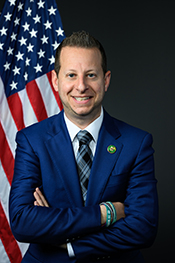
Rep. Jared Moskowitz
Sponsored bills
Maddy summaryThis bill amends the 2018 Anti-Boycott Act to include boycotts by international governmental organizations (IGOs), such as UN agencies, alongside boycotts by foreign countries. It expands existing requirements for U.S. entities to report boycotts they comply with, now covering IGO-initiated boycotts as well. The change directly affects U.S. businesses and organizations operating internationally who might face pressure from IGOs to participate in boycotts. Key provisions update legal definitions in the law by inserting "or international governmental organization" in relevant sections without creating new penalties.
Maddy summaryThe Uyghur Policy Act of 2023 establishes a U.S. Special Coordinator for Uyghur Issues within the State Department to coordinate policy and advocate for the protection of Uyghur cultural, religious, and linguistic identity in Xinjiang. It authorizes $250,000 annually for Uyghur human rights advocates to speak at public diplomacy events in Muslim-majority countries and mandates Uyghur language training for U.S. diplomats. The bill also directs the U.S. government to support United Nations monitoring of Xinjiang human rights issues and oppose efforts to block discussions of Xinjiang at the UN. These provisions focus on diplomatic advocacy and information-sharing, not direct sanctions or enforcement actions against China.
Maddy summaryThe Election Worker Recruitment and Safety Act requires the Election Assistance Commission to regularly study state programs for recruiting and training poll workers, with a focus on safety. The Commission must publish reports by December 2024 and every two years after, identifying voluntary best practices states can adopt. States can then use federal election funding to implement these recommended practices for recruiting and training poll workers. The bill does not mandate specific actions but creates a framework for states to access and apply proven safety and recruitment strategies. This aims to improve the safety and efficiency of election worker programs nationwide.
Maddy summaryThis bill requires the Secretary of Homeland Security, working with the Education Secretary and other agencies, to create a federal strategy for securing K-12 schools against terrorism threats within 180 days of enactment. The strategy must detail existing federal programs and funding for school security, identify specific vulnerabilities in school safety, outline actions to address those gaps, and recommend any needed new authorities. It applies directly to federal agencies coordinating school security efforts but does not mandate specific security measures for schools themselves. The strategy must be updated every seven years, with the requirement ending seven years after the bill's enactment.
Maddy summaryHRES 966 is a symbolic resolution condemning alleged sexual violence committed by Hamas during its October 7, 2023, attack on Israel. It specifically references eyewitness accounts, forensic evidence, and Hamas fighters' admissions of ordering gang rape, sexual mutilation, and assault against Israeli civilians. The resolution calls for international condemnation of such acts as weapons of war, urges nations to criminalize sexual violence, and supports investigations into Hamas' actions. As a non-binding resolution, it does not create new laws or directly affect any individuals but formally expresses the House's position on the issue.
Maddy summaryThis bill prevents states from banning or discouraging the use of specific financial industry codes (merchant category codes) that identify firearm and ammunition merchants. It directly affects financial institutions and payment processors that use these standardized codes for transaction tracking. The law requires states to allow the use of these codes, and the Attorney General can enforce this through civil lawsuits. The bill does not change gun laws or affect gun owners; it only addresses financial coding standards.
Maddy summaryThis bill restricts how credit reporting companies share homebuyers' credit reports during mortgage applications. It prevents companies from sending these reports to third parties (like marketers) just because a lender requested them for a mortgage. Only specific entities can receive the reports: the mortgage lender who originated the loan, the company servicing the loan, or the bank holding the homebuyer's account. This directly protects homebuyers' privacy by limiting unauthorized sharing of their financial data.
Maddy summaryHR 7272, the Shining a Spotlight on Safer Communities Act, requires the Attorney General to submit annual reports to Congress starting in 2024, detailing how the Bipartisan Safer Communities Act's provisions (specifically sections 932 and 933 of title 18) are being implemented. These reports must include data on investigations, prosecutions, demographic information of defendants, and seized firearms or assets related to gun trafficking and straw purchasing. The bill mandates these reports for fiscal years 2024 through 2027, with a funding limit of $2 million annually for this reporting. It is a procedural bill focused solely on transparency and accountability for existing gun safety measures, not creating new policies.
Maddy summaryThe TIGER Act increases dollar thresholds for foreign military sales under the Arms Export Control Act, raising key amounts like the $14 million threshold to $23 million and the $50 million threshold to $83 million. For sales exceeding three times these new thresholds, it requires the Secretary of State to consult with defense agencies, report progress to Congress, and certify that the sale aligns with U.S. foreign policy interests. The bill also establishes a Special Defense Acquisition Fund, allowing the Department of Defense to transfer funds directly to the State Department without reprogramming requirements, provided Congress is notified 15 days in advance. These changes primarily affect the process for approving and funding major defense sales to foreign partners, streamlining oversight for larger transactions.