

Maddy summaryThis bill amends the Servicemembers Civil Relief Act (SCRA) to improve access to existing financial protections for active-duty service members, reservists, and their dependents. It requires military financial literacy training to include SCRA consumer protections (like interest rate limits), mandates notifications about these benefits at key service milestones (e.g., when entering service or being mobilized), and clarifies that creditors must apply the SCRA interest rate cap to *all* pre-service debts, not just specified ones. Creditors must also provide multiple submission methods (online, mail, fax) for servicemembers to submit required documents. These changes aim to make SCRA benefits easier to understand and utilize without creating new financial obligations.
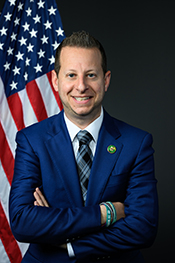
Rep. Jared Moskowitz
Sponsored bills
Maddy summaryHR 7113 provides approximately $55 billion in emergency supplemental funding for U.S. military support to Ukraine and Israel. The bill allocates specific funds for military personnel, operations, equipment procurement, and research related to Ukraine's security assistance (including $12 billion for the Ukraine Security Assistance Initiative) and Israel's defense systems (including $4 billion for Iron Dome and David's Sling systems). Key provisions include transfer authorities between defense accounts, specific requirements for funds to be designated as emergency requirements by Congress and the President, and provisions for replacement of defense articles for Ukraine. This bill directly affects U.S. defense budgeting and security assistance programs for both countries.
Maddy summaryThe ACCESS Act of 2024 creates a federal grant program to help clinics and health care providers expand abortion and reproductive health services in states where abortion is legal (outside of life or health exceptions). It authorizes $200 million annually for fiscal years 2024-2028 to fund specific capacity-building activities, including facility expansions, hiring clinical staff, telehealth services, and culturally appropriate patient resources. Priority is given to providers in states experiencing the highest increases in out-of-state patients seeking abortion care. The bill directly supports health care entities serving patients who travel across state lines for services, aiming to reduce wait times and improve access for vulnerable communities.
Maddy summaryHRES 978 is a non-binding resolution encouraging all U.S. schools (K-12 and colleges) to integrate digital literacy education with age-appropriate lessons on Holocaust history, World War II, and antisemitism. It specifically urges schools to teach Jewish identity, primary-source-based Holocaust history (including antisemitism's historical roots), and critical thinking skills for navigating digital information. The resolution also recommends federal funding for teacher training to support these educational efforts. While not requiring legal changes, it aims to promote historical understanding and digital literacy as tools for preventing hatred and fostering inclusive citizenship. Introduced January 25, 2024, by Representatives Khanna and Fitzpatrick.
Maddy summaryHR 7056, the Access to Family Building Act, establishes federal rights for individuals to access assisted reproductive technology (ART) like IVF without unreasonable restrictions, directly affecting patients seeking fertility treatments and health care providers offering ART services. The bill prohibits states from imposing limitations on ART that are more burdensome than those for comparable medical procedures, fail to advance safety, or unduly restrict access, while allowing health and safety regulations that are necessary and least restrictive. It creates federal enforcement mechanisms, including lawsuits by the Attorney General or affected individuals to challenge violating state laws, and preempts conflicting state regulations. The bill explicitly preserves state authority over health/safety regulations and does not alter existing state insurance coverage laws for ART.
Maddy summaryHR 6967, the Safe Airspace for Americans Act, requires the Federal Aviation Administration (FAA) to establish standardized procedures for reporting and investigating incidents involving unidentified anomalous phenomena (UAPs) reported by aviation personnel, including pilots, air traffic controllers, and maintenance staff. Key provisions include creating a dedicated reporting system (either updating an existing program or launching a new one), mandating data archiving for investigations, and prohibiting retaliation against employees who report UAPs. The bill explicitly protects pilots’ medical and airman certificates from being negatively impacted by UAP reports and bans employers from taking adverse personnel actions against staff for reporting such incidents. This directly affects aviation workers who witness UAPs by ensuring their reports are handled systematically and without professional penalty.
Maddy summaryThis resolution (HRES 975) is a symbolic recognition of the Associated Builders and Contractors Florida East Coast Chapter (ABC Florida East Coast). It honors the organization for its 55-year role representing merit shop construction contractors - firms that award projects based on open competition, not labor affiliation - and its work in providing free apprenticeship programs across Florida. The resolution specifically highlights ABC Florida East Coast as the state's largest apprenticeship provider, training nearly 700 annual apprentices in trades like plumbing and electrical work without student debt, while earning competitive wages ($59,000-$73,000). As a purely ceremonial resolution, it does not create new laws or policies but formally acknowledges the group's contributions to Florida's infrastructure and construction workforce development.
Maddy summaryHRES 882 is a non-binding resolution passed by the U.S. House of Representatives on November 21, 2023, declaring support and gratitude to food banks, food pantries, and community-based organizations addressing food insecurity. It recognizes these groups' work in serving over 5 billion meals annually, rescuing wasted food (nearly 118 billion pounds yearly), and supporting vulnerable populations including 44.2 million people in food-insecure households in 2022. The resolution specifically acknowledges their role in providing emergency aid, nutrition education, and disaster response, while highlighting that 55% of food-insecure households did not access federal nutrition programs. It does not create new policies or funding but formally commends these organizations' contributions to reducing food insecurity and improving community health.
Maddy summaryThe Stronger Communities through Better Transit Act establishes a new federal grant program to improve public transportation service. It provides funding to urban areas, states, and Indian tribes to cover up to 50% of public transit operating costs (up to 80% in persistent poverty areas and 100% for Indian tribes), with requirements to report on service frequency, access to jobs, and conduct community surveys. The program mandates that a majority of funds must benefit underserved communities and areas of persistent poverty, defined as census tracts with high poverty rates or minority populations. Recipients must maintain their transit funding levels and report on improvements in access to essential services. The bill authorizes $20 billion annually for fiscal years 2024-2027.
Maddy summary# Summary of "Protecting Communities from Plastics Act" (Title II) This comprehensive legislation addresses the environmental, health, and environmental justice impacts of plastics production and use. Key provisions include: ## Environmental Justice Protections - Requires environmental justice assessments for permits of "covered facilities" (plastics manufacturing facilities) - Mandates consultation with "fenceline communities" (communities near facilities) including: * Prompt notification in multiple languages * Public hearings with translation services * Community benefit agreements - Establishes a 45-day waiting period before approving permits after public hearings ## Regulatory Requirements - Amends Clean Air Act to establish new source performance standards for plastics facilities - Requires continuous monitoring of air emissions (benzene, nitrogen oxides, etc.) - Amends Clean Water Act to prohibit discharge of plastic pellets in wastewater - Requires financial assurance for facility closure and emergency response - Prohibits new facility permits within 5 miles of community buildings (schools, hospitals, etc.) ## Research and Monitoring - Requires study of microplastics in food (including fish, meat, fruits, vegetables) - Mandates research on microplastics in human bodies (urine, breastmilk, stool) - Establishes a pilot program to test technologies for microplastic removal - Requires inventory of plastics manufacturing and distribution ## Additional Provisions - Temporary permitting moratorium on new plastics facilities (during "temporary pause period") - Requires listing of discarded polyvinyl chloride as hazardous waste - Limits National Recycling Strategy to exclude chemical recycling technologies - Creates grants to reduce single-use plastics in agricultural packaging - Requires biodegradable alternatives to plastic weed barriers The legislation aims to address the disproportionate environmental and health impacts of plastics production on vulnerable communities while establishing comprehensive regulatory frameworks for plastics manufacturing and disposal.