

Maddy summaryHR 5401, the Pay Our Troops Act of 2026, ensures military personnel, civilian Defense workers, and supporting contractors receive pay during government funding gaps in fiscal year 2026. It appropriates emergency funds for active-duty service members, reserves, and their supporting personnel (including Coast Guard staff under DHS) if regular appropriations aren't enacted by the end of the fiscal year. The bill provides necessary pay and allowances during any period when full-year funding is unavailable, covering both active service and support roles. Funding expires when regular appropriations are passed, a funding resolution is enacted, or January 1, 2027, whichever comes first. This is a procedural measure to prevent pay delays for military and support staff during fiscal year 2026 funding lapses.
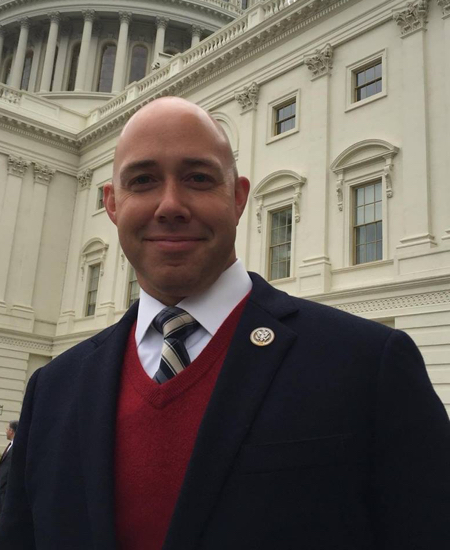
Rep. Brian J. Mast
Sponsored bills
Maddy summaryHR 2334, the Servicemember Residence Protection Act, amends the Servicemembers Civil Relief Act to prevent state "squatter's rights" laws from applying to properties owned by active-duty military members. The bill specifically blocks states from allowing squatters to claim ownership of a servicemember's home during the member's period of military service. This directly protects deployed servicemembers and their families by ensuring their property rights remain secure while they serve. The key mechanism is a new federal provision (Section 301A) that overrides conflicting state laws for military-owned properties occupied by squatters during active service.
Maddy summaryThis bill reschedules marijuana from the most restrictive Schedule I to Schedule III under federal law. It requires the Attorney General to issue an order effecting this change within 60 days of the bill's enactment. This classification shift would make marijuana less restricted federally, affecting all federal regulations and penalties related to the substance. The change directly impacts federal enforcement, research, and medical access policies for marijuana nationwide.
Maddy summaryHRES 612 is a ceremonial resolution celebrating the 250th anniversary of the U.S. Army Medical Department, established by the Continental Congress on July 27, 1775. It does not create new laws or policies but formally commemorates Army Medicine’s historical role in providing medical care to soldiers from the Revolutionary War through modern conflicts. The resolution expresses the House’s gratitude for the department’s legacy of innovation, sacrifice, and service to military personnel. It specifically honors the 50 Army Medical Department personnel awarded the Medal of Honor and acknowledges their impact on both military and civilian medicine. This is a non-binding expression of appreciation, not a substantive legislative action.
Maddy summaryHR 4419, the AV Accessibility Act, requires states to ensure self-driving ride-hail services (like driverless Uber/Lyft vehicles) do not discriminate against people with disabilities when issuing licenses for fully autonomous operation. It mandates a federal study to identify infrastructure changes - such as improved curb access, non-visual navigation aids, and dedicated pickup zones - that would help people with disabilities safely use these vehicles. The study, funded with $5 million, will examine modifications to sidewalks, road design, and technology to improve accessibility during boarding and exiting. This bill directly affects disabled riders and autonomous vehicle service providers operating in the U.S.
Maddy summaryThis bill extends funding deadlines for sport fish restoration and recreational boating programs through 2031, updating prior expiration dates. It clarifies funding for interstate fisheries commissions and adds new definitions for alternative marine fuel infrastructure, including facilities dispensing fuels derived from recycled oils or plant materials. The bill also establishes a 3% tax rate (down from 10%) for portable, electronically-aerated bait containers sold by manufacturers. These changes primarily affect recreational boaters, sport fishing programs, and facilities seeking to install alternative fuel infrastructure.
Maddy summaryHRES 570 is a House resolution commending Petty Officer 3rd Class Scott Ruskan for rescuing 165 people during catastrophic July 2025 flooding in central Texas. The resolution honors Ruskan, a Coast Guard Aviation Survival Technician from Air Station Corpus Christi, for his role as the sole triage coordinator during the disaster. It recognizes his "exceptional courage" and "selflessness" in saving lives during the Guadalupe River flooding that caused extensive damage and loss of life. As a ceremonial resolution, it does not create new laws or policies but formally expresses the House's gratitude for Ruskan's service.
Maddy summaryHR 4189 directs the Secretary of the Navy to officially designate three specific features at the National Navy UDT-SEAL Museum in Fort Pierce, Florida, as national memorials. It recognizes the museum's Memorial as a national memorial, its Memorial Garden and Living Beach as a national memorial garden, and its Naval Special Warfare K9 Memorial as a national K9 memorial. These designations apply solely to the existing sites at the museum's location (3300 North Highway A1A, North Hutchinson Island) and honor Navy SEAL history and service dogs. The bill is procedural, focusing on formal recognition without altering funding, policy, or creating new obligations.
Maddy summaryHR 4190, the Defining Humanitarian Demining Assistance Act of 2025, clarifies definitions for two types of U.S. foreign assistance programs under existing law (10 U.S.C. §407). It precisely defines "humanitarian demining assistance" as activities to detect and clear landmines and explosive remnants of war, including training and equipment based on international standards. It also defines "stockpiled conventional munitions assistance" as support for safely managing and disposing of weapons stockpiles, including small arms and missiles. The bill directly affects U.S. government programs providing foreign aid for mine clearance and explosive ordnance safety, ensuring consistent application of these definitions in aid delivery.
Maddy summaryHRES 542 is a non-binding resolution expressing the House of Representatives' support for designating June 2025 as "National Post-Traumatic Stress Awareness Month" and June 27, 2025, as "National Post-Traumatic Stress Awareness Day." It does not create new laws but aims to raise public awareness about post-traumatic stress, particularly among veterans and military personnel, and reduce associated stigma. The resolution cites statistics showing that 11-30% of veterans from recent conflicts experience PTSD, emphasizing the need for timely treatment and education. It encourages the Department of Defense and Veterans Affairs to continue efforts in mental health education and cultural change around PTSD.