Maddy summaryHR 6044, the Pay Our Patriots Act, ensures military personnel and essential Federal Aviation Administration (FAA) staff continue receiving pay during a government shutdown. It appropriates funds from the Treasury to cover "covered pay and allowances" for active-duty military members and specific FAA employees (like air traffic controllers) deemed essential for air safety during any lapse in regular appropriations. The bill mandates that payments be made at the rate in effect before the shutdown began, with funds immediately available and not subject to reductions. This funding continues until either a new appropriations bill is passed or the end of the fiscal year in which the shutdown began.
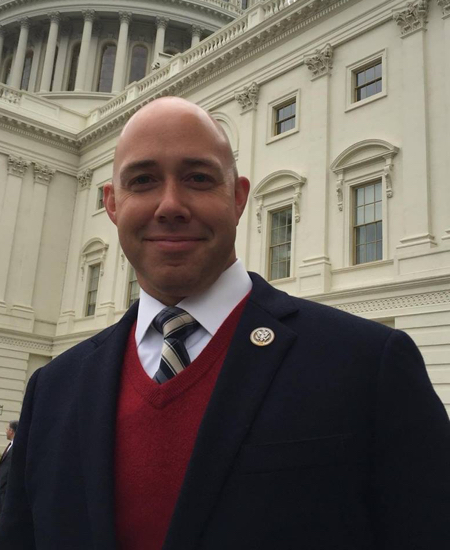
Rep. Brian J. Mast
Sponsored bills
Maddy summaryHRES 864 is a ceremonial resolution honoring U.S. veterans on Veterans Day 2025. It does not create new laws or policies but formally recognizes veterans' service and sacrifice, calling on all Americans to observe Veterans Day. The resolution references historical context about Veterans Day's origins (from Armistice Day to honoring all veterans) but contains no concrete policy changes. It directly addresses the general public, urging them to participate in the observance. As a non-binding resolution, it affects no specific individuals or groups through legislative action.
Maddy summaryThis bill adds Medicare coverage for multi-cancer early detection screening tests (blood or biological tests analyzing cell-free DNA) starting January 1, 2028. It directly affects Medicare beneficiaries aged 68 and older (starting in 2028, with the age limit increasing by 1 year annually), requiring tests to be FDA-cleared and deemed reasonable/necessary by the Secretary for early cancer detection across multiple organ sites. Payment will initially match current stool DNA test rates before 2031, then shift to a lower rate or new payment system after 2031, with limits preventing more than one test per year. The bill explicitly states it does not alter coverage for existing cancer screenings like breast, colorectal, or prostate cancer tests.
Maddy summaryHRES 719 is a House resolution honoring Charles "Charlie" James Kirk, the founder of Turning Point USA who was assassinated on September 10, 2025. The resolution condemns his assassination and all political violence, extends condolences to his family, and calls on Americans to reject violence while promoting civil discourse. It specifically recognizes Kirk's legacy as a defender of constitutional principles and his role in inspiring youth through free speech and faith-based civic engagement. As a commemorative resolution, it does not enact policy changes but formally expresses the House's stance on honoring his life and legacy.
Maddy summaryThis bill requires health plans and insurers to create a clear, timely process for patients or doctors to request exceptions when step therapy protocols (which force patients to try cheaper drugs first) might harm them. It mandates approval for exceptions in six specific cases, such as when prior treatments failed, delaying care risks severe harm, or the required drug causes adverse reactions. Plans must respond within 72 hours (24 hours for emergencies) and cover the requested drug for at least one year if approved. Additionally, health plans must report annual data on exception requests, approvals, denials, and reasons to the government for transparency.
Maddy summaryHR 5455, the Aviation Funding Stability Act of 2025, ensures continued operation of the Federal Aviation Administration (FAA) during government funding gaps. If Congress fails to pass regular appropriations or a continuing resolution before the new fiscal year begins, the bill allows the FAA to use existing funds from the Airport and Airway Trust Fund to maintain essential programs and airport infrastructure at the previous year’s funding level. This prevents shutdowns for FAA operations like air traffic control, airport grants, and safety programs for up to 30 days or until regular funding is enacted. The bill directly affects all FAA programs funded through the trust fund, including airport improvements and aviation safety initiatives, without creating new policies or altering funding levels.
Maddy summary# Summary of Legislative Provisions This comprehensive legislative text contains numerous provisions related to U.S. foreign policy, international assistance, diplomacy, and related matters. Key elements include: 1. **International Religious Freedom**: Requires annual reports on religious freedom status worldwide, including assessments of violations, U.S. policy responses, and country-specific actions. 2. **Global Health Initiatives**: Establishes a Global Health Compact model to transition U.S. global health programs to partner country ownership by 2028, including PEPFAR programs. Includes provisions for maternal and child health programs through the Safe Passages program. 3. **Foreign Assistance Branding**: Mandates that all U.S. foreign assistance prominently display the U.S. flag as the sole primary brand, with limited exceptions for specific circumstances. 4. **International Organization Engagement**: Requires annual reports on U.S. participation metrics in international organizations, including voting practices, and aims to increase U.S. citizen employment in international organizations. 5. **Corruption and Kleptocracy**: Establishes policy to counter corruption through diplomatic engagement, foreign assistance, and leveraging authorities like the Global Magnitsky Act. 6. **Cultural Heritage Protection**: Creates a Cultural Heritage Coordinating Committee with multiple federal agency representatives to protect international cultural property. 7. **Sports Diplomacy**: Establishes an Office of Sports Diplomacy to leverage major sporting events hosted in the U.S. (2024-2034) to enhance U.S. soft power and diplomatic relationships. 8. **United Nations Engagement**: Includes provisions for reporting on country voting practices at the UN, prohibiting U.S. contributions to specific UN commissions, and extending diplomatic immunities to the African Union. 9. **Global Health Reporting**: Consolidates multiple global health reporting requirements into a single annual report to improve transparency and efficiency. 10. **Diplomatic Immunities**: Extends certain privileges and immunities to the Pacific Islands Forum and the African Union's permanent observer mission to the UN. The legislation represents a broad framework for U.S. international engagement, emphasizing strategic communication, health diplomacy, cultural preservation, and effective use of foreign assistance resources.
Maddy summaryThe DFC Modernization Act of 2025 would modernize the U.S. International Development Finance Corporation (DFC) by allowing it to increase its risk tolerance to better mobilize private capital for U.S. foreign policy and national security goals. The bill permits DFC to use new tools like equity investments and partial guarantees, and to lend in high-risk countries or sectors, while restricting support for projects involving "countries of concern" like China, Russia, and Iran. It also increases DFC's maximum contingent liability from $60 billion to $250 billion and modifies the agency's management structure, including changes to its Board of Directors. This legislation would directly affect DFC's operations and the countries and private sector entities it works with, particularly by expanding its ability to invest in strategic areas while limiting support for certain geopolitical rivals. The bill aims to help the U.S. counter strategic competitors' influence in key sectors like infrastructure and critical supply chains.
Maddy summaryHRES 733 is a symbolic resolution designating the week of September 20-27, 2025, as "National Estuaries Week." It expresses congressional support for raising public awareness about the economic and ecological importance of coastal estuaries, which support millions of jobs, generate significant economic output, and provide critical services like flood protection and habitat for fish and wildlife. The resolution acknowledges estuaries' role in sustaining employment, economic growth, and environmental health without creating new policies or funding. It directly affects the public, government officials, and conservation organizations by highlighting estuaries' value through a designated awareness week.
Maddy summaryThis bill ensures continued pay for specific Department of Homeland Security (DHS) personnel and Coast Guard members during government shutdowns in fiscal years 2026-2027. It directly affects DHS law enforcement officers (including those in job series like 0083, 1801, and 1811), DHS administrative and payroll staff, and Coast Guard personnel. The bill authorizes emergency funding from the Treasury to cover their pay and allowances when regular appropriations are not in place. This funding expires on January 1, 2027, or earlier if Congress passes a new appropriations bill covering these costs.