Funding for Aviation Screeners and Threat Elimination Restoration Act or the FASTER Act This bill repeals the requirement that a portion of aviation security service fees collected from passengers be credited as offsetting receipts and deposited in the general fund of the Treasury. It requires such fees to be deposited into a separate account in the Treasury for expenditure to pay only the costs of activities and services for which the fee is imposed (i.e., aviation security screening).
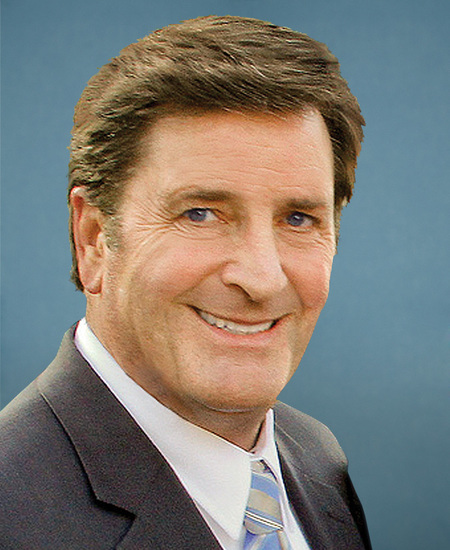
Rep. John Garamendi
Sponsored bills
RTP Full Funding Act of 202 1 This bill revises provisions regarding the recreational trails program of the Department of Transportation (DOT). Specifically, the bill requires DOT to estimate the total amount of nonhighway recreational fuel taxes received by the Department of the Treasury and transferred to the Highway Trust Fund; the Federal Highway Administration to establish financial management information system codes for certain motorized and non-motorized use projects, including single and diverse use projects; DOT to reserve amounts of the state-apportioned funds for administrative, research, technical assistance, and training expenses to carry out the recreational trails program; and states to obligate a specific amount of reserved funds each fiscal year for the recreational trails program.
Stop Tax Haven Abuse Act This bill authorizes the Department of the Treasury to impose restrictions on foreign jurisdictions or financial institutions to counter money laundering and efforts to significantly impede U.S. tax enforcement. Among other provisions, the bill expands reporting requirements for certain foreign investments and accounts held by U.S. persons, establishes a rebuttable presumption against the validity of transactions by institutions that do not comply with reporting requirements under the Foreign Account Tax Compliance Act, treats certain foreign corporations managed and controlled primarily in the United States as domestic corporations for tax purposes, treats swap payments sent offshore as taxable U.S. source income, requires corporations to disclose certain financial information on a country-by-country basis, imposes penalties for failing to disclose offshore holdings, modifies the base erosion anti-abuse tax to lower the gross receipts applicability threshold from $500 million to $100 million, makes investment advisers and persons engaged in forming new business entities subject to new anti-money laundering requirements, requires reporting of U. S. beneficial owners of foreign-owned financial accounts, and imposes additional requirements for third party summonses used to obtain information in tax investigations that do not identify the person with respect to whose liability the summons is issued (i.e., John Doe summons).
No Tax Breaks for Outsourcing Act This bill modifies the tax treatment of the foreign source income of domestic corporations. The bill includes provisions that modify calculations of the gross income of U.S. shareholders to include net CFC tested income in the current taxable year, apply limitations on the foreign tax credit on a country-by-country basis, limit the tax deduction for the interest expense of a U.S. corporation that is a member of a financial reporting group (i.e., a group that prepares consolidated financial statements according to generally accepted accounting principles or international financial reporting standards), modify the rules for the taxation of inverted corporations (i.e., U.S. corporations that acquire foreign companies to reincorporate in a foreign jurisdiction with income tax rates lower than the United States), and treat certain foreign corporations managed and controlled primarily in the United States as domestic corporations for tax purposes.
Protecting the Right to Organize Act of 20 21 This bill expands various labor protections related to employees' rights to organize and collectively bargain in the workplace. Among other things, it (1) revises the definitions of employee , supervisor , and employer to broaden the scope of individuals covered by the fair labor standards; (2) permits labor organizations to encourage participation of union members in strikes initiated by employees represented by a different labor organization (i.e., secondary strikes); and (3) prohibits employers from bringing claims against unions that conduct such secondary strikes. The bill also allows collective bargaining agreements to require all employees represented by the bargaining unit to contribute fees to the labor organization for the cost of such representation, notwithstanding a state law to the contrary; and expands unfair labor practices to include prohibitions against replacement of, or discrimination against, workers who participate in strikes. The bill makes it an unfair labor practice to require or coerce employees to attend employer meetings designed to discourage union membership and prohibits employers from entering into agreements with employees under which employees waive the right to pursue or a join collective or class-action litigation. The bill further prohibits employers from taking adverse actions against an employee, including employees with management responsibilities, in response to that employee participating in protected activities related to the enforcement of the prohibitions against unfair labor practices (i.e., whistleblower protections). Such protected activities include providing information about a potential violation to an enforcement agency, participating in an enforcement proceeding, initiating a proceeding concerning an alleged violation or assisting in such a proceeding, or refusing to participate in an activity the employee reasonably believes is a violation of labor laws. Finally, the bill addresses the procedures for union representation elections, provides employees with the ability to vote in such elections remotely by telephone or the internet, modifies the protections against unfair labor practices that result in serious economic harm, and establishes penalties and permits injunctive relief against entities that fail to comply with National Labor Relations Board orders.
For the People Act of 2021 This bill addresses voter access, election integrity and security, campaign finance, and ethics for the three branches of government. Specifically, the bill expands voter registration (e.g., automatic and same-day registration) and voting access (e.g., vote-by-mail and early voting). It also limits removing voters from voter rolls. The bill requires states to establish independent redistricting commissions to carry out congressional redistricting. Additionally, the bill sets forth provisions related to election security, including sharing intelligence information with state election officials, supporting states in securing their election systems, developing a national strategy to protect U.S. democratic institutions, establishing in the legislative branch the National Commission to Protect United States Democratic Institutions, and other provisions to improve the cybersecurity of election systems. Further, the bill addresses campaign finance, including by expanding the prohibition on campaign spending by foreign nationals, requiring additional disclosure of campaign-related fundraising and spending, requiring additional disclaimers regarding certain political advertising, and establishing an alternative campaign funding system for certain federal offices. The bill addresses ethics in all three branches of government, including by requiring a code of conduct for Supreme Court Justices, prohibiting Members of the House from serving on the board of a for-profit entity, and establishing additional conflict-of-interest and ethics provisions for federal employees and the White House. The bill requires the President, the Vice President, and certain candidates for those offices to disclose 10 years of tax returns.
Support Our Military Working Dogs Act This bill addresses provisions regarding the care and study of military working dogs. First, the bill authorizes the Department of Defense (DOD) to accept donations for the purpose of providing long-term care for retired military working dogs that have been adopted. The bill authorizes DOD to enter into a multi-year agreement with a veterans service organization or nonprofit entity to solicit, accept, and transfer funds to provide long-term care for adopted military working dogs. The bill prohibits charging a fee for the adoption of a military animal. The bill updates the duties of the Joint Trauma Education and Training Directorate. Specifically, the bill requires the directorate to develop a comprehensive trauma care registry with respect to military working dogs. Additionally, the directorate must inform and advise the conduct of research on the leading causes of morbidity and mortality of military working dogs in combat. Finally, DOD must establish a personnel management plan for veterinary care.
TRICARE Reserve Select Improvement Act This bill expands TRICARE Reserve Select eligibility to include members of the Selected Reserve who are enrolled or eligible to enroll in the Federal Employees Health Benefits Program.
Abortion is Health Care Everywhere Act of 2021 This bill authorizes the use of certain foreign assistance funds to provide comprehensive reproductive health care services in developing countries, including abortion services, training, and equipment.
Stop Underrides Act This bill requires the installation of rear, side, and front underride guards on certain trucks and trailers. Specifically, the Department of Transportation (DOT) must require the installation of rear, side, and front underride guards on the following a trailer or semi-trailer with a gross vehicle weight rating of 10,000 pounds or more, and a single unit truck for which the bottom of the carriage is greater than 22 inches above the ground and that is 10,000 pounds or more. For rear and side underride guards, DOT must require adherence to a performance standard that requires the guards to be able to prevent intrusion from the body or frame of a trailer, semi-trailer, or truck into the passenger compartment of the motor vehicle that contacts the guard while traveling at 35 miles per hour. In addition, DOT must require drivers to (1) conduct a pre-trip inspection of the underride protection system on their vehicles; (2) identify rusted metal compromising structural integrity, cracked welds, or missing or loose fasteners; and (3) complete any necessary repairs. DOT must establish a Committee on Underride Protection to oversee the ongoing underride guard rulemaking process. DOT must publish data on victims of truck underride crashes on a publicly accessible website and update such data quarterly.