Maddy summaryThis bill, known as the Dalilah Law, would restrict commercial driver's licenses to U.S. citizens, lawful permanent residents, and holders of specific work visas. It requires states to verify the citizenship or visa status of all CDL applicants and renewals within 180 days of enactment, while also mandating English language proficiency testing for all license holders. States that fail to enforce these requirements or issue licenses to ineligible individuals risk losing federal transportation funding. The law also imposes lifetime disqualifications for operating commercial vehicles without proper immigration status.
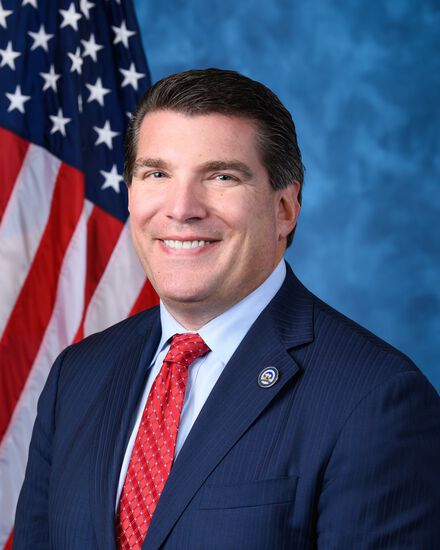
Rep. Jay Obernolte
Sponsored bills
Maddy summaryThis non-binding resolution expresses the House's support for designating 2026 as the "Year of Math" in the United States, primarily to celebrate the International Congress of Mathematicians (ICM) hosting in Philadelphia that year. It highlights math's critical role in STEM fields, national security, economic prosperity, and everyday life, while recognizing the ICM's significance as a global mathematics event. The resolution aims to increase public awareness of mathematics' importance and inspire engagement in math education, particularly among students and educators. As a symbolic gesture, it does not create new laws or funding but seeks to elevate the visibility of mathematical sciences.
Advanced Capabilities for Emergency Response Operations Act or the ACERO Act This bill provides statutory authority for the Advanced Capabilities for Emergency Response Operations (ACERO) project. The ACERO project conducts research and development activities regarding aerial response to wildfires using uncrewed aircraft systems (UAS) and other advanced aviation technologies. It is administered by the National Aeronautics and Space Administration (NASA). The bill directs the ACERO project to address airspace management and deconfliction during wildfire response efforts, including through real-time information sharing among response teams and the development of a platform to provide situational awareness of aerial assets. The bill also directs the ACERO project to establish a multiagency concept of operations to facilitate the coordination of aerial wildfire response among federal, state, and local government agencies. NASA must consult with other federal agencies and departments to avoid duplication of these efforts. NASA generally may not procure UAS manufactured or assembled by specified foreign entities, including entities domiciled in or controlled by China, for use by the ACERO project.
Maddy summaryThis bill amends the Department of Energy Organization Act to define "critical energy resources" as those essential to U.S. energy systems with vulnerable supply chains. It directs the Energy Secretary to assess supply chain risks, diversify sources, boost domestic production of these resources, develop alternatives, and improve recycling. The law specifically requires evaluating reliance on imports, adversarial nation tactics (like price manipulation), and impacts on energy technology development. The Department of Energy and energy sector stakeholders will implement these measures, directly affecting how the federal government manages energy security. The bill focuses on concrete policy actions, not outcomes or political advocacy.
Maddy summaryHR 6688, the ADAS Functionality and Integrity Act, requires the National Highway Traffic Safety Administration (NHTSA) to develop guidelines within 24 months to ensure Advanced Driver Assistance Systems (ADAS) in passenger vehicles (model year 2028+) maintain safety after modifications like tire changes or suspension adjustments. The guidelines will specify allowable modification ranges (e.g., ride height, sensor alignment), calibration procedures, and verification tests for repair shops and owners. This directly affects vehicle manufacturers, independent repair facilities, and car owners who customize or modify vehicles. The bill mandates that guidelines be based on empirical data and reference existing safety assessment methods, with penalties for non-compliance.
Maddy summaryThe PART Act requires new vehicles to have catalytic converters marked with a unique identification number that links directly to the vehicle's identification number, stored in a law enforcement-accessible database. It establishes a $7 million grant program to help repair shops, dealers, law enforcement, and fleet owners purchase equipment for marking converters with visible, durable identifiers (using die or pin stamping and high-visibility paint). The bill also mandates that businesses buying catalytic converters keep detailed seller records (including vehicle information) for two years and use traceable payments, banning cash or cryptocurrency transactions. Additionally, it creates new federal criminal penalties for stealing or trafficking in catalytic converters, with potential sentences of up to five years in prison.
Maddy summaryThis bill directs the Secretary of Transportation to update the federal definition of "motorcycle" in transportation regulations within 120 days of enactment. The new definition specifies that a motorcycle must be a three-wheeled vehicle designed to be ridden while sitting astride, steered by handlebars, and capable of exceeding 30 mph. It directly affects motorcycle manufacturers, regulators, and riders by aligning federal safety standards with this updated definition in the Code of Federal Regulations. The change ensures regulatory consistency for vehicles meeting these specific design and performance criteria.
Maddy summaryThe AI Grand Challenges Act of 2026 establishes a National Science Foundation program to award cash prizes for solving specific, measurable AI research challenges across 15 priority areas like national security, health, energy, and cancer breakthroughs. It requires the NSF Director to create prize competitions with minimum $1 million awards per winner (including a mandatory $10 million cancer-focused competition), targeting U.S.-based entities or citizens. Key mechanisms include publishing clear problem statements and success metrics on Challenge.gov, consulting public and federal agencies on challenge selection, and reporting annual results to Congress. The bill directly affects U.S. researchers, companies, and organizations developing AI solutions for federally identified challenges.
Maddy summaryThis bill, known as the BASICS Act, creates a new $5.5 billion federal funding program over five years to repair and replace bridges in poor condition across the United States. The program prioritizes projects based on the cost of bridge rehabilitation in each state and guarantees a minimum funding allocation of $45 million per state annually. It also expands funding for regional transportation planning in rural areas and increases flexibility for local governments to select and manage transportation projects through enhanced consultation requirements. Additionally, the legislation removes local matching fund requirements for metropolitan planning activities and allows 100 percent federal funding for off-system bridge projects owned by local governments or tribes.
Maddy summaryThis bill amends the Passport Act of 1920 to exempt Purple Heart and Medal of Honor recipients from standard U.S. passport application and renewal fees. It directly affects veterans who have received these specific military decorations. The key provision adds a new fee exemption category (subparagraph D) for these individuals in the passport fee structure. The bill also requires the State Department to create a verification process with the Defense Department to confirm eligibility using military service records. This is a straightforward administrative change to reduce costs for honored veterans.