Maddy summaryThe GRADUATE Act (HR 7536) amends tax law to expand the deduction for qualified education loan payments. It allows individuals to deduct up to $10,000 annually (plus $500 per dependent) for interest paid on such loans, increasing the previous limit. The deduction phases out for taxpayers with modified adjusted gross income above $125,000 ($250,000 for joint filers), with the new thresholds applying to taxable years after 2025. This directly affects individual taxpayers with education debt who itemize deductions, reducing their taxable income but not forgiving loan balances. The bill modifies existing tax code sections without creating new government programs or altering loan repayment terms.
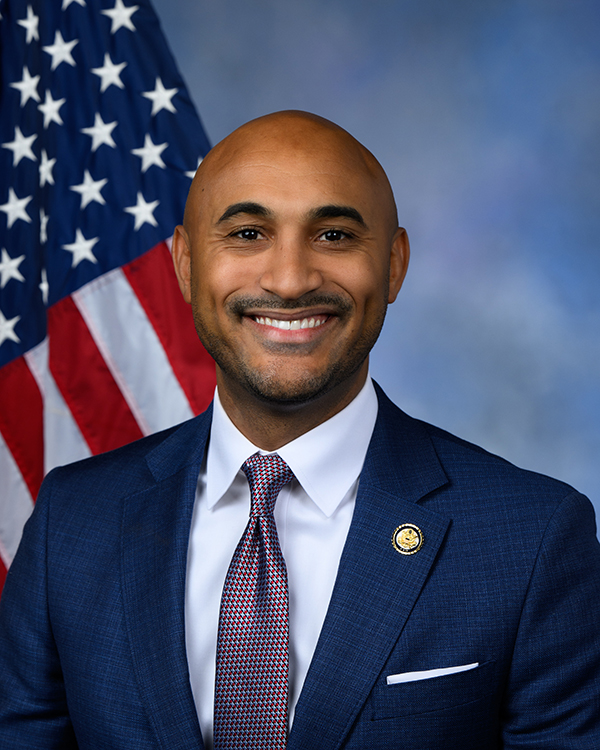
Rep. Shomari Figures
Sponsored bills
Maddy summaryThis bill establishes a 12-member National Council on African American History and Culture within the National Endowment for the Humanities (NEH). The Council, appointed by the President with Senate approval, will include experts in African American history and culture who are not federal employees, with balanced representation (6 Democrats, 6 Republicans) and attention to diversity. Its duties include evaluating NEH programs related to African American history, preparing annual reports, and making recommendations to improve preservation and celebration efforts. The Council will operate for 10 years, with members serving five-year terms and receiving partial compensation for their service.
Maddy summaryThis bill authorizes the U.S. Mint to produce two types of commemorative $2.50 coins for the 250th anniversary of the Declaration of Independence: a circulating coin for everyday use and a numismatic (collector) coin. Both would feature designs based on the 1926 Sesquicentennial coin - showing allegorical liberty holding the Declaration on one side and Independence Hall on the other - with "1776-2026" inscriptions. The bill requires the Mint to issue these coins by July 4, 2026, if technically and economically feasible, but does not mandate their production or affect any specific groups beyond the public who may purchase them.
Department of Homeland Security Appropriations Act, 2026 This bill provides FY2026 appropriations for various agencies and offices within the Department of Homeland Security (DHS), except for U.S. Immigration and Customs Enforcement (ICE), U.S. Customs and Border Protection (CBP), and management and oversight activities of the Office of the Secretary. Specifically, the bill provides appropriations to DHS for the Federal Protective Service, the Office of Inspector General, the Transportation Security Administration, the U.S. Coast Guard, the U.S. Secret Service, the Cybersecurity and Infrastructure Security Agency, the Federal Emergency Management Agency (FEMA), U.S. Citizenship and Immigration Services, the Federal Law Enforcement Training Centers, and the Science and Technology Directorate. The bill does not provide appropriations for some agencies and activities that have been funded in prior DHS appropriations acts, including ICE, CBP, and management and oversight activities of the Office of the Secretary.
Maddy summaryHRES 1051 is a symbolic resolution recognizing Mobile, Alabama, as the origin of the oldest continuous Mardi Gras celebration in the United States, dating to 1703. It formally acknowledges Mobile's historical significance as the birthplace of the Carnival tradition, citing its 300+ year tradition of parades and festivities marking the end of Carnival before Lent. The resolution has no legal effect or policy changes - it is purely commemorative, affirming cultural heritage without altering laws or affecting any group. It was introduced by Alabama representatives and referred to the Oversight Committee.
Maddy summaryThe PART Act requires new vehicles to have catalytic converters marked with a unique identification number that links directly to the vehicle's identification number, stored in a law enforcement-accessible database. It establishes a $7 million grant program to help repair shops, dealers, law enforcement, and fleet owners purchase equipment for marking converters with visible, durable identifiers (using die or pin stamping and high-visibility paint). The bill also mandates that businesses buying catalytic converters keep detailed seller records (including vehicle information) for two years and use traceable payments, banning cash or cryptocurrency transactions. Additionally, it creates new federal criminal penalties for stealing or trafficking in catalytic converters, with potential sentences of up to five years in prison.
Maddy summaryHR 7417 reauthorizes and expands the WISEWOMAN program to include heart health screenings and education for low-income women. The bill directs the CDC to award grants for blood pressure and cholesterol screenings, health education, and referrals for heart disease prevention, building on existing breast and cervical cancer services. It specifically targets low-income women who are already served by the WISEWOMAN program or meet new eligibility criteria set by the Secretary. The expansion is funded with $250 million over five fiscal years (2027-2031), with services to be provided by current WISEWOMAN grantees or approved alternative providers.
Maddy summaryHR 6671, the REPAIR Infrastructure Act, reauthorizes $3 billion annually (2027-2031) for infrastructure projects that reconnect communities divided by highways or other "divisive roadway infrastructure" (like high-speed roads or viaducts). It directly affects local governments, tribes, and community groups seeking funding to rebuild access to jobs, healthcare, schools, and parks - especially in neighborhoods historically cut off by transportation projects. Key provisions prohibit using funds for new highway lanes, require projects to address historic inequities, and prioritize affordable housing, disability access, and community input. Projects must demonstrate how they prevent displacement, support low-income residents, and integrate with local land use (e.g., preserving affordable housing or limiting parking requirements).
Maddy summaryHR 6635, the Bus Operator Safety and Security Act, requires new fixed-route buses over 30 feet long (with a 10+ year lifespan) purchased using federal transit funds to have physical barriers at the driver's workstation. These barriers must extend from floor to ceiling, fully enclose the workstation to block entry of people or objects, and not obstruct the driver's view. Transit agencies must install these barriers within two years of the law's enactment, unless the labor union representing bus drivers agrees to waive the requirement. The rule applies only to new buses bought with federal funds (excluding those from rural transportation programs) and directly affects transit agencies and bus drivers operating large fixed-route vehicles.
Maddy summaryHRES 1018 is a resolution calling for the U.S. government and international partners to prioritize women's rights in Haiti's crisis response. It specifically demands ensuring at least 30% of Haiti's leadership positions (including security, humanitarian, and election roles) are held by women, funding services for gender-based violence survivors, and requiring gender-disaggregated data collection in all aid programs. The resolution also urges rebuilding U.S. Women, Peace, and Security programs and mandates that all policies address women's distinct needs in Haiti's transition. This resolution directly affects U.S. foreign policy implementation and Haiti's transitional government, emphasizing that women's inclusion is critical for stability.