Issue · Criminal Justice

Criminal Justice (Drug Policy)

Every criminal justice bill, vote, and legislator stance in Delaware, automatically classified by Maddy, our AI policy reader.

Total bills
8
153rd General Assembly (2025-2026)
Top supporter
Alonna Berry
100% support rate
Top opponent
Bryan Shupe
33% support rate
Ranked legislators
10
5 support · 5 oppose
Key legislators

Who's moving drug policy in Delaware

Legislators moving drug policy in Delaware
Legislator Party Stance Support rate Votes
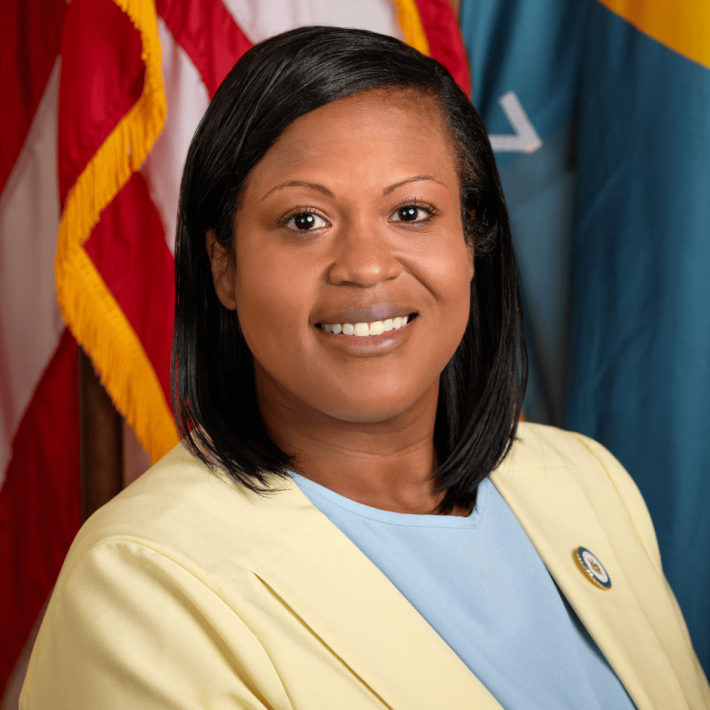
Alonna Berry
Alonna Berry House · District 20
D
Strong +
100% 3
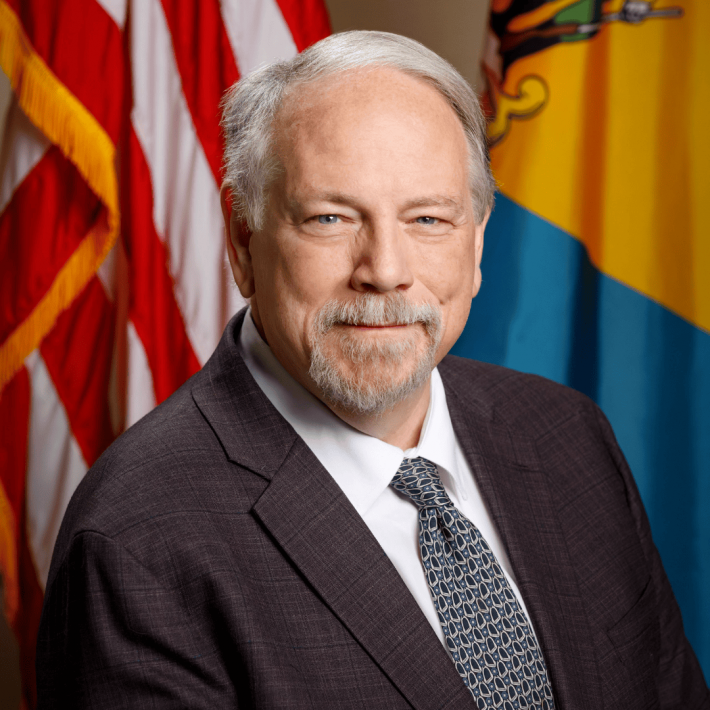
DeShanna Neal
DeShanna Neal House · District 13
D
Strong +
100% 3
Frank Burns
Frank Burns House · District 21
D
Strong +
100% 3
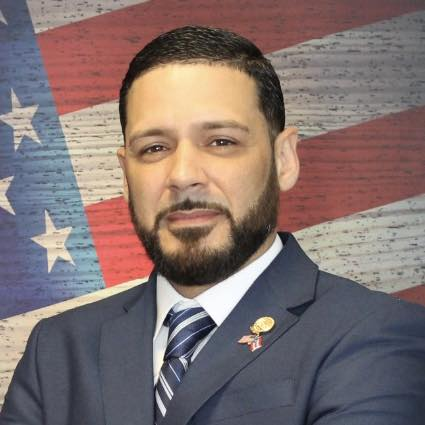
Josue Ortega
Josue Ortega House · District 3
D
Strong +
100% 3
Kam Smith
Kam Smith House · District 15
D
Strong +
100% 3
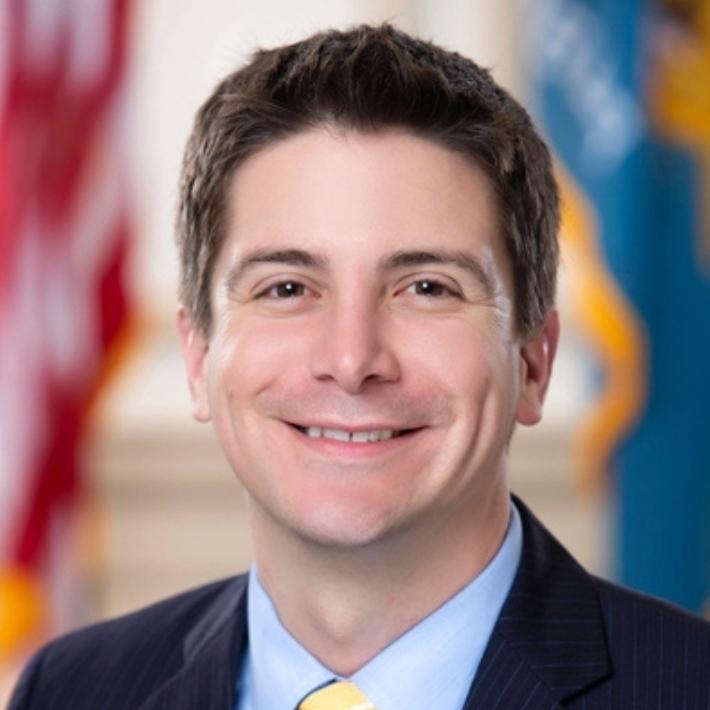
Bryan Shupe
Bryan Shupe House · District 36
R
Oppose
33% 3
Jeff Hilovsky
Jeff Hilovsky House · District 4
R
Oppose
33% 3
Jeff Spiegelman
Jeff Spiegelman House · District 11
R
Oppose
33% 3
Jesse Vanderwende
Jesse Vanderwende House · District 35
R
Oppose
33% 3
Kim Williams
Kim Williams House · District 19
D
Oppose
33% 3
Showing 8 of 8 bills

All criminal justice bills

in committee · Delaware · House Jun 11, 2026

HB 403: AN ACT TO AMEND TITLE 4 OF THE DELAWARE CODE RELATING TO OPIOID ANTAGONISTS AND THE SALE OF ALCOHOL.

This Act requires taprooms and taverns to keep at least 2 working opioid antagonists on the premises at all times. It also requires employees who sell alcohol to receive training in the use of opioid antagonists in an emergency as part of State-mandated training. This Act also confirms that an employee of a taproom or tavern who administers an opioid antagonist to a patron is exempt from civil liability if acting in good faith and not wilfully, wantonly, recklessly, or with gross negligence. This Act also makes technical corrections to conform existing law to the standards of the Delaware Legislative Drafting Manual.
Sub-Topics Drug Policy
in committee · Delaware · Senate May 6, 2026

SB 304: AN ACT TO AMEND TITLE 11 OF THE DELAWARE CODE RELATING TO POSSESSION OF A FIREARM OR PROJECTILE WEAPON IN A SAFE SCHOOL ZONE.

This Act does the following: (1) Makes clear that charter schools and private schools may employ a constable or employ or contract for a qualified retired law-enforcement officer to provide security. (2) Creates an exemption in the Safe School Zone law enacted in 2023, Chapter 175 of Volume 84 of the Laws of Delaware (House Bill No. 201, 152nd General Assembly), for an individual authorized by a private school to serve a “sentry”, an individual authorized by the school to carry a firearm or projectile weapon in a Safe School Zone if certain training and notice requirements are complied with. Not every school is able to afford to hire a constable or a police officer who is a school resource officer. Therefore, the General Assembly finds that it is necessary to permit private schools in this State to employ or contract for individuals to serve as a sentry for these schools. The following states have also provided a similar exemption to their equivalent of the Safe School Zone law for a sentry: Indiana, Iowa, Kansas, Massachusetts, Michigan, Minnesota, Missouri, Montana, New Jersey, North Dakota, Ohio, Oklahoma, Oregon, South Dakota, Utah, and Wyoming. This Act also makes technical corrections to conform existing law to the standards of the Delaware Legislative Drafting Manual.
passed both · Delaware · Senate Jun 30, 2026

SB 300: AN ACT TO AMEND TITLE 11, TITLE 16, AND TITLE 24 OF THE DELAWARE CODE RELATING TO DEADLY WEAPONS DEALERS.

This Act is a substitute for Senate Bill No. 300. Like SB 300, this Act requires firearm dealers to obtain a state license to sell or transfer firearms under Chapter 9B instead of the license to sell deadly weapons under Chapter 9 of Title 24. Like SB 300, this Act does all of the following: -Establishes in statute factors that make a person ineligible to obtain a state license to sell or transfer firearms or to serve as a responsible person for a state license holder (licensee). -Heightens and adds more specific security requirements. -Heightens and centralizes recordkeeping and reporting requirements. -Requires background checks for contractors and volunteers with access to the licensee's firearms or performing certain tasks for a licensee. -Establishes training requirements. -Includes a recurring inspection by the DSP to ensure licensees are in compliance with State law. -Establishes civil penalties and possible license revocation in the event of violations. This Act differs from Senate Bill No. 300 as follows: -Changes the definition of firearm to reference 11 Del. C. § 222. -Removes the license fee ranges that are dependent on the number of firearms sold or transferred and instead sets flat and established license fees at $300 for an initial license and $250 to renew a state license. This Act makes corresponding changes throughout to account for the change in license fee structure. -Removes the licensee requirement to report firearm trace information to the Attorney General and the Attorney General’s publication of an annual report. Instead, firearm trace information will be provided as part of a licensee’s renewal application and will be provided to the General Assembly by the Delaware State Police (DSP). -Background checks are required once every 2 years, instead of annually. Relatedly, the background check obtained by a licensee or responsible person is valid for 2 years for purposes of applying for an initial license or a license renewal under this chapter. -Establishes December 31 of each year as the date that license renewal applications are due. Initial licenses that are granted after January 1 of each year may receive a prorated license fee. This Act makes corresponding changes throughout to account for the date change. -Changes the DSP report about licensee status from an annual report due by December 1 to a biennial report due on March 1. -Adds that the Delaware Department of Justice also has general investigative authority to investigate a breach of Chapter 9B. Under SB 300, only DSP had this authority. -Removes the requirement that a licensee maintain all security system recordings for at least 3 years. DSP shall promulgate regulations that establish how long a licensee shall maintain recordings. -The General Assembly shall expend any money collected in the Firearm Licensing Fund in furtherance of implementing this Act and Chapter 9 of Title 24. -Delays implementation and gradually phases in the requirements in this Act, beginning by July 1, 2028, with DSP notification to people with valid special licenses to sell deadly weapons under Chapter 9 of Title 24 about the changes in law and the potential that a license under this Act may be required. Changes made by this Act to Delaware’s licensing system are in recognition of a growing body of evidence that demonstrates that firearms dealers’ sales practices affect the probability of firearms entering the illegal market, and that policies designed to hold dealers accountable can curtail illegal use of firearms and the concomitant crimes. According to the Johns Hopkins University Center for Gun Violence Solutions, utilizing data from the Centers for Disease Control, firearms are used in 78% of homicides that occur in Delaware. In addition to loss of life, firearm violence has an economic impact, costing Delawareans $1.3 billion per year, which amounts to $1,236 per resident. An article in the Journal of Urban Health found that in-state trafficking was 64 percent lower in places with strong firearm dealer regulations and oversight. A study published in the American Journal of Public Health, examining 20 years of data, found that state licensing requirements and laws requiring or allowing inspections or audits of firearm dealers were independently associated with significantly lower firearm homicide rates. The ATF has oversight over firearms dealers, but its efforts are insufficient. Though the ATF aims to inspect firearm dealers at least every three years, at the rate inspections are performed, a dealer can expect inspection only once every 9 years. ATF data reveals that, when they occur, dealer inspections generally yield a large number of violations. In sum, the frequency of violations and the rarity of inspections allow the possibility that dealers are violating law each year without any corrective action by the ATF. According to data compiled by Brady United, there is State-specific evidence to suggest Delaware’s firearm licensing system would benefit from reform to protect the health and safety of our residents. According to 2017 through 2021 ATF data, 6,626 firearms were recovered in Delaware by law enforcement, after either having been used in a crime, found at a crime scene, or where the purchase or possession of the firearm was itself illegal (“crime guns”). Half of these crime guns were recovered by law enforcement within 3 years of retail purchase, which is indicative of potential firearm trafficking. The data also raises concerns about potential straw purchasing in our State, as there was a mismatch in the identity of the firearm purchaser and firearm possessor during a criminal offense in 72% of the traceable cases. Furthermore, 67% of the firearms recovered by law enforcement in this State were sourced from in-State firearm dealers. Delaware is also a significant supplier of crime guns to other states, most significantly Maryland (12.2% of the crime guns recovered come from Delaware dealers) and Pennsylvania (8.9% if the crime guns recovered come from Delaware dealers).
passed both · Delaware · House Jul 1, 2026

HB 342: AN ACT TO AMEND TITLE 11 OF THE DELAWARE CODE RELATING TO THE POSSESSION AND PURCHASE OF DEADLY WEAPONS BY PERSONS PROHIBITED.

Current law prohibits persons subject to Family Court protective orders from purchasing or possessing deadly weapons, with some exceptions. This Act extends this prohibition to individuals with out-of-state protective orders as well.
passed both · Delaware · Senate Jun 23, 2026

SB 249: AN ACT TO AMEND TITLE 16 AND TITLE 29 OF THE DELAWARE CODE RELATING TO SUBSTANCE USE HARM REDUCTION.

This Act does all of the following: (1) Establishes a regulatory framework for substance use harm reduction programs that provides immunities for program providers and staff. (2) Modifies the definition of drug paraphernalia. (3) Decriminalizes possession of paraphernalia for individuals who use drugs, while retaining prohibitions for paraphernalia used in the manufacturing or distribution of drugs and the selling of certain drug paraphernalia. This Act also makes technical corrections to conform existing law to the standards of the Delaware Legislative Drafting Manual.
signed · Delaware · House Jun 24, 2026

HB 265: AN ACT TO AMEND TITLE 11 OF THE DELAWARE CODE RELATING TO SEXUAL OFFENSE REPORTING AND IMMUNITY FOR CERTAIN CRIMES.

This Act provides limited immunity from prosecution for persons who seek to report a sexual offense. Under this Act a person who is a victim or witness or otherwise seeks law enforcement assistance in relation to a sexual offense may not be charged, arrested, or prosecuted, or issued a civil citation for low-level crimes relating to drug or alcohol use or possession. This Act also provides that a person’s probation or pretrial release status may not be revoked or changed based on an incident for which the person would receive the limited immunity from prosecution provided under this statute.
introduced · Delaware · House Mar 10, 2026

HB 252: AN ACT TO AMEND TITLE 16 OF THE DELAWARE CODE RELATING TO CONTROLLED SUBSTANCES AND COUNTERFEIT CONTROLLED SUBSTANCES.

This Substitute for House Bill No. 252, like House Bill No. 252, makes a technical correction and decriminalizes the use or consumption of a personal use quantity of a controlled substance or counterfeit controlled substance in an area accessible to the public, instead making it a civil violation with a fine of up to $50 for a first offense and up to $100 for subsequent offenses. This Substitute differs from House Bill No. 252 in that it does not decriminalize the use of or consumption of a personal use quantity by individuals in moving vehicles. This Substitute does not change the penalty (up to a $200 fine, up to 5 days imprisonment, or both) for a person operating a moving vehicle while using a personal use quantity, but changes the penalty for passengers to a $100 fine with no possibility of prison time.
signed · Delaware · House Jul 21, 2025

HB 21: AN ACT TO AMEND TITLE 16 OF THE DELAWARE CODE RELATING TO TIANEPTINE.

This Act bans the sale of Tianeptine in the State by identifying it as a Schedule I controlled substance. Tianeptine, also known as “gas station heroin,” is an antidepressant drug that is not approved by the FDA and is being sold as a dietary supplement in gas stations and other shops. This Act requires approval by a two-thirds vote because the statutory change will result in the expansion of an existing misdemeanor.
Sub-Topics Drug Policy