Maddy summaryHB 6334 allows tenants in set-aside housing developments to remain in their units for up to three years after their income exceeds the income threshold that would normally disqualify them. This bill directly affects low- and moderate-income renters in designated set-aside housing who experience temporary income increases. The key provision amends state law to permit continued tenancy during this three-year grace period, rather than requiring immediate relocation. The change applies specifically to tenants renting in developments with income-based set-aside requirements.
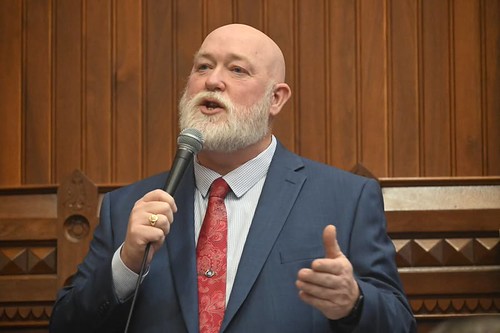
Rep. Billy Buckbee
Sponsored bills
Maddy summaryHB 5829 appropriates a specific sum from the General Fund to the Department of Transportation for the 2025-2026 fiscal year to complete road improvements recommended in the October 2024 New Milford Road Safety Audit report. This bill directly affects road safety in the town of New Milford by funding specific infrastructure changes identified in the audit. The key provision requires the Department of Transportation to complete these recommended road work projects in a timely manner. The bill focuses solely on providing funding and a timeline for implementing the safety audit's findings.
Maddy summaryHB 5942 (2025) would amend Connecticut law to permit electric suppliers to purchase renewable energy credits from providers outside the state. This change directly affects electric utilities and energy providers operating in Connecticut by expanding their allowable sources for meeting renewable energy requirements. The key provision removes current restrictions, allowing suppliers to source these credits from out-of-state renewable energy projects. The bill focuses solely on enabling this purchasing option without altering existing renewable energy targets or requirements.
Maddy summarySB 381 appropriates funds from the General Fund to reimburse Connecticut municipalities for property tax revenue lost when veterans qualify for tax exemptions under state law (section 12-81, subdivision 83). It directly affects towns and cities that grant these exemptions, compensating them for the revenue shortfall caused by the exemption program. The bill provides a specific funding mechanism to ensure municipalities are not financially harmed by offering this benefit to veterans. This is a straightforward reimbursement measure, not a policy change to the exemption itself.
Maddy summaryHB 5211 updates Connecticut's financial regulations by repealing and replacing the definitions within the state's money transmission laws to include virtual currency and related digital assets. The bill directly affects money transmission businesses, their owners, and employees by formally defining terms such as "virtual currency," "money transmission," and "authorized delegate" to ensure these modern financial activities are covered under existing rules. A key provision clarifies who counts as a "control person" or "key individual" by specifying ownership thresholds and family relationships, while also distinguishing between active managers and passive investors. These changes aim to provide clear legal guidelines for how licensed entities must operate and report transactions involving digital currencies and electronic payment instruments.
Maddy summaryThis bill restricts the intentional addition of PFAS chemicals to a wide range of consumer products, including mattresses, clothing, cosmetics, and cleaning supplies, effective October 1, 2024. It defines specific categories such as children's products, outdoor apparel, and cookware to clarify which items are subject to the new limits while excluding certain uses deemed essential for health and safety. Manufacturers must ensure that PFAS are not deliberately included in these goods unless they are unavoidable for the product's function and no safer alternative exists. The legislation also establishes clear definitions for terms like "intentionally added" and "currently unavoidable use" to guide regulatory enforcement.
Maddy summaryThis bill updates state laws to improve healthcare accessibility for people with disabilities by requiring facilities to consider federal accessibility standards when buying medical equipment. It mandates that healthcare providers, including hospitals and clinics, purchase diagnostic equipment like X-ray machines and examination tables that comply with these standards. Starting in 2025, facilities with two or more exam rooms must ensure at least one room is spacious enough for wheelchairs and is equipped with lifts to help patients reach medical devices. The Department of Public Health will also send annual notifications to providers about these accessibility requirements and post the information online.
Maddy summaryThis bill updates the rules for when Connecticut financial institutions must share customer financial records with government officials. It specifically requires banks and similar institutions to provide records to the Commissioner of Social Services or their designated agents within twenty calendar days of receiving a formal request. The law also clarifies that failing to comply with these specific disclosure mandates will no longer be treated as a criminal misdemeanor. Additionally, the bill outlines other situations where financial records can be legally shared, such as in response to court orders or requests from tax authorities.
Maddy summaryThis bill directs the University of Connecticut Health Center's Department of Neurology to conduct a study on migraine treatments specifically for women and veterans. The study must be completed by July 1, 2025, with the results reported to state legislative committees responsible for public health and budget matters. This legislation does not change existing healthcare laws or funding but establishes a requirement for the university to investigate and share findings on this specific medical topic.
Maddy summaryThis bill establishes new rules for wheelchair dealers in the state to ensure timely repairs and better customer service for people who use wheelchairs. Effective October 1, 2024, dealers selling or leasing wheelchairs must fix them within ten days of a request and provide home repairs for specialized medical wheelchairs upon demand. The law also requires dealers to maintain a phone line for repair requests, respond within one business day, and keep enough parts in stock to complete repairs efficiently. Dealers can charge fees for out-of-warranty repairs but cannot penalize customers for defects caused by abuse or neglect. Violations of these requirements will be treated as unfair trade practices and may result in penalties for those who contract with the Department of Social Services.