Maddy summaryThis bill requires Connecticut municipalities to register their fire protection entities in a national system and create local fire protection plans detailing how fire services are provided, including staffing levels, response times, and mutual aid agreements. The State Fire Administrator will review these plans and assign ratings, with unsatisfactory-rated municipalities required to submit improvement plans with state assistance. Additionally, the bill updates the state commission's authority to set firefighter education standards, establish training programs, and develop specialized training for responding to incidents involving individuals with autism spectrum disorder or cognitive impairments.

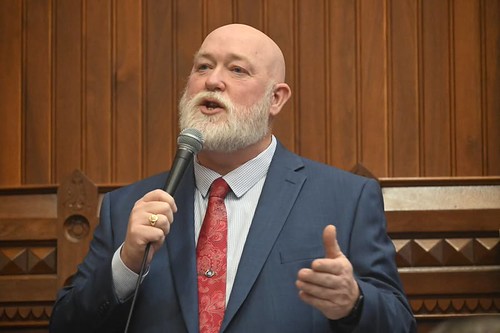
Rep. Billy Buckbee
Sponsored bills
Maddy summaryHB 5374 requires individual health insurance policies in Connecticut that cover chemotherapy to also provide coverage for scalp cooling systems used to prevent hair loss during treatment. This applies to policies delivered, renewed, or continued on or after January 1, 2027, and mandates coverage "at least equivalent to such coverage provided under Medicare." The bill specifically targets policies covering certain chemotherapy-related treatments, directly affecting patients receiving chemotherapy who may use scalp cooling systems. It does not apply to group plans or other insurance types, focusing solely on individual health insurance policies meeting the specified coverage criteria.
Maddy summaryHB 5313 requires the Chief Court Administrator to develop a plan by January 1, 2027, creating uniform state-wide case identification codes for domestic violence cases across three state systems: the Judicial Branch, Division of Criminal Justice, and Department of Emergency Services. The codes must consistently track all domestic violence cases (defined as family violence between household members under state law) in electronic case files, improving statewide data collection for reporting and policy analysis while maintaining confidentiality. This plan must be reported to legislative committees by February 1, 2027. The bill directly affects how state agencies track and manage domestic violence case data, aiming to standardize identification without changing legal definitions or services.
Maddy summaryHB 5142 allows residents in nursing homes and residential care facilities to use their own technology for virtual visits with family or for third-party monitoring, provided they cover all costs (purchase, maintenance, etc.). Residents must follow privacy rules, including placing a door notice, obtaining roommate consent in shared rooms, and filing written notice with the facility. Facilities must provide free internet and power for this technology, though they may charge private-pay residents for unreimbursed infrastructure costs. The bill exempts basic phones or tablets used primarily for calls and requires written roommate consent for shared-room monitoring.
Maddy summarySB 246 requires Connecticut's Energy and Environmental Protection Commissioner to study natural gas rates for commercial and agricultural customers with intermittent peak demand. The study will examine whether demand charges - fees based on peak usage - unfairly increase costs for these customers. If the commissioner finds such charges are unfair, they must recommend how to adjust them. The commissioner must submit a final report with findings and recommendations to the legislature by January 15, 2027. This bill does not change current rates but mandates an evaluation to inform potential future adjustments.
Maddy summaryHB 5283 authorizes Connecticut municipalities to ban pet shops from selling dogs, cats, and rabbits. The bill amends state law to allow local governments to prohibit these sales in pet shops (defined under section 22-327) without requiring them to do so. It takes effect October 1, 2026, and directly affects pet shops currently selling these animals and local governments choosing to adopt such restrictions. The policy change provides municipalities with a specific legal mechanism to regulate pet shop sales, focusing on dogs, cats, and rabbits.
Maddy summarySB 373 would allow volunteer firefighters, volunteer fire police officers, and volunteer ambulance members in Connecticut to deduct stipends they receive for their service from their state personal income tax. The bill amends the state tax code to add these stipends as a deductible expense, effective January 1, 2027. This change directly affects individuals who serve on volunteer emergency response teams and receive monetary stipends for their work. The provision aligns with existing tax deductions for certain income types but specifically targets volunteer emergency service compensation. It does not change federal tax treatment of these stipends.
Maddy summarySB 377 creates a personal income tax deduction in Connecticut for military personnel who receive compensation for serving on funeral honor guard details. It directly affects active-duty and reserve military members who are paid for this duty, allowing them to deduct that specific compensation from their taxable income. The deduction applies to amounts already counted as federal taxable income, reducing Connecticut tax liability for this income. The change takes effect for tax years beginning January 1, 2027.
Maddy summarySB 244 requires the Commissioner of Energy and Environmental Protection to study the market for renewable energy certificates (RECs) issued by the New England Power Pool system. The study must examine how RECs support renewable energy development, current market trends in supply/demand/pricing, and whether RECs deliver environmental or grid benefits. The Commissioner must submit a report to the legislature by March 1, 2027, detailing findings on these aspects. This bill does not change existing law but mandates a review to inform future policy decisions.
Maddy summaryHB 5407 creates a state reimbursement program for Connecticut municipalities that lose property tax revenue when veterans with a 100% service-connected disability rating (as determined by the U.S. Department of Veterans Affairs) receive property tax exemptions. Municipalities must annually submit certified claims by July 1 to the Office of Policy and Management, detailing lost tax revenue from this exemption. The state will review claims and pay municipalities by December 31 each year, starting January 1, 2027. This directly affects towns, cities, and boroughs that administer local property taxes.