Maddy summarySB 779 allows retired teachers to return to full-time teaching in public schools without their reemployment salary affecting their pension calculations. The bill amends Connecticut General Statute §10-183v to explicitly permit this reemployment by local and regional school boards. It directly affects retired educators who wish to return to teaching and school districts seeking to address staffing needs. The key provision removes the previous restriction that required such salary to be included in pension computations. This change creates a straightforward policy adjustment to facilitate rehiring retired teachers.
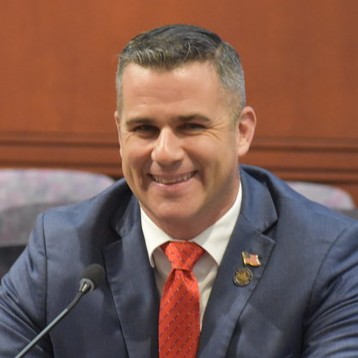
Rep. Greg Howard
Sponsored bills
Maddy summarySB 1154 requires Connecticut's Department of Energy and Environmental Protection (DEEP) to develop a phase-out plan for helium used in filling helium-filled balloons by October 1, 2025. The plan must end all helium use for these balloons in the state by December 31, 2027, and DEEP must report progress to the Environment Committee by February 1, 2026. The bill directly affects helium manufacturers, distributors, and balloon sellers by mandating a timeline for transitioning away from helium. It does not impose direct costs or new regulations on businesses but requires DEEP to coordinate with the helium industry to create the phase-out schedule.
Maddy summaryHB 5749 requires new residential and commercial developments, major renovations (increasing wastewater by 25%+), and replacements of failing systems in "environmentally sensitive areas" to install nitrogen-reducing septic systems. These systems must meet performance standards set by the Department of Public Health and undergo annual inspections. The bill applies to properties in designated zones at risk from nitrogen pollution, such as coastal areas, watersheds, and near drinking water sources. It takes effect October 1, 2025, with departments required to establish standards and designate sensitive areas by March 2026.
Maddy summarySB 647 establishes a systems benefits charge to fund energy affordability programs, directly affecting all electricity customers in Connecticut. The bill requires the Public Utilities Regulatory Authority to set this annual charge (effective July 1, 2025), with funds directed to specific programs like Operation Fuel for energy assistance, hardship protection measures, low-income conservation initiatives, and energy efficiency programs. It replaces an older funding mechanism and specifies exact allocations, including $2.1 million annually for energy assistance (with $200,000 for administrative costs). The bill does not change electricity rates but redirects existing funding to support vulnerable households and energy programs.
Maddy summaryHB 5026 exempts the sale, storage, use, and consumption of aircraft weighing less than 6,000 pounds (maximum certificated takeoff weight) from state sales and use taxes. This change directly affects owners, buyers, and sellers of small aircraft, such as personal or small business planes. The bill amends existing tax law to create a uniform exemption for this category of aircraft, removing a tax burden previously applied to their purchase and use. It does not apply to larger aircraft or other taxable items.
Maddy summaryHB 5037 establishes the Connecticut Connect 700 Program to create new state government hiring pathways for people with disabilities. The bill requires the state to offer up to 700 hours of paid on-the-job trial work experience to qualifying individuals, allowing them to demonstrate skills before permanent hiring. This program directly affects state agencies and job seekers with disabilities by promoting inclusive hiring, reducing workforce turnover, and increasing diversity in state employment. The key mechanism is the structured trial period designed to foster economic self-sufficiency while helping the state build a more diverse workforce.
Maddy summaryHB 6761 prohibits individuals charged with severe animal cruelty - specifically cases involving violence, starvation, or death of an animal - from using accelerated rehabilitation programs. These programs typically allow offenders to avoid criminal penalties through rehabilitation instead of trial. The bill amends Section 54-56e of the general statutes to explicitly exclude such serious animal cruelty charges from eligibility for this alternative. It directly affects defendants facing these specific felony-level animal cruelty charges in court. The change ensures these cases proceed through standard judicial processes rather than alternative resolutions.
Maddy summaryThis bill establishes the Mystic Aquarium Animal Rescue Fund to support the aquarium's work rescuing, rehabilitating, and releasing stranded marine mammals. Funded through annual state appropriations from the General Fund, the money will directly support the aquarium's rescue operations, educational outreach programs, and marine conservation research. The fund specifically targets marine mammal welfare and scientific efforts, benefiting the Mystic Aquarium's program and broader coastal conservation initiatives in Connecticut.
Maddy summaryHB 6510 would allow state and local police to hold undocumented immigrants for up to 48 hours without a court warrant if they are charged with a class A, B, or C felony or a crime of family violence, based solely on an ICE detainer request. This directly affects undocumented immigrants facing these specific criminal charges. The bill's key provision removes the requirement for a judicial warrant to temporarily detain such individuals while ICE processes their custody request. It does not change immigration status or lead to deportation but extends law enforcement's hold period for coordination with federal authorities.
Maddy summaryHB 6549 authorizes hospitals to install climate-controlled devices on emergency department exteriors for the safe, voluntary surrender of infants. These devices must include a bassinet, an automatically locking exterior door, and an alert alarm to notify staff. The bill directly affects parents in crisis who might abandon infants and hospitals that choose to implement such devices. It provides a legal, safe alternative to infant abandonment by enabling immediate staff response without requiring parents to enter the facility.