

Issue · Budget & Taxes
Budget & Taxes
Every budget & taxes bill, vote, and legislator stance in Connecticut, automatically classified by Maddy, our AI policy reader.
Total bills
366
2026 Regular Session
Top supporter
Eilish Collins Main
80% support rate
Top opponent
Cara Pavalock-D'Amato
30% support rate
Ranked legislators
10
5 support · 5 oppose
Key legislators
Who's moving budget & taxes in Connecticut
| Legislator | Party | Stance | Support rate | Votes |
|---|---|---|---|---|

Eilish Collins Main
House · District 146
|
D |
Strong +
|
80% | 21 |

Jonathan Steinberg
House · District 136
|
D |
Strong +
|
80% | 25 |

Maryam Khan
House · District 5
|
D |
Support
|
75% | 27 |

Fred Gee
House · District 126
|
D |
Support
|
73% | 26 |

Raghib Allie-Brennan
House · District 2
|
D |
Support
|
73% | 26 |

Cara Pavalock-D'Amato
House · District 77
|
R |
Oppose
|
30% | 25 |

Anne Dauphinais
House · District 44
|
R |
Oppose
|
31% | 28 |

Donna Veach
House · District 30
|
R |
Oppose
|
31% | 28 |
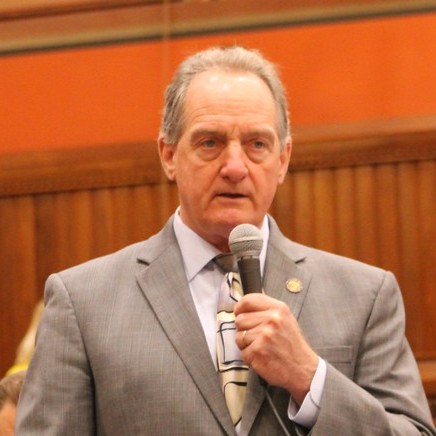
John Piscopo
House · District 76
|
R |
Oppose
|
31% | 28 |

Mark DeCaprio
House · District 48
|
R |
Oppose
|
31% | 28 |
Showing 241–250 of 366
bills
All budget & taxes bills
SB 209: AN ACT INCREASING MEDICAID REIMBURSEMENT RATES FOR NEPHROLOGY SERVICES.
Topics
✓ Budget & TaxesSupports Budget & TaxesIncreases state Medicaid spending for kidney care services, directly funding essential healthcare programs through higher reimbursement rates (80% of Medicare), impacting state budget costs.
✓ HealthcareSupports HealthcareIncreases Medicaid reimbursement rates for nephrology services to 80% of Medicare rates, aiming to improve provider participation and patient access to kidney care without altering coverage.
HB 5076: AN ACT CONCERNING THE REBASING OF THE EDUCATION COST SHARING GRANT FORMULA FOR PURPOSES OF PROPERTY TAX RELIEF.
Topics
✓ Budget & TaxesSupports Budget & TaxesIncreases state education funding with inflation adjustments, allowing municipalities to reduce property tax rates by the exact amount of increased aid, directly lowering local tax burdens for residents.
✓ EducationSupports EducationIncreases state education grants from $11,525 to $18,681 over 5 years with inflation adjustments, directly boosting school funding and enabling property tax relief for residents.
SB 69: AN ACT ELIMINATING THE EARNED INCOME TAX CREDIT.
Topics
✗ Budget & TaxesOpposes Budget & TaxesEliminates EITC, a refundable tax credit for low-income working families, directly reducing financial support for this group.
✗ Labor & EmploymentOpposes Labor & EmploymentEliminates EITC, a refundable tax credit for low-income workers, reducing financial support for qualifying families. Directly weakens worker benefits.
HB 5087: AN ACT ESTABLISHING PERSONAL INCOME TAX DEDUCTIONS FOR TIPS OR GRATUITIES AND OVERTIME PAY.
Topics
✓ Budget & TaxesSupports Budget & TaxesBill creates state tax deduction for tips/overtime (mirroring federal treatment), reducing taxable income for service industry workers. This provides direct tax relief for lower/middle income earners in affected industries.
✓ Labor & EmploymentSupports Labor & EmploymentCreates tax deduction for tips/overtime, increasing take-home pay for service workers, directly supporting wage benefits under Labor & Employment policies.
HB 5105: AN ACT EXEMPTING HANDICAP RAMPS FOR RESIDENTIAL USE FROM THE SALES AND USE TAXES.
Topics
✓ Budget & TaxesSupports Budget & TaxesExempts residential handicap ramps from sales tax, providing direct tax relief for homeowners with disabilities (a lower-income group) by reducing a specific tax burden.
✓ HousingSupports HousingExempts residential handicap ramps from sales tax, reducing costs for homeowners with disabilities and increasing housing accessibility for a vulnerable group.
HB 5175: AN ACT CONCERNING FUNDING TO HIRE AUDITORS AT THE DEPARTMENT OF REVENUE SERVICES.
HB 5017: AN ACT CONCERNING THE PROPERTY TAX CREDIT AGAINST THE PERSONAL INCOME TAX FOR A PRIMARY RESIDENCE OR MOTOR VEHICLE.
HB 5194: AN ACT AUTHORIZING BONDS OF THE STATE FOR THE NEW ENGLAND SCIENCE AND SAILING FOUNDATION.
Sub-Topics
Debt & Bonds
SB 213: AN ACT CONCERNING FUNDING FOR THE 9-8-8 SUICIDE PREVENTION AND MENTAL HEALTH CRISIS LIFELINE AND THE 2-1-1 INFOLINE PROGRAM.
Topics
✓ Budget & TaxesSupports Budget & TaxesImposes $0.25 monthly telecom fee to fund mental health crisis programs, creating dedicated revenue stream instead of annual appropriations.
✓ HealthcareSupports HealthcareFunds mental health crisis services (9-8-8) and health info line (2-1-1) via dedicated fee, advancing mental health support.
Sub-Topics
Mental Health