Issue · Labor & Employment

Labor & Employment

Every labor & employment bill, vote, and legislator stance in Colorado, automatically classified by Maddy, our AI policy reader.

Total bills
34
2026 Regular Session
Top supporter
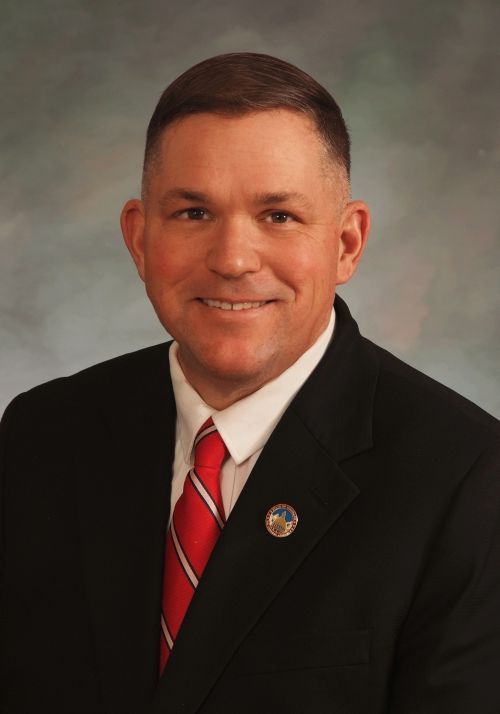
Kyle Brown
100% support rate
Top opponent
Scott Bottoms
0% support rate
Ranked legislators
10
5 support · 5 oppose
Key legislators

Who's moving labor & employment in Colorado

Legislators moving labor & employment in Colorado
Legislator Party Stance Support rate Votes
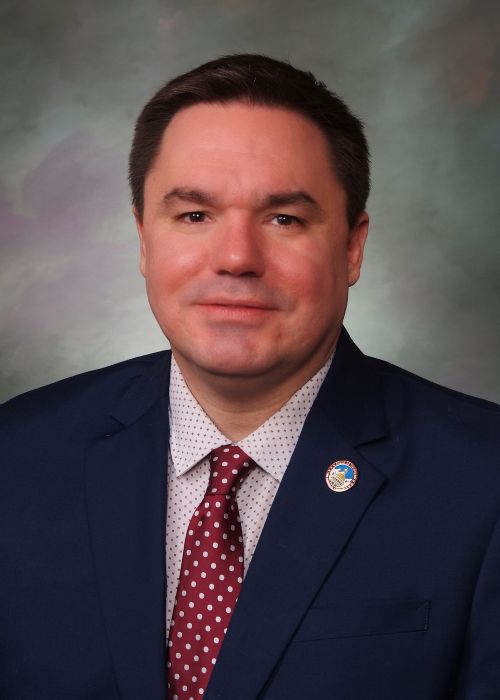
Kyle Brown
Kyle Brown House · District 12
D
Strong +
100% 169
Chad Clifford
Chad Clifford House · District 37
D
Strong +
100% 159
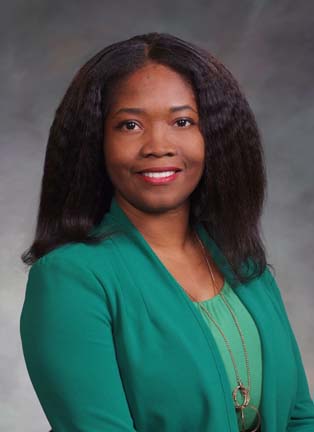
Junie Joseph
Junie Joseph House · District 10
D
Strong +
100% 176
Jeff Bridges
Jeff Bridges Senate · District 26
D
Strong +
100% 43
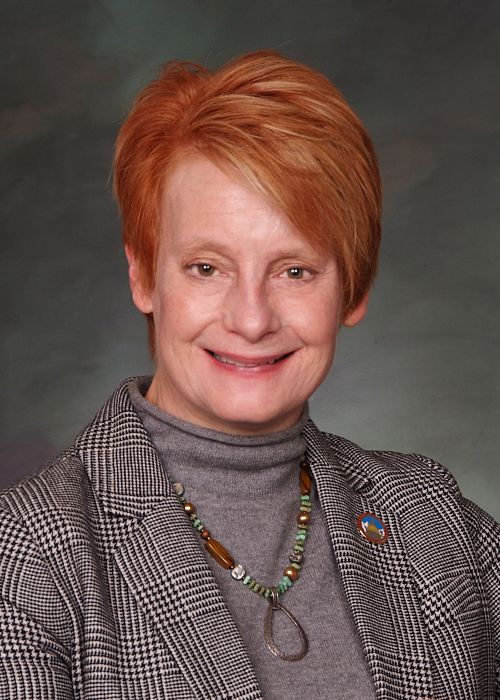
Amy Paschal
Amy Paschal House · District 18
D
Strong +
100% 150
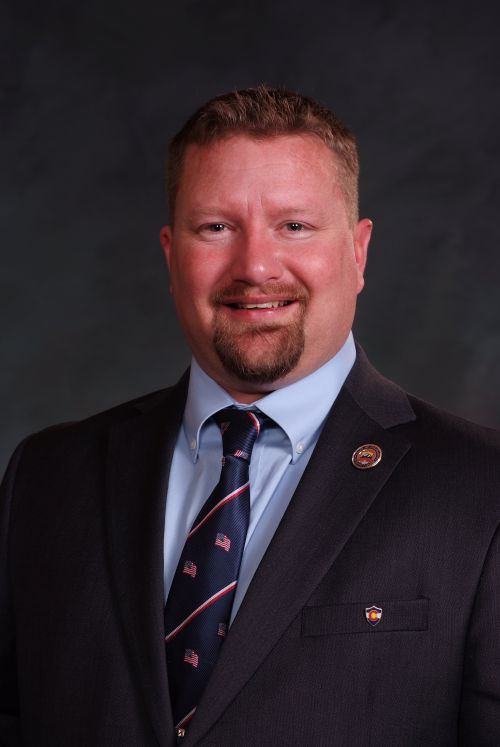
Scott Bottoms
Scott Bottoms House · District 15
R
Strong −
0% 161
Lynda Zamora Wilson
Lynda Zamora Wilson Senate · District 9
R
Strong −
0% 31
Ron Weinberg
Ron Weinberg House · District 51
R
Strong −
0% 140
Ava Flanell
Ava Flanell House · District 14
R
Strong −
0% 157
Scott Slaugh
Scott Slaugh House · District 64
R
Strong −
0% 139
Showing 31–34 of 34 bills

All labor & employment bills

signed · Colorado · Senate Apr 6, 2026

SB 39: Fire and Police Pension Association Disability and Survivor Benefits

The fire and police pension association (association) provides disability retirement and survivor benefits (disability and survivor benefits) for eligible members of the association (members) who become disabled or die. The act recodifies and reorganizes the disability and survivor benefits statutes, removes outdated provisions, and clarifies ambiguous language. In addition, the act makes the following modifications to the disability and survivor benefits statutes:Removes the current requirement that the association require every member who applies for disability retirement benefits to have 3 independent medical exams and instead authorizes the board of the association (board) to appoint a medical advisor to assess the needs of each applicant for disability retirement benefits;Authorizes the board to adopt rules to streamline the appeal process for disability retirement benefit applicants who are denied benefits;Allows the association to require a member who is occupationally disabled to participate in a rehabilitation and retraining program to help the member gain additional skills and knowledge so the member can earn a wage doing a job other than being a police officer or firefighter;Clarifies that a member who is a total disability retirement benefit recipient will begin receiving a cost of living adjustment when the member starts receiving a total disability retirement benefit;Clarifies eligibility for a member to apply for disability retirement benefits; Repeals the statute that makes an employer liable for the payment of disability retirement benefits if a member's disability existed at the commencement of employment, the employment was not ordered by a court, and the employer failed to require the member to complete and file a health history form prior to commencing employment; andRequires members to fill out a health history form, which notifies the association of any preexisting health conditions, prior to employment.     The act does not change the amounts of disability retirement and survivor benefits or the length of time a member must be employed to be eligible for a benefit, nor does it require additional money from the state, employers, or members.(Note: This summary applies to this bill as enacted.)
Sub-Topics Retirement Benefits
passed · Colorado · House May 13, 2026

HB 1054: Protections for Worker Safety

Section 1 of the bill requires an employer to ensure the employer's workplace is free from recognized hazards, as interpreted consistent with the federal occupational safety and health administration's interpretation of the general duty clause of the 'Occupational Safety and Health Act of 1970' (OSH Act) as of September 1, 2025. Additionally, employers have the general duty to:Ensure that each workplace is constructed, equipped, arranged, operated, and conducted as to provide reasonable and adequate protection to the lives, health, and safety of all individuals employed or working in the workplace; andComply with standards for workplace health and safety adopted by rule by the division of labor standards and statistics in the department of labor and employment (division) attorney general.     The bill authorizes the following actions to address workplace health and safety concerns:The attorney general or the division may refer workplace health and safety concerns to relevant state or local authorities;The attorney general, the division, a labor organization, a worker organization, or a person aggrieved by a violation of the bill may file a civil action;For each violation of the bill or of rules adopted pursuant to the bill, a court may order the person an employer that violates the bill or rules to pay statutory damages to a person aggrieved by the violation; andA court may order a person an employer that violates the bill or rules adopted pursuant to the bill to pay a penalty to the attorney general for each violation.     The bill creates the workplace health and safety fund (fund) into which penalties collected pursuant to the bill are credited. The money in the fund may be used by the division attorney general for specified purposes.     The bill authorizes the division attorney general to adopt rules:To replace any requirement of the OSH Act or the 'Federal Mine Safety and Health Act of 1977' that is repealed or revoked; or amended in any manner that results in the federal protections of workers' rights or worker safety becoming less stringent; and      To define standards for workplace health and safety if there is no standard in effect under the OSH Act; andAs necessary to implement the bill.      Section 2 authorizes the attorney general to apply to the appropriate district court for an order for specified relief if a person fails to obey an investigative demand, subpoena, warrant, or other investigative process related to worker and employee protection.      Sections 2 3 through 8 11 make conforming amendments.(Note: Italicized words indicate new material added to the original summary; dashes through words indicate deletions from the original summary.)(Note: This summary applies to the reengrossed version of this bill as introduced in the second house.)
vetoed · Colorado · House May 28, 2026

HB 1005: Worker Protection Collective Bargaining

The act makes the following changes to the 'Labor Peace Act':Specifies that employees' right to bargain collectively includes the right to bargain collectively concerning any mandatory subject of bargaining;Eliminates the requirement for a second election to negotiate a union security agreement clause in the collective bargaining process;Declares that it is not an unfair labor practice for an employer to refuse to agree to a lawful proposal made by the exclusive representative of the employees, or for the exclusive representative of the employees to refuse to agree to a lawful proposal made by the employer, concerning a mandatory subject of bargaining if the refusing party has bargained in good faith with the other party; andRequires employers and employees, through their exclusive representative, to bargain in good faith.(Note: This summary applies to this bill as enacted.)
signed · Colorado · House Jun 2, 2026

HB 1010: Older Adult Support & Representation in Workforce

The act increases participation, representation, and support for individuals 55 years old or older in the Colorado workforce and in organizations related to employment and the workforce by:Beginning in 2027, requiring the state work force development council (council), the Colorado commission on the aging, and other entities to meet twice a year, collect data, and work collaboratively on issues related to individuals in the workforce who are 55 years old or older;Beginning in 2028, and each year thereafter, requiring the department of labor and employment and the department of human services to jointly submit a report compiling the data collected by the council, the Colorado commission on the aging, and other entities to the general assembly and requiring the department of labor and employment, during the department's annual 'SMART Act' hearings, to summarize the report to certain legislative committees; andRequiring that the council, the commission on higher education, and the advisory committee to the commission on higher education, or their successor entities, each have at least one member serving on their governing entity that is at least 55 years old and either is actively involved in or has interest, knowledge, or experience in advocating for the interests of individuals who are 55 years old or older as related to the functions of each entity.(Note: This summary applies to this bill as enacted.)
Sub-Topics Apprenticeships Tags Seniors
Showing 31 to 34 of 34 bills
Previous 1 2 3 4