Issue · Education

Education

Every education bill, vote, and legislator stance in Colorado, automatically classified by Maddy, our AI policy reader.

Total bills
71
2026 Regular Session
Top supporter
Lorena García
100% support rate
Top opponent
Lisa Frizell
8% support rate
Ranked legislators
10
5 support · 5 oppose
Key legislators

Who's moving education in Colorado

Legislators moving education in Colorado
Legislator Party Stance Support rate Votes
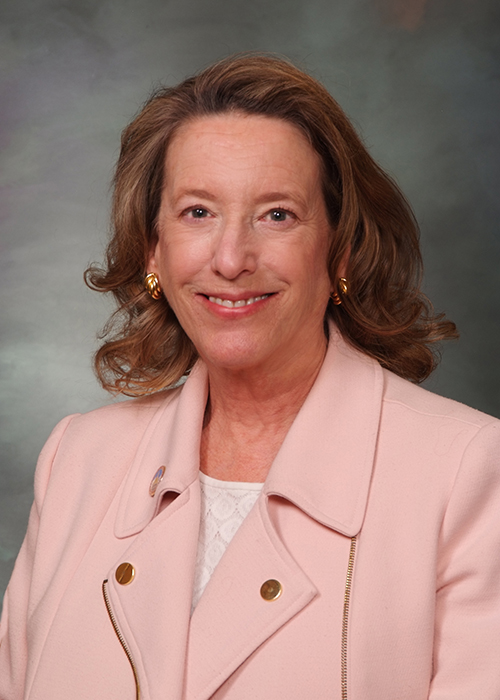
LG
Lorena García House · District 35
D
Strong +
100% 20
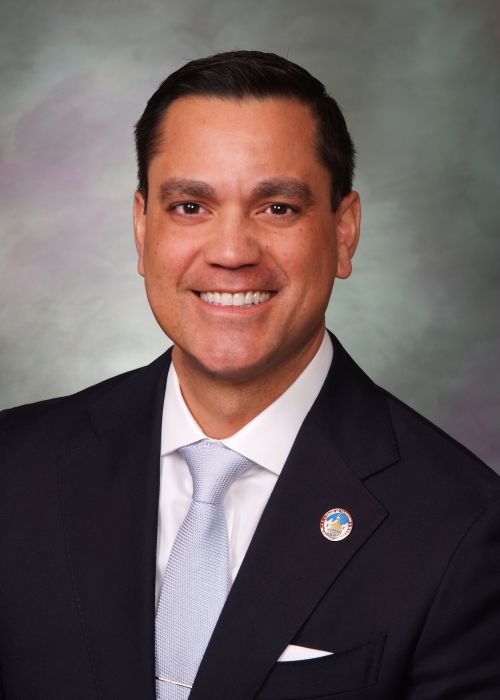
Marc Snyder
Marc Snyder Senate · District 12
D
Strong +
100% 13
Regina English
Regina English House · District 17
D
Strong +
94% 85
Rebekah Stewart
Rebekah Stewart House · District 30
D
Strong +
93% 106
Sean Camacho
Sean Camacho House · District 6
D
Strong +
93% 102
Lisa Frizell
Lisa Frizell Senate · District 2
R
Strong −
8% 18
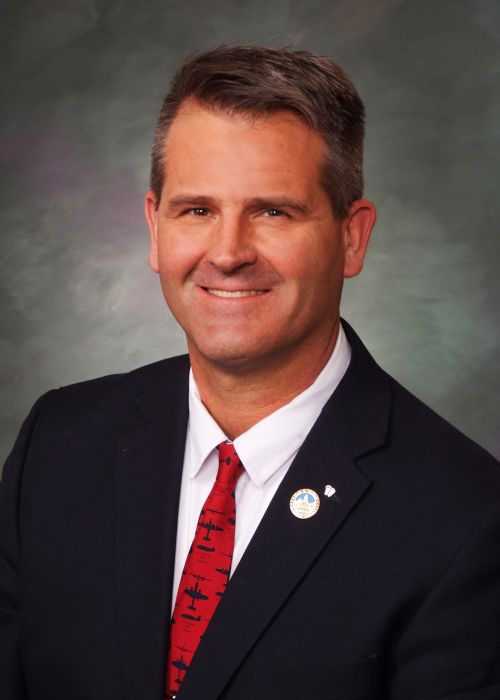
Ken DeGraaf
Ken DeGraaf House · District 22
R
Strong −
9% 84
Scott Bottoms
Scott Bottoms House · District 15
R
Strong −
10% 118
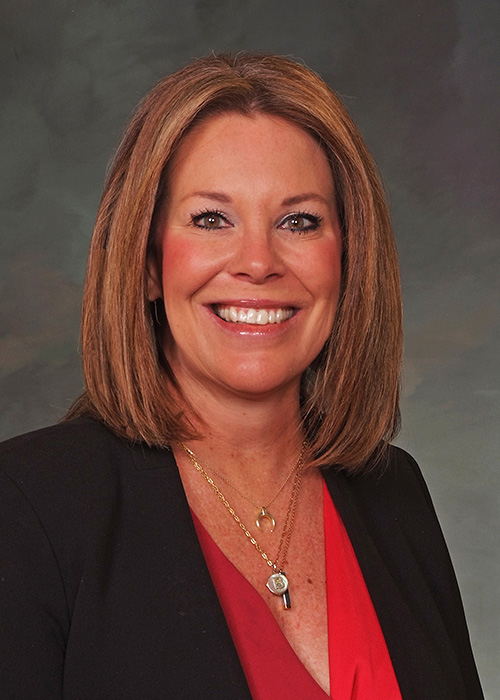
Brandi Bradley
Brandi Bradley House · District 39
R
Strong −
13% 111
Max Brooks
Max Brooks House · District 45
R
Strong −
15% 108
Showing 51–60 of 71 bills

All education bills

signed · Colorado · Senate Apr 20, 2026

SB 126: Licensure for Experienced Out-of-State Teachers

The act allows the state department of education (CDE) to issue a professional teacher license to a teacher with at least 3 years of successful teaching experience in another state or country for which CDE has granted reciprocity. The act eliminates the requirement that an applicant have the successful teaching experience within the previous 7 years.     The act creates a temporary licensing process for teachers from states that participate in the 'Interstate Teacher Mobility Compact' (Compact). The process requires that CDE:Issue an initial teacher license within 30 days of receiving a complete teacher license application from a person licensed by a Compact state when the applicant passes a criminal history record check and holds an unencumbered eligible license issued by a Compact state that is equivalent to an eligible license in Colorado; and Publish an annual table showing how out-of-state licenses correspond to Colorado endorsement areas.     The act repeals the temporary licensing process when CDE begins issuing licenses pursuant to the Compact.(Note: This summary applies to this bill as enacted.)
Sub-Topics Teachers
signed · Colorado · House Jun 3, 2026

HB 1143: Non-Employment Educational Opportunities Background Check Information

The act requires an entity that requires an individual to provide a social security number for a background check for a non-employment-based educational opportunity to accept an individual's taxpayer identification number in lieu of a social security number, including in clinical educational experiences for health-related academic programs, subject to certain exceptions.     A licensed or certified hospital or covered school, or a state institution of higher education or local district college that offers a non-employment-based educational opportunity that involves work with a vulnerable population, shall accept either an applicant's taxpayer identification number or a fingerprint-based background check in lieu of a social security number.     An applicant for a non-employment-based educational opportunity that involves work with a vulnerable population at a licensed or certified hospital or covered school, or a state institution of higher education or local district college, is permitted to have their fingerprints taken by a local law enforcement agency or an entity approved by the Colorado bureau of investigation for taking fingerprints for the purpose of a background check. A licensed or certified hospital or covered school, or state institution of higher education or local district college, must determine who pays the fee for the fingerprint-based background check.     The attorney general is authorized to bring a civil action to enforce the provisions of the act. An entity that violates this act is subject to a civil penalty of $2,000 for the first violation and $5,000 for each subsequent violation.(Note: This summary applies to this bill as enacted.)
Sub-Topics Higher Education
signed · Colorado · House Jun 1, 2026

HB 1299: Reducing Regulatory Burden on Education Providers

The act requires the Colorado bureau of investigation to transmit a list of missing children to the Colorado department of education (department) instead of each school district and requires the department to notify the bureau if the department's list of enrolled students includes information about a missing child.     The act repeals the requirement for a school district, board of cooperative services, district charter school, or institute charter school to have paper and pencil assessment policies for state-administered assessments in public schools.     The act allows a school district or a charter school network with 1,200 students or fewer to submit a single plan to satisfy school district, school network, or school accreditation plan requirements.     The act prohibits the department from representing as mandatory a voluntary data collection request to a school district, the state charter school institute, or a public school and prohibits the department from conditioning any benefit unrelated to a specific grant on the completion of a voluntary data collection request.(Note: This summary applies to this bill as enacted.)
signed · Colorado · Senate Jun 4, 2026

SB 80: Cradle to Career Grant Program Creation

The act creates the cradle to career grant program (grant program) in the department of human services (CDHS) to provide grants to a local government, local education provider, state institution of higher education, Indian tribe or tribal organization, or community-based nonprofit or not-for-profit organization (eligible entity) to promote coordinated community-based supports and services that open opportunities for economic mobility from poverty. The grant program must connect children and youth with high-quality educational and extracurricular programming and families with key health and social services in order to improve prenatal and early childhood outcomes, student achievement, workforce readiness, and wealth-building opportunities.     The act creates the cradle to career advisory council (council) to approve or disapprove CDHS's potential grant recipients and to collaborate with CDHS to develop grant program guidelines and criteria for awarding grants. Council members must be Colorado residents and must not provide financial support for the grant program.     To receive a grant, an eligible entity must submit an application that includes an economic mobility needs assessment and a comprehensive proposal to address the needs within its designated service area. The application must identify prospective community partners and subcontractors. The act caps the amount that CDHS may award in connection with a single grant application at 49% of available grant program money.     A grant recipient must comply with various health and safety, financial responsibility, and anti-discrimination safeguards. Each grant recipient must annually report to CDHS addressing the recipient's progress using a set of performance indicators to assess the economic mobility outcomes and impacts associated with the grant award. CDHS must make a related report to the health and human services committees of the general assembly and the governor each year.     CDHS may seek, accept, and expend gifts, grants, and donations for grant-program-related purposes. If CDHS does not receive $900,000 for those purposes on or before December 31, 2028, the grant program is repealed. The general assembly shall not appropriate general fund dollars for grant program operations.(Note: This summary applies to this bill as enacted.)
signed · Colorado · House Mar 26, 2026

HB 1175: State Education Fund Reading to Ensure Academic Development Act & Colorado Teacher of the Year Program

The act discontinues the annual transfers from the state education fund to the Colorado teacher of the year fund for the Colorado teacher of the year program and to the early literacy fund for specified purposes in support of the 'Colorado READ Act'. The Colorado teacher of the year fund and the early literacy fund are repealed, effective September 1, 2027.     The act permits the general assembly to appropriate money from the state education fund for the Colorado teacher of the year program and requires the general assembly to annually appropriate at least $34 million from the state education fund for the same specified purposes in support of the 'Colorado READ Act'.(Note: This summary applies to this bill as enacted.)
Sub-Topics Teachers
in committee · Colorado · House Mar 12, 2026

HB 1291: Educator Performance Evaluations

Under current law, a local board of education's (local board) or board of cooperative services' (BOCES) licensed personnel employment performance system must ensure that nonprobationary teachers receive one evaluation resulting in a written evaluation report in each academic year.The bill requires that nonprobationary teachers receive one evaluation resulting in a written evaluation report at least once every 3 academic years; except that, if a nonprobationary teacher receives a less than effective rating, the local board or BOCES may require that the nonprobationary teacher receive one evaluation that results in a written evaluation report in the next academic year.(Note: This summary applies to this bill as introduced.)
Sub-Topics Teachers
signed · Colorado · Senate Jun 1, 2026

SB 20: Child Care Provider Licensing & Quality

The act requires the executive director of the Colorado department of early childhood (CDEC) to adopt rules concerning the requirements for licensed child care facilities to maintain up-to-date employee records in the professional development information system currently administered by CDEC.     The act requires CDEC, on or before July 1, 2026, to begin phasing out its reliance on third parties to investigate and inspect facilities applying for certain types of child care licenses where feasible and to prioritize the use of CDEC personnel to conduct the investigations and inspections instead. The act exempts certain health and sanitation inspections from the phase-out. CDEC must establish standardized training, protocols, and supervision for CDEC personnel and authorized or contracted third parties.     A local governing authority that imposes requirements related to the inspection, permitting, licensing, or approval of a child care center or family child care home beyond the state-level licensing standards (local approval process) shall limit associated fees and prioritize concluding a local approval process that has been delayed or disputed.     The act creates the child care licensure task force (task force) to study and report on recommendations for a streamlined child care licensure system in the state. On or before January 1, 2027, the task force must report on its recommendations to the health and human services and education committees of the house of representatives and the senate, the governor, and CDEC. The performance of the task force's work is dependent upon the receipt of sufficient gifts, grants, and donations.(Note: This summary applies to this bill as enacted.)
Sub-Topics Early Childhood
signed · Colorado · House Jun 1, 2026

HB 1006: Thriving Institution Designations for Higher Education

On or before December 31, 2027, the act requires the department of higher education (department) to establish thriving institution designations and, on or before January 1, 2027, to establish an advisory committee to provide input to the department on the outcome and recognition standards and continuous improvements set by the department to identify institutions of higher education (institutions) that meet the requirements for one or more thriving institution designations.     The act requires the department, with input from the advisory committee, to:Identify institutions that meet the outcome and recognition standards to be designated as a thriving institution;Notify each institution that meets the outcome standards to be designated as a thriving institution and request the institution to respond within 10 calendar days with the institution's decision of whether to be recognized as a thriving institution;Post on the department's website the names of the institutions that earn a thriving institution designation and agree to be listed as a thriving institution; andNotify the general assembly of the names of the institutions that are recognized as thriving institutions.(Note: This summary applies to this bill as enacted.)
Sub-Topics Higher Education
signed · Colorado · House Jun 1, 2026

HB 1016: Continuation of Open Educational Resources Program

The act extends the repeal date of the open educational resources grant program and the Colorado open educational resources council (council) to November 1, 2031. The act increases representation from public institutions of higher education on the council from 12 to 15 members.     The act extends the requirement for the department of higher education (department) to prepare and submit an annual report regarding open educational resources to December 31, 2031.     The act appropriates $275,000 to the department for use by the Colorado commission on higher education and higher education special purpose programs.(Note: This summary applies to this bill as enacted.)
signed · Colorado · House May 4, 2026

HB 1050: Optional Individualized Readiness Plan for School

Under current law, a local education provider is required to ensure that a preschool or kindergarten student receives an individualized readiness plan (plan). The act makes it optional for local education providers to provide plans to students who demonstrate proficiency on specified assessment domains and the kindergarten reading assessment, unless the student's parent requests a plan.     Under current law, a local education provider is required to annually provide information concerning assessments to students' parents. The act requires this written notice to include:The results of the student's specified assessment domains and kindergarten reading assessment;If applicable, information explaining that because of the student's assessment results, the local education provider is not required, and does not intend, to provide a plan for the student; andLanguage indicating that the student's parent may request a plan.     Under current law, the department of education is required to submit an annual report to the education committees of the house of representatives and the senate concerning specified educational accountability requirements. One of the reporting requirements concerns the level of school readiness demonstrated by students enrolled in kindergarten. The act requires the department to report this information on a statewide basis and to disaggregate the information based on specific characteristics.(Note: This summary applies to this bill as enacted.)
Showing 51 to 60 of 71 bills
Previous 1 5 6 7 8 Next