Issue · Criminal Justice

Criminal Justice (Victims' Rights)

Every criminal justice bill, vote, and legislator stance in Colorado, automatically classified by Maddy, our AI policy reader.

Total bills
4
2026 Regular Session
Top supporter
Scott Slaugh
100% support rate
Top opponent
Matt Soper
20% support rate
Ranked legislators
10
5 support · 5 oppose
Key legislators

Who's moving victims' rights in Colorado

Legislators moving victims' rights in Colorado
Legislator Party Stance Support rate Votes
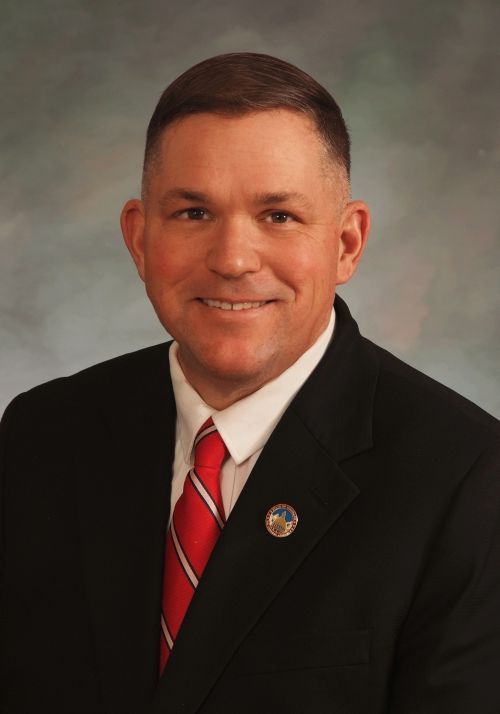
Scott Slaugh
Scott Slaugh House · District 64
R
Strong +
100% 5
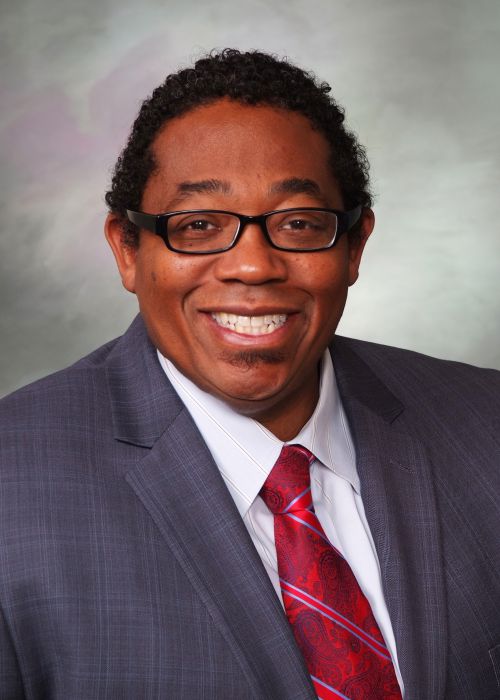
Jennifer Bacon
Jennifer Bacon House · District 7
D
Strong +
80% 5
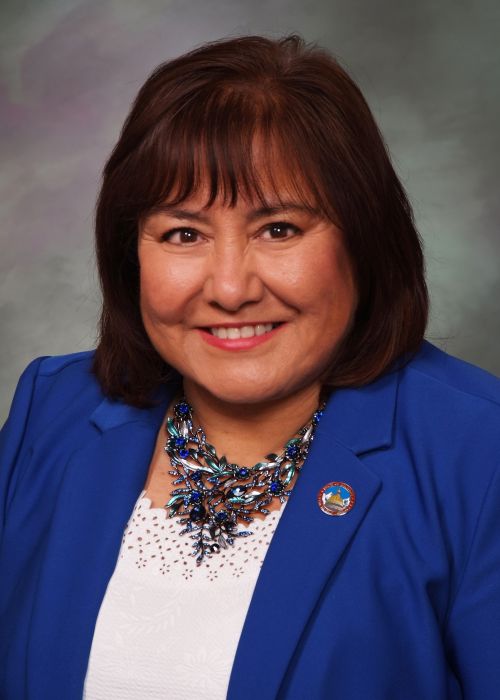
LG
Lorena García House · District 35
D
Strong +
80% 5
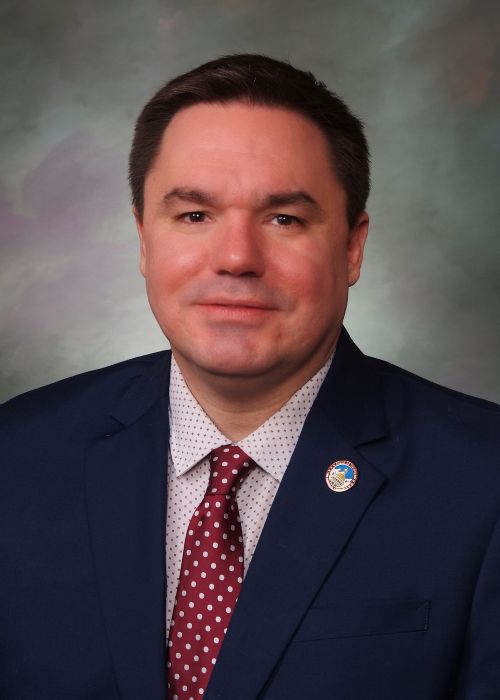
Michael Carter
Michael Carter House · District 36
D
Strong +
80% 5
Yara Zokaie
Yara Zokaie House · District 52
D
Strong +
80% 5
Matt Soper
Matt Soper House · District 54
R
Strong −
20% 5
Rebecca Keltie
Rebecca Keltie House · District 16
R
Strong −
20% 5
Ava Flanell
Ava Flanell House · District 14
R
Oppose
40% 5
Cecelia Espenoza
Cecelia Espenoza House · District 4
D
Oppose
40% 5
Chad Clifford
Chad Clifford House · District 37
D
Oppose
40% 5
Showing 4 of 4 bills

All criminal justice bills

signed · Colorado · House Jun 4, 2026

HB 1250: Procedures Related to Civil Asset Forfeiture

The act clarifies an existing requirement for the criminal conviction of a property owner by requiring that one or more criminal charges be brought as a prerequisite to any nuisance abatement or forfeiture proceeding.     Existing law provides an exception to the conviction requirement for noninnocent owners who are not subject to criminal charges that no criminal conviction is necessary of the nonowner criminal defendant if the plaintiff proves its case by clear and convincing evidence that the property subject to the forfeiture proceeding is traceable proceeds of the charged offense or related criminal activity. The act clarifies this exception to first require a conviction of the nonowner criminal defendant before the noninnocent owner's property may be forfeited, while retaining other various exceptions that allow forfeiture actions to proceed against the interest of a claimant.     The act establishes a right for indigent civil asset forfeiture defendants to access forfeiture defense counsel and creates a procedure for the appointment of forfeiture defense counsel in nuisance abatement and forfeiture proceedings. The state court administrator shall enter into a contract for services with a private contractor who regularly provides legal services for indigent clients or litigants to provide a legal defense to a civil asset forfeiture proceeding. The private contractor is subject to certain reporting requirements.     The act creates a forfeiture defense counsel fund (fund) to pay for contracted forfeiture defense counsel who are authorized to represent persons against whom a nuisance abatement or forfeiture proceeding has been filed in connection with criminal charges. The fund is capped at $500,000, and starting in state fiscal year 2027-28, no general fund money is allowed to finance the fund. The balance of the fund over $500,000 is credited to the law enforcement community services grant program fund. The act transfers any unexpended and unencumbered money from the law enforcement community services grant program fund to the forfeiture counsel defense fund.     The act alters the disposition of property and proceeds ordered forfeited in a nuisance abatement or forfeiture action. Currently, forfeited property and proceeds are applied first toward restitution and cost recovery for a list of stakeholders, and of the remainder, 50% is granted to the local governmental body with authority over the seizing agency, 25% is granted to the local behavioral health administrative services organization, and 25% is granted to the law enforcement community services grant program fund. The act amends the disposition of the remainder so that 50% is granted to the local governmental body with authority over the seizing agency, 25% is granted to the fund, and 25% is granted to the local behavioral health administrative services organization.     The act appropriates $556,750 to the judicial department from the fund for civil asset forfeiture defense contracting and $55,000 to the department of local affairs from the fund for civil asset forfeiture portal administration.(Note: This summary applies to this bill as enacted.)
signed · Colorado · House Jun 3, 2026

HB 1256: Procedures & Data Individual's Release from Department of Corrections

The act requires the department of corrections (department) to furnish an individual being discharged from the department's custody a release allowance of at least $100, free of any deductions. Beginning by September 15, 2027, and annually thereafter, the department is required to collect and report discharge data, including the number of individuals released from department correctional facilities, the number and percentage of released individuals who received the release allowance, and the total amount of money spent on release allowances. The department must issue a report to the general assembly annually. The act repeals provisions requiring the department to give an individual a ticket to leave prior to discharging the individual from a correctional facility.     The act requires eligible offenders to participate in the department's existing program to procure state-issued identification cards for offenders (program), unless the offender affirmatively opts-out of the program. Beginning by September 15, 2027, and annually thereafter, the department is required to collect data on the process of securing necessary identification documents to issue state identification cards and issue a report to the general assembly. The report must include the number and percentage of offenders released with an identification card, birth certificate, and social security number and the number and percentage of offenders who were ineligible to participate in the program and the reason for ineligibility.     The department is prohibited from charging an offender a fee to obtain a state identification card, and any fee incurred in the process of securing an offender's identification documents to create the state identification card must be assessed after the offender has been released and may be consolidated with existing restitution, fees, or other legal financial obligations owed by the offender.     The department of public health and environment shall assist the department in securing necessary identification documents.(Note: This summary applies to this bill as enacted.)
signed · Colorado · House Jun 3, 2026

HB 1052: Rights for Victims of Certain Crimes

For purposes of the 'Victim Rights Act', the act prohibits a defendant or alleged offender in the underlying case from being the 'lawful representative' of a victim or the victim's designee if the victim is a child or an at-risk adult.     The act creates new rights for a victim under the 'Victim Rights Act', including the right to:Be notified by the district attorney if the district attorney receives a notice that a crime laboratory employee engaged in a wrongful action that includes a crime against the victim and a notice that an evidentiary hearing on post-conviction petition for relief is held;Request to be referred to by an abbreviation, pseudonym, initials, or another preferred name during hearings; andBe heard at a restitution assessment hearing.(Note: This summary applies to this bill as enacted.)
Sub-Topics Courts Victims' Rights
signed · Colorado · Senate May 29, 2026

SB 12: Compensable Losses for Tribal Members

The act allows persons who are indigenous to receive compensation for traditional Native American healing ceremonies and practices and related expenses under the 'Colorado Crime Victim Compensation Act', which includes:Traditional counseling and healing from an elder or spiritual healer;Traditional ceremonial practices;Ceremonial burials, including clothing for the deceased, meals, and other related expenses;Child care during burial ceremonies;Reimbursement for honoraria provided in connection with ceremonial services; andReasonable travel expenses related to the traditional Native American healing ceremonies and practices.(Note: This summary applies to this bill as enacted.)
Sub-Topics Victims' Rights Tags Tribal Nations