






Issue · Budget & Taxes

Budget & Taxes

Every budget & taxes bill, vote, and legislator stance in Colorado, automatically classified by Maddy, our AI policy reader.

Total bills
151
2026 Regular Session
Top supporter
Matt Ball
100% support rate
Top opponent
Mark Baisley
14% support rate
Ranked legislators
10
5 support · 5 oppose
Key legislators

Who's moving budget & taxes in Colorado

Legislators moving budget & taxes in Colorado
Legislator Party Stance Support rate Votes
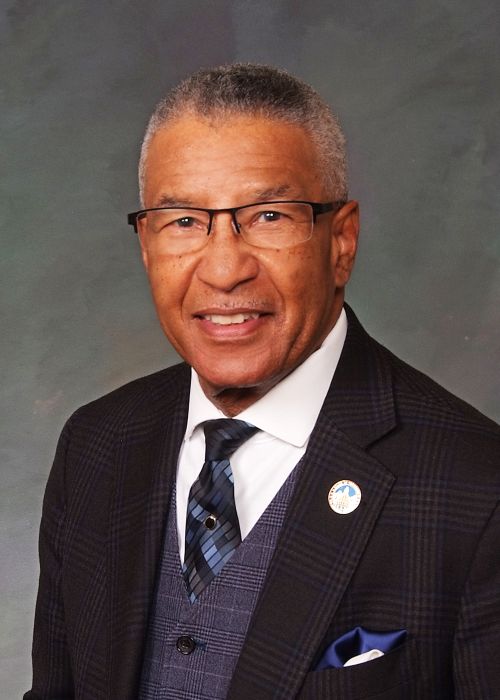
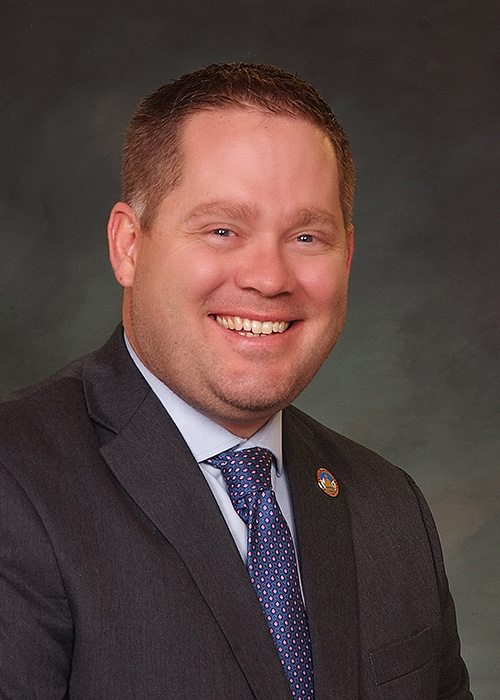
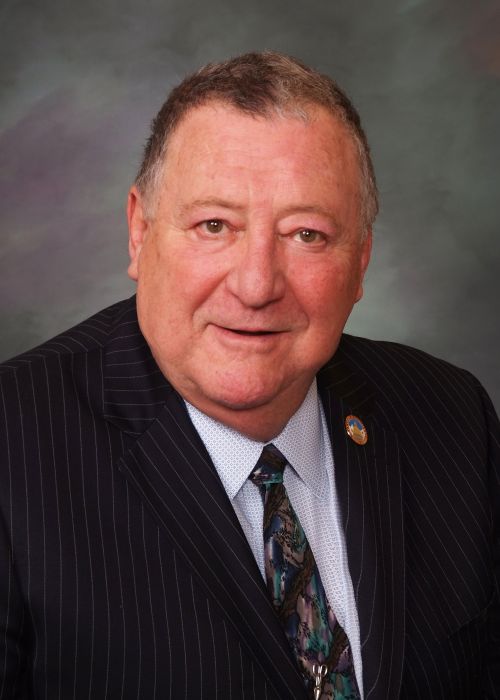
Matt Ball
Matt Ball Senate · District 31
D
Strong +
100% 32
Tony Exum
Tony Exum Senate · District 11
D
Strong +
100% 33
Kyle Mullica
Kyle Mullica Senate · District 24
D
Strong +
88% 50
Marc Snyder
Marc Snyder Senate · District 12
D
Strong +
83% 48
Julie Gonzales
Julie Gonzales Senate · District 34
D
Strong +
82% 80
Mark Baisley
Mark Baisley Senate · District 4
R
Strong −
14% 36
Brandi Bradley
Brandi Bradley House · District 39
R
Oppose
20% 194
Scott Bottoms
Scott Bottoms House · District 15
R
Oppose
21% 233
Stephanie Luck
Stephanie Luck House · District 60
R
Oppose
22% 187
Ken DeGraaf
Ken DeGraaf House · District 22
R
Oppose
23% 196
Showing 61–70 of 151 bills

All budget & taxes bills

vetoed · Colorado · House May 28, 2026

HB 1418: Online Add-on Transaction Fee Youth Service Enterprise

The act requires each covered social media platform (covered platform) to impose a fee on each add-on transaction that occurs on the covered platform. The act creates the youth mental health services access enterprise in the behavioral health administration (BHA) to use the fee revenue to operate and fund programs that provide youth mental health services. The youth mental health services access enterprise constitutes an enterprise for purposes of section 20 of article X of the state constitution.     The act defines a 'covered platform' as a sole proprietorship, a partnership, a limited liability company, a corporation, an association, or another legal entity, or an affiliate thereof, that:Conducts business in this state;Generates revenue directly from add-on transactions conducted in an online gaming service, product, or feature;Generates a majority of its annual revenue from online gaming services, products, or features;Publishes one or more online gaming services, products, or features that are reasonably likely to be accessed by a youth;Collects users' personal data or has users' personal data collected on its behalf; andDetermines the purposes and means of the processing of users' personal data.     The act defines an 'add-on transaction' as a transaction through which a player or participant in a video game accessed via an online gaming service, product, or feature acquires:An item or ability that provides the player or participant an advantage over other players or participants of the video game; orA feature that alters or enhances the video game as accessed by the online gaming service, product, or feature.     The act creates the youth mental health services access enterprise fund, consisting of money credited to the fund as fee revenue, any money received from the issuance of revenue bonds, and any other money that the general assembly may appropriate or transfer to the youth mental health services access enterprise fund. Money in the youth mental health services access enterprise fund is continuously appropriated to the youth mental health services access enterprise.     After deducting its administrative expenses, the youth mental health services access enterprise is required to allocate the remaining fee revenue credited to the fund as follows:40% to operate and fund the youth mental health peer navigator grant program, which program is created in the act;35% to operate and fund the crisis resolution team program, which program is created in the act; and25%, beginning January 1, 2028, to operate the existing youth mental health services program.     The initial amount of the fee is 5% of the amount of the add-on transaction. On and after October 1, 2027, the youth mental health services access enterprise may adjust the amount of the fee.     The act creates the youth mental health peer navigator grant program to award grants to entities that recruit and train young adults to provide prevention services, peer support, and system navigation to youth in schools or community-based settings.     The act creates the crisis resolution team program to provide community-based de-escalation and stabilization services to youth who are experiencing high-acuity behavioral health crises and to their caregivers.     Under current law, the BHA operates the youth mental health services program to facilitate access to mental health services, including substance use disorder services, for youth in response to mental health needs identified in an initial mental health screening through the program's web-based portal. The youth mental health services program reimburses providers for up to 3 mental health sessions with a youth. The act directs the youth mental health services access enterprise, rather than the BHA, to operate and fund the youth mental health services program beginning January 1, 2028. The act also allows the youth mental health services access enterprise to reimburse a provider for up to 6 mental health sessions with a youth.     The act creates the youth programming and protections enterprise to:Award grants through the existing out-of-school time program grant program; andSupport the department of education's enforcement of educational rights on behalf of children.     The youth programming and protections enterprise constitutes an enterprise for purposes of section 20 of article X of the state constitution.     The act creates the youth programming and protections enterprise fund. In each state fiscal year, after the state treasurer has credited $8 million to the youth mental health services access enterprise fund, the state treasurer must credit any other money received as fees to the youth programming and protections enterprise fund.     Under current law, the department of education administers the out-of-school time program grant program and the state board of education awards grants from the program, subject to available appropriations. The act directs the department of education to consult with the youth programming and protections enterprise in administering the out-of-school time program grant program, and the act directs the youth programming and protections enterprise to award grants from the program in consultation with the state board of education. The act also requires the out-of-school time program grant program to provide programming and services that support the mental health and well-being of children and youth.     The act requires a covered platform to ensure that the purchase price for an online gaming service, product, or feature that is reasonably likely to be accessed by a minor to be listed in United States dollars at the point of sale.     For the 2026-27 state fiscal year, the act appropriates:$294,984 to the department of revenue from the general fund;$26,500 to the department of law from reappropriated funds;$145,750 to the department of law from the youth mental services access enterprise fund created in the act; and$79,500 to the department of law from the youth programming and protections enterprise fund created in the act.(Note: This summary applies to this bill as enacted.)
signed · Colorado · House May 27, 2026

HB 1351: Healthy School Meals for All State Education Fund

During the 2023-24 and 2024-25 state fiscal years, the general assembly appropriated money from the state education fund for expenditures related to the healthy school meals for all program. The act directs the state treasurer to transfer $31,066,831 from the healthy school meals for all program cash fund (program fund) to the state education fund on July 1, 2026.     Under current law, beginning on July 1, 2026, and on each July 1 thereafter, the state treasurer is required to transfer money from the state education fund to the program fund and to the healthy school meals for all program fund account (account) within the program fund. The act delays that requirement so that the treasurer is required to transfer money from the state education fund to the program fund and to the account beginning on July 1, 2028. In addition, the act repeals reporting requirements related to money in the program fund.(Note: This summary applies to this bill as enacted.)
signed · Colorado · House Jun 3, 2026

HB 1416: Transfers to General Fund & Colorado Economic Development Fund

The act requires the state treasurer to transfer $1.2 million from the universal high school scholarship cash fund (fund) to the Colorado economic development fund and $2.3 million from the fund to the general fund on June 30, 2026.(Note: This summary applies to this bill as enacted.)
signed · Colorado · House May 29, 2026

HB 1378: Repeal Behavioral Health Resources

Current law requires the general assembly to annually appropriate $50,000 to provide vouchers to individuals living in rural and frontier communities in need of behavioral health-care services. The bill repeals the requirement to appropriate money for that purpose.     The act:Repeals the requirement that the BHA contract with an independent third party to provide services and supports to behavioral health providers seeking to become behavioral health safety net providers;Repeals the building substance use disorder treatment capacity in underserved communities grant program;Repeals the recovery support services grant program;Transfers the balance of the high-risk families cash fund (fund) to the general fund and repeals the fund on July 1, 2026; andReduces appropriations to the behavioral health administration for the affected programs and services.(Note: This summary applies to this bill as enacted.)
signed · Colorado · House Jun 1, 2026

HB 1359: Credit State Public School Fund from Natural Resources

Under current law, with certain exceptions, royalties and other payments for the depletion or extraction of a natural resource on public school lands is credited to the state public school fund, which is also known as the permanent fund.     The act requires that:For the 2025-26 state fiscal year, $25 million of this money be credited to the state public school fund; andFor the 2026-27 state fiscal year, $45 million of this money be credited to the state public school fund.(Note: This summary applies to this bill as enacted.)
signed · Colorado · House May 28, 2026

HB 1356: Repeal Local Accountability System

Under current law, as a supplement to the state accountability system in the department of education, a local accountability system may be established by a local education provider to measure the performance of public schools and school districts in achieving student success and system effectiveness. The act repeals the local accountability system law, which includes the local accountability system grant program.     The act reduces the members of the accountability, accreditation, student performance, and resource inequity task force from 26 to 25 by removing the task force member who is a superintendent who represents a rural school district that participates in the repealed local accountability system grant program.(Note: This summary applies to this bill as enacted.)
signed · Colorado · House May 27, 2026

HB 1354: Repeal Science Teacher Professional Development Program

The act repeals a professional development program for science teachers (program) on July 1, 2027. For the 2024-25 state fiscal year, the general assembly appropriated $3 million from the state education fund for the program, which money is available for expenditure through the 2026-27 state fiscal year. The act reduces the appropriation to $1.5 million.(Note: This summary applies to this bill as enacted.)
in committee · Colorado · House Apr 7, 2026

HB 1365: Repeal Medicaid Reimbursement for Equine Therapy

Joint Budget Committee. Current law authorizes medicaid reimbursement for therapy using equine movement provided by a licensed physical therapist, a licensed occupational therapist, or a certified speech-language pathologist. The bill repeals this provision and reduces the 2026-27 appropriation to the department of health care policy and financing by $181,514.(Note: This summary applies to this bill as introduced.)
signed · Colorado · House Jun 1, 2026

HB 1383: Repeal Employment Support Job Retention Program

The act changes the repeal date of the employment support and job retention services program (program) in the division of employment and training (division) in the department of labor and employment (department) from September 1, 2029, to July 1, 2026.     The state treasurer is required to transfer all unexpended and unencumbered money in the employment support and job retention services program cash fund (fund) to the general fund on June 30, 2026.     Pursuant to section 3 of the act, the appropriations made in the annual general appropriation act for the 2026-27 state fiscal year to the department for use by the division are adjusted as follows:The general fund appropriation for the fund is decreased by $250,000; andThe reappropriated funds appropriation from the fund is decreased by $250,000.     A reduction of an appropriation in the annual general appropriation act for the 2026-27 state fiscal year is not required pursuant to section 3 of the act if one of the following conditions is satisfied:The amount of the general fund appropriation to the department for use by the division for the fund is less than $250,000;The amount of the reappropriated funds appropriation from the fund to the department for use by the division for the program is less than $250,000; orThe annual general appropriation act for the 2026-27 state fiscal year does not include an appropriation to the department for use by the division for the fund or the program.(Note: This summary applies to this bill as enacted.)
signed · Colorado · House May 29, 2026

HB 1367: COVID Increased Medicaid Match to General Fund

The act recreates a provision that authorizes the state to retain the percentage of reimbursement that is in excess of the 50% federal match received for certain medicaid services provided (enhanced federal financial participation) during the COVID-19 pandemic.     The provision is repealed once the reconciliation of all reimbursements and payments for services delivered during the period of enhanced federal financial participation has been completed.(Note: This summary applies to this bill as enacted.)
Sub-Topics State Budget Medicaid
Showing 61 to 70 of 151 bills
Previous 1 6 7 8 16 Next