Issue · Budget & Taxes

Budget & Taxes

Every budget & taxes bill, vote, and legislator stance in Colorado, automatically classified by Maddy, our AI policy reader.

Total bills
151
2026 Regular Session
Top supporter
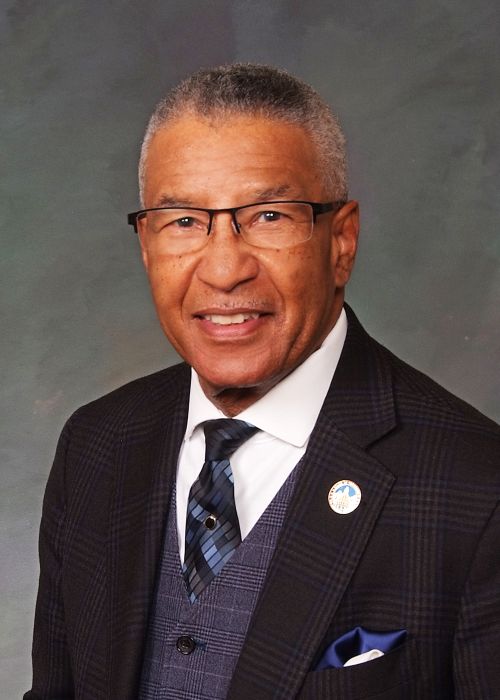
Matt Ball
100% support rate
Top opponent
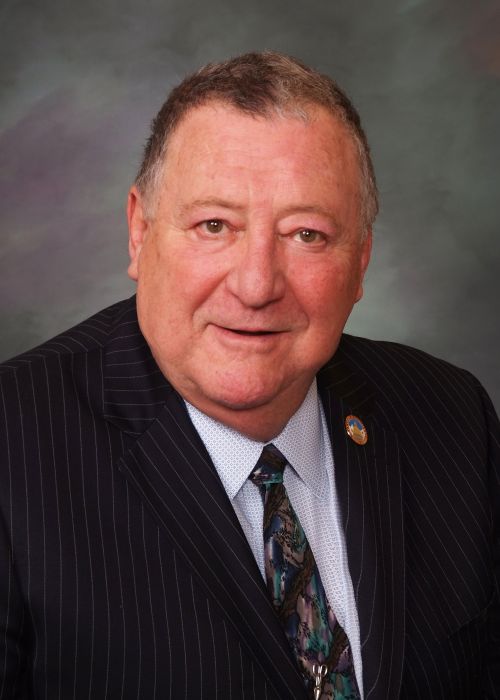
Mark Baisley
14% support rate
Ranked legislators
10
5 support · 5 oppose
Key legislators

Who's moving budget & taxes in Colorado

Legislators moving budget & taxes in Colorado
Legislator Party Stance Support rate Votes
Matt Ball
Matt Ball Senate · District 31
D
Strong +
100% 32
Tony Exum
Tony Exum Senate · District 11
D
Strong +
100% 33
Kyle Mullica
Kyle Mullica Senate · District 24
D
Strong +
88% 50
Marc Snyder
Marc Snyder Senate · District 12
D
Strong +
83% 48
Julie Gonzales
Julie Gonzales Senate · District 34
D
Strong +
82% 80
Mark Baisley
Mark Baisley Senate · District 4
R
Strong −
14% 36
Brandi Bradley
Brandi Bradley House · District 39
R
Oppose
20% 194
Scott Bottoms
Scott Bottoms House · District 15
R
Oppose
21% 233
Stephanie Luck
Stephanie Luck House · District 60
R
Oppose
22% 187
Ken DeGraaf
Ken DeGraaf House · District 22
R
Oppose
23% 196
Showing 41–50 of 151 bills

All budget & taxes bills

in committee · Colorado · Senate Apr 28, 2026

SB 161: Modernize Regulation of Cannabis-Related Products

Under current law, an excise tax of 15% is levied and collected on the first sale or transfer of unprocessed retail marijuana by a retail marijuana cultivation facility, and a sales tax of 15% is imposed on sales of retail marijuana and retail marijuana products by a retailer. The bill lowers the excise tax to $1 per pound of unprocessed retail marijuana and replaces the 15% sales tax with a sales tax structure that is based on the content of intoxicating cannabinoids in retail cannabis products. The sales tax may be changed by an act of the general assembly but may not exceed 2 cents per milligram of total intoxicating cannabinoids until January 1, 2030, and 5 cents thereafter.     The legislative council staff shall make projections based on the tax changes and propose adjustments to the joint budget committee in order to stabilize intoxicating cannabinoid tax revenue. If such a proposal is made, the joint budget committee may propose legislation to stabilize the tax revenue.     Current law creates a bifurcated regulatory structure for marijuana and intoxicating hemp. The bill moves the testing and safety elements from the department of revenue to the department of public health and environment (department). The state licensing authority (authority) in the department of revenue is currently directed to adopt rules to, among other things, establish testing standards. The bill transfers these responsibilities from the authority to the department. Mandatory compliance testing requirements are shifted from throughout the supply chain to the point at which products are packaged for sale to or use by consumers. Mandatory compliance testing standards are set by a new reference laboratory, which will also conduct statewide off-shelf surveillance testing of intoxicating cannabis products. This means that the products are tested at the retail level where consumers may purchase them.     The bill requires the following be made available for public inspection via an online portal:Adverse health reports, including the product manufacturer and basis for the report, with personally identifiable information related to the affected customers redacted; andTraceability information and testing results for intoxicating cannabis products transferred to a consumer, so that consumers may access and view product batches, manufacturers, cultivators, or retailers and the associated traceability or testing data.     The bill requires marijuana product producers to be registered with the department and regulated in a like manner as other food manufacturers. The department may enforce labeling and content claim requirements and impose penalties for health- and labeling-related violations or refer violations to the authority for license discipline.(Note: This summary applies to this bill as introduced.)
Sub-Topics Revenue Sales Tax
signed · Colorado · Senate May 29, 2026

SB 165: Species Conservation Measures

For state fiscal year 2026-27, the act appropriates $5,000,000 from the species conservation trust fund (trust fund) in the state treasury for various wildlife conservation programs directed at conserving candidate species or species that are likely to become candidate species, as determined by the United States fish and wildlife service. The executive director of the Colorado department of natural resources, after consulting with the Colorado water conservation board, the parks and wildlife commission, and the director of the division of parks and wildlife, has submitted to the general assembly a list of programs and associated costs that are eligible to receive funding from the trust fund as follows:$2,380,000 for the upper Colorado river endangered fish recovery program and San Juan river basin recovery implementation program;$60,000 for Rio Grande native fish protection and habitat improvements;$60,000 for selenium management, research, monitoring, evaluation, and control;$1,250,000 for native terrestrial wildlife conservation; and$1,250,000 for native aquatic wildlife conservation.     Trust fund money made available for native terrestrial wildlife conservation is not available for purposes of importing new wolves for reintroduction into the state for state fiscal year 2026-27.(Note: This summary applies to this bill as enacted.)
Sub-Topics Conservation Wildlife
signed · Colorado · House Jun 1, 2026

HB 1386: Colorado National Guard Tuition Waiver Funding

In current law, a person who is a member of the Colorado National Guard who is accepted for enrollment at a designated institution of higher education (member) has all their tuition costs waived. All tuition waiver costs are currently funded by the state from money in the Colorado National Guard tuition fund.     The act changes the funding mechanism of the Colorado National Guard tuition waiver program by requiring each designated institution of higher education to waive the remaining balance of a member's tuition cost in excess of the amount of any private, state, or federal financial assistance received. The act requires the department of military and veterans affairs to reimburse each institution for 50% of the cost of tuition waived by the institution and requires the general assembly to appropriate money to the Colorado National Guard tuition fund to cover the reimbursement.(Note: This summary applies to this bill as enacted.)
signed · Colorado · House May 27, 2026

HB 1373: Subsidy Limits in Assistance Programs for Children

The act specifies monthly subsidy payment reimbursement limits for the adoption assistance program and the relative guardianship assistance program that apply to contracts that take effect July 1, 2026, or later, and prohibits reimbursement for services other than nonreoccuring adoption expenses. The act requires the state department of human services to create a standardized notice for families that describes the reimbursement change. The act requires the county departments of human or social services to provide the notice by June 15, 2026, to families currently receiving services.     The act reduces the state fiscal year 2025-26 appropriation to the department of human services for adoption and relative guardianship assistance made in the long bill as follows:From the general fund, by $2,199,750; andFrom cash funds, by $407,295.(Note: This summary applies to this bill as enacted.)
signed · Colorado · House Jun 1, 2026

HB 1358: Reduce Academic Accelerator Grant Program Appropriation

The act reduces by $5.2 million the appropriation for the Colorado academic accelerator grant program for the 2023-24 state fiscal year, which is available for expenditure through the 2026-27 state fiscal year.(Note: This summary applies to this bill as enacted.)
signed · Colorado · House Jun 4, 2026

HB 1357: Phase-Out of Teacher Recruitment Education and Preparation Program

The act repeals the teacher recruitment education and preparation program (TREP) after the 2026-27 budget year. The act repeals the teacher recruitment and preparation program and pathways in early technology early college high schools working group on July 1, 2027.     On July 1, 2026, the act requires the state treasurer to transfer $799,200 from the electrifying school buses grant program cash fund to the state education fund. The general assembly declares that TREP may receive funding from the state education fund.     For the 2026-27 state fiscal year, the act caps the amount that a district receives for a student participating in TREP under the school finance formulas at $7,104.     The act increases the cash fund appropriation to the department of education for state share of districts' total program funding and decreases the cash fund appropriation for extended high school in the 2026-27 long bill in order to fund TREP for the 2026-27 state fiscal year. The amount of the changes is contingent on whether House Bill 26-1364, concerning the calculation of the consumer price index for the 2025 calendar year, becomes law.(Note: This summary applies to this bill as enacted.)
signed · Colorado · House Jun 4, 2026

HB 1409: Marijuana Tax Cash Fund Distributions

Current law requires 3.5% of the gross retail marijuana sales tax revenue to be distributed to local governments. The act eliminates the distribution to local governments and allocates the gross retail marijuana sales tax revenue as follows, on and after July 1, 2026:73.17% to the marijuana tax cash fund (fund);11.33% to the state public school fund;1.5% to the marijuana cash fund; and14% to the general fund.     The act also directs the state treasurer to transfer from the fund to the state public school fund on June 30, 2027, and on each June 30 thereafter, an amount equal to the difference between the balance of the fund and:15% of the amount that the general assembly appropriated from the fund in that fiscal year; andAny amount of the fund designated to be part of the emergency reserve for that fiscal year.(Note: This summary applies to this bill as enacted.)
signed · Colorado · House May 27, 2026

HB 1374: Kinship Care Funding Provisions

The act eliminates financial assistance and supports and reimbursement to county departments of human or social services (county departments) for non-certified kinship care homes.     The act specifies that county departments are not required to provide financial assistance and supports for non-certified kinship care homes, except as required by the federal 'Social Security Act' and by Colorado's out-of-home placement required services and temporary custody provisions.     The act requires the department of human services to create a standardized notice for non-certified kinship care providers regarding the discontinuation of non-certified kinship care financial assistance. The act requires county departments to provide the notice by June 15, 2026, to non-certified kinship foster care homes currently receiving monthly payments.(Note: This summary applies to this bill as enacted.)
signed · Colorado · House Jun 2, 2026

HB 1397: Multiple Employer Health Trust Funding

Current law requires the general assembly to appropriate $650,000 from the general fund to the department of local affairs (department) on July 1, 2026, and $1 million from the general fund to the department on July 1, 2027, to reduce participating employer contributions to a multiple employer health trust for volunteer firefighters and part-time firefighters. The act repeals the appropriation otherwise required on July 1, 2026.     Current law requires the general assembly to appropriate money from the general fund to the division of criminal justice in the department of public safety for the purpose of reimbursing a multiple employer health trust for the direct costs of providing cardiac and other health screenings for peace officers as follows:$350,000 for the state fiscal year beginning July 1, 2026; $500,000 for the state fiscal year beginning July 1, 2027; $1 million for the state fiscal year beginning July 1, 2028; andOn each July 1 thereafter, sufficient funds.The act repeals the appropriation otherwise required on July 1, 2026.     For the 2026-27 state fiscal year, the general fund appropriation and the reappropriated funds appropriation from the firefighter benefits cash fund to the department of local affairs for firefighter heart and circulatory malfunction benefits are each decreased by $150,000.     For the 2026-27 state fiscal year, the general fund appropriation to the department of public safety for use by the division of criminal justice for first responder employer health benefit trusts is decreased by $100,000.(Note: This summary applies to this bill as enacted.)
signed · Colorado · House Jun 1, 2026

HB 1408: Processes to Determine State Budget Requests

The act requires a state agency, defined as any department, commission, council, board, bureau, committee, institution of higher education, agency, or other governmental unit of the executive, legislative, or judicial branch of state government that receives an appropriation or is otherwise included in the annual general appropriation act, to submit a base budget for the upcoming state fiscal year to the joint budget committee and the office of state planning and budgeting (office) on or before September 1 of each year, beginning in 2026. The act excludes specific independent agencies within the judicial department from this requirement. For these excluded agencies, the office of administrative services for independent agencies must submit a single, consolidated base budget on their behalf. A base budget is defined as the total amount appropriated in the annual general appropriation act and other legislation enacted in the prior state fiscal year plus:Out-year costs or savings from legislation adopted in prior years that were not included in the appropriations for the preceding state fiscal year; and Budget adjustments from prior years that were not included in the appropriations for the preceding state fiscal year.A state agency is required to submit its base budget using a format agreed upon by state agencies and the office, in coordination with joint budget committee staff.     The act also requires the director of the office, in collaboration with the executive director of the department of personnel, to provide information related to the office's calculations for common policies, as annually submitted in the governor's November 1 budget request, to the departments, institutions, and agencies of the executive, judicial, and legislative branches of state government as soon as practicable prior to the submission of the November 1 budget request.(Note: This summary applies to this bill as enacted.)
Showing 41 to 50 of 151 bills
Previous 1 4 5 6 16 Next