Repealing Big Brother Overreach Act This bill repeals the Corporate Transparency Act. The act requires existing companies and newly created companies to report beneficial ownership information to the Department of the Treasury’s Financial Crimes Enforcement Network for purposes of addressing the financing of terrorism and money laundering.
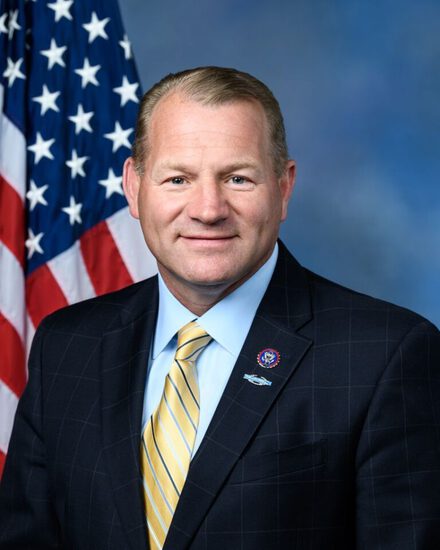
Rep. Troy E. Nehls
Sponsored bills
Maddy summaryThis bill establishes the Lone Star Coastal National Recreation Area as a unit of the National Park System to protect the natural, cultural, and recreational resources along the Texas Gulf Coast. The area would be created only after the Secretary of the Interior acquires sufficient land through voluntary means such as donations, purchases from willing sellers, or exchanges, with no use of condemnation. A new partnership involving federal, state, local, and private stakeholders will develop a management plan that coordinates activities across both federally owned lands and participating private or state lands. The legislation ensures that private landowners retain their rights and that existing economic activities like hunting, fishing, and oil and gas operations continue without new regulations, while allowing the National Park Service to provide technical assistance and interpretive services.
Maddy summaryThis bill creates new grounds for deporting non-citizens who are members of or associated with criminal gangs. It defines a "criminal gang" as a group of five or more people whose primary purpose is committing serious crimes like drug offenses, violence, trafficking, or weapons violations. The Secretary of Homeland Security can designate groups as criminal gangs after consultation with the Attorney General, and these designations make gang members ineligible for asylum, temporary protected status, parole, and other immigration benefits. The bill also establishes procedures for reviewing and revoking these designations, with limited judicial review options.
Maddy summaryThe Preventing Trafficking of Minors Act of 2026 strengthens federal laws against exploiting individuals under 18 by expanding the definition of prohibited conduct to include engaging in or soliciting commercial sex acts with minors. It removes the legal requirement to prove force, fraud, or coercion when the victim is a minor and establishes that a defendant's lack of knowledge about the victim's age is not a valid defense if they had a reasonable opportunity to observe them. The bill also clarifies that law enforcement officers posing as minors cannot use this as a defense against prosecution and increases the minimum prison sentence to 15 years for offenses involving victims under 14. These changes apply to actions taken 180 days after the law is enacted.
Maddy summaryThe WATER for Farmers Act establishes a system to enforce the 1944 Water Treaty by requiring Mexico to deliver a minimum of 350,000 acre-feet of water annually to the United States. If Mexico fails to meet this delivery target, the bill mandates the imposition of import duties on specific goods from Mexico, with rates increasing for consecutive years of non-compliance. Revenue generated from these duties is placed in a trust fund to provide direct financial compensation to agricultural producers in South Texas who suffer economic losses due to water shortfalls. Additionally, the legislation creates a new requirement for the government to collect and publicly report real-time data on water deliveries and compensation payments.
Medal of Sacrifice Act of 2025 This act directs the President to issue a medal of sacrifice for eligible law enforcement officers and first responders who are killed in the line of duty. The act also directs the President to establish a commission on the medal of sacrifice and appoint its members. The act sets forth responsibilities of the commission, including to advise on the design of the medal and determine how the medal will be presented. Under the act, eligible law enforcement officers and first responders include federal, state, local, tribal, or territorial law enforcement officers or first responders who are not subject to an official act of wrongdoing (e.g., a determination that the officer or first responder acted outside the scope of their duties or in a manner that was not in accordance with official policies or procedures). A law enforcement officer or first responder who is subject to an official act of wrongdoing is generally not eligible for the medal of sacrifice. However, in the case of such an officer or first responder, the act requires the commission to investigate the circumstances surrounding the officer or first responder's cause of death and issue a final determination on their eligibility.
Maddy summaryThis bill directs the Federal Aviation Administration to upgrade its system for submitting Form 337, which is used to record major aircraft repairs and alterations. The key changes allow authorized users to voluntarily submit these forms digitally and enable third-party software to connect securely to the FAA's filing system. To protect privacy and security, the law mandates strict data controls, prohibits the use of personal information for commercial purposes, and ensures that no new reporting requirements are added for aircraft owners or mechanics.
Maddy summaryHRES 1314, the America 250 Commemorative Flag Act, designates a special flag featuring the number 250 within the circle of stars as an official United States flag for the 250th anniversary of the Declaration of Independence. This resolution authorizes the America 250 flag to be flown alongside the national flag and POW/MIA flags at all government buildings, embassies, and official U.S. locations worldwide during the commemoration year. The bill serves as a ceremonial measure to honor the nation's history and the sacrifices made by patriots, without altering any existing laws or policies.
Maddy summaryThe Monitor Accountability Act of 2026 directs the Administrator of the Administrative Office of the United States Courts to establish new rules for federal courts appointing monitors to oversee State or local governments. The bill limits monitor fees, caps their service to one monitorship for a maximum of five years, and prevents reappointments under the same court order. It also requires courts to allow public comment before appointing a monitor and mandates annual public accountings of services and fees. Additionally, cases with monitorships lasting six years or more must be transferred to a different judge. These provisions, including the appointment of new monitors and case transfers, apply retroactively to existing monitorships that have been in effect for six years.
Maddy summaryHR 5625, the Cashless Bail Reporting Act, requires the Attorney General to publish and regularly update a public list of all states and local governments that allow cashless bail (release without requiring money bonds). This list must be available within 30 days of the bill's enactment and updated quarterly. The bill does not change existing bail laws but increases transparency by making it easier for the public to see where cashless bail is used. It directly affects individuals seeking information about bail practices in different jurisdictions. The key mechanism is a mandatory, publicly accessible database maintained by the federal government.