Maddy summaryThis House resolution formally honors the life and legacy of the late Representative Kay Granger from Texas, recognizing her historic achievements in public service. The bill highlights her roles as the first woman elected mayor of Fort Worth, the first Republican woman to represent Texas in the U.S. House, and the first Republican woman to chair the House Committee on Appropriations. It also acknowledges her contributions to national defense, including her work on the F-35 fighter jet program and the naming of a Navy ship for Fort Worth. The resolution expresses sympathy to Granger's family and directs the Clerk of the House to send an official copy of the document to her loved ones.
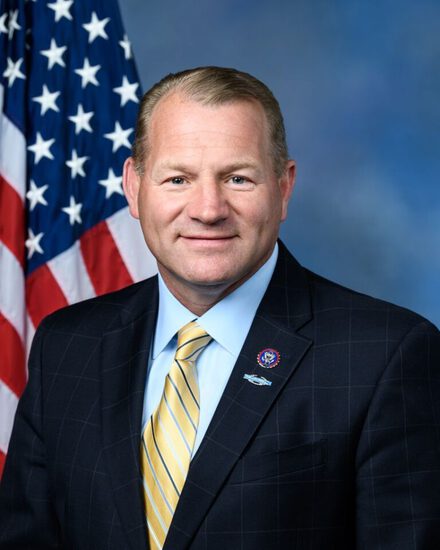
Rep. Troy E. Nehls
Sponsored bills
Maddy summaryThis bill, known as the Deputy Darren Almendarez Act, adds a new federal crime for knowingly possessing or purchasing catalytic converters removed from vehicles with the intent to sell or distribute them. It directly affects individuals involved in the removal and resale of these parts, as well as businesses like scrap yards and repair shops, by establishing penalties of up to five years in prison and fines of $100,000 for first offenses. The law includes specific exceptions that allow for legal possession or purchase if the converter was removed by a vehicle owner, acquired during official duties by authorized entities, or bought from licensed businesses that follow state and local identification rules. For repeat offenders, the potential prison sentence increases to ten years and the fine limit rises to $200,000.
Maddy summaryHR 2715, the *Destruction of Hazardous Imports Act*, expands the authority to destroy imported goods that pose public health risks. It amends the Federal Food, Drug, and Cosmetic Act to allow the Secretary of Health and Human Services to order the destruction of any refused import (not just drugs or devices) if it presents a significant health concern. The bill also prohibits the unauthorized movement, sale, or export of such refused goods. These changes apply to importers of hazardous refused articles 180 days after enactment, with the FDA required to finalize implementing regulations within 90 days.
Maddy summaryThis resolution honors the late Senator Lindsey Graham and condemns Omar Suleiman for publicly celebrating Graham's death. It also acknowledges that House Democrats invited Suleiman to serve as a guest chaplain in 2019 and highlights his past statements and affiliations. The measure expresses support for the House Republicans' Sharia-Free America Caucus, which aims to protect constitutional principles from what it describes as an ideology incompatible with American life.
Maddy summaryHR 7651, the Chloe Cole Act of 2026, prohibits healthcare providers from performing certain medical interventions on minors under 18 aimed at altering physical development to align with gender identity. These "covered interventions" include puberty blockers, hormone treatments, and specific surgeries, but exclude medically necessary care for conditions like disorders of sexual development or traumatic injuries. The bill creates a federal civil lawsuit right for affected minors or their parents against providers who perform such interventions, allowing claims for damages including emotional distress and punitive awards, with strict liability for providers after the law's enactment. It explicitly allows exceptions for legitimate medical treatments and requires providers to prove such exceptions apply if challenged.
Maddy summaryHR 7184, the PRESS Act, targets equipment used to manufacture illegal drugs by making it unlawful to sell specific items like tableting machines, gelatin capsules, or related chemicals when the seller knows the equipment will be used to produce controlled substances for unlawful U.S. importation. It directly affects manufacturers and distributors of these drug-making tools who have knowledge or reasonable cause to believe their products will facilitate illegal drug trafficking. The bill adds new prohibitions to the Controlled Substances Act and increases potential prison sentences for violations, with penalties reaching up to 20 years for major offenses involving large quantities of equipment or chemicals. These changes aim to disrupt the supply chain for illicit synthetic drugs by holding equipment sellers accountable for their intended use.
Maddy summaryHR 3100 amends the National Child Protection Act of 1993 to expand background check requirements. It allows businesses and organizations working with vulnerable populations (like children or elderly individuals) to request background checks for their contractors and for people they license or certify to provide care. The bill modifies the law to include individuals "contracted with" or "licensed/certified by" these organizations as those requiring background checks. This change directly affects organizations serving vulnerable groups, their contractors, and licensed care providers by broadening the scope of background checks mandated under the Act.
Protecting Privacy in Purchases Act This bill prohibits payment card networks from using merchant codes that distinguish firearms retailers from general-merchandise retailers or sporting-goods retailers. The Department of Justice must enforce this bill and report annually on the resulting investigations and cases.
Maddy summaryHR 4398, the Veteran Burial Timeliness and Death Certificate Accountability Act, requires Veterans Affairs (VA) physicians or nurse practitioners to certify the death of a veteran who dies of natural causes within 48 hours of learning of the death. This directly affects veterans' families, who previously faced delays of up to eight weeks in burial and access to survivor benefits due to slow death certifications. The bill mandates annual reports to Congress on VA compliance with the 48-hour rule, including statistics on delays and their causes. The key change is establishing a strict timeline for death certification to prevent unnecessary delays in honoring veterans' final arrangements.
Maddy summaryThis bill redesignates the existing National Parks and Public Land Legacy Restoration Fund as the America's Legacy Restoration Fund to address deferred maintenance on federal lands. It directs revenue from recreation fees and a portion of energy development income into the fund, which must be used primarily for repairing critical infrastructure like roads, trails, and buildings managed by agencies such as the National Park Service and the Forest Service. The legislation establishes strict rules requiring that most funds go toward non-transportation projects, mandates transparency through public dashboards tracking project status, and sets aside a small percentage for matching private donations. Additionally, the bill increases entrance fees for foreign visitors to ensure they contribute to the fund, while prohibiting the use of these specific funds for land acquisition or employee bonuses.