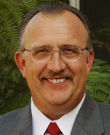
Photo of Robert Dutton
R California Senate · District 31

Sen. Robert Dutton

Compare
Total votes
18,884
all sessions
Attendance
94%
867 missed
Lower than 90% of chamber peers
With party
97%
of cast votes
Lower than 85% of chamber peers
Bipartisan score
2%
crosses aisle rarely
Higher than 80% of chamber peers
Sponsored
592
bills & resolutions
Near the chamber average
Committees
0
assignments
592 bills and resolutions

Sponsored bills

Total
592
Primary
176
Co-sponsor
416
This page
592
matching current filters
Co-sponsor SJR 19
Signed into law · California Senate · Co-sponsor
Relative to military base closures.

This measure would urge the California delegates of Congress to protect California military bases from closure during upcoming base realignment and closure processes.

Signed into law Aug 24, 2012 1 co-sponsor
Co-sponsor AB 391
Signed into law · California House · Co-sponsor
Secondhand dealers and pawnbrokers: electronic reporting.

(1) Existing law generally requires secondhand dealers and coin dealers, as defined, to report specified transactions involving tangible personal property, on forms provided or approved by the Department of Justice, to the local law enforcement agency where their businesses are located. Existing law defines "tangible personal property" for these purposes, and excludes from that definition, among other items, commercial grade ingots defined to include, among other items, 0.99 fine ingots of gold, silver, or platinum. This bill would revise the definition of commercial grade ingots to include 0.99 fine or finer ingots of gold, silver, palladium, or platinum. Under existing law, secondhand dealers and coin dealers are required to report the information described above using an electronic reporting system 12 months after the Department of Justice develops that system. This bill would eliminate the electronic filing requirements for coin dealers, and would instead require that secondhand dealers report this information using the single, statewide, uniform electronic reporting system on and after the date that the system is implemented, as specified. (2) Existing law requires a local law enforcement agency to issue a license to engage in the business of a secondhand dealer or pawnbroker to an applicant who meets designated criteria. Existing law authorizes the local licensing authority and the Department of Justice to charge an initial licensure fee and a renewal fee, as specified. This bill would require the Department of Justice to charge a licensure fee and a renewal fee of no more than $300, as specified. The bill would also require licensees issued a license before the effective date of this bill to pay an additional fee of no more than $288 for the purpose of funding the single, statewide, uniform electronic reporting system, with payment due within 120 days of the enactment of this bill. The bill would require that the fees assessed by the department be deposited in the Secondhand Dealer and Pawnbroker Fund, which the bill would create in the State Treasury. The bill would require that the money in the fund be used by the department, upon appropriation by the Legislature, for the purpose of paying for specified regulatory costs, including the cost of implementing, operating, and maintaining the single, statewide, uniform electronic reporting system. The bill would also require applicants for a license to submit fingerprint images relative to a required criminal background check, with associated fee revenue to be deposited in the Fingerprint Fee Account, and would make those revenues available to the Department of Justice, upon appropriation by the Legislature, for these purposes. This bill would make findings and declarations of the Legislature, and state the intent of the Legislature, with regard to these matters. The bill would make other related conforming changes. The bill would declare that it is to take effect immediately as an urgency statute.

Signed into law Aug 17, 2012 1 co-sponsor
Co-sponsor AB 1309
Passed · California House · Co-sponsor
University of California: UC Riverside Medical School.

Existing provisions of the California Constitution establish the University of California as a public trust under the administration of the Regents of the University of California. The University of California (UC) system includes 10 campuses, which are respectively located in Berkeley, Davis, Irvine, Los Angeles, Merced, Riverside, San Diego, San Francisco, Santa Barbara, and Santa Cruz. This bill would express findings and declarations of the Legislature relating to, among other things, the role of the UC Riverside Medical School in supporting California's health care infrastructure. The bill would, from any amount paid to the State of California as a result of an investigation into possible overpayments of state funds to the Senior Care Action Network (SCAN) Health Plan and available for expenditure for the purposes of the bill, as the highest priority for the use of these funds, transfer $15,000,000 to the Regents of the University of California for allocation to the School of Medicine at the University of California, Riverside, thereby making an appropriation. This bill would declare that it is to take effect immediately as an urgency statute.
Passed Aug 16, 2012 1 co-sponsor
Co-sponsor SB 962
Passed · California Senate · Co-sponsor
Public water systems: point-of-use treatment.

Existing law, the California Safe Drinking Water Act, provides for the operation of public water systems, and requires the State Department of Public Health to adopt regulations for these purposes. Under existing law, regulations adopted by the department are required to include requirements governing the use of point-of-entry and point-of-use treatment by public water systems in lieu of centralized treatment, where feasible. Existing law requires the department to adopt emergency regulations governing the permitted use of point-of-entry and point-of-use treatment by public water systems in lieu of centralized treatment and requires that these emergency regulations remain in effect until the earlier of January 1, 2014, or the effective date of the required nonemergency regulations. Existing law limits these regulations to public water systems with less than 200 service connections. This bill would, instead, limit these regulations to public water systems with less than 500 service connections, and would require the emergency regulations to remain in effect until the earlier of January 1, 2016, or the effective date of the required nonemergency regulations. Existing law prohibits the department from issuing a permit to a public water system to allow the use of point-of-use treatment, unless the department makes specified determinations. This bill would additionally prohibit the department from issuing a permit to a public water system to allow the use of point-of-entry treatment, unless the department makes specified determinations. The bill would require that prior to the approval of a permit allowing installation of point-of-use or point-of-entry treatment devices, that a water system submit a capital outlay plan outlining the plan for construction of centralized treatment, as specified. The bill also would require the department to conduct a full audit of the water system's finances. The bill would require the department to charge a fee to a public water system that is seeking a permit or an amendment to a permit for purposes of conducting these administrative and regulatory activities.

Passed Aug 16, 2012 1 co-sponsor
Co-sponsor SB 1426
Passed · California Senate · Co-sponsor
Lobbyist employers: gifts.

The Political Reform Act of 1974 regulates the receipt of gifts by public officials and also regulates the activities of members of the lobbying industry, including lobbyist employers. Under existing law, public officials are prohibited from accepting gifts from any single source in any calendar year with a total value of more than $250, as adjusted biennially by the Fair Political Practices Commission. Existing law also prohibits a lobbyist or lobbying firm from giving gifts to a public official aggregating more than $10 in a calendar month or from acting as an agent or intermediary in the making of any gift or arranging for the making of any gift by any other person. This bill would prohibit a lobbyist, lobbying firm, or lobbyist employer from giving to an elected state officer or a member of that officer's immediate family, and would prohibit an elected state officer from accepting from a lobbyist, lobbying firm, or lobbyist employer, certain gifts, including spa treatments, recreational trips, and gift cards. However, under the bill, these prohibitions would not apply to a fundraising event for a bona fide charitable organization. This bill would also prohibit a lobbyist employer from giving to an elected state officer, or a lobbyist, lobbying firm, or lobbyist employer from giving to a member of that officer's immediate family, specified entertainment tickets with face values exceeding $25, including theater, concert, and amateur sporting event tickets. Existing law makes a violation of the Political Reform Act of 1974 subject to administrative, civil, and criminal penalties. This bill would impose a state-mandated local program by creating additional crimes. The California Constitution requires the state to reimburse local agencies and school districts for certain costs mandated by the state. Statutory provisions establish procedures for making that reimbursement. This bill would provide that no reimbursement is required by this act for a specified reason. The Political Reform Act of 1974, an initiative measure, provides that the Legislature may amend the act to further the act's purposes upon a 23 vote of each house and compliance with specified procedural requirements. This bill would declare that it furthers the purposes of the act.

Passed Aug 16, 2012 1 co-sponsor
Co-sponsor AB 1693
Passed · California House · Co-sponsor
Mental health: persons incompetent to stand trial: pilot program expansion.

Existing law establishes the State Department of State Hospitals, provides for the administration of state hospitals by the department, and provides for the involuntary confinement of certain individuals in those state hospitals, including persons who have been found incompetent to stand trial. This bill would authorize the department to expand a specified pilot program to establish competency restoration programs in prescribed counties, to provide treatment in county jails to individuals found incompetent to stand trial, and who have not been committed to a state hospital. By requiring specified counties to participate in the pilot program if it is expanded, the bill would impose a state-mandated local program. This bill would make legislative findings and declarations as to the necessity of a special statute for competency restoration programs in Los Angeles County and Kern County. The California Constitution requires the state to reimburse local agencies and school districts for certain costs mandated by the state. Statutory provisions establish procedures for making that reimbursement. This bill would provide that, if the Commission on State Mandates determines that the bill contains costs mandated by the state, reimbursement for those costs shall be made pursuant to these statutory provisions.

Passed Aug 16, 2012 1 co-sponsor
Co-sponsor AB 1654
Signed into law · California House · Co-sponsor
Public employment: disqualification from employment.

The California Constitution provides that a person shall be disqualified from holding office if he or she has been convicted of bribery, and directs the Legislature to enact laws to exclude persons convicted of malfeasance in office or other high crimes from office. Under existing statutory law, a person is disqualified from holding any office upon the conviction of specified crimes designated in the Constitution or statute. Existing law enumerates events causing a vacancy in office, including the conviction of a felony or any offense involving a violation of official duties. This bill would disqualify for 5 years a person who employed at will for the purposes of providing services to an elected public officer from any public employment, including, but not limited to, employment with a city, county, district, or any other public agency of this state, if he or she is convicted of a felony involving accepting or giving, or offering to give, any bribe, the embezzlement of public money, extortion or theft of public money, perjury, or conspiracy to commit any of those crimes arising directly out of his or her duties as a public employee. That 5-year disqualification period would begin at the later of either the person's final conviction or release from any incarceration.

Signed into law Jul 9, 2012 1 co-sponsor
Primary SB 446
Passed · California Senate · Lead sponsor
Ontario International Airport.

Existing law provides for creation of airport districts. Existing law provides for transfer of the San Diego International Airport from the San Diego Unified Port District to the San Diego County Regional Airport Authority. This bill would establish the Ontario International Airport Authority as a local entity of regional government. The bill would establish the membership of the board of directors of the authority and set forth the powers of the authority. The bill would authorize the authority to enter into an agreement with the City of Los Angeles to facilitate the sale of, or the transfer of management and operational control of, the Ontario International Airport to the authority. The bill would require the authority, in cooperation with the City of Los Angeles and the City of Ontario, to develop a transition plan to facilitate the sale of, or the transfer of management and operational control of, the Ontario International Airport to the authority. The bill would also require the authority, the City of Los Angeles, the City of Ontario, the County of San Bernardino, other local and regional agencies, and the Department of Transportation to cooperate to develop effective surface transportation access to the Ontario International Airport. To the extent these provisions would impose additional duties on entities of local government, the bill would impose a state-mandated local program. The California Constitution requires the state to reimburse local agencies and school districts for certain costs mandated by the state. Statutory provisions establish procedures for making that reimbursement. This bill would provide that, if the Commission on State Mandates determines that the bill contains costs mandated by the state, reimbursement for those costs shall be made pursuant to these statutory provisions.

Passed Jun 25, 2012 0 co-sponsors
Showing 21 to 30 of 592 bills
Previous 1 2 3 4 60 Next