This measure would name the public street, circle, and plaza at 914 and 915 Capitol Mall in the City of Sacramento as the Willie L. Brown, Jr. Circle and Plaza. The measure would request the Department of General Services to determine the cost of erecting the appropriate signage commemorating this special designation and, upon receiving donations from nonstate sources, to cover that cost to erect that signage.
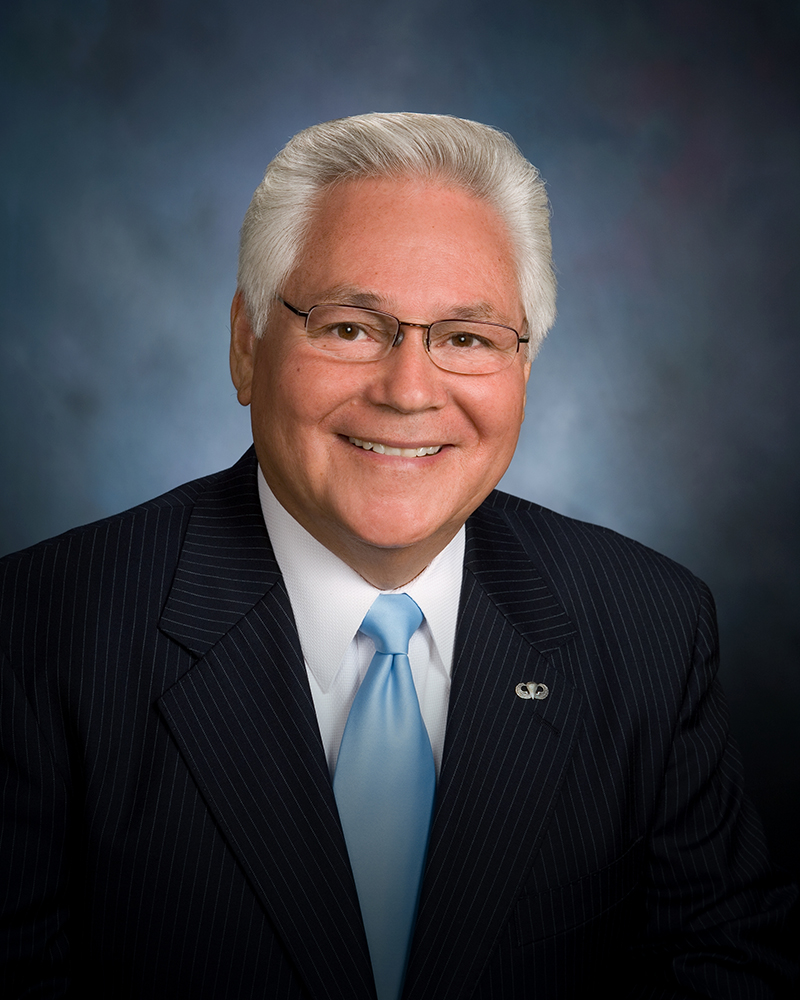
Sen. Bob Archuleta
Sponsored bills
(1) Existing law delegates to the Fish and Game Commission the power to regulate the taking or possession of birds, mammals, fish, amphibians, and reptiles, except as provided. Existing law provides that the accidental taking of a bird, mammal, reptile, or amphibian by collision with a motor vehicle while the vehicle is being operated on a road or highway is not a violation of law. Existing law authorizes the state or local agency having jurisdiction of a road or highway to remove an accidental take from the road or highway. A violation of the Fish and Game Code is a crime. This bill would, upon appropriation by the Legislature, authorize the commission to establish, in consultation with specified public agencies and stakeholders, a pilot program no later than January 1, 2022, for the issuance of wildlife salvage permits through a user-friendly and cell-phone-friendly web-based portal developed by the Department of Fish and Wildlife to persons desiring to recover, possess, use, or transport, for purposes of salvaging wild game meat for human consumption of, any deer, elk, pronghorn antelope, or wild pig that has been accidentally killed as a result of a vehicle collision on a roadway within California. The bill would require the commission to prescribe the requirements for applying for and receiving a wildlife salvage permit. The bill would authorize the commission to restrict the roadways where wildlife salvage may be conducted and the species subject to salvage, and to regulate any other aspect of the pilot program, as specified. The bill would, upon appropriation by the Legislature, require the department to implement the pilot program no later than 6 months after the commission establishes the pilot program. The bill would require the commission to require a person seeking to obtain a wildlife salvage permit to report certain information relating to the salvage through the department's web-based portal. The bill would require the department, beginning on the first March 1 after the department implements the pilot program, and each March 1 thereafter, to make available on its internet website data that includes the number of wildlife salvage permits issued, locations of impacts, and species of wildlife. The bill would repeal these provisions on January 1, 2029. The bill would define "roadway" and "vehicle" for these purposes and make conforming changes. By creating criteria for the accidental taking and possession of specified wild game animals, the violation of which would be a crime, the bill would impose a state-mandated local program. (2) Existing law vests the Department of Fish and Wildlife with jurisdiction over the conservation, protection, and management of fish, wildlife, native plants, and habitat necessary for biologically sustainable populations of those species. This bill would, upon appropriation by the Legislature, authorize the department to develop a pilot program to collect and compile information and data on wildlife-vehicle collisions to support certain wildlife conservation efforts. The bill would require the pilot program to be at a maximum of 3 geographically dispersed sites identified by the department to be areas of high wildlife-vehicle collisions. The bill would authorize the department, in developing the pilot program, to coordinate with other state agencies that remove dead wildlife from roadways to determine the scope of data collected on wildlife-vehicle collisions and would require the department, at the conclusion of the pilot program, to report to the Fish and Game Commission on the number of wildlife-vehicle collisions identified during the study period, barriers to additional data collection, and the feasibility of creating a statewide wildlife-vehicle collision reporting system. The bill would require the report to include an estimate of the costs of implementing the statewide wildlife-vehicle collision reporting system. (3) The California Constitution requires the state to reimburse local agencies and school districts for certain costs mandated by the state. Statutory provisions establish procedures for making that reimbursement. This bill would provide that no reimbursement is required by this act for a specified reason.
Existing law establishes the Medi-Cal program, which is administered by the State Department of Health Care Services and under which qualified low-income persons receive health care services. The Medi-Cal program is, in part, governed and funded by federal Medicaid program provisions. Existing federal law provides for various home- and community-based services (HCBS) , as part of a waiver or a state plan amendment under the Medicaid program, to promote coverage and services that enable an individual who would otherwise be institutionalized to live at home or in the community. This bill would require the retention of placement on the waiting list for, or the reenrollment in, specified HCBS waiver programs for an individual who is a dependent child or spouse of an active duty military service member and who transfers out of state with the military service member on official military orders, if the individual subsequently reestablishes residence in this state and meets other specified procedural requirements. The bill would authorize an individual applying for one of those specified waiver programs who is a dependent child or spouse of an active duty military service member and is residing out of state to submit the individual's application to enroll in that waiver program as soon as the military service member receives official military orders to transfer to this state and before moving to this state, as specified. The bill would condition the implementation of these provisions on receipt of any necessary federal approvals and the availability of federal financial participation, and would authorize the department to seek amendments to the waiver programs, or take other action, as necessary to implement these provisions. The bill would authorize the department to implement these provisions by means of letters or other similar instructions, without taking regulatory action.
(1) The California Financing Law (CFL) provides for the licensure and regulation of finance lenders and brokers by the Commissioner of Business Oversight. The CFL prohibits anyone from engaging in the business of a finance lender or broker without obtaining a license. A willful violation of the CFL is a crime, except as specified. Under existing law, a licensee who lends any sum of money is authorized to contract for and receive charges at a maximum rate that does not exceed specified sums on the unpaid principal balance per month, ranging from 2 12 % to 1%, based on the consumer loan amount, as specified. This provision, however, does not apply to any loan of a bona fide principal amount of $2,500 or more, as determined in accordance with a provision governing regulatory ceilings and evasion of the CFL. The CFL also authorizes a licensee, as an alternative to the above-described rate charges for consumer loan amounts, to instead contract for and receive charges at the greater of a rate not exceeding 1.6% per month on the unpaid principal balance or a rate not exceeding 5 56 of 1% per month, plus a specified percentage per month, as established by the Federal Reserve Bank of San Francisco, on advances to member banks under federal law, or if there is no single determinable rate, the closest counterpart of this rate. Under existing law, these provisions do not apply to a loan of a bona fide principal amount of $2,500 or more, as specified. The CFL further authorizes a licensee to contract for and receive an administrative fee of a specified amount that varies with the bona fide principal amount of the loan. This bill, entitled the Fair Access to Credit Act, would authorize a finance lender, with respect to a loan of a bona fide principal amount of $2,500 or more but less than $10,000, to contract for or receive charges at a rate not exceeding an annual simple interest rate of 36% plus the Federal Funds Rate. The bill would require finance lenders making loans subject to these provisions to, among other requirements, report each borrower's payment performance to at least one consumer reporting agency that compiles and maintains files on consumers on a nationwide basis and to also offer, at no cost to the borrower, a credit education program or seminar that has been previously reviewed and approved by the commissioner, in accordance with specific requirements. The bill would further specify that a licensee may contract for and receive an administrative fee, as described above, in addition to these charges. (2) Under the CFL, certain principles apply in determining whether a loan is a loan of a bona fide principal amount under specified provisions and whether the regulatory ceiling provision is used for purposes of evading the CFL. This bill would apply these principles to loans of a bona fide principal amount of $2,500 or more but less than $10,000. The bill would also apply these principles to any fees paid to a licensee for the privilege of participating in an open-end credit program. (3) Existing law prohibits licensees subject to the CFL from entering into a contract for a consumer loan that provides for a scheduled repayment of principal over more than the maximum terms set forth in relation to the respective size of the loan. Among other things, this provision prohibits a loan of at least $3,000 but less than $5,000 from exceeding a maximum term of 60 months and 15 days. This bill would increase the maximum principal loan amount under the above schedule to $10,000. The bill would also prohibit a licensee from entering into a contract for a consumer loan that is at least $2,500 but less than $10,000 that provides for a scheduled repayment of principal that is less than 12 months. The bill would also specify that the maximum loan term of 60 months and 15 days does not apply to a loan secured by real property of a bona fide principal amount of at least $5,000. The bill would also prohibit a licensee from charging, imposing, or receiving any penalty for the prepayment of a loan under the CFL, except as specified. (4) The CFL regulates a specific type of consumer loan known as an open-ended loan. The CFL prescribes the amount upon which charges authorized by the CFL may be based, the amount of a minimum monthly payment, the amount of fees, costs, and expenses a licensee may receive, and the amount to be delivered by the licensee at the time the open-ended loan is made. The CFL applies these provisions only to a loan of a bona fide principal amount not exceeding $5,000, as specified. This bill would apply those provisions to an open-ended loan in a bona fide principal amount not exceeding $10,000, as specified. The bill would make conforming and nonsubstantive changes. By expanding the application of the CFL to cover more loans, the bill would expand the scope of an existing crime, thereby imposing a state-mandated local program. The California Constitution requires the state to reimburse local agencies and school districts for certain costs mandated by the state. Statutory provisions establish procedures for making that reimbursement. This bill would provide that no reimbursement is required by this act for a specified reason.
Existing law prescribes, in accordance with federal law, the powers of the protection and advocacy agency, which is a private, nonprofit corporation, charged with protecting and advocating for the rights of persons with developmental disabilities and mental disorders. Under existing law, a protection and advocacy agency's powers include the authority to pursue legal, administrative, and other appropriate remedies to ensure the protection of the rights of persons with developmental disabilities and persons with mental illness, to provide information and referral to programs and services addressing the needs of persons with developmental disabilities and persons with mental illness, and to investigate any incident of abuse or neglect of persons with developmental disabilities or persons with mental illness if the complaints are reported to the protection and advocacy agency or if probable cause exists to believe that abuse or neglect has occurred. This bill would make various changes to the protection and advocacy agency's access to facilities, programs, and records by, among other things, authorizing the protection and advocacy agency to exercise the authority to take certain actions if the agency receives a complaint or report of alleged abuse or neglect or makes a related determination, as described. The authority would include monitoring a facility's, program's, or service provider's compliance with respect to the rights and safety of individuals with disabilities, requiring a facility, program, or service provider to provide immediate access to interview any individual with a disability unless providing immediate access would interfere with treatment or therapy to be provided to the individual, and providing the protection and advocacy agency with additional access to the records of persons with a disability. The bill would also require the protection and advocacy agency to obtain written consent from specified individuals before releasing information concerning them to a person not otherwise authorized to receive it. The bill would permit the sharing of health information and records with a protection and advocacy agency to the extent the sharing is required by law and complies with the requirements of that law.
Existing law, as part of the hazardous waste control laws, authorizes public agencies, defined as state or federal agencies, counties, cities, or districts, or their contractors, to operate household hazardous waste collection facilities, as defined, and specifies conditions for the transportation of household hazardous waste. A violation of the hazardous waste control laws is a crime. Existing law authorizes a registered hazardous waste transporter operating a door-to-door household hazardous waste collection program or household hazardous waste residential pickup service to use a specified manifesting procedure for transporting household hazardous waste, if the transporter complies with certain operating and reporting requirements. Existing law requires a transporter that uses the specified manifesting procedure to submit quarterly reports to the Department of Toxic Substances Control and requires the department to make all of the information in the quarterly reports available to the public, as provided. Existing law requires a public agency to retain a copy of the manifest in a specified manner. Existing law makes these manifesting requirements inoperative on January 1, 2020. This bill would extend the operation of those provisions indefinitely. Because the bill would continue duties imposed on public agencies and because the bill would extend the operation of various provisions, the violation of which would be a crime, the bill would impose a state-mandated local program. Existing law requires a facility operator in the state who receives hazardous waste for handling, treatment, storage, disposal, or any combination thereof, which was transported with a manifest, to submit a copy of the manifest to the department. Existing law authorizes a facility operator to submit to the department an electronic report that meets certain requirements in lieu of submitting the copy of each manifest used. Existing law, if an out-of-state receiving facility is not required to submit the signed manifest copy to the department, requires a transporter, acting on behalf of the generator, to submit a copy of the manifest signed by the receiving hazardous waste facility to the department. This bill would repeal the above provisions authorizing a facility operator to submit that electronic report in lieu of a copy of each manifest and requiring a transporter to submit a copy of the manifest to the department. Existing law authorizes a door-to-door household hazardous waste collection program or household hazardous waste residential pickup service, operated by a public agency or its contractor, that meets specified requirements to collect household hazardous waste from individual residences and, on and before December 31, 2019, to transport that waste to a hazardous waste facility, as defined. Existing law requires, on and before December 31, 2019, those public agencies or contractors that transport household hazardous waste to a hazardous waste facility to use the manifesting procedures described above. This bill would extend the operation of those provisions indefinitely. Because the bill would continue duties imposed on public agencies and because a violation of these provisions is a crime, the bill would impose a state-mandated local program. Existing law requires the Secretary for Environmental Protection to implement a unified hazardous waste and hazardous materials management regulatory program, also known as the unified program. Existing law requires every county to apply to the secretary to be certified to implement the unified program, and authorizes a city or local agency that meets specified requirements to apply to the secretary to be certified to implement the unified program, as a certified unified program agency. Existing law requires the unified program to consolidate the administration of certain requirements, including, among others, the hazardous waste control laws that are applicable to, on and before December 31, 2019, a transfer facility, as defined, that is operated by a door-to-door household hazardous waste collection program or household hazardous waste residential pickup service. This bill would extend the operation of the requirement to consolidate the administration of the hazardous waste control laws that are applicable to those transfer facilities indefinitely. Because the bill would continue duties imposed on unified program agencies, the bill would impose a state-mandated local program. This bill would incorporate additional changes to Sections 25218.1 and 25218.5 of the Health and Safety Code proposed by SB 726 to be operative only if this bill and SB 726 are enacted and this bill is enacted last. The California Constitution requires the state to reimburse local agencies and school districts for certain costs mandated by the state. Statutory provisions establish procedures for making that reimbursement. This bill would provide that with regard to certain mandates no reimbursement is required by this act for a specified reason. With regard to any other mandates, this bill would provide that, if the Commission on State Mandates determines that the bill contains costs so mandated by the state, reimbursement for those costs shall be made pursuant to the statutory provisions noted above.
(1) The existing Gambling Control Act (act) provides for the licensure and regulation of various legalized gambling activities and establishments by the California Gambling Control Commission and the investigation and enforcement of those activities and establishments by the Department of Justice. The existing act specifically requires the commission to provide for a state gambling license, key employee license, or work permit and authorizes the commission to deny a license or work permit for any cause deemed reasonable by the commission. The existing act makes a person under 21 years of age ineligible for a work permit in a gambling establishment and prohibits that person from entering the premises of a gambling establishment, except as provided. The existing act makes it a crime, punishable as a misdemeanor, for a person under 21 years of age to, among other things, be an employee of a licensed gambling establishment, except in areas of the establishment where no gambling activity or activity directly associated with gambling takes place. This bill would permit a person who is 18 through 20 years of age to work in a gambling establishment without a work permit, but only in job classifications that do not involve working on the gaming floor or on other restricted access areas, as specified, and that are not involved in the play of a controlled game, as specified. The bill would require an employee who is 18 through 20 years of age to wear a chest-level badge on their outermost garment stating the person is under 21 years of age, as specified. The bill would also make conforming changes. (2) The existing act requires an individual who is under 21 years of age and using a pathway to enter upon or pass through the gaming floor to be accompanied by or in the presence of a person or gambling establishment employee who is over 21 years of age, as specified. This bill would instead require a nonemployee who is under 21 years of age to be accompanied by a person or gambling establishment employee who is over 21 years of age, in certain areas of the establishment. (3) The existing act prohibits a person from being employed as a gambling enterprise employee unless the person has a work permit or is an independent contractor not required to hold a work permit. This bill would authorize a person to begin working as a gambling enterprise employee with limited job duties after applying for a work permit, provided that the person wears a chest-level badge on their outermost garment stating their temporary authorization, as specified. This bill would also permit a person who is 18 through 20 years of age to work as a gambling enterprise employee without a work permit but only in positions that are located outside of certain areas of the establishment and that do not involve gambling operations, as specified.
The Personal Income Tax Law and the Corporation Tax Law allow various credits against the taxes imposed by those laws, including, for taxable years beginning on or after January 1, 2017, and before January 1, 2022, a credit for qualified taxpayers, defined as the person responsible for planting a crop, managing the crop, and harvesting the crop from the land, in an amount equal to 15% of the qualified value of fresh fruits or vegetables donated to a food bank. This bill, under both laws, would expand the credit to apply to the donation of qualified donation items, defined as raw agricultural products or processed foods. The bill would expand the definition of qualified taxpayer to include the person responsible for growing or raising a qualified donation item, or harvesting, packing, or processing a qualified donation item but would exclude a retailer, as defined, from that expanded definition. The bill would apply these provisions to taxable years beginning on or after January 1, 2020. This bill would take effect immediately as a tax levy.
Existing law establishes the Office of Emergency Services within the office of the Governor and under the supervision of the Director of Emergency Services and makes the office responsible for the state's emergency and disaster response services for natural, technological, or human-made disasters and emergencies. Existing law defines the terms "political subdivision" and "emergency plans" for purposes of emergency services provided by local governments. Existing law requires a county, upon the next update to its emergency plan, to integrate access and functional needs into its emergency plan, as specified. This bill would require a county to integrate cultural competence, as defined, into its emergency plan upon the next update to its emergency plan, as specified. The bill would also require a county to provide a forum for community engagement in geographically diverse locations in order to engage with culturally diverse communities, as defined, within its jurisdiction. The bill would authorize a county to establish a community advisory board for the purpose of cohosting, coordinating, and conducting outreach for the community engagement forums. By increasing the duties of local officials, this bill would impose a state-mandated local program. The California Constitution requires the state to reimburse local agencies and school districts for certain costs mandated by the state. Statutory provisions establish procedures for making that reimbursement. This bill would provide that, if the Commission on State Mandates determines that the bill contains costs mandated by the state, reimbursement for those costs shall be made pursuant to the statutory provisions noted above.