

The California Constitution generally limits ad valorem taxes on real property to 1% of the full cash value of that property. For purposes of this limitation, "full cash value" is defined as the assessor's valuation of real property as shown on the 1975–76 tax bill under "full cash value" or, thereafter, the appraised value of that real property when purchased, newly constructed, or a change in ownership has occurred. The California Constitution authorizes the Legislature to provide that persons over 55 years of age and persons who are severely disabled may transfer the base year value, as defined, of real property that is eligible for a homeowners' property tax exemption to a replacement dwelling, if certain conditions are met. This measure would additionally authorize the Legislature to provide for a similar transfer of base year value of real property to a replacement dwelling for persons who are the parents or legal guardians of a severely disabled child and reside with that child. The measure would limit this provision to replacement dwellings purchased or newly constructed on or after its effective date.
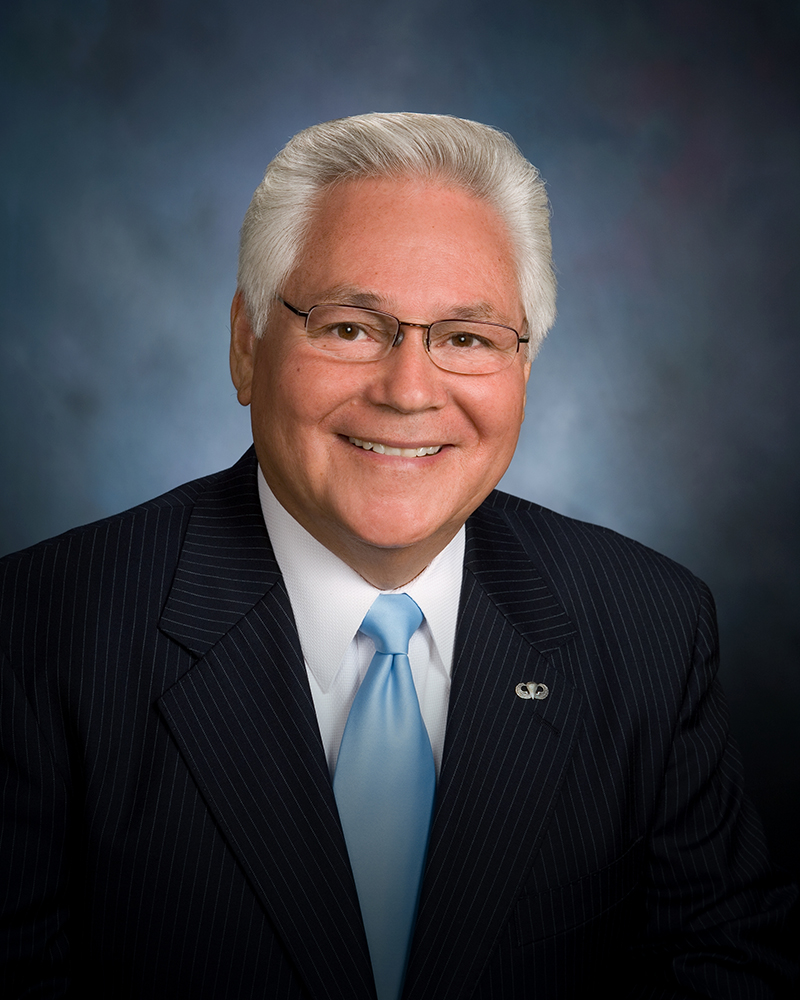
Sen. Bob Archuleta
Sponsored bills
This measure would proclaim January 13, 2020, as Korean American Day.
Existing law vests with the State Lands Commission administration and control of certain public lands. Existing law further provides that whenever permissive authority or discretion is vested in any public officer or body under specified laws governing state lands, that authority is subject to the condition that it be exercised in the best interests of the state. This bill would make nonsubstantive changes in that provision relating to the authority vested in a public officer or body.
Existing law, the Real Estate Law, prescribes a process for obtaining a license from the Real Estate Commissioner and prohibits a person from acting as a real estate broker, as specified, without obtaining a license. Existing law requires an application for the real estate broker license examination to be in writing and to include valid contact information for the applicant. This bill would make a nonsubstantive change to these provisions.
(1) Existing law, the Public Safety Officers Procedural Bill of Rights Act, grants a variety of employment rights and protections to public safety officers, with respect to investigations, interrogations, and disciplinary procedures. Existing law defines public safety officers with reference to statutory provisions describing specified types of officers. A public safety department may be held liable for violations of the act. This bill would include correctional officers who are employed by a city or county in facilities housing certain inmates, including, among others, parole violators and wards in the jurisdiction of the Department of Corrections and Rehabilitation, within the definition of public safety officers for purposes of the act. By imposing new duties on local agencies, the bill would create a state-mandated local program. (2) The California Constitution requires the state to reimburse local agencies and school districts for certain costs mandated by the state. Statutory provisions establish procedures for making that reimbursement. This bill would provide that, if the Commission on State Mandates determines that the bill contains costs mandated by the state, reimbursement for those costs shall be made pursuant to the statutory provisions noted above.
Existing law requires the Department of Veterans Affairs to disburse funds, appropriated to the department for the purpose of supporting county veterans service officers pursuant to the annual Budget Act, on a pro rata basis, to counties that have established and maintain a county veterans service officer in accordance with the staffing level and workload of each county veterans service officer under a formula based upon performance developed by the department. This bill would define a workload unit for purposes of these provisions to mean a specific claim activity that is used to allocate subvention funds to counties, which is approved by the department, and performed by county veterans service officers. The bill would appropriate on an annual basis the sum of $11,000,000 from the General Fund to the Department of Veterans Affairs to be available for allocation to counties to fund the activities of county veterans service officers, as specified. The bill would also delete obsolete provisions and would make conforming changes. This bill would declare that it is to take effect immediately as an urgency statute.
Existing law prohibits specified entities that offer lodging, or any employee or agent thereof, from disclosing, producing, providing, releasing, transferring, disseminating, or otherwise communicating all or any part of a guest record, as defined, orally, in writing, or by electronic or any other means to a third party, other than a California peace officer, without a court-issued subpoena, warrant, or order, as specified. Existing law also prohibits an owner or operator of a private or charter bus transportation company, or any employee or agent thereof, from disclosing, producing, providing, releasing, transferring, disseminating, or otherwise communicating all or any part of a passenger manifest, as defined, orally, in writing, or by electronic or any other means to a third party, other than a California peace officer, without a court-issued subpoena, warrant, or order, as specified. This bill would prohibit a faith-based organization that collects personal information, as defined, from volunteers from disclosing, except to a California peace officer, all or any part of that personal information orally, electronically, in writing, or by any other means to a third party without a court-issued subpoena, warrant, or order, unless that organization obtains the informed consent of the individual identified in the information.
Existing law authorizes the Department of Veterans Affairs to design, develop, and construct state-owned and state-operated veterans cemeteries, as specified, in northern, southern, and central California. Existing law makes honorably discharged veterans, their spouses, and dependent children eligible for internment in those cemeteries, as specified. This bill would additionally authorize the remains of a person to be buried in those cemeteries if the person was naturalized pursuant to the federal Hmong Veterans' Naturalization Act of 2000, as specified, and resided in the State of California at the time of the person's death.
Existing law prohibits the disclosure of the home addresses of certain public employees and officials that appear in records of the Department of Motor Vehicles, except to a court, a law enforcement agency, an attorney in a civil or criminal action under certain circumstances, and certain other official entities. This bill would extend that prohibition, subject to those same exceptions, to the disclosure of the home addresses of code enforcement officers and parking control officers, as defined. The bill would also require the department to charge a fee sufficient to cover the reasonable costs for this service commencing with requests for confidentiality made on or after January 1, 2020. Existing constitutional provisions require that a statute that limits the right of access to the meetings of public bodies or the writings of public officials and agencies be adopted with findings demonstrating the interest protected by the limitation and the need for protecting that interest. This bill would make legislative findings to that effect.
Existing law, the Davis-Stirling Common Interest Development Act, governs the management and operation of common interest developments and defines a "managing agent" as a person who, for compensation or in expectation of compensation, exercises control over the assets of a common interest development. This bill would require a managing agent whose management agreement has been terminated to produce client property and client records within a specified period of time pursuant to a written request by a common interest development association in a format that the association can reasonably use, except as specified. The bill would define "client property" and "client records" for purposes of those provisions.