

Existing law establishes the Permanent Amusement Ride Safety Inspection Program and requires the Division of Occupational Safety and Health within the Department of Industrial Relations to propose rules and regulations for adoption by the Occupational Safety and Health Standards Board relating to permanent amusement ride safety for the protection of the general public. The program exempts certain amusements from its provisions, including trampolines and stationary spring-mounted fixtures. This bill would establish a state program to inspect trampoline courts, as defined, for the protection of the general public using trampoline courts. The bill would require each owner of a trampoline court to annually submit to the division a certificate of compliance, and to report specified accidents. The bill would make operation of a trampoline court contingent on being insured in an amount not less than $1,000,000, or self-insured, as prescribed by rules and regulations promulgated by the division. The bill would require the division to formulate and propose rules and regulations for adoption by the board regarding trampoline courts, and to adopt rules and regulations necessary to administer the program. The bill would authorize the division to employ qualified safety inspectors, as defined, for purposes of the program and would require the division to certify inspectors as prescribed. The bill would authorize the division to fix and collect fees to cover the reasonable costs of administering the program, and provide for the imposition of civil penalties for violations of the program or rules and regulations adopted to implement the program. The bill would establish the Trampoline Courts Safety Fund and require fees and penalties collected pursuant to these provisions to be deposited in the fund, as specified. The bill would require that all moneys in the fund be made available upon appropriation by the Legislature.
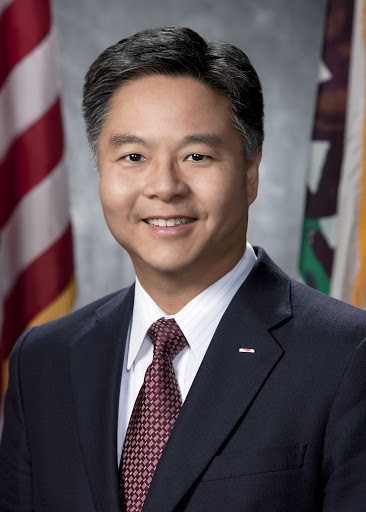
Sponsored bills
Existing law provides that the Secretary of State is the chief elections officer of the state and requires the Secretary of State to administer the provisions of the Elections Code. Existing law authorizes the Secretary of State to adopt regulations to assure the uniform application and administration of state election laws. Existing law sets forth procedures for processing vote by mail ballots and requires that all vote by mail ballots cast be received by the elections official or by the precinct board no later than the close of polls on election day. Under existing law, a vote by mail voter is required to return his or her voted vote by mail ballot either by returning the ballot by mail or in person to the elections official from whom it came or by returning the ballot in person to a member of a precinct board at a polling place within the jurisdiction. This bill would permit a vote by mail voter to return his or her voted vote by mail ballot to the elections official from whom it came at a vote by mail ballot drop-off location, as defined. This bill would require the Secretary of State to promulgate regulations establishing security measures and procedures that a county elections official would be required to comply with if the county elections official establishes one or more vote by mail ballot drop-off locations and vote by mail ballot drop boxes, as defined.
(1) Existing law provides that school districts and county offices of education are responsible for the overall development of a comprehensive school safety plan for each of their constituent schools. Existing law requires the schoolsite council of a school to write and develop the school safety plan relevant to the needs and resources of the particular school. Existing law requires a schoolsite council or school safety planning committee, before adopting a school safety plan, to hold a public meeting at the schoolsite, as specified. Existing law requires schools to forward copies of their school safety plans to the school district or county office of education for approval. Existing law requires school districts and county offices of education annually to notify the State Department of Education regarding schools that fail to adopt a school safety plan. This bill would revise and recast those procedures. The bill would, among other things, require each school to adopt its comprehensive school safety plan by March 1, 2014, and to review and update its plan by March 1 of every 3rd year thereafter. The bill would require, no later than October 15, 2014, and every 3rd year thereafter, each superintendent of a school district or county office of education to provide written notification to the Superintendent of Public Instruction identifying each school within the school district or county that has not complied with the requirement to adopt, and periodically review and update, a comprehensive school safety plan. The bill would require certain school administrators to keep and maintain a copy of the most recent comprehensive school safety plan, as provided. The bill would require the department to monitor compliance with these provisions using an existing monitoring framework. By requiring school and local educational agency officers to perform additional duties, the bill would impose a state-mandated local program. (2) The California Constitution requires the state to reimburse local agencies and school districts for certain costs mandated by the state. Statutory provisions establish procedures for making that reimbursement. This bill would provide that, if the Commission on State Mandates determines that the bill contains costs mandated by the state, reimbursement for those costs shall be made pursuant to these statutory provisions.
Existing law establishes the California Health Benefit Review Program to assess legislation that proposes to mandate or repeal a mandated health benefit or service, as defined. Existing law requests the University of California, to provide the analysis to the appropriate policy and fiscal committees of the Legislature within 60 days after receiving a request for the analysis. Existing law also requests that the university report to the Governor and the Legislature on the implementation of the program by January 1, 2014. This bill would request the University of California to include essential health benefits and the impact on the California Health Benefit Exchange in the analysis prepared under the program. The bill would further request that the University of California assess legislation that impacts health insurance benefit design, cost sharing, premiums, and other health insurance topics. The bill would request that the university provide the analysis to the appropriate policy and fiscal committees of the Legislature not later than 60 days, or in a manner and pursuant to a timeline agreed to by the Legislature and the program, after receiving the request, as specified. The bill would also extend the date by which the university is requested to report to the Governor and the Legislature on the implementation program until January 1, 2016. Existing law establishes the Health Care Benefits Fund to support the university in implementing the program. Existing law imposes an annual charge on health care service plans and health insurers, as specified, to be deposited into the fund. Existing law prohibits the total annual assessment pursuant to that provision from exceeding $2,000,000. Under existing law, the fund and the program are repealed as of June 30, 2015. This bill would extend until June 30, 2016, the operative date of the program and the fund, including the annual charge on health care service plans and health insurers. The bill would repeal the above-described provisions as of June 30, 2016. This bill would declare that it is to take effect immediately as an urgency statute.
Existing law provides for the Medi-Cal program, which is administered by the State Department of Health Care Services, under which qualified low-income individuals receive health care services. The Medi-Cal program is, in part, governed and funded by federal Medicaid Program provisions. Existing law authorizes the department to adopt regulations for the certification of each provider in the Medi-Cal program. Existing law also provides for the Medi-Cal Drug Treatment Program (Drug Medi-Cal) , under which the department is authorized to enter into contracts with counties for various drug treatment services to Medi-Cal recipients, or is required to directly arrange for these services if a county elects not to do so. This bill would require the department, in coordination with the counties, to ensure the implementation of procedures, for purposes of the Drug Medi-Cal program, to routinely identify and initiate recovery efforts for payments that the county authorizes either (1) between the effective date of a provider's decertification and the date the county receives information regarding the decertification or (2) after a beneficiary's date of death.
This measure would urge any official of the State of California involved with the National Conference on Weights and Measures and acting in his or her official capacity to strongly support the natural gas vehicle fuel standards recommended by the Natural Gas Steering Committee of the National Conference on Weights and Measures. The measure would also urge the United States Department of Commerce, the National Conference on Weights and Measures, and the National Institute of Standards and Technology to work with the natural gas industry to develop natural gas vehicle fuel standards that are user and consumer friendly and that include recognition of the gasoline and diesel gallon equivalent units for dispensing natural gas.
Existing law requires the Director of the Governor's Office of Business and Economic Development to provide to the Legislature, not later than February 1, 2014, a strategy for international trade and investment that, at a minimum, includes specified information, goals, objectives, and actions related to the promotion of trade. This bill would require the Director of the Governor's Office of Business and Economic Development to provide to the Legislature, not later than December 1, 2014, a strategy for promoting trade for California airports, land ports, and seaports that, at a minimum, includes specified information, objectives, goals, and recommendations. The bill would require that the strategy be submitted to the Chief Clerk of the Assembly and the Secretary of the Senate, with copies provided to the Speaker of the Assembly, the President pro Tempore of the Senate, and the chairs of specified legislative committees. The bill would also require the Director of the Governor's Office of Business and Economic Development to convene, no later than February 1, 2014, a statewide business partnership for promotion of trade for California ports and to explore greater utilization of California ports, which would be required to advise the director on establishing that trade strategy, as prescribed. This bill would declare that it is to take effect immediately as an urgency statute.
Under existing law, there are programs providing assistance for, among other things, emergency housing, multifamily housing, farmworker housing, home ownership for very low and low-income households, and downpayment assistance for first-time homebuyers. Existing law also authorizes the issuance of bonds in specified amounts pursuant to the State General Obligation Bond Law. Existing law requires that proceeds from the sale of these bonds be used to finance various existing housing programs, capital outlay related to infill development, brownfield cleanup that promotes infill development, and housing-related parks. This bill would enact the California Homes and Jobs Act of 2013. The bill would make legislative findings and declarations relating to the need for establishing permanent, ongoing sources of funding dedicated to affordable housing development. The bill would impose a fee, except as provided, of $75 to be paid at the time of the recording of every real estate instrument, paper, or notice required or permitted by law to be recorded. By imposing new duties on counties with respect to the imposition of the recording fee, the bill would create a state-mandated local program. The bill would require that revenues from this fee be sent quarterly to the Department of Housing and Community Development for deposit in the California Homes and Jobs Trust Fund, which the bill would create within the State Treasury. The bill would provide that moneys in the fund may be expended for supporting affordable housing, administering housing programs, and the cost of periodic audits, as specified. The bill would impose certain auditing and reporting requirements. Existing law requires the Department of Industrial Relations to monitor and enforce compliance with applicable prevailing wage requirements for specified public works projects that are funded by state bond proceeds. Moneys collected for this purpose are continuously appropriated to the department from the State Public Works Enforcement Fund to cover the costs of these monitoring and enforcement duties. This bill would require the Department of Industrial Relations to monitor and enforce prevailing wage requirements for construction contracts for certain public works projects over $1,000,000, that are funded, in whole or in part, by the bill. The bill would authorize the department to charge each person or entity awarding a construction contract for the reasonable and directly related costs of the monitoring and enforcement activities, and would require the department to deposit the moneys collected into the State Public Works Enforcement Fund. The bill would exempt projects with a collective bargaining agreement with a mechanism for resolution of wage disputes from this requirement. By establishing a new source of revenue for a continuously appropriated fund, this bill would make an appropriation. The California Constitution requires the state to reimburse local agencies and school districts for certain costs mandated by the state. Statutory provisions establish procedures for making that reimbursement. This bill would provide that no reimbursement is required by this act for a specified reason. This bill would declare that it is to take effect immediately as an urgency statute.
Under the Alquist-Priolo Earthquake Fault Zoning Act, prior to approving a project within an earthquake fault zone, a city or county is directed to require the preparation of a geologic report, subject to certain exceptions. The act authorizes cities and counties to, among other things, establish stricter policies and criteria, and impose and collect specified additional fees. Existing law requires the approval of a project by a city or county to be in accordance with policies and criteria established by the State Mining and Geology Board and the findings of the State Geologist. This bill would require a city or county, prior to approval of a project in certain locations, as described, to determine that either the project is in compliance with existing law relating to the policies and criteria established by the State Mining and Geology Board and the findings of the State Geologist, as provided, or the project is not located on an active fault trace, as determined by a geological site investigation. By expanding the duties of local officials in the process of approving a project, this bill would impose a state-mandated local program. The California Constitution requires the state to reimburse local agencies and school districts for certain costs mandated by the state. Statutory provisions establish procedures for making that reimbursement. This bill would provide that no reimbursement is required by this act for a specified reason.
Existing law establishes the "Sexual Assault Victims' DNA Bill of Rights," which, among other things, encourages a law enforcement agency assigned to investigate specified sexual assault offenses to perform DNA testing of rape kit evidence or other crime scene evidence in a timely manner to assure the longest possible statute of limitations. Existing law also requires a law enforcement agency to inform victims of certain sexual assault offenses, if the identity of the perpetrator is in issue, if the law enforcement agency elects not to analyze DNA evidence within certain time limits. This bill instead would, with respect to specific sex offenses, encourage a law enforcement agency in whose jurisdiction the sexual assault offense occurred to submit sexual assault forensic evidence received by the agency on or after January 1, 2016, to the crime lab within 20 days after it is booked into evidence, and ensure that a rapid turnaround DNA program, as defined, is in place to submit forensic evidence collected from the victim of a sexual assault to the crime lab within 5 days after the evidence is obtained from the victim. The bill would also encourage the crime lab, with respect to sexual assault forensic evidence received by the lab on or after January 1, 2016, to process that evidence, create DNA profiles when able, and upload qualifying DNA profiles into the Combined DNA Index System as soon as practically possible, but no later than 120 days after initially receiving the evidence, or to transmit the sexual assault forensic evidence to another crime lab as soon as practically possible, but no later than 30 days after initially receiving the evidence, as specified. The bill would also revise the provisions requiring a law enforcement agency to inform victims of certain sexual assault offenses, to make the requirement applicable without regard to whether the identity of the perpetrator is in issue, if the law enforcement agency does not analyze DNA evidence, and to require those entities to notify the victims within 6 months of the time limits established under existing law. By imposing a higher level of service on local law enforcement agencies, this bill would impose a state-mandated local program. The California Constitution requires the state to reimburse local agencies and school districts for certain costs mandated by the state. Statutory provisions establish procedures for making that reimbursement. This bill would provide that, if the Commission on State Mandates determines that the bill contains costs mandated by the state, reimbursement for those costs shall be made pursuant to these statutory provisions.