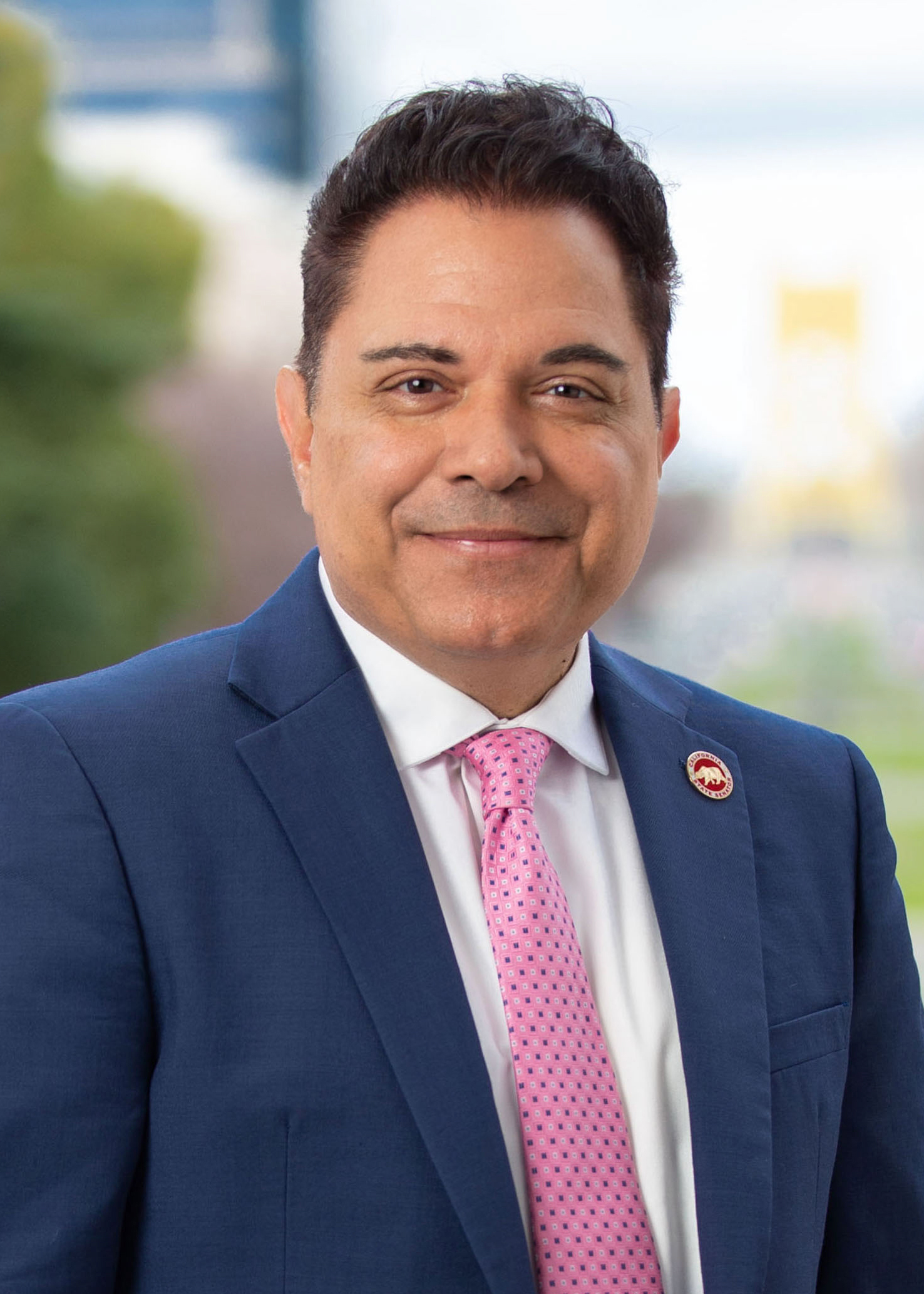
Photo of Steve Padilla
D California Senate · District 18 On the 2026 ballot

Sen. Steve Padilla

Compare
Total votes
9,009
all sessions
Attendance
94%
475 missed
Near the chamber average
With party
99%
of cast votes
Near the chamber average
Bipartisan score
0%
crosses aisle rarely
Near the chamber average
Sponsored
250
bills & resolutions
Near the chamber average
Committees
13
assignments
250 bills and resolutions

Sponsored bills

Total
250
Primary
91
Co-sponsor
159
This page
250
matching current filters
Primary SB 1223
Passed · California Senate · Lead sponsor
Fairs: contracting.

Existing law governs fairs in this state, including the California Exposition and State Fair, district agricultural associations, county and district fairs, and citrus fruit fairs. Existing law establishes various requirements applicable to contracts of fairs. This bill would prohibit a fair from issuing any invitation to bid or request for proposal, in connection with the awarding of a contract, for services to any person or entity, in a manner that limits the bidding directly or indirectly to any one bidder, except as specified. The bill would make any contract awarded in violation of this prohibition void.

Passed Aug 27, 2026 0 co-sponsors
Primary SB 867
Passed · California Senate · Lead sponsor
Toys: companion chatbots.

Existing law regulates the sale, manufacture, and exchange of toys in the state and prohibits the manufacture, sale, or exchange, possession with intent to sell or exchange, and exposition or offer for sale or exchange to a retailer a toy that is contaminated with a toxic substance, as provided. Violation of these provisions is punishable as a misdemeanor. Existing law requires an operator of a companion chatbot platform, as defined, to issue a clear and conspicuous notification indicating that the companion chatbot is artificially generated and not human if a reasonable person interacting with a companion chatbot would be misled to believe that the person is interacting with a human. For these purposes, existing law defines a "companion chatbot" to mean an artificial intelligence system with a natural language interface that provides adaptive, human-like responses to user inputs and is capable of meeting a user's social needs, including by exhibiting anthropomorphic features and being able to sustain a relationship across multiple interactions. Existing law also requires an operator to take certain actions with respect to a user the operator knows is a minor, including to disclose to the user that the user is interacting with artificial intelligence. Violation of these provisions is subject to civil liability. This bill would, until January 1, 2031, prohibit the manufacture, sale, exchange, possession with intent to sell or exchange, and exposition or offer for sale or exchange to a retailer a toy, as defined, that includes a companion chatbot, and would make violations of the bill subject to the same civil liability as violations of the provisions applicable to operators of companion chatbots in the above-described paragraph.

Passed Aug 27, 2026 0 co-sponsors
Primary SB 887
Passed · California Senate · Lead sponsor
California Environmental Quality Act: environmental leadership development projects: data centers: geothermal powerplant projects.

(1) The California Environmental Quality Act (CEQA) requires a lead agency, as defined, to prepare, or cause to be prepared, and certify the completion of, an environmental impact report on a project that it proposes to carry out or approve that may have a significant effect on the environment or to adopt a negative declaration if it finds that the project will not have that effect. CEQA also requires a lead agency to prepare a mitigated negative declaration for a project that may have a significant effect on the environment if revisions in the project would avoid or mitigate that effect and there is no substantial evidence that the project, as revised, would have a significant effect on the environment. CEQA requires the Office of Land Use and Climate Innovation to prepare and propose guidelines for the implementation of CEQA by public agencies and requires the Secretary of the Natural Resources Agency to certify and adopt the guidelines. CEQA requires the guidelines to include a list of classes of projects that have been determined not to have a significant effect on the environment and that are exempt from CEQA, commonly known as categorical exemptions. This bill would define "data center" for the purposes of CEQA and prohibit the application of categorical exemption to a project for the development and operation of a data center, as specified. By increasing the duties of a lead agency in relation to the environmental review of a data center project, this bill would impose a state-mandated local program. (2) The Jobs and Economic Improvement Through Environmental Leadership Act of 2021 authorizes the Governor, until January 1, 2032, to certify environmental leadership development projects that meet specified requirements for certain streamlining benefits related to CEQA. The act, among other things, requires a lead agency to prepare the record of proceedings for an environmental leadership development project concurrent with the administrative process and to provide a specified notice within 10 days of the Governor certifying the project. The act specifies the process for the quantification and mitigation of impacts from emissions of greenhouse gases of certain environmental leadership projects, as provided. The act is repealed by its own terms on January 1, 2034. This bill would authorize the Governor to certify a data center project that is certified by the lead agency to meet specified conditions as an environmental leadership development project. The bill would require the Office of Land Use and Climate Innovation, in consultation with the State Energy Resources Conservation and Development Commission and other state agencies, as necessary, to develop uniform statewide standards for satisfying those conditions for data centers, as specified. The bill would also authorize the Governor to certify a geothermal powerplant that is certified by the lead agency to meet certain criteria as an environmental leadership development project. The bill would require the quantification and mitigation of impacts for emissions of greenhouse gases of a data center project and geothermal powerplant projects to be determined in the same manner as for those certain environmental leadership projects. By increasing the duties of a lead agency, the bill would impose a state-mandated local program. (3) The California Constitution requires the state to reimburse local agencies and school districts for certain costs mandated by the state. Statutory provisions establish procedures for making that reimbursement. This bill would provide that no reimbursement is required by this act for a specified reason.

Passed Aug 27, 2026 0 co-sponsors
Co-sponsor SB 895
Passed · California Senate · Co-sponsor
California Science and Health Research Bond Act.

(1) Existing law establishes various grant and loan programs for research, including, among others, the California Institute for Regenerative Medicine, California Firefighter Cancer Prevention and Research Program, and the Public Interest Research, Development, and Demonstration Program. This bill would establish the California Foundation for Science and Health Research within the Government Operations Agency. The bill would require the Secretary of Government Operations to oversee the process of appointing the director of the foundation, and would authorize the Secretary of Government Operations to delegate the task of hiring and determining the salaries, bonuses, and benefits of additional personnel to the director, as specified. The bill would require the director and personnel of the foundation to be responsible for implementing the strategic objectives of the California Foundation for Science and Health Research Council, as described below, administering grants, loans, and contracts awarded by the council, and all other duties as deemed necessary for the operation of the foundation. This bill would create the California Foundation for Science and Health Research and Innovation Acceleration Fund and require the moneys in the fund to be used by the foundation to award grants and make loans to, and enter into contracts with, public or private research companies, universities, academic medical centers, institutes, and organizations for scientific research and development and for certain economic sectors, as specified, in specific areas of research, including, but not limited to, biomedical, behavioral health, and climate research. The bill would also create the California Foundation for Science and Health Research and Innovation Acceleration Benefit Fund, to consist solely of private donations. The bill would make the moneys in the benefit fund available for the same purposes as the California Foundation for Science and Health Research and Innovation Acceleration Fund. This bill would require that, prior to the first grant from the foundation and no later than one year from the date the bill takes effect, the council develop various provisions and requirements to facilitate the foundation's goals of affordability and equitable access. The foundation shall impose various requirements on the grantees, loan recipients, and contractors, as specified, including, among other things, developing strategies to promote equitable access to the subject invention in various specified communities and making the data resulting from the bond-funded research available to the broader scientific community, except in cases involving national security interests. The council shall also establish standards requiring that all grants, awards, and contracts be subject to intellectual property agreements that balance the opportunity for the State of California to benefit from the inventions, technologies, patents, royalties, and licenses that result from research funded by certain public and private grants, as specified. This bill would create the California Foundation for Science and Health Research Council, as specified, which shall be vested with full power, authority, and jurisdiction over the foundation. The bill would require the council to, among other things, develop the strategic objectives and priorities of the foundation and provide the opportunity for public comment on the foundation's priorities, as specified, determine the research projects that will be funded by the California Foundation for Science and Health Research and Innovation Acceleration Fund, develop objectives and opportunities that offer support to early career researchers, and adopt certain regulations and standards, as specified. The bill would also require the council to consider how the foundation's research priorities relate to or support various economic and industry considerations, as specified. The bill would provide that a majority of the members of the council constitutes a quorum for the transaction of any business, for the performance of any duty, or for the exercise of any power of the council, except as otherwise provided. The bill would authorize the council to establish one or more scientific peer review panels consisting of experts in specified fields of research for the purposes of reviewing and prioritizing proposals on the basis of the scientific merit of the proposal, the potential benefit to the health and well-being of the population, natural resources, and environment of the state, and the demonstrated background, training, and expertise of the researchers and investigators to conduct the proposed work. This bill would require all research and development funded by the California Foundation for Science and Health Research and Innovation Acceleration Fund to be conducted under established standards of open scientific exchange, peer review, and public oversight. The bill would require the funds and contracts to be awarded on the basis of the research priorities established for the foundation by the council and the scientific merit of the proposed research, as determined by an open, competitive, scientific peer review process that ensures objectivity, consistency, and high quality. This bill would enact the California Science and Health Research Bond Act, which, if approved by the voters, would authorize the issuance of bonds in the amount of $7,500,000,000, pursuant to the State General Obligation Bond Law, to finance grants and loans to fund research and operate and maintain facilities for research. The bill would provide for the submission of the bond act to the voters at the March 7, 2028, statewide primary election. (2) Existing law establishes prohibitions and penalties with respect to ethical obligations and conflicts of interest for public officials, including a prohibition on engaging in activities that are incompatible with their official duties and a prohibition on being financially interested in a contract made by them in their official capacity or the board of which they are a part. This bill would authorize a council member to participate in a decision to approve or award a grant, loan, or contract for the purpose of research into a disease in which the member or their immediate family member has a personal interest, as specified. The bill would provide that service with specified educational institutions and organizations is not incompatible with a council member's duties. The bill would provide that the prohibition on being financially interested in a contract, as specified, does not apply if the council member recuses themself from a decision to award or approve a grant, loan, or contract that would otherwise be subject to the prohibition. The bill would provide that council members are subject to certain disclosure requirements relating to personal investments and potential conflicts of interest, as specified. (3) Existing law, the Bagley-Keene Open Meeting Act, requires that all meetings of a state body be open and public and all persons be permitted to attend any meeting of a state body, with specified exceptions for authorized closed sessions. This bill would require the Bagley-Keene Open Meeting Act to apply to all meetings of the council and scientific peer review panels, except as specified for when the council or scientific peer review panels meet to consider or discuss specified matters in closed sessions, including matters involving information relating to patients or medical or scientific research subjects, the disclosure of which would constitute an unwarranted invasion of personal privacy. Existing constitutional provisions require that a statute that limits the right of access to the meetings of public bodies or the writings of public officials and agencies be adopted with findings demonstrating the interest protected by the limitation and the need for protecting that interest. This bill would make legislative findings to that effect. (4) This bill would declare that it is to take effect immediately as an urgency statute.

Passed Aug 27, 2026 1 co-sponsor
Co-sponsor SB 934
Passed · California Senate · Co-sponsor
Sexual orientation or gender identity change efforts.

Existing law defines "sexual orientation change efforts" as practices by mental health providers that seek to change an individual's sexual orientation, as specified. Existing law prohibits a mental health provider, as defined, from engaging in sexual orientation change efforts with a patient under 18 years of age, and provides that such efforts attempted by a mental health provider are considered unprofessional conduct and must subject the mental health provider to discipline by that provider's licensing entity. This bill would define "sexual orientation or gender identity change efforts" as any practices of a licensed mental health provider that seek, during the provision of mental health services, to direct a patient toward a predetermined sexual orientation or gender identity, as specified, and would apply the prohibitions described above to such efforts. The bill would exclude specified practices, including age-appropriate interventions to address unlawful conduct or unsafe practices that do not seek to direct the patient toward a particular sexual orientation or gender identity, from this definition.

Passed Aug 27, 2026 1 co-sponsor
Co-sponsor SB 845
Passed · California Senate · Co-sponsor
Pupil instruction: career technical education, career education, work-based learning, work experience education, and apprenticeships.

(1) Existing law authorizes the governing board of a school district to authorize a pupil who meets specified criteria to attend community college. Existing law requires a pupil to receive credit for community college courses that the pupil completes at the level determined appropriate by the governing boards of the school district and community college district. This bill would authorize a pupil concurrently enrolled in specified community college courses to participate in work-based learning activities, as provided. (2) Existing law authorizes a group of students to organize a student body association within the public schools with the approval of and subject to the control and regulation of the governing board of the school district, as specified. This bill would authorize an above-described student body organization to operate a student-led enterprise program, as provided. (3) Existing law authorizes the governing board of a school district maintaining a high school to (A) establish courses of work-based learning or work experience education to provide pupils with instruction in the skills, attitudes, and understanding necessary for success in employment, (B) provide guidance and supervision procedures to ensure maximum educational benefit to pupils from placement in suitable work-based learning or work experience education courses, (C) provide for arranging, approving, coordinating, and awarding credit for work-based learning or work experience education courses, and employing personnel for purposes of providing that credit, and (D) provide or require pupils to acquire liability insurance for off-school-grounds work experience programs. This bill would extend the above-described authorizations provided by the governing boards of school districts to the governing boards or bodies of county offices of education, charter schools, and state special schools. The bill would define "work-based learning" and "work experience education" for purposes of those authorizations, would make other changes to those authorizations, and would make various other changes to law relating to work-based learning, as specified. Existing law authorizes work-based learning opportunities for pupils to be delivered by partnership academies, regional occupational programs, and local educational agencies, as specified. Existing law authorizes those opportunities to include work experience education, community classrooms, cooperative career technical education programs, and job shadowing experience, as specified. This bill would authorize work-based learning activities, instead of work-based learning opportunities, to be delivered by those entities, would authorize work-based learning activities to also be delivered by state special schools, and would authorize work-based learning activities to include on-the-job training in certain youth apprenticeship programs, internships, and mentorships. The bill would instead authorize work-based learning activities to be offered through work experience education courses, community classrooms, cooperative career technical education programs, and early college credit courses, among other related changes, as specified. Existing law requires the governing boards of school districts to grant credit to pupils enrolled in grade 11 or a higher grade for completing a work experience education program, as specified. This bill would extend the above-described requirement provided by the governing boards of school districts to the governing boards or bodies of county offices of education, charter schools, and state special schools. The bill would extend to pupils enrolled in grade 10 the granting of credit for completing a work experience education program to the same extent granted to pupils in grade 11 or a higher grade. To the extent that the bill would impose new duties on local educational agencies, the bill would impose a state-mandated local program. Existing law authorizes the governing board of a high school district, the governing board of a joint powers regional occupational center or program, or a county superintendent of schools that conducts a county-operated regional occupational center or program to establish and maintain cooperative career technical education programs or community classrooms as part of a career technical education course, as provided. This bill would authorize the above-described cooperative career technical education programs or community classrooms to include work-based learning activities, as provided. Existing law creates within the State Department of Education an agricultural career technical education unit to assist school districts in establishing and maintaining career technical education programs in agriculture, as provided. Existing law requires the curriculum of school districts that choose to participate in the state program of agricultural career technical education to include organized classes in the study of agricultural science and technology, a student-supervised occupational experience program in agriculture, and a program of leadership, organization, and personal development. This bill would authorize funding provided for the above-described purposes to be used to support agricultural career technical education programs that provide work-based learning activities, as provided. Existing law establishes the Golden State Pathways Program to promote pathways in high-wage, high-skill, high-growth areas, including technology, health care, education, and climate-related fields that, among other things, allow pupils to advance seamlessly from high school to college and career and provide the workforce needed for economic growth. Existing law appropriates $500,000,000 from the General Fund to the department to competitively award grant funds to local educational agencies, defined as school districts, charter schools, county offices of education, or regional occupational centers or programs operated by a joint powers authority or county office of education, for purposes of the program, and makes these funds available for encumbrance until June 30, 2029. This bill would authorize Golden State Pathways Program grants to be awarded to pathways programs that provide work-based learning activities, as provided. Existing law establishes the California Career Technical Education Incentive Grant Program, administered by the department, with the purpose of encouraging, maintaining, and strengthening the delivery of high-quality career technical education programs. Existing law requires, for the 2021–22 fiscal year and each fiscal year thereafter, $300,000,000 to be available to the department, upon appropriation by the Legislature, for the program. This bill would authorize California Career Technical Education Incentive Grant Program grants to be awarded to pathway programs and work-based learning activities, as provided. Existing law establishes the California Partnership Academies and finds and declares that partnership academies have proven to be highly effective state-school-private sector partnerships that combine academic and vocational training for high school pupils who present a high risk of dropping out of school, and motivate them to stay in school and graduate. Existing law requires the Superintendent of Public Instruction to issue grants to school districts, as specified, to plan, establish, and maintain these academies. Existing law requires the Superintendent to establish eligibility criteria for school districts that apply for these grants. This bill would authorize funding provided for these academies to be used to support those academies that provide work-based learning activities, as provided. Existing law provides that an essential component of transition services for individuals with exceptional needs is the project workability program that provides instruction and experiences that reinforce core curriculum concepts and skills leading to gainful employment. Existing law requires the Superintendent to develop criteria for awarding grants, funding, and evaluating workability projects, and requires project workability project applications to include specified elements. This bill would authorize transition and employment preparation services under the project workability program to include work-based learning activities, as provided. Existing law authorizes the governing board of a community college district to enter into a College and Career Access Pathways partnership with the governing board of a school district, a county office of education, or the governing body of a charter school with the goal of developing seamless pathways from high school to community college for career technical education or preparation for transfer, improving high school graduation rates, or helping high school pupils achieve college and career readiness. This bill would authorize a College and Career Access Pathways partnership agreement to include work-based learning activities, as provided. Existing law authorizes the Board of Governors of the California Community Colleges, to the extent that funds are available, to establish internship training programs and actively support apprenticeship training programs in collaboration with the Division of Apprenticeship Standards. This bill would authorize programs and partnerships established under the above-described provisions to include work-based learning activities, as provided. Existing law provides funding for the Strong Workforce Program and a K–12 component of the Strong Workforce Program with the purpose of creating, maintaining, supporting, encouraging, strengthening, and expanding the delivery of career technical education programs in the state, as provided. This bill would authorize Strong Workforce Program funds to be used to support career technical education programs that provide work-based learning activities, as provided. Existing law requires the Division of Apprenticeship Standards to develop a process to approve preapprenticeship programs, as specified. Existing law requires a program seeking approval as a preapprenticeship program to submit to the division a request for approval that includes documentation evidencing that the program's preapprenticeship training activities are conducted in partnership with an apprenticeship program approved by the division. This bill would authorize a preapprenticeship program seeking approval to instead include documentation evidencing that the program's preapprenticeship training activities are conducted with approval by a local building and construction trades council of the use of the multicraft core curriculum for the preapprenticeship program. (4) The California Constitution requires the state to reimburse local agencies and school districts for certain costs mandated by the state. Statutory provisions establish procedures for making that reimbursement. This bill would provide that, if the Commission on State Mandates determines that the bill contains costs mandated by the state, reimbursement for those costs shall be made pursuant to the statutory provisions noted above.

Passed Aug 27, 2026 1 co-sponsor
Primary SB 594
Passed · California Senate · Lead sponsor
Short-Term Rental Facilitator Act of 2026.

Existing law, the Short-Term Rental Facilitator Act of 2025, authorizes a local agency to enact an ordinance to require a short-term rental facilitator, as defined, to report, in the form and manner prescribed by the local agency, the physical address of each short-term rental, as defined, during the reporting period. Existing law requires a short-term rental facilitator, in a jurisdiction that has adopted an ordinance, to include in the listing of a short-term rental any applicable local license number associated with the short-term rental and any transient occupancy tax certification issued by a local agency. Existing law authorizes a local agency to, if the short-term rental facilitator is responsible for collecting and remitting the transient occupancy tax to the local agency pursuant to a local ordinance or collection agreement, conduct an audit or otherwise examine the records of the short-term rental facilitator documenting the receipt of the transient occupancy tax due and payable to the local agency. This bill would enact the Short-Term Rental Facilitator Act of 2026. The bill would authorize an Indian tribe, as defined, to exercise the same powers a local agency has under the Short-Term Rental Facilitator Act of 2025. The bill would provide that an "ordinance" under the act refers to a tribal law of an Indian tribe imposing a transient occupancy tax.

Passed Aug 27, 2026 0 co-sponsors
Co-sponsor SB 296
Passed · California Senate · Co-sponsor
Property taxation: exemption: disabled veteran homeowners.

The California Constitution provides that all property is taxable and requires that it be assessed at the same percentage of fair market value, unless otherwise provided by the California Constitution or federal law. The California Constitution and existing property tax law provide various exemptions from taxation, including, among others, a disabled veterans' exemption and a veterans' organization exemption. This bill would exempt from taxation, as provided, 50% of that part of the full value of the property that does not exceed $1,000,000 that is owned by, and that constitutes the principal place of residence of, a veteran, the veteran's spouse, or the veteran and the veteran's spouse jointly, if, among other things, the veteran is 100% disabled. The bill would provide an unmarried surviving spouse a property exemption in the same amount that they would have been entitled to if the veteran were alive and if certain conditions are met. In the case of a disabled veteran or unmarried surviving spouse whose household income does not exceed a specified amount for the relevant assessment year, as prescribed, the bill would exempt 100% of that part of the full value of the property that does not exceed $1,000,000 from taxation. The bill would require certain documentation to be provided to the county assessor to receive the exemption and would prohibit any other real property tax exemption from being granted to the claimant if receiving the exemption provided by the provisions of this bill. The bill would make these exemptions applicable for property tax lien dates occurring on or after January 1, 2027, but occurring before January 1, 2032. By imposing additional duties on local tax officials, the bill would impose a state-mandated local program. Existing law requires any bill authorizing a new tax expenditure to contain, among other things, specific goals, purposes, and objectives that the tax expenditure will achieve, detailed performance indicators, and data collection requirements. This bill also would include additional information required for any bill authorizing a new tax expenditure. The California Constitution requires the state to reimburse local agencies and school districts for certain costs mandated by the state. Statutory provisions establish procedures for making that reimbursement. This bill would provide that, if the Commission on State Mandates determines that the bill contains costs mandated by the state, reimbursement for those costs shall be made pursuant to the statutory provisions noted above. Existing law requires the state to reimburse local agencies annually for certain property tax revenues lost as a result of any exemption or classification of property for purposes of ad valorem property taxation. This bill would provide that, notwithstanding those provisions, no appropriation is made and the state shall not reimburse local agencies for property tax revenues lost by them pursuant to the bill. This bill would take effect immediately as a tax levy.
Passed Aug 27, 2026 1 co-sponsor
Co-sponsor SB 747
Passed · California Senate · Co-sponsor
Civil rights: deprivation of federal constitutional rights, privileges, and immunities.

Under existing law, the Tom Bane Civil Rights Act (act) , if a person or persons, whether or not acting under color of law, interferes or attempts to interfere, by threats, intimidation, or coercion, with the exercise or enjoyment by any individual or individuals of rights secured by the Constitution or laws of the United States, or of the rights secured by the Constitution or laws of this state, the Attorney General, or any district attorney or city attorney, is authorized to bring a civil action for injunctive and other appropriate equitable relief in the name of the people of the State of California, in order to protect the exercise or enjoyment of the right or rights secured. Under that act, an individual may also institute and prosecute in their own name and on their own behalf a civil action for damages, as described, for any resulting interference or attempt at interference of the individual's exercise or enjoyment of rights secured by the Constitution or laws of the United States or this state. The act authorizes the court to award the petitioner or plaintiff reasonable attorney's fees in addition to any damages, injunction, or other equitable relief awarded in these civil actions (attorney's fees authorization) . Existing federal law provides that every person who, under color of any statute, ordinance, regulation, custom, or usage, of any state, territory, or the District of Columbia, subjects or causes to be subjected any United States citizen or other person within the jurisdiction to the deprivation of any rights, privileges, or immunities secured by the Constitution and laws, is liable to the party injured in an action at law, suit in equity, or other proper proceeding for redress, except as provided. This bill would also provide that every natural person, as defined, who, under color of any law, statute, ordinance, regulation, custom, or usage, as defined, subjects or causes to be subjected any citizen of this state or any person within the jurisdiction thereof to the deprivation of any rights, privileges, or immunities secured by the United States Constitution, shall be liable to the party injured in an action at law, suit in equity, or other proper proceeding for redress, except as specified. The bill would apply the aforementioned attorney's fees authorization, except as specified, to any action brought under these provisions. The bill would authorize a court, in its discretion, to also award costs, except as specified, to the prevailing plaintiff in any action brought under these provisions. This bill would authorize a defendant in an action brought under these provisions to assert and receive the benefit of a defense of absolute or qualified immunity only to the same extent as a person sued under certain federal provisions under like circumstances, as specified, and would specify that nothing in these provisions is to be construed to waive or abrogate any defense of sovereign immunity otherwise available to a party, as specified. The bill would prohibit any civil action brought under these provisions from being commenced later than 2 years after the date that the cause of action accrues. The bill would make its provisions severable. The bill would specify that these provisions apply retroactively to March 1, 2025, as provided. This bill would declare the intent of the Legislature in enacting these provisions. This bill would declare that it is to take effect immediately as an urgency statute.

Passed Aug 27, 2026 1 co-sponsor
Co-sponsor AB 2465
Passed · California House · Co-sponsor
State government: benefits.

Existing law generally provides various benefits, including grant programs and tax credits. Existing law, the California Values Act, generally prohibits California law enforcement agencies from using their moneys or personnel for immigration enforcement purposes, except as specified. This bill would prohibit a business entity that is directly invested in, owns, operates, or manages a private detention facility, or that contracts with the federal government for immigration enforcement purposes, as specified, from receiving any state-provided grant or loan, as specified. The bill would also prohibit a disqualified taxpayer, as defined, from receiving any tax credits, except as provided. The bill would define "disqualified taxpayer" to mean a taxpayer that is directly invested in, owns, operates, or manages a private detention facility, or a taxpayer that contracts with a private detention facility or agency engaging in immigration enforcement, as specified. The bill would not apply these provisions to a provider of health care, as defined, that contracts with a private detention facility or agency engaging in immigration enforcement, as specified. The bill would establish the Due Process for All Fund and would require the Controller to transfer each year from the General Fund to the Due Process for All Fund the amount of tax collected that is attributable to business entities being made ineligible for tax credits by this bill. The bill would make moneys in the fund available upon appropriation by the Legislature for immigration-related services and programs. This bill would include a change in state statute that would result in a taxpayer paying a higher tax within the meaning of Section 3 of Article XIIIA of the California Constitution, and thus would require for passage the approval of 23 of the membership of each house of the Legislature.

Passed Aug 26, 2026 1 co-sponsor
Showing 21 to 30 of 250 bills
Previous 1 2 3 4 25 Next