

Existing law, subject to an appropriation, requires the Department of Justice, on a monthly basis, to review the records in the statewide criminal justice databases and identify persons who are eligible for arrest record relief and automatic conviction record relief. Commencing on October 1, 2024, existing law makes arrest record relief available to an eligible person if the arrest occurred on or after January 1, 1973. Under existing law, a person is eligible for arrest record relief under these provisions if, among other things, the arrest was for a misdemeanor offense and the charge was dismissed. This bill, on and after October 1, 2029, additionally makes a person eligible for that relief if the arrest was for a felony offense, all charges arising from the arrest were dismissed, one year has elapsed since the date on which the most recent charge arising from the arrest was dismissed, and no charge arising from the arrest was refiled or is pending during that period. Under existing law, a person is eligible for automatic conviction record relief if the person meets certain requirements, including that it does not appear, based upon information available in the Department of Justice's record, that the person is currently serving a sentence of an offense and there is no indication of pending criminal charges. This bill would, on and after October 1, 2029, require, in determining whether there is a pending criminal charge based on the department's records, the department to conclude that there is no indication of pending criminal charges if at least 3 years have elapsed with no new activity related to that record. The bill would require, in determining whether a person is currently serving a sentence for an offense, the department to conclude that the person is no longer serving a sentence if the department is unable to determine whether a sentence is complete and at least 7 years have passed since the date of conviction. Existing law, subject to an appropriation, on a monthly basis, requires the department to electronically submit a notice to the superior court having jurisdiction over the criminal case and inform the court of all cases for which a complaint was filed and for which relief was granted pursuant to the provisions above. Existing law, for any certain record retained by the court, prohibits the court from disclosing information concerning a conviction granted relief pursuant to specified provisions, including the above provisions, to any person or entity, in any format, except to the person whose conviction was granted relief or a criminal justice agency. This bill would, on and after October 1, 2029, expand the above-described prohibition to include other provisions that authorize relief from a conviction. By placing additional duties on court staff, this bill would create a state-mandated local program. This bill would, on and after October 1, 2029, also require a court, upon the request of the subject of a record granted relief, to furnish a register of action confirming the court's receipt of notification and compliance with a grant of relief for a specified record granted relief under the above provisions. This bill would incorporate additional changes to Section 1203.425 of the Penal Code proposed by SB 1395 to be operative only if this bill and SB 1395 are enacted and this bill is enacted last. The California Constitution requires the state to reimburse local agencies and school districts for certain costs mandated by the state. Statutory provisions establish procedures for making that reimbursement. This bill would provide that, if the Commission on State Mandates determines that the bill contains costs mandated by the state, reimbursement for those costs shall be made pursuant to the statutory provisions noted above.
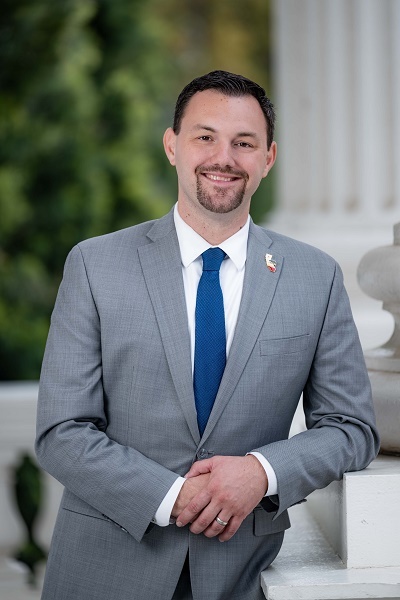
Rep. Nick Schultz
Sponsored bills
Under existing law, if a person is convicted of either driving under the influence (DUI) of any alcoholic beverage or drug, or under the combined influence of any alcoholic beverage and drug or driving while having 0.08% or more, by weight, of alcohol in the person's blood within 10 years of 2 separate violations of specified DUI offenses, or any combination thereof, that resulted in convictions, that person has committed an offense punishable by imprisonment in the county jail for not less than 120 days nor more than one year and by a fine, as specified. This bill would, instead, make the above DUI conviction punishable as a wobbler by imprisonment in the county jail for not less than 120 days nor more than one year and by a fine, as specified, or by imprisonment in the county jail for 16 months or 2 or 3 years and a fine, as specified. By increasing the punishment of a crime, this bill would impose a state-mandated local program. Under existing law, if a person is convicted of DUI and the offense occurred within 10 years of 3 or more separate violations for driving under the influence that resulted in specified convictions, that person has committed an offense punishable as either a misdemeanor or a felony. This bill would, instead, make the above DUI conviction punishable as a wobbler if the offense occurred within 10 years of 3 separate violations for driving under the influence that resulted in specified convictions, and punishable as a felony by imprisonment in the county jail for 16 months or 2 or 3 years and a fine, as specified, if the offense occurred within 10 years of 4 or more separate violations for driving under the influence that resulted in specified convictions. By increasing the punishment of a crime, this bill would impose a state-mandated local program. This bill would make conforming changes. This bill would incorporate additional changes to Sections 23546, 23550, and 23550.5 of the Vehicle Code proposed by AB 1830 to be operative only if this bill and AB 1830 are enacted and this bill is enacted last. The California Constitution requires the state to reimburse local agencies and school districts for certain costs mandated by the state. Statutory provisions establish procedures for making that reimbursement. This bill would provide that no reimbursement is required by this act for a specified reason.
(1) The California Integrated Waste Management Act of 1989, administered by the Department of Resources Recycling and Recovery (CalRecycle) , generally regulates the disposal, management, and recycling of solid waste, as defined. The act authorizes CalRecycle to certify a local enforcement agency and requires CalRecycle and certified local enforcement agencies to perform specified functions with regard to the regulation of solid waste management, including issuing and enforcing solid waste facility permits. The act prohibits a person from operating a solid waste facility without a solid waste facilities permit, as provided. The California Global Warming Solutions Act of 2006 charges the State Air Resources Board with monitoring and regulating sources of emissions of greenhouse gases that cause global warming in order to reduce emission of greenhouse gases. The act requires the state board to adopt rules and regulations to achieve the maximum technologically feasible and cost-effective greenhouse gas emissions reductions, as provided. This bill would require the owner or operator of a solid waste landfill, as defined, to, among other things, notify the Department of Resources Recycling and Recovery if a subsurface elevated temperature event occurs. The bill would define "subsurface elevated temperature event" to mean an event where subsurface gas or waste temperatures at a solid waste landfill persistently exceed 131 degrees Fahrenheit over a substantial area and meets other performance criteria, as determined by the department. The bill would authorize the department to require the owner or operator of a solid waste landfill experiencing a subsurface elevated temperature event to create a corrective action plan that includes, but is not limited to, a cost assessment for fully implementing the corrective action plan. The bill would authorize the department or a local enforcement agency to impose an administrative civil penalty of $100,000 per day for failing to comply with these requirements, as provided. The bill would require all penalties collected to be deposited into the Landfill Subsurface Fire Mitigation Community Fund, which the bill would create in the State Treasury. The bill would continuously appropriate moneys in the fund to the California Alternative Energy and Advanced Transportation Financing Authority, to be paid to counties in which a subsurface elevated temperature event occurred to mitigate harm to a person or community affected by a subsurface elevated temperature event and to be paid to the authority for its costs of implementation. The bill would require the authority to develop guidelines for dispersing these funds, as specified. The bill would authorize the department to become the enforcement agency for a solid waste landfill experiencing a subsurface elevated temperature event, as specified. This bill would authorize the Secretary for Environmental Protection to select and coordinate a multiagency coordination group to investigate and provide recommendations on how to achieve resolution of a subsurface elevated temperature event, as specified. The bill would require a local health department to initiate community health needs assessments to identify and collect information regarding the effects of a subsurface elevated temperature event on an affected community and to share the findings, as provided. By requiring a local health department and a local air pollution control district to perform additional duties, the bill would impose a state-mandated local program. The bill would, upon request by a multiagency coordination group, require the owner or operator of a solid waste landfill that experiences a subsurface elevated temperature event to implement an air monitoring and sampling plan, as specified. The bill would require the owner and operator of a solid waste landfill that experiences a subsurface elevated temperature event to reimburse the members of a multiagency coordination group and the local health department for all reasonable and necessary expenses incurred, as specified. The bill would authorize the department to adopt regulations to implement and enforce them as emergency regulations, as specified. (2) This bill would declare its provisions to be severable. (3) The California Constitution requires the state to reimburse local agencies and school districts for certain costs mandated by the state. Statutory provisions establish procedures for making that reimbursement. This bill would provide that no reimbursement is required by this act for a specified reason.
Existing law prohibits a state or local law enforcement agency or officer from knowingly arresting or knowingly participating in the arrest of any person for performing, supporting, or aiding in the performance of a legally protected health care activity, as defined, or for obtaining a legally protected health care activity, if the legally protected health care activity is lawful in this state. Existing law prohibits a state or local public agency from cooperating with or providing information to an individual or agency from another state or a federal law enforcement agency, as specified, regarding a legally protected health care activity. Existing law prohibits specified persons, including a judicial officer, a court employee, or an authorized attorney, among others, from issuing a subpoena in connection with a proceeding in another state regarding an individual performing, supporting, or aiding in the performance of a legally protected health care activity in this state, or an individual obtaining a legally protected health care activity in this state, if the legally protected health care activity is lawful in this state. This bill would make those provisions apply regardless of the patient's location. Existing law authorizes the Governor to surrender, on demand of the executive authority of any other state, any person in this state charged in the other state with committing an act in this state, or in a 3rd state, intentionally resulting in a crime in the state whose executive authority is making the demand. This bill would additionally prohibit a state or local law enforcement agency or officer from knowingly arresting or participating in the arrest of any person who the Governor has declined to surrender. Existing law requires any out-of-state subpoena, warrant, wiretap order, pen register trap and trace order, or other legal process to include an affidavit or declaration under penalty of perjury that the discovery request is not in connection with an out-of-state proceeding relating to a legally protected health care activity, except as specified. Existing law prohibits a California corporation that provides electronic communication services or remote computing services to the general public from complying with an out-of-state subpoena, warrant, wiretap order, pen register trap and trace order, other legal process, or request by a law enforcement agent or entity seeking records that would reveal the identity of the customers using those services, data stored by, or on behalf of, the customer, the customer's usage of those services, the recipient or destination of communications sent to or from those customers, or the content of those communications, unless the out-of-state subpoena, warrant, wiretap order, pen register trap and trace order, other legal process, or request from law enforcement includes the affidavit or declaration described above. This bill would extend those provisions to also apply to a California corporation that provides financial services, as defined, to the general public. By expanding the situations in which a declaration under penalty of perjury is required, this bill would expand the scope of the crime of perjury and impose a state-mandated local program. The bill would authorize the Attorney General to commence an action to enforce these provisions, as specified, and would authorize the court to assess a statutory penalty of $10,000 for a first violation, and $15,000 for a 2nd or subsequent violation, against any person or entity found to have intentionally, knowingly, willingly, or recklessly complied with or provided information in response to an inquiry, investigation, subpoena, or summons regarding legally protected health care activity in violation of these provisions. The California Constitution requires the state to reimburse local agencies and school districts for certain costs mandated by the state. Statutory provisions establish procedures for making that reimbursement. This bill would provide that no reimbursement is required by this act for a specified reason.
Existing law generally provides for the regulation of law enforcement agencies and requires specified law enforcement agencies to maintain policies on, among other things, use of force, hate crimes, and gun violence restraining orders. Existing law requires the Commission on Peace Officer Standards and Training to establish and keep updated a field training officer course relating to competencies of the field training program and police training program that addresses how to interact with persons with certain conditions. This bill would make it unlawful for a law enforcement officer to deny, delay, obstruct, or fail to facilitate access to medical evaluation or treatment for an individual under law enforcement control, but who is not in the custody of, or detained by, the Department of Corrections and Rehabilitation, if it is safe and reasonable to provide access to treatment and a medical professional has been requested or is present and is willing to render care to the individual. If access to medical evaluation or treatment is denied or delayed when a medical professional is present and is willing to assist, the bill would require law enforcement to document the basis of the denial within 72 hours of the incident, as specified. The bill would authorize administrative discipline, including suspension or termination, against a law enforcement officer who violates those provisions. By creating a new crime and by increasing the duties on local law enforcement relating to reporting, the bill would impose a state-mandated local program. The California Constitution requires the state to reimburse local agencies and school districts for certain costs mandated by the state. Statutory provisions establish procedures for making that reimbursement. This bill would provide that with regard to certain mandates no reimbursement is required by this act for a specified reason. With regard to any other mandates, this bill would provide that, if the Commission on State Mandates determines that the bill contains costs so mandated by the state, reimbursement for those costs shall be made pursuant to the statutory provisions noted above.
Existing law requires a prosecuting attorney to disclose to the defendant or their attorney all relevant real evidence seized or obtained as a part of the investigation of the offenses charged that is in the possession of the prosecuting attorney or known to be in the possession of the investigating agencies. Existing law requires the disclosures to be made at least 30 days prior to the trial, unless good cause is shown why a disclosure should be denied, restricted, or deferred. Existing law prohibits an attorney from disclosing or permitting to be disclosed to a defendant, members of the defendant's family, or anyone else copies of child pornography evidence, unless specifically permitted to do so by the court after a hearing and a showing of good cause. Existing law authorizes an attorney to disclose or permit to be disclosed copies of child pornography evidence to persons employed by the attorney or to persons appointed by the court to assist in the preparation of a defendant's case if that disclosure is required for that preparation. This bill would require the court, in specified criminal cases involving sexually explicit material depicting an adult victim, to issue a protective order governing the disclosure of that material, with conditions sufficient to safeguard the victim's privacy, prevent unnecessary copying, transmission, or dissemination of the material, and ensure the defendant's right to a fair trial and a meaningful opportunity to participate in their own defense. This bill would, if the court issues that protective order, prohibit the parties from disclosing to any person copies of sexually explicit material depicting an adult victim, unless specifically permitted to do so by the protective order. The bill would authorize an attorney for any party to disclose or permit to be disclosed copies of sexually explicit material depicting an adult victim subject to the protective order, to a person necessary for the preparation of the case, including the defendant. The bill would, if a party receives any other sexually explicit material of the adult victim, require the party to notify the court for inclusion of the material in any existing protective order, or inclusion in a new or separate protective order. By increasing duties on local prosecutors, this bill would impose a state-mandated local program. This bill would clarify that these provisions do not relieve the prosecution from the duty to disclose the existence of any relevant or exculpatory evidence nor affect the admissibility of any relevant evidence in court. The California Constitution requires the state to reimburse local agencies and school districts for certain costs mandated by the state. Statutory provisions establish procedures for making that reimbursement. This bill would provide that, if the Commission on State Mandates determines that the bill contains costs mandated by the state, reimbursement for those costs shall be made pursuant to the statutory provisions noted above.
The California Environmental Quality Act (CEQA) requires a lead agency, as defined, to prepare, or cause to be prepared, and certify the completion of, an environmental impact report on a project that it proposes to carry out or approve that may have a significant effect on the environment or to adopt a negative declaration if it finds that the project will not have that effect. CEQA also requires a lead agency to prepare a mitigated negative declaration for a project that may have a significant effect on the environment if revisions in the project would avoid or mitigate that effect and there is no substantial evidence that the project, as revised, would have a significant effect on the environment. CEQA defines various terms, including "natural and protected lands" for its purposes. This bill would revise the definition of that term to include habitats for protected species identified as candidate, sensitive, or species of special status by state or federal agencies. CEQA exempts from its requirement projects that consist exclusively of a day care center that is not located in a residential area and projects that consist exclusively of an advanced manufacturing facility located on a site zoned exclusively for industrial uses. This bill would additionally exempt projects consisting exclusively of a family day care home, as defined. The bill would, for the exemption for the day care center and family day care home, instead require the projects for those facilities not be located in an area zoned for industrial use or within 3,200 feet of a facility that actively extracts or refines oil or natural gas in order for the exemption to apply. The bill would revise the exemption for advanced manufacturing facility projects to require those projects to be used exclusively for final tier manufacturing, as defined. The bill would require an applicant of an advanced manufacturing project that is exempted from CEQA under the bill's requirement to enter into a bona fide community benefits agreement, as provided, and to comply with certain labor requirements, as provided. The bill would require the lead agency, before determining that an advanced manufacturing project is exempt from CEQA, to hold at least one public hearing on the project and to ensure that the applicant complies with the requirement to enter into a bona fide community benefits agreement and the labor requirements. CEQA exempts from its requirements a rezoning that implements the schedule of actions contained in an approved housing element. CEQA specifies that this exemption does not apply to a rezoning that would allow for the construction of certain facilities, including oil and gas infrastructure. CEQA also specifies that this exemption does not apply rezoning that would allow for construction to occur within the boundaries of any natural and protected lands, except as provided. This bill would repeal the exception from the CEQA exemption for rezoning that would allow for oil and gas infrastructure. The bill would specify that the definition of "natural and protected land" does not include habitats for protected species that would be added to that definition by this bill for purposes the exception for rezoning that would allow for construction to occur within the boundaries of any natural and protected lands to the CEQA exemption. CEQA specifies, for a proposed housing development project that would otherwise be exempt from its requirements but for a single condition required for the exemption to apply, that the application of CEQA is limited to the effects upon the environment that are caused by that single condition. CEQA provides that this limited application of CEQA does not apply if the proposed housing project is located on natural and protected land, but does not include "natural and protected land" that is a site within a very high fire hazard severity zone or within the state responsibility area, except as provided. This bill would additionally specify that "natural and protected land" does not include habitats for protected species that would be added to that definition by this bill. Because the bill would imposes additional duties on a lead agency, this bill would impose a state-mandated local program. The California Constitution requires the state to reimburse local agencies and school districts for certain costs mandated by the state. Statutory provisions establish procedures for making that reimbursement. This bill would provide that no reimbursement is required by this act for a specified reason.
Existing law establishes the Medi-Cal program, which is administered by the State Department of Health Care Services and under which qualified low-income individuals receive health care services. The Medi-Cal program is in part governed by, and funded pursuant to, federal Medicaid program provisions. Under existing law, certain vision care benefits are covered under the Medi-Cal program, relating to, among other things, optometric and optician services and eyeglasses, as specified. This bill would require the department, by no later than January 1, 2028, to establish a list of performance measures to ensure that the vision services under the Medi-Cal program meet quality and access criteria. The bill would require that the performance measures be designed to evaluate utilization, access, and availability of Medi-Cal vision services. The bill would require certain information within the performance measures, relating to providers and examinations, among other factors. The bill would require the department, when evaluating performance measures, to consider certain criteria, including trended data and other state performance and quality measures. The bill would require the department to report on each performance measure only to the extent that the department has existing data sources from which to calculate the applicable measure, as specified. The bill would specify a timeline for the posting of performance measures and data on the department's internet website. The bill would also require the department to establish benchmarks for each performance measure and to annually prepare a summary report on complaints and grievances, as specified.
Existing law contains numerous provisions governing the qualifications, standards, and training of peace officers. Existing law requires specified peace officers to successfully complete a training course prescribed by the Commission on Peace Officer Standards and Training (POST) before exercising the powers of a peace officer. Existing law requires the commission, for those instances where individuals have acquired prior comparable peace officer training, to adopt regulations providing for alternative means for satisfying the training required by a specified provision of law. Existing regulations provide a Basic Course Waiver to individuals with qualifying out-of-state or federal law enforcement experience whose law enforcement training, experience, and education are deemed by POST to demonstrate sufficient law enforcement knowledge, skill, and proficiency. This bill would provide that service as a sworn federal law enforcement officer whose primary duties consisted of any one or any combination of immigration inspection, border enforcement, or apprehension, detention, or removal of noncitizens under the federal immigration laws, and the training for that service, does not, standing alone, constitute qualifying training, experience, and education demonstrating sufficient law enforcement knowledge, skill, and proficiency for purposes of determining eligibility for a Regular Basic Course Waiver. By increasing duties on local law enforcement agencies, this bill would impose a state-mandated local program. The California Constitution requires the state to reimburse local agencies and school districts for certain costs mandated by the state. Statutory provisions establish procedures for making that reimbursement. This bill would provide that, if the Commission on State Mandates determines that the bill contains costs mandated by the state, reimbursement for those costs shall be made pursuant to the statutory provisions noted above.
Existing law requires the Public Utilities Commission (PUC) , in consultation with the State Energy Resources Conservation and Development Commission and the Independent System Operator, to take specified actions by December 1, 2020, to facilitate the commercialization of microgrids for distribution customers of large electrical corporations, including, among other actions, by, without shifting costs between ratepayers, developing methods to reduce barriers for microgrid deployment. Under existing law, the PUC requires certain large electrical corporations to jointly develop a Microgrid Incentive Program to fund clean energy microgrids to support the critical needs of vulnerable populations impacted by a grid outage. This bill would require the PUC to require each electrical corporation to provide to the commission, on or before January 15, 2026, the status of any awarded or unallocated funds collected for the Microgrid Incentive Program. The bill would require the commission, after reviewing that information, if it determines additional actions, using funds collected on or before January 1, 2026, are needed, to consider the use of a third-party administrator and to ensure that unallocated funds are allocated to areas that have experienced 2 or more deenergization events, prioritizing vulnerable communities, including access and functional needs populations, and prioritizing customers that operate critical community infrastructure that supports resiliency during a deenergization event. The bill would require, if there are remaining unallocated funds on January 1, 2027, that those funds to be returned to ratepayers. Under existing law, a violation of any order, decision, rule, direction, demand, or requirement of the PUC is a crime. Because a violation of a PUC action implementing the bill's requirements would be a crime, the bill would impose a state-mandated local program. The California Constitution requires the state to reimburse local agencies and school districts for certain costs mandated by the state. Statutory provisions establish procedures for making that reimbursement. This bill would provide that no reimbursement is required by this act for a specified reason.