

The Personal Income Tax Law and the Corporation Tax Law allow various credits against the taxes imposed by those laws, including various motion picture credits, commonly referred to as motion picture credit 1.0, 2.0, 3.0, and 4.0, and the certified studio credit, to be allocated by the California Film Commission in differing amounts equal to specified percentages of the qualified expenditures of a qualified motion picture in this state. Existing law establishes the continuously appropriated Tax Relief and Refund Account and the Corporation Tax Fund and provides that payments required to be made to taxpayers or other persons are to be paid from those funds. This bill would allow a credit against those taxes in an amount between 35% and 50% of qualified expenses relating to the post-production of a qualified motion picture in California to be allocated by the California Film Commission, as specified. The bill would require the credit to be administered in the same manner as the motion picture credit 4.0, except as specified. The bill would require the California Film Commission to utilize a post-production services ratio, as defined, to allocate credits, as specified. The bill would limit the aggregate amount of credits allocated in a fiscal year based on a determination made by the Legislature in the annual Budget Act plus additional amounts, as described. The bill would require that 85% of the total allocable credits are reserved for qualified taxpayers that attest, under penalty of perjury, that they will abide by specified labor condition requirements. By expanding the scope of the crime of perjury, this bill would impose a state-mandated locale program. This bill would allow a qualified taxpayer to elect to be paid a refund if the amount allowable as a credit exceeds the qualified taxpayer's tax liability for the taxable year, as specified. By requiring moneys to be paid from the Tax Relief and Refund Account and the Corporation Tax Fund, the bill would make an appropriation. Existing law requires any bill authorizing a new tax expenditure, as defined, to include tax credits, to contain, among other things, specific goals, purposes, and objectives that the tax credit will achieve, detailed performance indicators, and data collection requirements. This bill would include findings and reporting requirements in compliance with this requirement. The bill would require exchange of information between the Legislative Analyst's Office and other specified agencies in order to comply with these requirements. The bill would make the unauthorized disclosure of this information subject to existing law, the violation of which is a crime. By expanding the scope of a crime, this bill would impose a state-mandated local program. This bill would incorporate additional changes to Sections 17039 and 23036 of the Revenue and Taxation Code proposed by AB 2222 to be operative only if this bill and AB 2222 are enacted and this bill is enacted last. The California Constitution requires the state to reimburse local agencies and school districts for certain costs mandated by the state. Statutory provisions establish procedures for making that reimbursement. This bill would provide that no reimbursement is required by this act for a specified reason.
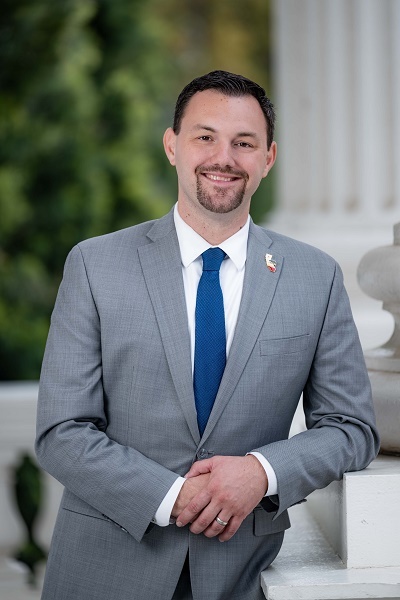
Rep. Nick Schultz
Sponsored bills
This measure would call on Congress to enact legislation that restores and strengthens the full protections of the Voting Rights Act of 1965, and it would call on the President to sign the legislation.
Existing law requires the Office of the State Fire Marshal to develop and make available on its internet website a Wildland-Urban Interface Fire Safety Building Standards Compliance training intended for use in the training of local building officials, builders, and fire service personnel, as specified. Existing law authorizes the Office of the State Fire Marshal to allow certification of contractors who conduct defensible space, home hardening, fuel reduction, roadside clearance, and other contracting activities for wildlife resiliency efforts and who have completed specified training programs. Existing law requires the Office of the State Fire Marshal to develop and update a Wildland-Urban Interface Products listing of products and construction assemblies that comply with prescribed regulations regarding building in a wildland-urban interface area. Existing law authorizes the Office of the State Fire Marshal to expend funds from the Building Standards Administration Special Revolving Fund, upon an appropriation by the Legislature, for the purposes of researching and developing the products listing and the educational and training provisions. Existing law requires the Office of the State Fire Marshal to establish the State Fire Marshal's Wildfire Mitigation Advisory Committee. This bill would require, on or before January 1, 2028, the State Fire Marshal's Wildfire Mitigation Advisory Committee to develop an implementation plan for a home hardening certification program that identifies home hardening measures, including defensible space, that can be voluntarily implemented during renovation or property improvement projects, or both, to substantially reduce the risk of loss during a fire and bring existing building stock into alignment with state building standards for wildland-urban interface areas. The bill would require the committee, in developing the implementation plan for the home hardening certification program, to provide specified recommendations. The bill would authorize the Office of the State Fire Marshal to expend funds from the Building Standards Administration Special Revolving Fund, upon an appropriation by the Legislature, for the purposes of developing the implementation plan for the home hardening certification program. The bill would require the committee, on or before January 1, 2028, to provide a report to specified legislative committees on its findings and recommendations pursuant to these provisions. The bill would require, on or before January 1, 2029, the State Fire Marshal to establish the home hardening certification program based on the recommendations made by the Wildfire Mitigation Advisory Committee.
Existing law specifies the rights and requirements of a claimant or homeowner to bring a civil action for construction defects of a dwelling, including applicable standards for home construction, detailed prelitigation procedures, statute of limitations, burden of proof, and the damages recoverable. Existing law specifies the rights and prohibitions for a builder to defend against a civil action for construction defects, including a prohibition against a builder obtaining a release or waiver in exchange for repair work mandated by law. This bill would modify specific rights, requirements, and prohibitions for the parties to a civil action for construction defects of a dwelling by revising, among other things, the requirements for a prelitigation notice from the claimant to the builder and the evidence a claimant is required to affirmatively demonstrate to make a claim. Among other changes, the bill would repeal the prohibition on, and, instead, authorize, a builder to obtain a release or waiver in exchange for certain repair work, as specified. Commencing July 1, 2027, the bill would prohibit an insurer from asserting repairs as a voluntary payment or as a payment made without the insurer's consent, or denying counting the costs associated with those repairs, against a deductible or self-insured retention. The bill would provide that its provisions apply to structures subject to the provisions governing the rights of a claimant or homeowner to bring a civil action for construction defects of a dwelling, except as provided. The bill would further provide that its provisions are severable.
(1) Existing law generally provides for the placement of foster youth in various placement settings. Existing law provides for the implementation of the resource family approval process, and defines a resource family as an individual or family who has successfully met both the home environment assessment standards and permanency assessment criteria, as specified, necessary for providing care for a child placed by a public or private child placement agency by court order, or voluntarily placed by a parent or legal guardian. Existing law requires the State Department of Social Services, on or before January 1, 2027, to adopt a simplified approval process for relative caregivers, as specified. Existing law conditions implementation of the simplified approval process upon federal financial participation and approval, as specified. This bill would, among other things, require the department to, on or before July 1, 2028, adopt a kinship family approval process to approve a relative, nonrelative extended family member, or extended family member of an Indian child to be a kinship family, which the bill defines as an individual or family who has successfully met the home environment assessment and family engagement standards, as specified, necessary for providing care for a child placed by a county child welfare department or a probation department by court order or voluntarily placed by a parent or legal guardian. The bill would require counties to ensure relatives, nonrelative extended family members, and extended family members of an Indian child are provided information regarding approval processes and the option to choose between the kinship family approval process, the resource family approval process, and in the case of an Indian child, a tribally approved home. The bill would also make technical, conforming changes to make provisions that are applicable to resource families also applicable to kinship families, and delete obsolete provisions. By imposing duties on counties relating to the approval of, and placement of children with, kinship families, this bill would impose a state-mandated local program. The bill would make certain personal identifying information, written evaluation reports, and court proceedings relating to kinship families confidential, except as specified. The bill would require the application form signed by a kinship family applicant to be signed with a declaration by the applicant that the information submitted is true, correct, and contains no material omissions of fact to the best knowledge and belief of the applicant, and makes any person who willfully and knowingly, with the intent to deceive, makes a false statement or fails to disclose a material fact in their application is guilty of a misdemeanor. By expanding the scope of an existing crime, the bill would impose a state-mandated local program. (2) Existing law authorizes the court to order temporary placement of the child in the home of a relative, extended family member, or nonrelative extended family member, and requires the court to consider the results of a criminal records check, among other things, before ordering that placement. Existing law also authorizes the placement of a child on an emergency basis in the home of a relative or nonrelative extended family member after a criminal records check, among other things, and requires the relative or nonrelative extended family member to submit an application for approval as a resource family after the emergency placement. Existing law authorizes the court to place a child after an order of removal, or on a temporary or emergency basis in the home of a relative, regardless of the status of any criminal record exemption or resource family approval if the court finds that the placement does not pose a risk to the health and safety of the child. This bill would additionally authorize the court to place a child after an order of removal, or on a temporary or emergency basis, in the home of a nonrelative extended family member or an extended family member, regardless of the status of any criminal record exemption, kinship family approval, tribally approved home, or resource family approval if the court finds that the placement does not pose a risk to the health and safety of the child. (3) Existing law prohibits a school district from permitting access to pupil records to a person without written parental consent or under judicial order except as authorized by law, and requires access to be granted to a list of specified persons and entities, including, among others, a parent or a caregiver, who have direct responsibility for the care of the pupil. This bill would add a kinship family, as defined, to the list of persons and entities required to be granted access to pupil records. To the extent the bill would impose additional duties on local educational agencies, the bill would impose a state-mandated local program. (4) Existing law establishes the Adoption Assistance Program to benefit children residing in foster homes by providing the stability and security of permanent homes and requires a child to be eligible for benefits under the program if they meet specified criteria, including that the prospective adoptive parent has completed specified background check requirements. This bill would authorize a child to receive benefits under the program if the prospective parent is otherwise ineligible if the prospective parent or an adult living in the home was granted a criminal record exception or the juvenile court authorized the placement with a prospective parent who was not granted the exemption. (5) Existing constitutional provisions require that a statute that limits the right of access to the meetings of public bodies or the writings of public officials and agencies be adopted with findings demonstrating the interest protected by the limitation and the need for protecting that interest. This bill would make legislative findings to that effect. (6) The California Constitution requires the state to reimburse local agencies and school districts for certain costs mandated by the state. Statutory provisions establish procedures for making that reimbursement. This bill would provide that with regard to certain mandates no reimbursement is required by this act for a specified reason. With regard to any other mandates, this bill would provide that, if the Commission on State Mandates determines that the bill contains costs so mandated by the state, reimbursement for those costs shall be made pursuant to the statutory provisions noted above. (7) This bill would incorporate additional changes to Section 49076 of the Education Code proposed by SB 1017 to be operative only if this bill and SB 1017 are enacted and this bill is enacted last. This bill would incorporate additional changes to Sections 366.31, 11363, 11386, 16120, and 16501.1 of the Welfare and Institutions Code proposed by AB 2764 to be operative only if this bill and AB 2764 are enacted and this bill is enacted last. This bill would incorporate additional changes to Section 11461.6 of the Welfare and Institutions Code proposed by SB 1051 to be operative only if this bill and SB 1051 are enacted and this bill is enacted last.
Existing law requires the Department of Corrections and Rehabilitation, when amending or adopting regulations that may impact the visitation of inmates, to recognize and consider the value of visiting as a means to improve prison safety, the important role of inmate visitation in maintaining connection with family and community, and the role of inmate visitation in preparing for successful release. This bill would require each facility, as defined, to establish at least 3 days of visitation per week. The bill would require a facility, if it will not be open for visitation, to provide notice to the impacted population as soon as possible. The bill would authorize a facility to deny contact visits only for specified reasons, including, among others, possession of contraband or pending or sustained rules violations that result in a restricted housing unit term. The bill would require facility staff to take specified actions with regard to correctable issues with a visitation, including, among other things, allowing the visitor a reasonable opportunity to correct the issue and return to visiting up to one hour before the end of the visiting period. The bill would prohibit denial of visitation if a visitor has traveled more than 170 miles to attend a visit and has not visited within 30 days, unless there has been a finding of a credible and documented security threat. The bill would prohibit a facility from searching visitors without their voluntary, informed, and written consent. The bill would authorize a facility to respond to refusal of that search only with denial of contact visiting for that day, and would require the facility to offer a noncontact visit on the same day, if space is available. The bill would authorize other restrictions and procedures for searches of visitors, as specified.
Existing law authorizes a peace officer, humane society officer, or animal control officer to take possession of a stray or abandoned animal in specified circumstances, including when the animal is kept without proper care and attention, as specified. Existing law provides that if an animal is seized pursuant to those provisions or pursuant to a warrant, the owner is personally liable to the seizing agency for the cost of the seizure and care of the animal. Existing law deems the animal to then be abandoned by the owner under specified circumstances, including if the owner, within 14 days of notice of availability of the animal to be returned, fails to pay charges and take possession of the animal. This bill would make those provisions apply to animals seized pursuant to any provision of California law.
Existing law requires each law enforcement agency, on or before January 1, 2021, to maintain a policy that provides a minimum standard on the use of force. Existing law requires that the policy include, among other things, training standards and requirements relating to demonstrated knowledge and understanding of the law enforcement agency's use of force policy by officers, investigators, and supervisors. Existing law prohibits a law enforcement agency from authorizing the use of a carotid restraint or choke hold by any peace officer employed by that agency. This bill would, until January 1, 2030, prohibit a law enforcement agency, including a federal law enforcement agency, from using a wearable electroshock device within the State of California. The bill would also prohibit a law enforcement agency from using state funds to purchase a wearable electroshock device. The bill would require a law enforcement agency to update their use of force policies to prohibit the use of a wearable electroshock device. By increasing the duties on local law enforcement, the bill would impose a state-mandated local program. The bill would require the Division of Law Enforcement within the Department of Justice to conduct a study on the safety and community impacts of wearable electroshock devices and provide recommendations for appropriate standards and safeguards for their use, and would require the department to report to the Legislature on the findings and recommendations of the study on or before January 1, 2029. The California Constitution requires the state to reimburse local agencies and school districts for certain costs mandated by the state. Statutory provisions establish procedures for making that reimbursement. This bill would provide that, if the Commission on State Mandates determines that the bill contains costs mandated by the state, reimbursement for those costs shall be made pursuant to the statutory provisions noted above.
Existing law authorizes a court to issue various orders relating to criminal investigations, including the interception of wire or electronic communications, the installation and use of a pen register or trap and trace device, or a search warrant upon specified grounds. Existing law prohibits the issuance of any orders or warrants for the purpose of investigating or recovering evidence of a prohibited violation, as defined. Existing law requires an out-of-state warrant for specified records to include an attestation that the evidence sought is not related to an investigation into, or enforcement of, a prohibited violation. Existing law prohibits the production of records by a California corporation when the corporation knows or should know that the out-of-state warrant relates to an investigation into, or enforcement of, a prohibited violation. This bill would include exercising any rights protected by the First Amendment to the United States Constitution within the definition of "prohibited violation." The bill would expand the prohibition on the production of records relating to investigation into, or enforcement of, prohibited violations to federal court orders.
Existing law requires the Public Utilities Commission to set resource adequacy and resource procurement obligations for load-serving entities, which include electrical corporations, electric service providers, and community choice aggregators. Existing law requires various compliance reporting for load-serving entities. This bill would require the commission, on or before January 1, 2030, to consider a process to consolidate certain plans submitted by load-serving entities into a single procurement plan, and would require the commission, when feasible, to consolidate certain compliance reporting for reliability requirements, as specified. The bill would require the commission, if it determines that the consolidation is not feasible, to set forth its reasons in a specified decision or ruling. Under existing law, a violation of any order, decision, rule, direction, demand, or requirement of the commission is a crime. Because a violation of a commission action implementing the provisions of the bill would be a crime, the bill would impose a state-mandated local program. The California Constitution requires the state to reimburse local agencies and school districts for certain costs mandated by the state. Statutory provisions establish procedures for making that reimbursement. This bill would provide that no reimbursement is required by this act for a specified reason.