Issue · Veterans

Veterans

Every veterans bill, vote, and legislator stance in California, automatically classified by Maddy, our AI policy reader.

Total bills
81
2025-2026 Regular Session
Top supporter
María Elena Durazo
100% support rate
Top opponent
Kelly Seyarto
0% support rate
Ranked legislators
6
5 support · 1 oppose
Key legislators

Who's moving veterans in California

Legislators moving veterans in California
Legislator Party Stance Support rate Votes
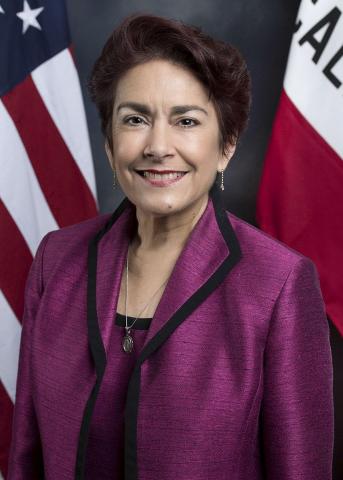
ME
María Elena Durazo Senate · District 26
D
Strong +
100% 176
John Laird
John Laird Senate · District 17
D
Strong +
100% 176
Anna Caballero
Anna Caballero Senate · District 14
D
Strong +
100% 181
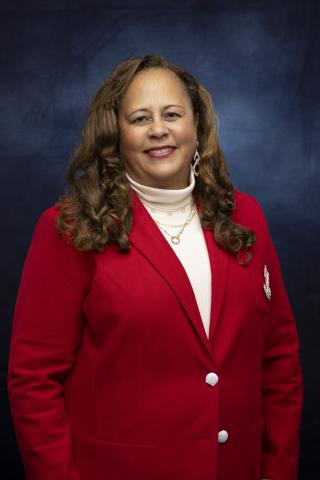
Laura Richardson
Laura Richardson Senate · District 35
D
Strong +
100% 197
Lola Smallwood-Cuevas
Lola Smallwood-Cuevas Senate · District 28
D
Strong +
100% 166
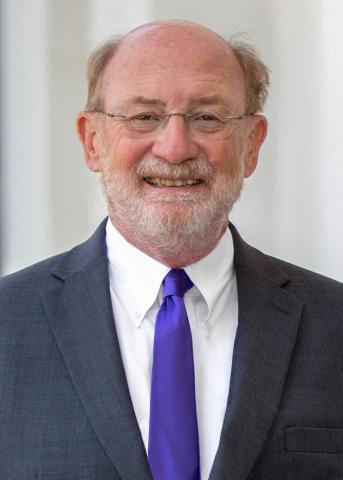
Kelly Seyarto
Kelly Seyarto Senate · District 32
R
Strong −
0% 220
Showing 61–70 of 81 bills

All veterans bills

passed · California · Senate Jul 2, 2025

SB 798: Veterans.

Existing law authorizes the board of supervisors of any county to grant financial assistance, relief, and support to indigent veterans, as specified. Existing law authorizes this assistance to include the necessary expenses, not to exceed $350, for burial or cremation of any indigent veteran. This bill would increase that amount to $1,000.
signed · California · Senate Jul 3, 2025

SCR 56: Relative to National Military Appreciation Month.

This measure would honor those service members who have served and are serving in our nation's military, and would recognize the month of May 2025 as National Military Appreciation Month.
passed · California · Senate Jul 15, 2025

SB 56: Property taxation: disabled veterans' exemption: household income.

The California Constitution provides that all property is taxable, and requires that it be assessed at the same percentage of fair market value, unless otherwise provided by the California Constitution or federal law. The California Constitution and existing property tax law provide various exemptions from taxation, including, among others, a disabled veterans' exemption. Under existing law, the disabled veterans' exemption exempts from taxation part of the full value of property that constitutes the principal place of residence of a veteran, the veteran's spouse, or the veteran and veteran's spouse jointly, and the unmarried surviving spouse of a veteran, as provided, if the veteran incurred specified injuries or died while on active duty in military service, as described. Existing law exempts that part of the full value of the residence that does not exceed $100,000, or $150,000 if the household income of the claimant does not exceed $40,000, as adjusted for inflation, as specified. This bill would, until January 1, 2036, exclude service-connected disability payments from the definition of "household income" for purposes of the disabled veterans' exemption. The bill would also correct an erroneous cross-reference in the above-described provisions. By imposing additional duties on local tax officials, the bill would impose a state-mandated local program. Existing law requires any bill authorizing a new tax expenditure to contain, among other things, specific goals, purposes, and objectives that the tax expenditure will achieve, detailed performance indicators, and data collection requirements. This bill would include additional information required for any bill authorizing a new tax expenditure. The California Constitution requires the state to reimburse local agencies and school districts for certain costs mandated by the state. Statutory provisions establish procedures for making that reimbursement. This bill would provide that, if the Commission on State Mandates determines that the bill contains costs mandated by the state, reimbursement for those costs shall be made pursuant to the statutory provisions noted above. Existing law requires the state to reimburse local agencies annually for certain property tax revenues lost as a result of any exemption or classification of property for purposes of ad valorem property taxation. This bill would provide that, notwithstanding those provisions, no appropriation is made and the state shall not reimburse local agencies for property tax revenues lost by them pursuant to the bill. This bill would take effect immediately as a tax levy.
failed · California · Senate Feb 2, 2026

SB 1: Personal income taxes: exclusion: Military Services Retirement and Surviving Spouse Benefit Payment Act.

The Personal Income Tax Law, in conformity with federal income tax laws, defines "gross income" as income from whatever source derived, except as specifically excluded, and provides various exclusions from gross income, including an exclusion for combat-related special compensation. This bill, for taxable years beginning on or after January 1, 2025, and before January 1, 2035, would exclude from gross income retirement pay received by a qualified taxpayer, as defined, during the taxable year, not to exceed $20,000, from the federal government for service performed in the uniformed services, as defined. The bill, for taxable years beginning on or after January 1, 2025, and before January 1, 2035, would also exclude from gross income annuity payments received by a qualified taxpayer, as defined, during the taxable year, not to exceed $20,000, pursuant to a United States Department of Defense Survivor Benefit Plan. The bill would make related findings and declarations. Existing law requires any bill authorizing a new tax expenditure to contain, among other things, specific goals, purposes, and objectives that the tax expenditure will achieve, detailed performance indicators, and data collection requirements. This bill also would include additional information required for any bill authorizing a new tax expenditure. This bill would take effect immediately as a tax levy.
failed · California · Senate Feb 2, 2026

SB 23: Property taxation: exemption: disabled veteran homeowners.

The California Constitution provides that all property is taxable, and requires that it be assessed at the same percentage of fair market value, unless otherwise provided by the California Constitution or federal law. The California Constitution and existing property tax law provide various exemptions from taxation, including, among others, a disabled veterans' exemption and a veterans' organization exemption. This bill would exempt from taxation, property owned by, and that constitutes the principal place of residence of, a veteran, the veteran's spouse, or the veteran and the veteran's spouse jointly, if the veteran is 100% disabled. The bill would provide an unmarried surviving spouse a property exemption in the same amount that they would have been entitled to if the veteran was alive and if certain conditions are met. The bill would require certain documentation to be provided to the county assessor to receive the exemption and would prohibit any other real property tax exemption from being granted to the claimant if receiving the exemption provided by the provisions of this bill. The bill would make these exemptions applicable for property tax lien dates occurring on or after January 1, 2025, but occurring before January 1, 2035. By imposing additional duties on local tax officials, the bill would impose a state-mandated local program. Existing law requires any bill authorizing a new tax expenditure to contain, among other things, specific goals, purposes, and objectives that the tax expenditure will achieve, detailed performance indicators, and data collection requirements. This bill would state that it is the intent of the Legislature to apply those requirements to the bill and would set forth specified information relating to those requirements. The California Constitution requires the state to reimburse local agencies and school districts for certain costs mandated by the state. Statutory provisions establish procedures for making that reimbursement. This bill would provide that, if the Commission on State Mandates determines that the bill contains costs mandated by the state, reimbursement for those costs shall be made pursuant to the statutory provisions noted above. Existing law requires the state to reimburse local agencies annually for certain property tax revenues lost as a result of any exemption or classification of property for purposes of ad valorem property taxation. This bill would provide that, notwithstanding those provisions, no appropriation is made and the state shall not reimburse local agencies for property tax revenues lost by them pursuant to the bill. This bill would take effect immediately as a tax levy.
passed both · California · Senate Aug 27, 2026

SB 296: Property taxation: exemption: disabled veteran homeowners.

The California Constitution provides that all property is taxable and requires that it be assessed at the same percentage of fair market value, unless otherwise provided by the California Constitution or federal law. The California Constitution and existing property tax law provide various exemptions from taxation, including, among others, a disabled veterans' exemption and a veterans' organization exemption. This bill would exempt from taxation, as provided, 50% of that part of the full value of the property that does not exceed $1,000,000 that is owned by, and that constitutes the principal place of residence of, a veteran, the veteran's spouse, or the veteran and the veteran's spouse jointly, if, among other things, the veteran is 100% disabled. The bill would provide an unmarried surviving spouse a property exemption in the same amount that they would have been entitled to if the veteran were alive and if certain conditions are met. In the case of a disabled veteran or unmarried surviving spouse whose household income does not exceed a specified amount for the relevant assessment year, as prescribed, the bill would exempt 100% of that part of the full value of the property that does not exceed $1,000,000 from taxation. The bill would require certain documentation to be provided to the county assessor to receive the exemption and would prohibit any other real property tax exemption from being granted to the claimant if receiving the exemption provided by the provisions of this bill. The bill would make these exemptions applicable for property tax lien dates occurring on or after January 1, 2027, but occurring before January 1, 2032. By imposing additional duties on local tax officials, the bill would impose a state-mandated local program. Existing law requires any bill authorizing a new tax expenditure to contain, among other things, specific goals, purposes, and objectives that the tax expenditure will achieve, detailed performance indicators, and data collection requirements. This bill also would include additional information required for any bill authorizing a new tax expenditure. The California Constitution requires the state to reimburse local agencies and school districts for certain costs mandated by the state. Statutory provisions establish procedures for making that reimbursement. This bill would provide that, if the Commission on State Mandates determines that the bill contains costs mandated by the state, reimbursement for those costs shall be made pursuant to the statutory provisions noted above. Existing law requires the state to reimburse local agencies annually for certain property tax revenues lost as a result of any exemption or classification of property for purposes of ad valorem property taxation. This bill would provide that, notwithstanding those provisions, no appropriation is made and the state shall not reimburse local agencies for property tax revenues lost by them pursuant to the bill. This bill would take effect immediately as a tax levy.
passed · California · Senate Jun 23, 2025

SR 49: Relative to the 75th anniversary of the Korean War.

California's Senate Resolution 49 designates June 25, 2025, as the state's official commemoration of the 75th anniversary of the Korean War. The resolution honors the service and sacrifice of Korean War veterans (over 36,000 U.S. service members died) and recognizes the enduring U.S.-South Korea alliance forged during the conflict. It is a ceremonial resolution with no binding policy changes, intended to raise awareness of this historical event.
passed · California · Senate Aug 29, 2025

SB 55: State parks: facilities pass: Gold Star Family members.

Existing law requires the Department of Parks and Recreation to issue a park pass for free use of all park facilities in the state park system to a veteran of war in which the United States has been, or may be, engaged, who is a resident of this state, who presents to the department proof of a disability, proof of being held captive as a prisoner of war, or proof of being a recipient of a Congressional Medal of Honor, and proof of an honorable discharge from service. This bill would require an eligible Gold Star Family member, as defined, upon presentation of proof to the department, to be issued a pass for use of all facilities, including boat launching facilities, in units of the state park system.
signed · California · Assembly Jun 25, 2025

ACR 89: Relative to Military Appreciation Month.

This measure would honor the men and women who have served and are serving in our nation's military and would recognize the month of May 2025 as Military Appreciation Month.
passed · California · Assembly Aug 13, 2026

AB 53: Native American tribes: fish and wildlife: conservation and mitigation lands.

(1) Existing law requires the Wildlife Conservation Board to establish and administer, through the Department of Fish and Wildlife, the California Riparian Habitat Conservation Program with the purpose and goal of protecting, preserving, and restoring riparian habitats throughout the state, as specified. Existing law authorizes the board to authorize the department to award grants and loans for the purposes of the program to specified entities. This bill would authorize the board to authorize the department to make those awards to federally recognized tribes. (2) Existing law establishes the Inland Wetlands Conservation Program under the board with the purpose and goal of carrying out the programs of the Central Valley Habitat Joint Venture. Existing law authorizes the board to make grants or loans for the purpose of wetland and associated upland habitat acquisition, restoration, or enhancement to specified entities. This bill would authorize the board to make those grants or loans to federally recognized tribes. (3) Existing law authorizes the department to enter into contracts or other agreements with nonprofit conservation groups or resource conservation districts for the management and operation of department-managed lands. This bill would authorize the department to also enter into those contracts or other agreements with federally recognized tribes.
Sub-Topics Government Spending
Showing 61 to 70 of 81 bills
Previous 1 6 7 8 9 Next