Issue · Transportation

Transportation (Bicycle Infrastructure)

Every transportation bill, vote, and legislator stance in California, automatically classified by Maddy, our AI policy reader.

Total bills
17
2025-2026 Regular Session
Top supporter
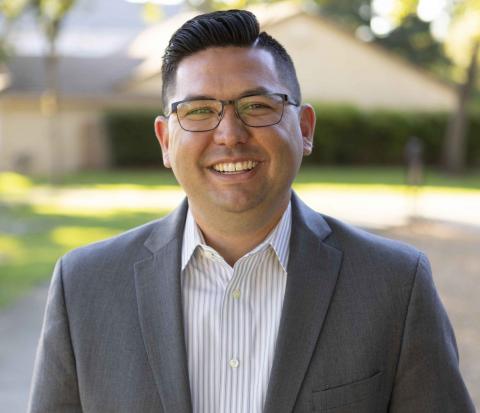
Blanca Pacheco
100% support rate
Top opponent
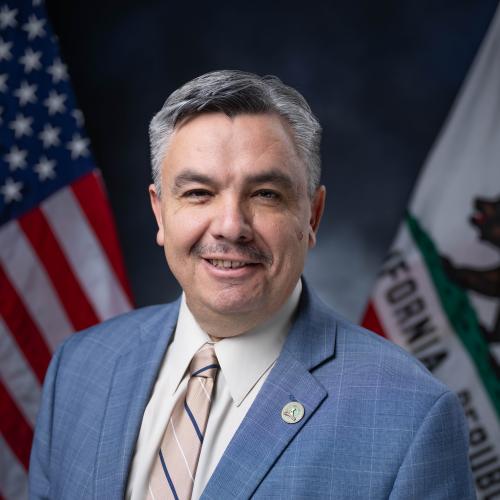
Joshua Hoover
0% support rate
Ranked legislators
10
5 support · 5 oppose
Key legislators

Who's moving bicycle infrastructure in California

Legislators moving bicycle infrastructure in California
Legislator Party Stance Support rate Votes
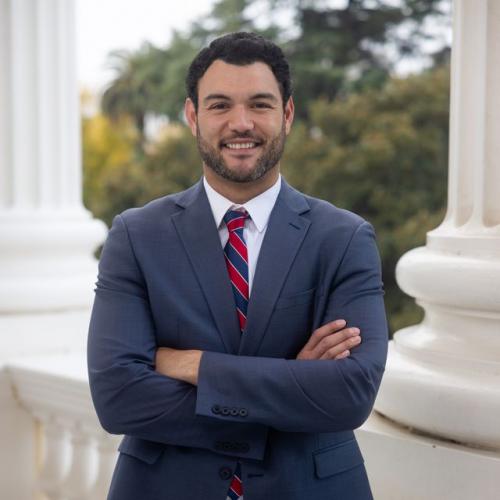
Blanca Pacheco
Blanca Pacheco House · District 64
D
Strong +
100% 8
Cecilia Aguiar-Curry
Cecilia Aguiar-Curry House · District 4
D
Strong +
100% 8
Gregg Hart
Gregg Hart House · District 37
D
Strong +
100% 8
Juan Carrillo
Juan Carrillo House · District 39
D
Strong +
100% 8
LaShae Sharp-Collins
LaShae Sharp-Collins House · District 79
D
Strong +
100% 8
Joshua Hoover
Joshua Hoover House · District 7
R
Strong −
0% 9
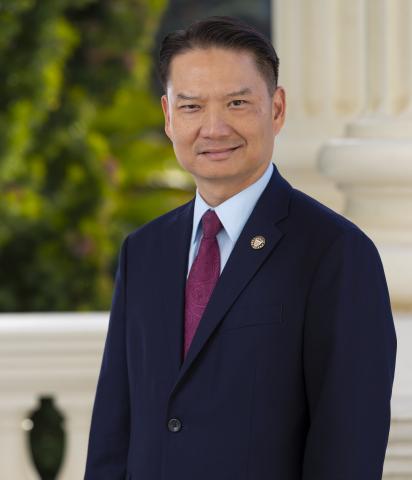
Tri Ta
Tri Ta House · District 70
R
Strong −
0% 8
Ali Macedo
Ali Macedo House · District 33
R
Strong −
0% 7
David Tangipa
David Tangipa House · District 8
R
Strong −
0% 7
Kelly Seyarto
Kelly Seyarto Senate · District 32
R
Strong −
0% 7
Showing 11–17 of 17 bills

All transportation bills

signed · California · Assembly Aug 27, 2026

AB 1569: Pupil safety: electric bicycle: safety and training program.

Existing law establishes the State Department of Education in state government, and vests the department with specified powers and duties relating to the state's public school system. Existing law establishes the Department of the California Highway Patrol, under the control of the Commissioner of the California Highway Patrol, within the Transportation Agency. Existing law requires the Department of the California Highway Patrol to develop statewide safety and training programs based on evidence-based practices for users of electric bicycles. This bill would require, on or before March 1, 2028, the State Department of Education, in consultation with the Department of the California Highway Patrol, to develop a standardized electric bicycle safety and training program for pupils in grades 7 to 12, inclusive, as provided. In developing the program, the bill would authorize the State Department of Education and the Department of the California Highway Patrol to collaborate with local law enforcement agencies or local governments that have implemented electric bicycle training programs already to ensure the program reflects proven best practices. The bill would encourage local educational agencies and parent organizations to offer training demonstrations to pupils and parents on electric bicycle operations in collaboration with local law enforcement agencies or local governments, as specified.
signed · California · Assembly Jul 14, 2025

AB 544: Electric bicycles: required equipment.

(1) Existing law requires a bicycle operated during darkness on a highway, sidewalk, or bikeway to be equipped with, among other things, a red reflector or a solid or flashing red light with a built-in reflector on the rear that is visible from a distance of 500 feet to the rear when directly in front of lawful upper beams of headlamps on a motor vehicle. Existing law defines "bicycle" for these purposes to, among other things, include an electric bicycle. Existing law defines an electric bicycle as a bicycle equipped with fully operable pedals and an electric motor that does not exceed 750 watts of power and categorizes electric bicycles into 3 classes. A violation of the provisions relating to the requirements for equipping a bicycle or an electric bicycle is punishable as an infraction. This bill would require an electric bicycle during all hours to be equipped with a red reflector or a solid or flashing red light with a built-in reflector on the rear that is visible from a distance of 500 feet to the rear when directly in front of lawful upper beams of headlamps on a motor vehicle. By expanding the requirements for equipping an electric bicycle, the violation of which would be an infraction, this bill would impose a state-mandated local program. (2) Existing law requires a minor to wear a properly fitted and fastened helmet when engaged in specified activities, including operating a bicycle, nonmotorized scooter, or skateboard or wearing in-line or roller skates and requires that the helmet meet the standards of the American Society for Testing and Materials or the United States Consumer Product Safety Commission. Existing law prohibits a record of a violation of those provisions from being transmitted to the court and prohibits the imposition of a fee if the parent or guardian of the minor delivers proof that the minor has a helmet that meets specific standards and has completed a bicycle safety course, as specified. Existing law makes a violation of these provisions an infraction punishable by a fine of not more than $25, except as specified. This bill would, for a violation of these provisions involving an electric bicycle, prohibit a record of a violation from being transmitted to the court and the imposition of a fee if the parent or guardian of the minor delivers proof that the minor has a helmet that meets the specified safety standards and has completed a specialized electric bicycle safety course. The bill would also specify that the specialized electric bicycle safety course developed by the Department of the California Highway Patrol satisfies the requirement that a person complete a specialized electric bicycle safety course. By imposing new requirements with respect to electric bicycles, the violation of which would be an infraction, this bill would impose a state-mandated local program. (3) The California Constitution requires the state to reimburse local agencies and school districts for certain costs mandated by the state. Statutory provisions establish procedures for making that reimbursement. This bill would provide that no reimbursement is required by this act for a specified reason.
signed · California · Senate Oct 6, 2025

SB 727: The Great Redwood Trail Agency.

(1) Existing law creates the Great Redwood Trail Agency with various powers and duties relating to rail service in the north coast area of the state, including the authority to acquire, own, lease, and operate railroad lines and equipment, and requires the agency, to the extent funding is available, to initiate or complete a railbanking process on its rail rights-of-way and to plan, design, construct, operate, and maintain a trail in, or parallel to, its rail rights-of-way. For purposes of these provisions, existing law grants the agency specified powers including, among others, the power to enter into and perform all necessary contracts in accordance with certain requirements. Under existing law, the authority is governed by a board of directors composed of nonvoting members appointed by the Governor and 9 voting members appointed by various local governments in the north coast area including a city representative selected by the cities served by the authority's rail line. This bill would expressly state that the agency is a subdivision of the state and would require the city representative to be selected by the cities through a process adopted by the board. The bill would require the board to adopt an annual budget and to provide for regular audits of the agency's accounts and records and to maintain accounting records and report accounting transactions in accordance with generally accepted accounting principles, as specified. The bill would require a contract and prescribe competitive bidding procedures for any work, as defined, not performed by the personnel of the agency if the agency estimates the work to cost over a specified threshold, as prescribed. This bill would exempt the agency, except with respect to the development of any projects on properties that are not owned or directly controlled by the agency, from building ordinances and zoning ordinances of the counties and cities in the jurisdiction of the agency. The bill would exempt certain uses of agency real property by third parties from laws governing the disposition of surplus property. The bill would exempt railroad tracks and ties owned by the agency from laws governing the control of hazardous waste if they remain in place within the agency's right-of-way, as specified. (2) Existing law authorizes the agency to contract with the State Coastal Conservancy, a state agency, or another organization to staff the agency. This bill would also authorize the agency to receive funds from the conservancy or any other state agency as may be appropriated by the Legislature. (3) Existing law authorizes the agency to adopt ordinances and to adopt and enforce rules and regulations for the administration, operation, use, and maintenance of trails, excursion rail service, and other recreational facilities and programs, as specified. The bill would authorize the agency to contract with state law enforcement agencies, or local law enforcement agencies of jurisdictions within the service area of the agency, to enforce the adopted rules, regulations, and ordinances of the agency. (4) Existing law requires the ancillary bicycle and pedestrian pathways that provide connections between and access to Sonoma-Marin Area Rail Transit District station sites and the district's other pathways to be known as "The Great Redwood Trail, Southern Segment." This bill would require the planned bike and pedestrian pathway running from the district's station in the City of Larkspur to the northern terminus of the Golden Gate Bridge in the County of Marin to be known as the Great Redwood Trail. (5) By imposing additional duties on the Great Redwood Trail Agency, this bill would impose a state-mandated local program. The California Constitution requires the state to reimburse local agencies and school districts for certain costs mandated by the state. Statutory provisions establish procedures for making that reimbursement. This bill would provide that, if the Commission on State Mandates determines that the bill contains costs mandated by the state, reimbursement for those costs shall be made pursuant to the statutory provisions noted above.
signed · California · Assembly Jul 28, 2025

AB 965: Vehicles: electric bicycles.

Existing law defines an electric bicycle and classifies electric bicycles into 3 classes with different restrictions. Under existing law, a "class 1 electric bicycle" is a bicycle equipped with a motor that, among other things, provides assistance only when the rider is pedaling and ceases to provide assistance when the bicycle reaches the speed of 20 miles per hour. Under existing law, a "class 2 electric bicycle" is a bicycle equipped with a motor that may be used exclusively to propel the bicycle and is not capable of providing assistance when the bicycle reaches the speed of 20 miles per hour. Under existing law, a "class 3 electric bicycle" is a bicycle equipped with a speedometer and a motor that, in pertinent part, provides assistance only when the rider is pedaling, and that ceases to provide assistance when the bicycle reaches the speed of 28 miles per hour. Existing law prohibits a person under 16 years of age from operating a class 3 electric bicycle. A violation of this provision is punishable as an infraction. This bill would prohibit a person from selling a class 3 electric bicycle to a person under 16 years of age and would make a violation of that prohibition an infraction punishable by a fine not to exceed $250. By creating a new infraction, this bill would impose a state-mandated local program. The California Constitution requires the state to reimburse local agencies and school districts for certain costs mandated by the state. Statutory provisions establish procedures for making that reimbursement. This bill would provide that no reimbursement is required by this act for a specified reason.
signed · California · Senate Oct 3, 2025

SB 671: Pedestrian crossing signals.

Under existing law, a pedestrian control signal showing a "WALK" or approved "Walking Person" symbol means a pedestrian may proceed across the roadway in the direction of the signal. Under existing law, a pedestrian facing a flashing "DON'T WALK" or "WAIT" or approved "Upraised Hand" symbol with a "countdown" signal, as specified, means a pedestrian may start crossing the roadway in the direction of the signal but requires the pedestrian to finish crossing prior to the display of the steady "DON'T WALK" or "WAIT" or approved "Upraised Hand" symbol, as specified. Upon the first placement or replacement of a traffic-actuated signal, as specified, existing law requires that traffic-actuated signal to be installed and maintained to detect bicycle or motorcycle traffic on the roadway. For these purposes, existing law defines a traffic-actuated signal as an official traffic signal, as specified, that displays one or more of its indications in response to traffic detected by mechanical, visual, electrical, or other means. Upon the first placement or replacement of a state-owned or -operated traffic-actuated signal, existing law requires that the traffic-actuated signal to be installed and maintained to have a leading pedestrian interval (LPI) and include the installation, activation, and maintenance of an accessible pedestrian signal (APS) and detector that complies with certain sections of the California Manual on Uniform Traffic Control Devices (CA MUTCD) . At crosswalks with state-owned or -operated traffic-actuated signals and pedestrian hybrid beacons with pedestrian signal heads, this bill would require the walk indication and other visual signals to comply with CA MUTCD. The bill would require these pedestrian signal heads to have an APS pushbutton or touch-free APS that activates "WALK" or "DON'T WALK" intervals and other visual signals at signalized intersections in nonvisual formats. The bill would require touch-free APS to be installed at new signalized pedestrian crossings on capital projects on the state highway system, encroachment projects, and highway maintenance-funded projects, as specified. The bill would require, as soon as practicable, all existing state-owned or -operated traffic signals located in certain areas to be identified and recorded in the Department of Transportation management system (TMS) inventory database to assist future annual operational review requirements and coordination with local agencies for delegated signals. The bill would require LPIs to be implemented at these existing state-owned or -operated traffic signals locations at the next opportunity for regularly scheduled operational reviews. The bill would require local agencies to report the implementation of LPIs at locations where local agencies are operating state-owned traffic-actuated signals so these locations can be included in the TMS inventory database. By placing new requirements on local agencies, this bill would create a state-mandated local program. The California Constitution requires the state to reimburse local agencies and school districts for certain costs mandated by the state. Statutory provisions establish procedures for making that reimbursement. This bill would provide that, if the Commission on State Mandates determines that the bill contains costs mandated by the state, reimbursement for those costs shall be made pursuant to the statutory provisions noted above.
passed · California · Assembly Aug 29, 2025

AB 954: Interregional transportation strategic plan: bicycle highways.

Existing law establishes the state transportation improvement program (STIP) process, pursuant to which the California Transportation Commission programs, on a biennial basis, available state and federal funds for transportation capital improvement projects, other than state highway rehabilitation and repair projects, for the 5-year period of the STIP, based on the interregional transportation improvement program (ITIP) prepared by the Department of Transportation and the regional transportation improvement programs (RTIP) prepared by regional transportation planning agencies. Existing law requires projects included in the ITIP to be consistent with the interregional transportation strategic plan (ITSP) . Existing law requires the department to submit the ITSP to the commission for approval and requires the ITSP, among other things, to be directed at achieving a high functioning and balanced interregional transportation system and consistent with the California Transportation Plan. This bill would require, to the extent feasible and consistent with the California Transportation Plan, the department to assess incorporating bicycle highways into strategic interregional corridors within the ITSP.
signed · California · Senate Oct 13, 2025

SB 71: California Environmental Quality Act: exemptions: transit projects.

The California Environmental Quality Act (CEQA) requires a lead agency, as defined, to prepare, or cause to be prepared, and certify the completion of an environmental impact report on a project that it proposes to carry out or approve that may have a significant effect on the environment or to adopt a negative declaration if it finds that the project will not have that effect. CEQA also requires a lead agency to prepare a mitigated negative declaration for a project that may have a significant effect on the environment if revisions in the project would avoid or mitigate that effect and there is no substantial evidence that the project, as revised, would have a significant effect on the environment. CEQA, until January 1, 2030, exempts from its requirements active transportation plans, pedestrian plans, or bicycle transportation plans for the restriping of streets and highways, bicycle parking and storage, signal timing to improve street and highway intersection operations, and the related signage for bicycles, pedestrians, and vehicles. This bill would extend the operation of the above-mentioned exemption indefinitely. The bill would also exempt a transit comprehensive operational analysis, as defined, a transit route readjustment, or other transit agency route addition, elimination, or modification, from the requirements of CEQA. Because a lead agency would be required to determine whether a plan qualifies for this exemption, the bill would impose a state-mandated local program. CEQA, until January 1, 2030, exempts from its requirements certain transportation-related projects, such as pedestrian and bicycle facilities, transit prioritization projects, public projects located on a site that is wholly within the boundaries of an urbanized area or urban cluster, as provided, for the institution or increase of bus rapid transit, bus, or light rail service, including the construction or rehabilitation of stations, terminals, or existing operations facilities, and public projects for the construction or maintenance of infrastructure of facilities to charge, refuel, or maintain zero-emission public transit buses, trains, or ferries, as provided. CEQA requires, except as provided, those exempted projects to be carried out by a local agency and meet certain requirements, including certain labor requirements. This bill would extend the operation of the above-mentioned exemption until January 1, 2040. The bill would exempt from the requirements of CEQA a public project for the protection and improvement of bus rapid transit, bus, or light rail service, including the protection, operation, and maintenance, public projects for the protection, improvement, institution, or increase of microtransit, paratransit, shuttle, and ferry, and for the protection, maintenance, construction, operation, or rehabilitation of stops that will be exclusively used by zero-emission, near-zero-emission, low oxide of nitrogen engine, compressed natural gas fuel, fuel cell, or hybrid powertrain vehicles, rail or cable cars, rolling stock, or vessels. The bill would, until January 1, 2032, exempt from the requirements of CEQA a public project for the protection, improvement, institution, or increase of microtransit, paratransit, shuttle, bus, ferry, bus rapid transit, or light rail service, including the protection, maintenance, construction, operation, or rehabilitation of stops, stations, terminals, or existing operations facilities, if used primarily by near-zero-emission, low oxide of nitrogen engine, compressed natural gas fuel, or hybrid powertrain vehicles, except as provided. The bill would exclude from this exemption certain public projects for the construction or rehabilitation of a ferry terminal, as provided, and, except as provided, public projects for transit services operated by a transportation network company, as defined. Because a lead agency would be required to determine whether a project qualifies for this exemption, the bill would impose a state-mandated local program. CEQA exempts from its requirements a project that consists exclusively of a combination of any of the components of specified transportation-related projects. This bill would extend the operation of the above-mentioned exemption until January 1, 2040. The bill would, until January 1, 2040, exempt from the requirements of CEQA a project that combines any of those specified transportation-related projects and a housing development project that is either subject to a nondiscretionary approval or is exempt from CEQA, as provided. Because a lead agency would be required to determine whether a project qualifies for this exemption, the bill would impose a state-mandated local program. Existing law exempts from the requirements of CEQA public projects for the institution or increase of passenger rail service, other than light rail service that is eligible for a specified exemption, including the construction or rehabilitation of stations, terminals, or existing operations facilities, which will be exclusively used by zero-emission trains. This bill would extend the operation of the above-mentioned exemption until January 1, 2040. The bill would exempt from the requirements of CEQA public projects for the improvement of passenger rail service, other than light rail service eligible for a specified exemption, including the maintenance of stations, terminals, or existing operations facilities, which will be exclusively used by zero-emission trains, public projects for the maintenance, construction, or rehabilitation of stations, terminals, or existing operations facilities which will be exclusively used by zero-emission certified Tier 4 or cleaner rolling stock or locomotives, as provided. The bill would exclude from this exemption public projects located in certain air basins for the maintenance, construction, or rehabilitation of stations, terminals, or existing operations facilities that will be used by certified Tier 4 or cleaner rolling stock or locomotives that are not zero-emission rolling stock or locomotives. Because a lead agency would be required to determine whether a project qualifies for this exemption, the bill would impose a state-mandated local program. Existing law requires certain CEQA-exempt projects exceeding specified dollar amounts to meet certain criteria, as provided. This bill would instead require certain CEQA-exempt projects that are, based on the project engineer's cost estimate, anticipated to exceed a specified dollar amount, to meet certain criteria, as provided. The bill would require the Office of Land Use and Climate Innovation, beginning January 1, 2026, and every two years thereafter, to adjust these amounts to reflect changes in the Consumer Price Index, as provided, and publish the updated amounts on its internet website. The bill would authorize the Office of Land Use and Climate Innovation to implement, interpret, or make specific that provision without taking any regulatory action. This bill would declare that its provisions are severable. The California Constitution requires the state to reimburse local agencies and school districts for certain costs mandated by the state. Statutory provisions establish procedures for making that reimbursement. This bill would provide that no reimbursement is required by this act for a specified reason.
Showing 11 to 17 of 17 bills