Issue · Labor & Employment

Labor & Employment (Employment Discrimination)

Every labor & employment bill, vote, and legislator stance in California, automatically classified by Maddy, our AI policy reader.

Total bills
14
2025-2026 Regular Session
Top supporter
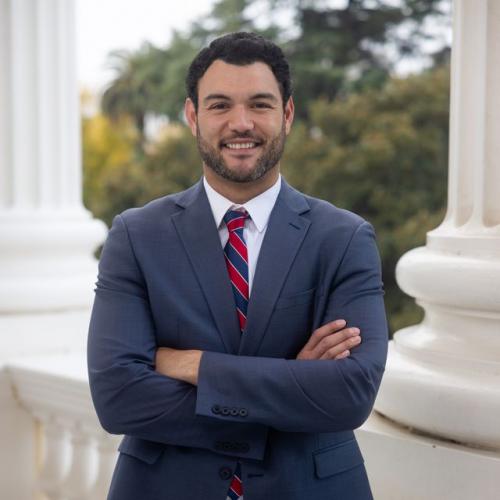
Blanca Pacheco
100% support rate
Top opponent
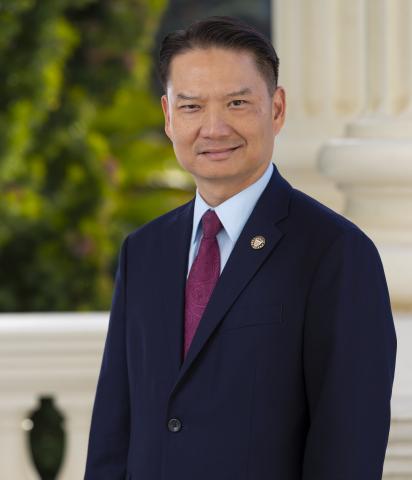
Diane Dixon
0% support rate
Ranked legislators
10
5 support · 5 oppose
Key legislators

Who's moving employment discrimination in California

Legislators moving employment discrimination in California
Legislator Party Stance Support rate Votes
Blanca Pacheco
Blanca Pacheco House · District 64
D
Strong +
100% 25
Aisha Wahab
Aisha Wahab Senate · District 10
D
Strong +
100% 18
Ash Kalra
Ash Kalra House · District 25
D
Strong +
100% 18
Catherine Stefani
Catherine Stefani House · District 19
D
Strong +
100% 18
Isaac Bryan
Isaac Bryan House · District 55
D
Strong +
100% 18
Diane Dixon
Diane Dixon House · District 72
R
Strong −
0% 19
Ali Macedo
Ali Macedo House · District 33
R
Strong −
0% 18
David Tangipa
David Tangipa House · District 8
R
Strong −
0% 16
Kelly Seyarto
Kelly Seyarto Senate · District 32
R
Strong −
0% 15
Tri Ta
Tri Ta House · District 70
R
Strong −
0% 13
Showing 11–14 of 14 bills

All labor & employment bills

signed · California · Assembly Oct 1, 2025

AB 406: Employment: unlawful discrimination: victims of violence.

Existing law, the California Fair Employment and Housing Act, establishes the Civil Rights Department within the Business, Consumer Services, and Housing Agency, under the direction of the Director of Civil Rights, to enforce civil rights laws with respect to housing and employment and to protect and safeguard the right of all persons to obtain and hold employment without discrimination based on specified characteristics or status. Existing law prescribes various functions, duties, and powers of the department, including, among others, to bring prescribed civil actions for violations of specified federal civil rights and antidiscrimination laws. Prior law, until January 1, 2025, authorized an employee who was discriminated or retaliated against for exercising certain rights to file a complaint with the Division of Labor Standards Enforcement in accordance with specified Labor Code provisions. These employee rights include, among other things, the right to take time off work to serve on a trial or to obtain specified crime-related relief. Existing law, as of January 1, 2025, transferred the authority to enforce these discrimination provisions from the Division of Labor Standards Enforcement to the Civil Rights Department. Existing law also repealed the above-described Labor Code provisions, and added new enforcement provisions to the California Fair Employment and Housing Act within the Government Code. Among other changes, these provisions refer to a "qualifying act of violence," as defined, instead of crime, or crime or abuse, for purposes of obtaining relief. Existing law further prohibits an employer with 25 or more employees from discharging or in any manner discriminating or retaliating against an employee who is a victim or who has a family member who is a victim for taking time off work for any of a number of additional prescribed purposes relating to a qualifying act of violence, as defined. Existing law requires an employee, as a condition of taking time off, to provide the employer with reasonable advance notice, unless not feasible, in accordance with certain procedural requirements. This bill would reinstate the above-described former Labor Code provisions, to apply only to alleged actions or inactions occurring on or before December 31, 2024. This bill would also transfer enforcement authority for two additional discrimination provisions relating to attending judicial proceedings from the Division of Labor Standards Enforcement to the Civil Rights Department. The bill would make other conforming changes. This bill would declare that it is to take effect immediately as an urgency statute.
signed · California · Senate Oct 13, 2025

SB 464: Employer pay data.

Existing law establishes the Civil Rights Department within the Business, Consumer Services, and Housing Agency to enforce civil rights laws with respect to housing and employment and to protect and safeguard the right of all persons to obtain and hold employment without discrimination based on specified characteristics or status. Existing law requires a private employer that has 100 or more employees to submit an annual pay data report to the Civil Rights Department that includes the number of employees by race, ethnicity, and sex in 10 specified job categories, the number of employees by race, ethnicity, and sex whose pay falls within federal pay bands, within each job category the median and mean hourly rate for employees having any combination of those characteristics, and the total number of hours worked by each employee counted in each pay band during the "Reporting Year," as specified. This bill would require an employer to collect and store any demographic information gathered by an employer or labor contractor for the purpose of submitting the pay data report separately from employees' personnel records, and, beginning January 1, 2027, increase the number of job categories, as specified above, to 23. Existing law authorizes the department, if it does not receive the pay data report, to seek an order requiring an employer to comply with these provisions. Existing law provides that upon the request of the department, a court may impose a civil penalty upon any employer for failure to file the required report, which shall be payable to the Civil Rights Enforcement and Litigation Fund. This bill would require a court to impose a civil penalty against an employer that fails to file the report if requested to do so by the department.
vetoed · California · Assembly Jan 22, 2026

AB 1136: Employment: immigration and work authorization.

Existing law, the California Fair Employment and Housing Act, prohibits various forms of employment and housing discrimination, including various types of discrimination because of national origin. Existing law empowers the Civil Rights Department to investigate and prosecute complaints alleging unlawful practices. Existing labor law also prohibits an employer or other person or entity from engaging in, or to directing another person or entity to engage in, unfair immigration-related practices against a person for exercising specified rights. Existing law defines unfair immigration-related practices for these purposes. Existing law additionally makes it unlawful for an employer to request more or different immigration documents than are required under federal law, to refuse to honor documents tendered that reasonably appear to be genuine, and to take other related actions concerning employee work authorization documents. Existing law authorizes an applicant for employment or an employee who is subject to an unlawful act that is prohibited by these provisions, or a representative of that applicant for employment or employee, to file a complaint with the Division of Labor Standards Enforcement. Existing law establishes specified civil penalties for a violation of these provisions. This bill would require each employee, upon request, to be released by their employer for up to 5 unpaid working days within a 12-month period in order to attend appointments, interviews, adjudications, legal proceedings, detainment, or any other meeting at which the employee's presence is required concerning the employee's immigration status, work authorization, visa status, or any other immigration-related matter, as specified. The bill would also require a postintroductory employee, as defined, whose employment has been terminated due to an inability to provide documentation of proper work authorization, to be immediately reinstated to their former classification without loss in seniority, subject to producing proper work authorization, except as provided. The bill would also require an employer, if the employee demonstrates a need for additional time, to rehire the employee into the next available opening in the employee's former classification, as a new hire without retaining seniority, subject to the employee providing proper work authorization and meeting certain other conditions. This bill would require an employer that is notified that an employee has been detained or incarcerated as a result of pending immigration or deportation proceedings, to place the employee on an unpaid leave of absence for a period pending the employee's release from detainment or incarceration and not to exceed 12 months. If the employee is released and provides appropriate work authorization documentation within the period of the authorized unpaid leave of absence, the bill would require the employer to return the employee to their former job classification without loss of seniority, except as specified. This bill would apply the above requirements to a public or private employer, but would exempt a public or private employer with 25 or fewer employees. The bill would prohibit each public or private employer from disciplining, discharging, or discriminating against an employee because of national origin or immigration status, or solely because the employee is subject to immigration or deportation proceedings, except as required to comply with the law. The bill would prohibit an employee subject to immigration or deportation proceedings from being discharged solely because of those proceedings, so long as the employee is authorized to work in the United States. This bill would provide that its provisions do not invalidate a collective bargaining agreement or a memorandum of understanding that contains a provision addressing rehire or reinstatement rights or leave rights regarding employees who are subject to immigration proceedings, nor does it supersede the seniority provisions of a collective bargaining agreement or a memorandum of understanding. The bill would require the Labor Commissioner to enforce the bill's provisions. This bill would make these provisions inoperative on July 1, 2029, and would repeal them on January 1, 2030.
signed · California · Senate Oct 8, 2025

SB 642: Employment: payment of wages.

Existing law imposes varying requirements upon employers to share the pay scale for a position with an applicant or in a job posting, as provided. Existing law defines "pay scale" as the salary or hourly wage range that the employer reasonably expects to pay for the position. This bill would revise the definition of "pay scale" to mean an estimate of this expected wage range that an employer reasonably expects to pay for the position upon hire and is made in good faith. Existing law prohibits an employer from paying its employees at wage rates less than the rates paid to employees of the opposite sex or another race or ethnicity for substantially similar work, except under specified circumstances. Existing law requires a civil action to recover wages for a violation of those provisions to be commenced no later than 2 years after the cause of action occurs or, if the cause of action arises out of a willful violation, no later than 3 years after the cause of action occurs. This bill would prohibit an employer from paying employees at wage rates less than the rates paid to employees of another sex instead of the opposite sex, and would require a civil action to recover wages to be commenced no later than 3 years after the last date the cause of action occurs. The bill would provide that an employee is entitled to obtain relief for the entire period of time in which a violation of its provisions exists, but not to exceed 6 years. This bill would specify that a cause of action occurs when an alleged unlawful compensation decision or practice is adopted, when an individual becomes subject to the decision or practice, or when an individual is affected by the application of the decision or practice. The bill would provide that its provisions do not prohibit the application of prescribed legal doctrine. The bill would define "wages," "wage rates," and "sex" for purposes of those provisions, and would specify that its provisions shall not be construed to define these terms for other purposes.
Showing 11 to 14 of 14 bills