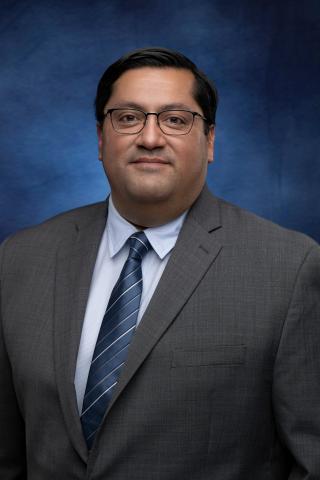
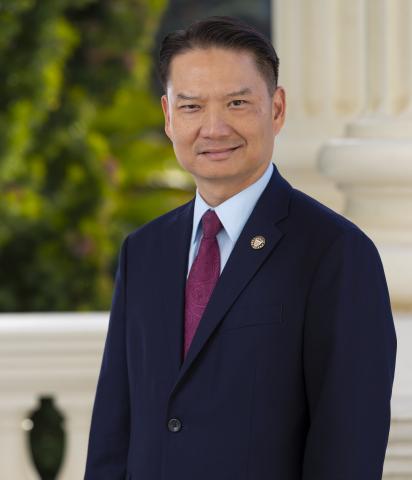
California Assembly Resolution 129 designates July as Sarcoma Awareness Month to promote public education and support for individuals affected by this rare cancer of bones and connective tissues. The resolution highlights the need for improved early detection, expanded research, and better clinical resources to address the challenges of misdiagnosis and underreporting associated with sarcomas. It directs the Chief Clerk of the Assembly to send copies of the resolution to the authors for distribution.
This bill proclaims September 2026 as Suicide Prevention Awareness Month in California to raise visibility for mental health resources and reduce stigma. The resolution highlights the severity of suicide as a public health issue, citing statistics on death rates and the increased risk faced by specific groups such as LGBTQIA+ youth and veterans. It encourages residents to openly discuss mental well-being and directs attention to existing support services like the 988 lifeline and local crisis centers.
This California state resolution urges federal immigration agencies to prioritize and expedite the processing of Deferred Action for Childhood Arrivals renewals, work authorization documents, and H-1B visas. It cites significant delays in application processing that have caused income instability and job losses for over 140,000 Californians participating in the DACA program. The resolution specifically highlights the impact on essential workers in education and health care, arguing that timely processing is necessary to protect community economic stability and workforce availability.
The electors of a county may propose an ordinance to the county board of supervisors by submitting an initiative petition containing signatures by registered voters in the county in an amount equal to 10% of the number of votes cast within the county for all candidates for Governor at the preceding gubernatorial election. If the county elections official certifies that an initiative petition has been signed by at least that number of voters, the county board of supervisors is required to either adopt the ordinance or submit it to the voters at the next statewide election occurring not less than 88 days later. This bill would require any Fresno County initiative petition that has been certified as sufficient by the Fresno County Registrar of Voters on or before July 8, 2026, to be submitted, without alteration, to the voters at the November 3, 2026, statewide general election. This bill would make legislative findings and declarations as to the necessity of a special statute for the County of Fresno. This bill would declare that it is to take effect immediately as an urgency statute.
This bill is a House Resolution that formally recognizes the value of "food as medicine" in improving public health and reducing healthcare costs in California. It highlights how providing medically tailored meals, produce prescriptions, and other nutrition services helps prevent and manage diet-related conditions, particularly for communities of color. The text cites evidence that these programs lower emergency room visits and hospitalizations while noting that they are currently optional under existing state healthcare initiatives. By documenting these successes and the role of local providers, the resolution aims to encourage broader adoption of these services to support patient health and economic stability.
This House resolution honors California veterans and urges the federal government to speed up the processing of disability claims. It highlights that long wait times for these benefits can cause financial hardship and delay access to necessary medical care. The bill calls on Congress and the Department of Veterans Affairs to reduce backlogs by improving staffing, increasing administrative efficiency, and modernizing their claims systems. Ultimately, it is a formal request for federal action rather than a law that changes state rules or allocates new funds.
Existing law requires the State Department of Education to identify an evidence-based online training program that a county office of education, school district, state special school, or charter school that serves pupils in grades 7 to 12, inclusive, can use to train school staff and pupils as part of their policy on pupil suicide prevention. Existing law requires the department, subject to an appropriation for these purposes, to provide a grant to a county office of education to acquire a training program identified by the department and disseminate that training program at no cost to specified educational entities, as specified. This bill would revise and recast these provisions by (1) deleting the requirement to provide the above-described grant, (2) deleting the requirement of the department to identify the above-described evidence-based online training program, (3) instead requiring the Behavioral Health Services Oversight and Accountability Commission to develop an online training program to train school staff, pupils who are 13 years of age or older, and parents, guardians, or caregivers of pupils as part of the policy on pupil suicide prevention adopted by county offices of education, school districts, state special schools, and charter schools that serve pupils in kindergarten or in any of grades 1 to 12, inclusive, as specified. The bill would require those educational entities that elect to conduct suicide risk screenings to report, on or before June 30, 2027, and June 30 annually thereafter, the number of pupils screened, and which screening instruments were used, for the reporting year, to the department, as provided, and would require the department to compile and post statewide aggregate data on these screenings on its internet website, as provided. This bill would declare that it is to take effect immediately as an urgency statute.
Existing law, the Pharmacy Law, provides for the licensure and regulation of pharmacists by the California State Board of Pharmacy. Existing law authorizes a pharmacist to, among other things, perform certain procedures or functions and furnish specified drugs. Existing law authorizes the refilling of a prescription for a dangerous drug without the authorization of the prescriber if the prescriber is unavailable to authorize the refill and, in the pharmacist's professional judgment, failure to refill the prescription might interrupt the patient's ongoing care and have a significant adverse effect on the patient's well-being. Existing law requires a pharmacist to notify the prescriber, as specified, of any prescription refilled without their authorization. This bill would only require a pharmacist to provide that notification if a prescriber is identified.
Existing law, the Health Care Decisions Law, provides for the creation, form, and revocation of advance health care directives, and authorizes an adult having capacity to give an individual health care instruction. Under existing law, the advance health care directive of a patient in a skilled nursing facility is not effective unless a patient advocate or ombudsman signs the advance directive as a witness and declares that they are serving as a witness pursuant to this requirement. Existing law authorizes a witness who is a patient advocate or ombudsman to rely on the representations of the administrators or staff of the skilled nursing facility, or of family members, as convincing evidence of the identity of the patient, as specified. This bill would delete a patient advocate from the above-described witness duties, thus requiring that an ombudsman witness the advance health care directive of a patient in a skilled nursing facility.
Existing law provides for the licensure and regulation of drug testing laboratories and adult alcoholism or drug abuse recovery or treatment facilities and provides for the certification and regulation of adult alcoholism or drug abuse recovery or treatment programs by the State Department of Health Care Services and authorizes the department to enforce those provisions. Existing law authorizes a facility described above to offer transportation services to an individual who is seeking recovery or treatment services only if specified conditions are met, including, among other things, that any air transportation provided to the individual includes a return ticket that may be used by the individual upon discharge and that a return ticket not used by an individual upon discharge is made available to the individual upon request for a period of one year following the individual's discharge. This bill would require a laboratory, facility, or program described above that provides air transportation to provide a ticket for round-trip transportation. The bill would additionally require, as conditions on the provision of transportation services, that the cost of the recovery or treatment services are prohibitive for the individual without assistance from the laboratory, facility, or program, and would require the laboratory, facility, or program to obtain written acknowledgment by the individual that the transportation is not tied to insurance benefits or program participation, to document the purpose and cost of the transportation, to compile information related to the provision of transportation, and to annually publish the compiled information on its internet website. The bill would require a laboratory, facility, or program to retain the information for a minimum of 5 years and to provide that information to the department upon request. Existing law prohibits facilities and programs described above and related persons from giving or receiving remuneration or anything of value for the referral of a person who is seeking alcohol or other drug recovery or treatment services. This bill would additionally apply the prohibition described above to the inducement of a person seeking services and would clarify that the prohibition prohibits specified practices by facilities or programs, including, among others, influencing or inducing an individual to enter or stay in a treatment or recovery program and recruiting individuals for treatment, unless otherwise specified.