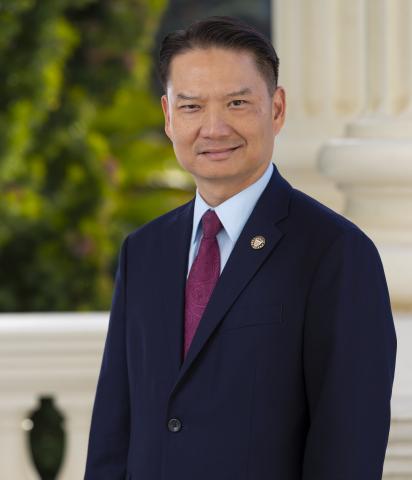
Existing law, the Trial Jury Selection and Management Act, governs the selection of jurors and formation of trial juries for civil and criminal cases in all trial courts of the state. Existing law requires the judge in a criminal action or proceeding alleging a violent felony, prior to discharging the jury, to provide specified information to trial jurors regarding mental health awareness, including information about stress relief and symptoms that may be experienced following exposure to trauma. This bill would authorize the County of Santa Cruz and two other counties, selected by the Judicial Council, to conduct a pilot program for the provision of no-cost mental health services to jurors and alternate jurors following the receipt of a verdict in a criminal action or proceeding alleging a violent felony, as defined. The bill would require the Judicial Council to enter into a memorandum of understanding with the behavioral health directors of the participating counties for the purposes of providing the above-described mental health services, and would require the memorandum of understanding to include, among other things, the number of no-cost mental health sessions available to jurors. The bill would require the participating counties to terminate the pilot program no later than January 1, 2034, and would require the counties to report specified information regarding the pilot program to the Judicial Council. The bill would require the Judicial Council to provide a report to the Legislature no later than July 1, 2035, regarding the pilot program, and would require the report to include the number of jurors who were offered mental health resources pursuant to this program and recommendations for improving outreach and access to mental health services for jurors. The bill would repeal these provisions on January 1, 2036.
Existing law establishes the State Department of Public Health, which, among other things, administers various programs that prevent disease and promote health. This bill would create the California Investigational Peptide and Novel Compound Research and Therapeutic Access Program and would require the department to convene a working group with specified members to study and make recommendations regarding the creation of a state-authorized research and investigational therapeutic framework, as specified. The bill would require the working group to study potential uses of investigational therapeutic compounds and novel peptide compounds, among other things, and to submit a report to the Legislature detailing its findings and recommendations no later than January 1, 2029. The bill would repeal these provisions on January 1, 2030.
Existing law requires specified occupied structures that are constructed on or after January 1, 2017, or constructed before that date and subject to subsequent modifications, to have an automated external defibrillator (AED) , as specified. Existing law exempts specified structures from these requirements, including structures that are owned or operated by any local government entity and specified health facilities. Existing law specifies that a structure with an existing AED in the common area of the structure meets the above-described requirement to have an AED without the installation of another AED. Existing law requires a person or entity that acquires an AED to, among other things, notify an agent of the local emergency medical services agency of the existence, location, and type of AED acquired, ensure that the AED is maintained and tested according to the manufacturer's guidelines, and ensure that the AED is tested at least biannually and after each use. Existing law provides that a person or entity that acquires an AED is not liable for civil damages resulting from the act or omission in the rendering of emergency care if certain requirements relating to the operation and maintenance of an AED are met. This bill would additionally require the specified structures described above to have an AED if that structure serves a population of adults 55 years of age or older and has the capacity to serve 50 or more adults 55 years of age or older.
This bill designates April 2026 as Parkinson's Disease Awareness Month in California. It directly affects state officials and the public by formally recognizing the importance of raising awareness for this specific health condition. The primary mechanism is a legislative proclamation that appears in the state statutes to mark the month. This action serves as an official acknowledgment of the disease without changing laws or funding.
This bill designates the month of March 2026 as Kidney Month in California to raise awareness about chronic kidney disease. It highlights the importance of early detection and screening, noting that many people with the condition are unaware they have it. The resolution aims to educate the public on prevention and the risks associated with kidney failure, particularly among marginalized communities.
This measure would designate the week of March 15, 2026, to March 21, 2026, inclusive, as Family Physician Week, recognize the invaluable contributions of family physicians to California's health care system, and encourage continued investment in primary care to strengthen the family medicine workforce.
This measure would designate February 28, 2026, as Rare Disease Day and, with respect to rare diseases and disorders, would recognize the importance of improving awareness, encouraging accurate and early diagnosis, and supporting national and global efforts to develop effective treatments, diagnostics, and cures.
This bill designates March 2026 as Colorectal Cancer Awareness Month in California to highlight the disease's impact and promote screening efforts. It directly affects all Californians by encouraging early detection through regular check-ups and new testing options, particularly for younger adults and underserved communities facing higher risks. The resolution aims to increase public knowledge about prevention and treatment advancements without mandating specific actions or funding changes.
The Personal Income Tax Law allows various credits against the tax imposed by that law. This bill, for taxable years beginning on or after January 1, 2026, and before January 1, 2031, would allow a credit against those taxes in an amount equal to 50% of unreimbursed costs paid or incurred by a taxpayer for the purchase of durable medical equipment, as defined, for use by a qualifying dependent, as defined, during the taxable year. The bill would limit the credit to $5,000 per taxable year for each qualifying dependent. Existing law requires any bill authorizing a new tax expenditure to contain, among other things, specific goals that the tax expenditure will achieve, detailed performance indicators, and data collection requirements. This bill also would include additional information required for any bill authorizing a new tax expenditure. This bill would take effect immediately as a tax levy.
Existing law, the Knox-Keene Health Care Service Plan Act of 1975, provides for the licensure and regulation of health care service plans by the Department of Managed Health Care and makes a willful violation of the act a crime. Existing law provides for the regulation of disability insurers by the Department of Insurance. Existing law requires a health care service plan or disability insurer to allow an individual to enroll in or change their health benefit plan as a result of a specified triggering event. This bill, the PARENT Act, would make pregnancy a triggering event for purposes of enrollment or changing a health benefit plan. Because a willful violation of this provision by a health care service plan would be a crime, the bill would impose a state-mandated local program. The California Constitution requires the state to reimburse local agencies and school districts for certain costs mandated by the state. Statutory provisions establish procedures for making that reimbursement. This bill would provide that no reimbursement is required by this act for a specified reason.