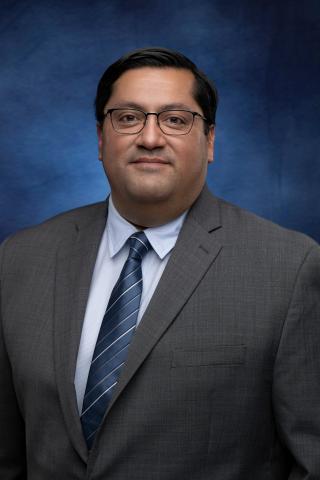
California Assembly Resolution 131 proclaims October 11 through 17, 2026, as Student Cancer Education, Detection, and Prevention Week. The resolution encourages middle schools, high schools, colleges, public health agencies, pediatricians, and community health providers to promote educational campaigns on cancer prevention and detection. These efforts aim to inform students about risk factors, warning signs, and the importance of timely screenings to support better health outcomes for young people in the state.
Existing law provides for the licensure and regulation of health facilities, including general acute care hospitals, by the State Department of Public Health. Existing law authorizes a general acute care hospital to be approved to offer special services, including, among others, cardiac surgery. Existing regulation requires, when a general acute care hospital is providing cardiovascular operative service, that a minimum of 3 surgeons constitute a surgical team if the procedure requires extracorporeal bypass. This bill would require the department, on or before January 1, 2030, to update that regulation to reflect current professional standards of care relating to extracorporeal bypass surgery.
Existing law, the Knox-Keene Health Care Service Plan Act of 1975, provides for the licensure and regulation of health care service plans by the Department of Managed Health Care and makes a willful violation of the act a crime. Existing law also provides for the regulation of health insurers by the Department of Insurance. Existing law authorizes health care service plans and health insurers that cover prescription drugs to utilize reasonable medical management practices, including prior authorization and step therapy, consistent with applicable law. This bill would prohibit a health care service plan contract or a health insurance policy that is issued, amended, or renewed on or after January 1, 2027, from imposing step therapy as a prerequisite to authorizing coverage of any prescription drug used for the treatment of a serious mental illness or substance use disorder, as those terms are defined, except as specified. The bill would specify that the prohibition on step therapy does not apply when the United States Food and Drug Administration-labeled indications and usage of a drug indicate that some prior medication must be taken. Because a willful violation of this provision by a health care service plan would be a crime, the bill would impose a state-mandated local program. The California Constitution requires the state to reimburse local agencies and school districts for certain costs mandated by the state. Statutory provisions establish procedures for making that reimbursement. This bill would provide that no reimbursement is required by this act for a specified reason.
Existing law, the Medical Practice Act, establishes the Medical Board of California to license and regulate the practice of medicine. Former law, repealed as of January 1, 2025, established the Licensed Physicians and Dentists from Mexico Pilot Program, which allowed up to 30 licensed physicians and up to 30 licensed dentists from Mexico to practice medicine or dentistry in California for a period not to exceed 3 years, in accordance with certain requirements. Existing law, operative January 1, 2025, instead, establishes within the act the Licensed Physicians from Mexico Program, which authorizes the board to issue a limited number of nonrenewable 3-year physician's and surgeon's licenses to licensed physicians from Mexico who meet specified criteria. This bill would require the board to issue a full and unrestricted physician's and surgeon's license to a person who has completed 2 3-year terms of the Licensed Physicians from Mexico Program or the former Licensed Physicians and Dentists from Mexico Pilot Program in good standing upon satisfaction of specified requirements, including having an offer of continued employment from a health care facility or practice in California. This bill would establish the California Physician Expansion Act, which would require the board to issue a provisional license to an applicant who holds a full and unrestricted license to practice medicine in another country who meets specified requirements, including that the applicant has not committed any acts or crimes constituting grounds for denial of a certificate, as specified. In this regard, the bill would require the board to submit to the Department of Justice fingerprint images and related information required by the department of all applicants for a provisional license to determine whether the applicant has a criminal conviction record, as specified, and would require the department to provide a state- and federal-level response pursuant to specified provisions for the board to determine whether the applicant is subject to denial of licensure, as specified. The bill would make the provisional license valid for 3 years and would authorize the board to grant a one-time renewal for an additional period of up to 3 years, as specified. The bill would require a provisional licensee to, among other things, be employed by, and practice medicine only within, a sponsoring entity, as specified. The bill would authorize the board to revoke a provisional license or take any other disciplinary action deemed appropriate by the board, as specified. The bill would deem a provisional licensee applicant who meets specified requirements, including having completed at least 36 months of practice under the provisional license without any disciplinary actions, to meet the professional instruction, preliminary education, and postgraduate training requirements for a certificate under the Medical Practice Act. The bill would require the board to establish application, initial licensure, renewal, and conversion fees for the provisional license, as specified. The bill would make findings and declarations relating to its provisions.
Existing law establishes the Medi-Cal program, which is administered by the State Department of Health Care Services and under which qualified low-income individuals receive health care services. The Medi-Cal program is in part governed by, and funded pursuant to, federal Medicaid program provisions. Existing federal law, enacted on July 4, 2025, sets forth various changes to Medicaid eligibility with regard to community engagement reporting, redeterminations, cost sharing, and retroactive coverage, among other factors, for certain Medicaid populations, including beneficiaries between 19 and 64 years of age, inclusive, with income up to 138% of the federal poverty level, commonly known as Medicaid expansion adults. The above-described federal law requires the state, beginning on October 1, 2028, to impose deductions, cost sharing, or similar charges determined appropriate by the state, in an amount greater than $0, with respect to certain care, items, or services furnished to Medicaid expansion adults, with income exceeding 100% and up to 138% of the federal poverty level, as determined by the state. The federal law excludes certain services from these provisions and prohibits the charge from exceeding $35. This bill would, no sooner than October 1, 2028, set a copayment of $0.01 for nonemergency services for the above-described population, as specified. The bill would authorize the provider to collect, retain, or waive the copayment amount. The bill would not apply the copayment requirements to emergency services, family planning services, or any services under certain categories. The bill would prohibit a service provider from denying care or services to an individual solely because of nonpayment of copayment. The bill would create an exemption from a copayment requirement for any visit, service, device, or item for which the Medi-Cal program's payment is $10 or less. The bill would prohibit the total aggregate amount of deductions, cost sharing, or similar charges imposed for all individuals in a family from exceeding 5% of the family income. Existing law requires the department to develop a single, accessible, standardized paper, electronic, and telephone application for insurance affordability programs, including Medi-Cal, for use by all entities authorized to make an eligibility determination for those programs. Existing law authorizes all insurance affordability programs to accept self-attestation for age, date of birth, family size, household income, state residence, pregnancy, work or community engagement activities or exemptions, and any other applicable criteria needed to determine eligibility, to the extent permitted by state and federal law. This bill would instead require those programs to accept self-attestation, to the extent permitted by state and federal law. Existing law requires department, the California Health and Human Services Agency, and the California Health Benefit Exchange (Exchange) board to establish a process for receiving and acting on stakeholder suggestions and concerns regarding the Exchange, as specified. Existing law requires this process to include regular updates on the work to analyze, prioritize, and implement corrections to confirmed defects and proposed enhancements to the eligibility systems and to monitor screening and evaluation for Medi-Cal eligibility. The bill would instead require the establishment of a process for receiving and acting on stakeholder suggestions and concerns regarding the functionality, accuracy, and legally appropriate determination of specified electronic eligibility systems and public internet websites that support Medi-Cal and the Exchange. The bill would also instead require the process to include regular updates on the work to analyze, prioritize, and implement corrections to confirmed defects and proposed enhancements to the eligibility systems and to monitor screening and evaluation for insurance affordability program eligibility. To the extent these provisions expand duties for counties relating to Medi-Cal and insurance affordability program eligibility, the bill would impose a state-mandated local program. The California Constitution requires the state to reimburse local agencies and school districts for certain costs mandated by the state. Statutory provisions establish procedures for making that reimbursement. This bill would provide that, if the Commission on State Mandates determines that the bill contains costs mandated by the state, reimbursement for those costs shall be made pursuant to the statutory provisions noted above.
Existing law requires each county to provide aid, commonly known as a general assistance program, to the county's indigent residents who are not supported by other means and are ineligible for the Medi-Cal program, as specified. Existing law sets forth various provisions relating to county-based health care services for indigent individuals and to reporting systems for those services. This bill would require the State Department of Health Care Services, by July 1, 2027, to establish an internet website where the public can access information on safety-net health care services in the state. The bill would require that the website include certain information and resources, including, among other items, information about each county that provides health care to low-income county residents who are uninsured or underinsured, including eligibility requirements, the cost structure for applicants, and other specified elements. The bill would require the department, in consultation with certain entities, to review the information and resources on the website, as specified. The bill would require each county to submit any changes to the above-described elements to the department within 120 calendar days, as specified. By creating new data-reporting duties for counties, the bill would impose a state-mandated local program. The California Constitution requires the state to reimburse local agencies and school districts for certain costs mandated by the state. Statutory provisions establish procedures for making that reimbursement. This bill would provide that, if the Commission on State Mandates determines that the bill contains costs mandated by the state, reimbursement for those costs shall be made pursuant to the statutory provisions noted above.
(1) Existing law provides for the licensing and regulation of health facilities, including, but not limited to, long-term health care facilities, as defined, by the State Department of Health Care Services. Existing law requires a contract for admission to a long-term care facility to state that a resident shall not be involuntarily transferred within, or discharged from, a long-term health care facility unless the resident is given reasonable notice in writing, and transfer or discharge planning, as specified. Willful or repeated violations of the provisions relating to long-term health care facilities is a misdemeanor. This bill would require long-term health care facilities to provide residents with a notice of a facility-initiated transfer or discharge at least 30 days before a resident is transferred or discharged, unless an exception applies. The bill would require the notice of transfer or discharge to be acknowledged by the signature of the resident or, if applicable, the resident's representative. The bill would make a violation of these provisions a class "B" violation and would make knowingly making a false verification regarding the delivery of a notice of transfer or discharge a willful violation for purposes of the criminal provision described above. The bill would require a notice of discharge or transfer to be provided to a resident and, if applicable, the resident's representative in a translated or accessible format at the same time as the written notice in English if the resident's primary language is not English or if the resident is vision impaired or blind, as specified. The bill would also require the translated or accessible-format notices to be made available to the local long-term care ombudsman upon request. The bill would require the translator to attest, under penalty of perjury, to the accuracy of the translation, thereby expanding the crime of perjury. The bill would require a resident's primary language or sensory impairments to be included in the minimum dataset maintained by the facility. The bill would make a violation of these provisions a class "B" violation. Existing law requires that a copy of the notice of transfer or discharge be sent to the local long-term care ombudsman at the same time notice is provided to the resident or the resident's representative by facsimile machine, email, or first-class mail, as specified. Existing law requires, if a resident is subject to a facility-initiated transfer to a general acute care hospital on an emergency basis, the notice to be provided to the local long-term care ombudsman as soon as practicable. This bill would instead require the notices described above to be sent to the long-term care ombudsman by facsimile, email, or other electronic means. For emergency transfer notices, the bill would require a copy of the notice to be provided to the local long-term care ombudsman as soon as practicable, but in no event later than 24 hours after the transfer. Because a willful or repeated violation of long-term care facilities provisions is a crime and because the crime of perjury is expanded, the bill would impose a state-mandated local program. (2) Existing law requires the State Department of Public Health to establish an inspection and reporting system to ensure that long-term health care facilities are in compliance with state statutes and regulations. Existing law, the Medi-Cal Long-Term Care Reimbursement Act, requires, among other things, that long-term health care facilities timely comply with hearing decisions issued by the department's Office of Administrative Hearings and Appeals for improperly transferring, discharging, or refusing to readmit a resident. Existing law authorizes the department to assess a penalty of $750 for each calendar day a facility fails to comply with the hearing decision and caps aggregate penalties for each individual hearing decision at $75,000. The bill would authorize the State Department of Public Health to prohibit the admission of new residents to a long-term health care facility upon notification that a facility has failed to timely comply with a hearing decision. The bill would require the prohibition to remain in effect until the facility has achieved compliance, the maximum aggregate of penalties have been collected, or the facility has formally sought judicial review of the hearing decision. The bill would increase the daily penalty described above to $1,000 for each calendar day and increase the maximum aggregate penalty amount to $100,000. (3) The California Constitution requires the state to reimburse local agencies and school districts for certain costs mandated by the state. Statutory provisions establish procedures for making that reimbursement. This bill would provide that no reimbursement is required by this act for a specified reason.
Existing law establishes the Children and Youth Behavioral Health Initiative, administered by the California Health and Human Services Agency and its departments, as applicable. Under existing law, the purpose of the initiative is to transform the state's behavioral health system into an innovative ecosystem in which all children and youth 25 years of age and younger, regardless of payer, are screened, supported, and served for emerging and existing behavioral health needs. Existing law requires, as a part of the initiative, the State Department of Health Care Services to develop and maintain a school-linked statewide fee schedule for outpatient mental health or substance use disorder treatment provided to a student who is 25 years of age or younger at a schoolsite. Existing law requires providers of medically necessary schoolsite services to be reimbursed by health care service plans, insurers, and Medi-Cal managed care plans, at a minimum, at the fee schedule rate or rates, regardless of network provider status. This bill would establish the Fee Schedule Intensive Technical Support for Onboarding Program. The bill would require the State Department of Education, upon appropriation and subject to the terms of the appropriation, to select through a competitive process, and, no later than July 1 of the year after an appropriation is made to fund the program, allocate funding to, a local educational agency that will serve as the lead entity that will administer the program over a 3-year period, as provided. The bill would require the lead entity, in coordination with the State Department of Education and the State Department of Health Care Services, to, no later than November 1 of the year after an appropriation is made to fund the program, select up to 25 entities to participate in the program and prioritize certain applicants, including, among others, applicants who will increase the number and amount of statewide fee schedule reimbursements. The bill would require that an entity meet specified criteria in order to be eligible to participate in the program, including, among other things, that the entity has past experience in serving children and youth that are of the age that the entity intends to serve. The bill would require a participating entity, as a condition of participation, to commit to increasing, among other things, the number of transition-age youth 16 to 25 years of age receiving behavioral health services. The bill would require the lead entity, starting on or before December 1 of the year after an appropriation is made to fund the program, and ending no earlier than 3 years after the program begins, to provide intensive technical assistance and support with regard to specified activities to the participating entities. The bill would require the lead entity to submit a progress report on or before September 1 of the year that is 3 years after an appropriation is made to fund the program, and submit a summative report by January 1 of the year that is 4 years after an appropriation is made to fund the program, regarding the program to the appropriate policy and fiscal committees of the Legislature.
Existing law establishes the State Department of Public Health, headed by the State Public Health Officer, and sets forth its powers and duties, including the administration of provisions relating to the prevention and control of communicable diseases. Existing law authorizes the department to take necessary measures to ascertain the nature and prevent the spread of communicable diseases. Existing law prohibits the governing authority of a school or other institution from unconditionally admitting or advancing to the 7th grade level any person as a pupil of any public or private elementary or secondary school, childcare center, day nursery, nursery school, family daycare home, or development center, unless, prior to their admission or advancement to that institution, they have been fully immunized against various communicable diseases, as provided, subject to any specific age criteria. Existing law requires the governing authority of a school or other institution, on at least an annual basis, to file a written report on the immunization status of new entrants to the school or institution under their jurisdiction with the department and the local health department at times and on forms prescribed by the department. This bill, the Informed Parents, Healthy Schools Act, would require the department to establish, and update as needed, levels of immunization rates needed to prevent the spread of specified communicable diseases. The bill would require the department to establish notification procedures designed to annually inform designated parties, including schools, daycare centers, and county departments of public health, when an immunization rate is determined to fall below the rate established by the department, among other things. The bill would require that the notification be translated into any language, in addition to English, that is spoken by 15% or more of enrolled children. The bill would require the department to apply existing data de-identification standards and methodologies to protect individual privacy, consistent with applicable state and federal law, in implementing these provisions. The bill would require a school or institution, as defined, to distribute the above-described notification to parents or guardians of enrolled children within 10 business days of receiving the notification from the department. The bill would authorize the school or institution to determine the manner of distribution for the notification, consistent with specified requirements. The bill would require the governing authority of the school or institution to cooperate with the department in carrying out these provisions. By requiring school districts to comply with these requirements, this bill would impose a state-mandated local program. The California Constitution requires the state to reimburse local agencies and school districts for certain costs mandated by the state. Statutory provisions establish procedures for making that reimbursement. This bill would provide that, if the Commission on State Mandates determines that the bill contains costs mandated by the state, reimbursement for those costs shall be made pursuant to the statutory provisions noted above.
Existing law requires the governing board of a school district to give diligent care to the health and physical development of pupils and authorizes the governing board of a school district to employ properly certified persons for this purpose. Existing law requires a school of a school district or county office of education and a charter school to notify pupils and parents or guardians of pupils no less than twice during the school year on how to initiate access to available pupil mental health services on campus or in the community, or both, as provided. This bill would require, on or before July 1, 2027, the State Department of Education to enter into a contract with one or more local educational agencies with capacity and established expertise, as provided, to serve as lead entities in providing support for the implementation of integrated, universal social-emotional learning, behavioral health, and restorative practices for pupils in kindergarten and grades 1 to 12, inclusive. The bill would require, on or before January 1, 2028, the lead entities, selected pursuant to a competitive process, to make available guidance, resources, and technical assistance to local educational agencies to expand the statewide implementation of integrated, universal social-emotional learning, behavioral health, and restorative practices, as provided. The bill would make the implementation of these provisions contingent upon an appropriation, as provided.