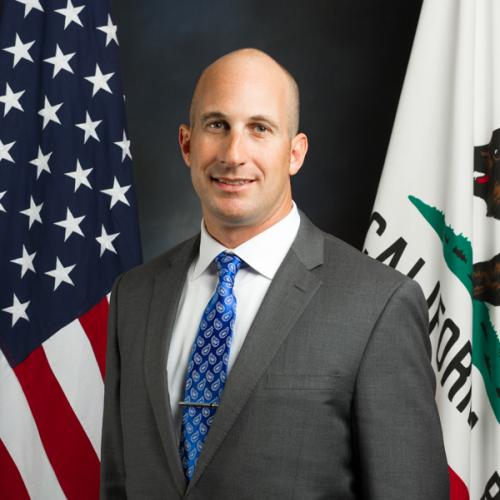
(1) Existing law establishes a system of elementary and secondary education in this state. This system consists of the public and private schools that provide instruction in kindergarten and in grades 1 to 12, inclusive. Existing law establishes a system of higher education in this state, consisting of 4 segments: the University of California, under the administration of the Regents of the University of California; the California State University, under the administration of the Trustees of the California State University; the California Community Colleges, under the administration of the Board of Governors of the California Community Colleges; and independent institutions of higher education. This bill would enact the Education Choice and Parental Empowerment Act of 2025 and establish the Education Savings Account (ESA) Trust, to be known as the ESA Trust, as a fund within the State Treasury to be administered by the ESA Trust Board. For the 2027–28 to 2030–31, inclusive, school years, the bill would authorize certain children eligible to be enrolled in kindergarten or any of grades 1 to 12, inclusive, to establish an ESA, based on parent or guardian income. The bill, beginning with the 2031–32 school year, would authorize every child eligible to be enrolled in kindergarten or any of grades 1 to 12, inclusive, to establish an ESA. The bill would credit a deposit amount to the account of every eligible student enrolled in an eligible school for tuition, elementary and secondary eligible education expenses, and undergraduate or graduate eligible education expenses, as defined. The bill would specify the deposit amounts for the 2027–28 school year, and would require the Department of Finance, beginning on July 1, 2028, to determine the ESA deposit amount annually for the upcoming school year, as provided. The bill would require the Controller to transfer an amount of money from the General Fund to the ESA Trust in those amounts. The bill would specify the membership of the ESA Trust Board and would vest the ESA Trust Board with certain powers and duties. The bill would establish 2 accounts within the ESA Trust, the ESA Trust Program Account and the ESA Trust Administrative Account, and would continuously appropriate the moneys in the program account to the ESA Trust Board for purposes of the bill, thereby making an appropriation. The bill would require the Superintendent of Public Instruction to establish a procedure for the parents and legal guardians of eligible students to apply to establish an ESA and submit an executed participation agreement. The bill would authorize the ESA Trust Board to disburse funds from ESAs to eligible schools. The bill would define "eligible school" as a campus of the California Community Colleges, the California State University, and the University of California, a full-time private school accredited by, or, except as provided, awaiting accreditation from, a regional accrediting agency recognized by the state or the United States Department of Education, a private college or university, a public college or university, or a vocational educational or training institution, as specified. The bill would specify the procedures for participating eligible schools to receive funds disbursed by the ESA Trust Board. Once an eligible student graduates from high school or obtains a high school equivalency certification, the bill would impose a $50,000 cap on the balance in any ESA available for an eligible student's use for tuition, undergraduate or graduate eligible education expenses, or expenses associated with vocational education. The bill would require the Department of Finance to adjust this limit annually for inflation using the California Consumer Price Index. (2) The Classroom Instructional Improvement and Accountability Act, an initiative approved by the voters as Proposition 98 at the November 8, 1988, statewide general election, amended the California Constitution to, among other things, set forth a formula for computing the minimum amount of revenues that the state is required to appropriate for the support of school districts and community college districts based on one of 3 tests in any given fiscal year, one of which is based on the percentage of General Fund revenues appropriated for school districts and community college districts, respectively, in the 1986–87 fiscal year, and 2 of which are based on, among other things, changes in enrollment. This bill would require the Legislature to recalculate that minimum education funding guarantee by including eligible students not enrolled in a public elementary or secondary school before the operative date of the act in those minimum funding guarantee calculations based on average daily attendance, as provided. The bill would also require the costs of providing ESA deposit amounts for eligible students to be apportioned between the General Fund and the public school district in which those eligible students reside in the same ratio of General Fund and local property tax revenue that would have been used to educate those eligible students in their public school district. (3) The Personal Income Tax Law, in modified conformity with federal law, generally defines "gross income" as income from whatever source derived, except as specifically excluded, and provides various exclusions from gross income, and deductions from income, for purposes of computing tax liability. This bill, for taxable years beginning on or after January 1, 2026, would exclude from gross income any amounts received as distribution from an Education Savings Account, as defined, as part of a participation agreement, as defined. This bill, for taxable years beginning on or after January 1, 2026, would also allow a deduction in an amount equal to the amount contributed by a taxpayer to an Education Savings Account. Existing law requires a bill authorizing a new tax expenditure to contain, among other things, specific goals, purposes, and objectives the tax expenditure will achieve, detailed performance indicators, and data collection requirements. This bill would state the intent of the Legislature to include additional information required for any bill authorizing a new tax expenditure. (4) These provisions would become operative on January 1, 2027, only if Assembly Constitutional Amendment ____ of the 2025–26 Regular Session is approved by the voters at the statewide general election on November 3, 2026.
Existing law establishes a public school financing system that requires state funding for county superintendents of schools, school districts, and charter schools to be calculated pursuant to a local control funding formula, as specified. Existing law requires funding pursuant to the local control funding formula to include, in addition to a base grant, supplemental and concentration grant add-ons that are based on the percentage of unduplicated pupils, defined as those pupils who are English learners, foster youth, or eligible for free or reduced-price meals, served by the county superintendent of schools, school district, or charter school, as specified. Existing law, commencing with the 2021–22 fiscal year, requires the concentration grant add-on to be equal to 65% of the base grant for each school district's or charter school's percentage of unduplicated pupils in excess of 55% of the school district's or charter school's total enrollment. Existing law prohibits a charter school's percentage of unduplicated pupils from exceeding the percentage of unduplicated pupils of the school district in which the charter school is physically located, or the highest percentage of unduplicated pupils of the school districts in which the charter school has a school facility, as applicable. This bill would authorize a charter school subject to the above-described prohibitions to apply to the Superintendent of Public Instruction for a waiver from the applicable limitation and to instead have its concentration grant calculated based on the charter school's percentage of unduplicated pupils in excess of 55 percent of the charter school's total enrollment. The bill would require the Superintendent to develop guidelines and procedures for these purposes and to grant the waiver if specified conditions are met, as specified.
(1) Existing law establishes a public school financing system that requires state funding for school districts and charter schools to be calculated pursuant to a local control funding formula, as specified. Existing law requires funding pursuant to the local control funding formula to include a base grant that in each fiscal year is adjusted for inflation by the percentage change in the annual average value of the Implicit Price Deflator for State and Local Government Purchases of Goods and Services for the United States, as specified. If the inflation adjustment for the base grant for a school district or charter school is calculated to be less than 4%, this bill would require the inflation adjustment for the base grant for a school district or charter school to instead be 4%. The bill would require the State Department of Education, on or before January 1, 2030, to establish and publish on its internet website regional cost adjustment factors in order address regional cost differences in housing and labor, and, commencing with the 2030–31 fiscal year, would require the adjustment to the base grant, whether calculated by the inflation adjustment or 4%, as applicable, to be further adjusted by multiplying that calculation by the applicable regional cost adjustment factor. (2) Existing law requires the local control funding formula to include, in addition to the base grant, supplemental and concentration grant add-ons that are based on the percentage of pupils who are unduplicated pupils, as defined to include English learners, pupils eligible for free or reduced-price meals, and foster youth, as specified. Existing law requires school districts and charter schools to annually report their enrollment of unduplicated pupils to the Superintendent of Public Instruction, as specified, and requires county superintendents of schools to review and validate that pupil data, as provided. Existing law requires pupils who are classified in more than one of these groups to be counted only once for these purposes. The bill would add pupils experiencing homelessness, as defined, to the categories of pupils who are unduplicated pupils for purposes of determining eligibility for supplemental and concentration grants. The bill would place reporting requirements on school districts and charter schools to implement these provisions. By imposing additional duties on county superintendents of schools, school districts, and charter schools related to reporting unduplicated pupils, the bill would impose a state-mandated local program. (3) Existing law requires the supplemental grant add-on to be equal to 20% of the base grants, as adjusted, for each school district's or charter school's percentage of unduplicated pupils, as specified, and requires the concentration grant add-on to be equal to 65% of the base grants, as adjusted, for each school district's or charter school's percentage of unduplicated pupils in excess of 55% of the school district's or charter school's total enrollment, as specified. Existing law requires the State Board of Education to adopt regulations that govern the expenditure of funds apportioned on the basis of the number and concentration of unduplicated pupils, as provided. This bill, commencing with the 2030–31 fiscal year, would require the supplemental grant add-on to instead be equal to 35% of the base grants, as adjusted, for each school district's or charter school's percentage of unduplicated pupils, as specified, and would require the concentration grant add-on to instead be equal to 65% of the base grants, as adjusted, for each school district's or charter school's percentage of unduplicated pupils in excess of 45% of the school district's or charter school's total enrollment, as specified. The bill would establish transition adjustments for the 2025–26 fiscal year to the 2029–30 fiscal years, inclusive, to be calculated by the Superintendent of Public Instruction for each school district and charter school based on increased funding that would have been generated by the changes to supplemental and concentration grant eligibility and percentages described above, as provided. The bill would continuously appropriate the moneys necessary to implement those adjustments and would require the Superintendent to add those transition amounts to the school district's and charter school's local control funding formula amounts. The bill, notwithstanding any other law, would require any increase in apportionment to a school district or charter school due to the bill's changes to the local control funding formula to be demonstrated to be used to support additional services for the targeted pupil group. To the extent the bill would impose additional duties on school districts and charter schools, the bill would impose a state-mandated local program. The bill, commencing with the 2025–26 fiscal year, would prohibit each school district and charter school from receiving less state aid under the local control funding formula for the then current fiscal year than they received in the 2024–25 fiscal year under the local control funding formula, as calculated on a per average daily attendance basis. (4) Existing law requires the Legislative Analyst's Office, on or before January 1, 2026, to submit a report to the Legislature on the effects of changing the pupil count methodology of the local control funding formula from average daily attendance to pupil enrollment, as provided. This bill would require the Legislative Analyst's Office, on or before January 1, 2027, to submit a report to the Legislature that studies the impact of the changes to the local control funding formula made by the bill within and between geographic regions of the state. (5) This bill would require the department, on or before January 1, 2028, to develop recommendations for adequacy adjustments to the grade span adjusted base grants in order to address the unique costs for each grade span and to account for the revisions to supplemental and concentration grants described above, and to report those recommendations to the appropriate policy and fiscal committees of the Legislature, as provided. The bill would state the intent of the Legislature to fully transition the local control funding formula commencing with the 2030–31 fiscal year consistent with those recommendations. (6) The California Constitution requires the state to reimburse local agencies and school districts for certain costs mandated by the state. Statutory provisions establish procedures for making that reimbursement. This bill would provide that, if the Commission on State Mandates determines that the bill contains costs mandated by the state, reimbursement for those costs shall be made pursuant to the statutory provisions noted above. (7) Funds appropriated by this bill would be applied toward the minimum funding requirements for school districts and community college districts imposed by Section 8 of Article XVI of the California Constitution.
Existing law establishes a system of public elementary and secondary schools in this state and authorizes local educational agencies throughout the state to operate schools and provide instruction to pupils in kindergarten and grades 1 to 12, inclusive. Existing law authorizes local educational agencies to employ personnel to provide services in schools pursuant to that system. This bill would require the State Department of Education to, on or before July 1, 2027, develop an online cultural competency training delivery platform and online cultural competency training curriculum for school employees to support pupils of color. The bill would, commencing with the 2027–28 school year and ending with the completion of the 2031–32 school year, require a school district, county office of education, or charter school serving pupils in kindergarten or any of grades 1 to 12, inclusive, to annually provide that training to all school employees, unless an employee is exempt from the training or an employee provides proof of completion for a cultural competency training completed while employed at another local educational agency, as provided. The bill would also require local educational agencies to provide a proof of completion to school employees that complete the training and to ensure that all school employees complete the required training on paid time during the employees' regular work hours or designated professional development hours, as provided. By imposing additional duties on local educational agencies, this bill would impose a state-mandated local program. The bill would require the department to (1) monitor compliance with the training requirement as part of the department's annual compliance monitoring of state and federal programs, (2) report data, within 9 months of the completion of the 5-year training period, from that compliance monitoring to the Legislature, and (3) post the report on the department's internet website, as provided. The bill would make these provisions inoperative on July 1, 2033, and would repeal them as of January 1, 2034. The California Constitution requires the state to reimburse local agencies and school districts for certain costs mandated by the state. Statutory provisions establish procedures for making that reimbursement. This bill would provide that, if the Commission on State Mandates determines that the bill contains costs mandated by the state, reimbursement for those costs shall be made pursuant to the statutory provisions noted above.
Existing law states the intent of the Legislature to provide for the adoption and selection of quality instructional materials for use in elementary and secondary schools and requires each governing board of a school district to provide for substantial teacher involvement in the selection of instructional materials and to promote the involvement of parents and other members of the community in the selection of instructional materials. Existing law authorizes the governing board of a school district, when adopting instructional materials for use in school, to include relevant technology-based materials, defined for these purposes to mean basic or supplemental instructional materials that are designed for use by pupils and teachers as learning resources and that require the availability of electronic equipment in order to be used as a learning resource, as provided. This bill would require the governing board or body of each school district, county office of education, and charter school to provide for substantial teacher involvement in the evaluation and selection of educational technology, as defined, that is required to be used by all teachers or all paraprofessionals of the local educational agency, and to promote the involvement of parents and other members of the community in the evaluation and selection process. By imposing additional duties on local educational agencies, the bill would impose a state-mandated local program. The bill would require the Superintendent of Public Instruction, on or before January 1, 2027, to develop, and post on the State Department of Education's internet website, best practices and resources to guide school districts, county offices of education, charter schools, and joint powers authorities providing educational services in the evaluation and selection of educational technology that is required to be used by all teachers or all paraprofessionals, as specified. The bill would, commencing January 1, 2027, encourage school districts, county offices of education, and charter schools to follow those best practices for the evaluation and selection of educational technology. The California Constitution requires the state to reimburse local agencies and school districts for certain costs mandated by the state. Statutory provisions establish procedures for making that reimbursement. This bill would provide that, if the Commission on State Mandates determines that the bill contains costs mandated by the state, reimbursement for those costs shall be made pursuant to the statutory provisions noted above.
Existing law requires the State Board of Education to adopt statewide academically rigorous content standards in the core curriculum areas of reading, writing, mathematics, history/social science, and science, as specified. Existing law requires the Instructional Quality Commission to, among other things, recommend curriculum frameworks to the state board and develop criteria for evaluating instructional materials. This bill would require the state board to, on or before January 1, 2028, develop and adopt academically rigorous content standards for ethnic studies instruction in high school. The bill would require the commission, on or before January 1, 2028, to review and recommend to the state board curriculum frameworks and instructional materials for ethnic studies instruction in high school, as specified. The bill would require the state board to provide the commission with evaluation criteria to use in providing its review and recommendations. The bill would state the intent of the Legislature to enact subsequent legislation to establish an advisory committee with a majority of the advisory committee's members being experts in African American studies, Asian American and Pacific Islander studies, Native American studies, and Latino and Chicanx studies, to provide input to the state board on proposed content standards and to the commission on proposed curriculum frameworks and instructional materials for ethnic studies instruction in high school. Existing law requires a pupil to complete designated coursework while in grades 9 to 12, inclusive, in order to receive a diploma of graduation from high school. These graduation requirements include, commencing for pupils graduating in the 2029–30 school year, the completion of a one-semester course in ethnic studies meeting specified requirements. Under existing law, the requirement to complete an ethnic studies course may be fulfilled by the completion of, among others, a course based on the model curriculum developed by the Instructional Quality Commission, an ethnic studies course taught as part of a course that has been approved as meeting the A–G requirements of the University of California and the California State University, or a locally developed ethnic studies course approved by the governing board of a school district or the governing body of a charter school. Existing law requires the curriculum, instruction, and instructional materials for these ethnic studies courses to meet specified requirements, including that they not reflect or promote any bias, bigotry, or discrimination against any person or group of persons on the basis of certain characteristics. Existing law makes these provisions relating to ethnic studies courses operative only upon an appropriation of funds by the Legislature for purposes of these provisions. This bill would require the curriculum, instruction, and instructional materials for any high school ethnic studies course, including ethnic studies courses meeting high school graduation requirements, to meet the above-described requirements, and would require the curriculum, instruction, and instructional materials for all high school ethnic studies courses to additionally, among other things, foster multicultural respect and understanding and focus on the domestic experience and stories of historically marginalized peoples in American society. To the extent that the bill would impose new duties on local educational agencies, the bill would impose a state-mandated local program. The bill would require a school district, county office of education, or charter school to provide, on or before June 30, 2026, the State Department of Education with a copy of all curricula, instruction, and instructional materials in ethnic studies that schools offer or plan to offer to pupils in any of grades 9 to 12, inclusive, and the adoption calendar for curricula, instruction, and instructional materials in ethnic studies proposed for adoption by the governing board or body of the local educational agency for instruction to these pupils. The bill would require a local educational agency that does not have an ethnic studies course in place for its pupils in any of grades 9 to 12, inclusive, on or before June 30, 2026, to provide the department with a copy of all curricula, instruction, and instructional materials in ethnic studies that its schools seek to adopt at least 60 days before being first presented at a public meeting of the governing board or body of the local educational agency for instruction to these pupils. The bill would require the department to post the information received pursuant to these requirements on its internet website. To the extent that the bill would impose new duties on local educational agencies, it would impose a state-mandated local program. The bill would require the department to monitor compliance with the requirements of this bill as part of its annual compliance monitoring of state and federal programs and to provide a report to the relevant policy and fiscal committees of the Legislature summarizing the data collected through compliance monitoring, as specified. The California Constitution requires the state to reimburse local agencies and school districts for certain costs mandated by the state. Statutory provisions establish procedures for making that reimbursement. This bill would provide that, if the Commission on State Mandates determines that the bill contains costs mandated by the state, reimbursement for those costs shall be made pursuant to the statutory provisions noted above.
(1) Existing law, commencing with the 2013–14 fiscal year, establishes a public school financing system that requires state funding for county superintendents of schools, school districts, and charter schools to be calculated pursuant to a local control funding formula, as specified. Existing law requires the Superintendent of Public Instruction to annually calculate a county local control funding formula for each county superintendent of schools that includes, among other components, a county office of education operations grant composed of (A) $655,920, as adjusted each fiscal year for inflation; (B) $109,320 per school district under the county office of education's jurisdiction, as adjusted each fiscal year for inflation; (C) $70 per unit of countywide average daily attendance up to 30,000 units, $60 per unit for 30,001 to 60,000 units, $50 per unit for 60,001 to 140,000 units, and $40 per unit above 140,000 units, as adjusted each fiscal year for inflation; and (D) commencing with the 2022–23 fiscal year, add-ons of (i) $175,000 to the per-school district amount and (ii) $14 to each per-unit amount. This bill, commencing with the 2036–37 fiscal year, would increase each of those inflation-adjusted amounts to instead be $1,308,227, $520,751, $164, $144, $124, and $104, respectively, and would retain the requirement to adjust those amounts for inflation each fiscal year. The bill, commencing with the 2036–37 fiscal year, would increase the per-school district and per-unit add-on amounts to instead be $262,500 and $21, respectively. (2) Existing law requires the county office of education local control funding formula to also include, among other things, an alternative education base grant that includes, among its own components, a base grant equal to the grade span-adjusted base grant for average daily attendance in grades 9 to 12, inclusive, for the 2022–23 fiscal year, multiplied by 1.33, as specified. Existing law requires that amount to be adjusted for inflation each fiscal year. This bill, commencing with the 2036–37 fiscal year, would require the inflation-adjusted base grant component of the alternative education grant to instead be $24,593 and would retain the requirement to adjust that amount for inflation each fiscal year. (3) Existing law provides for the funding of necessary small schools and high schools, as specified. Existing law requires that funding to include, among other things, various specified per-pupil and per-teacher amounts for different tiers based on the numbers of pupils and teachers, as specified. Existing law requires those amounts to be adjusted for inflation each fiscal year. This bill, commencing with the 2036–37 fiscal year, would increase those various per-pupil and per-teacher inflation-adjusted amounts, as specified, and would retain the requirement to adjust that amount for inflation each fiscal year. (4) Existing law, commencing with the 2013–14 fiscal year, requires school district and charter school funding pursuant to the local control funding formula to include, among other things, a base grant based on average daily attendance in kindergarten and grades 1 to 3, inclusive, grades 4 to 6, inclusive, grades 7 and 8, and grades 9 to 12, inclusive, of $6,845, $6,947, $7,154, and $8,289 per pupil, respectively. Existing law requires those amounts to be adjusted for inflation each fiscal year. This bill, commencing with the 2036–37 fiscal year, would increase those inflation-adjusted base grant amounts to instead be $14,879, $15,104, $15,551 and $18,023 per pupil, respectively, and would retain the requirement to adjust those amounts for inflation each fiscal year. (5) Existing law requires funding pursuant to the local control funding formula to include, in addition to the base grant, supplemental and concentration grant add-ons that are based on the percentage of unduplicated pupils, as specified, served by the school district or charter school. In addition to the base, supplemental, and concentration grants of the local control funding formula, existing law, commencing with the 2022–23 school year, requires the Superintendent to compute an additional add-on of $2,813 multiplied by the then current fiscal year's average daily attendance in transitional kindergarten, as specified, and requires that add-on to be annually adjusted for inflation. This bill, commencing with the 2036–37 fiscal year, would increase that inflation-adjusted add-on based on attendance in transitional kindergarten to instead be equal to $8,318 multiplied by the then current fiscal year's average daily attendance in transitional kindergarten for the school district or charter school, as specified, and would retain the requirement to adjust that amount for inflation each fiscal year.
Existing law requires the State Department of Education to incorporate age-appropriate materials relating to, among other things, genocide and the Holocaust into publications that provide examples of curriculum resources for teacher use, consistent with the subject frameworks on history and social science. Under existing law, the Legislature encourages the incorporation of survivor, rescuer, liberator, and witness oral testimony into the teaching of genocide and the Holocaust. Existing law, upon appropriation by the Legislature, establishes the California Teachers Collaborative for Holocaust and Genocide Education to establish a statewide teacher professional development program on genocide, including the Holocaust, for school district, county office of education, and charter school teachers, and provides that the collaborative's mission is to ensure that genocide, including Holocaust, education is taught consistent with, among other things, content standards, curriculum frameworks, and instructional materials adopted by the State Board of Education, in ways that are interdisciplinary and age-appropriate to pupils of different grade levels. This bill would require the Superintendent of Public Instruction to establish the Holocaust and Genocide Education Grant Program to provide direct allocations to school districts, county offices of education, and charter schools for the purposes of providing Holocaust and genocide education and professional development on Holocaust and genocide education, as provided. The bill would establish the Holocaust and Genocide Education Grant Program Fund in the State Treasury, and would require moneys in the fund to be available, upon appropriation by the Legislature, to the Superintendent for purposes of the grant program. The bill would require the department to issue a notice to school districts, county offices of education, and charter schools serving pupils in grades 7 to 12, inclusive, regarding genocide and Holocaust instruction, and would authorize the department to issue a survey to these local educational agencies on the status of Holocaust and genocide instruction at their schools, as provided.
(1) Existing law requires, by no later than September 30, 2026, the State Board of Education to approve, and the State Department of Education to post on its internet website, criteria and guidance for the selection or development of inservice professional development programs for effective means of teaching literacy in transitional kindergarten, kindergarten, or any of grades 1 to 5, inclusive, with a list of inservice professional development programs that have been deemed to meet those criteria. This bill would require the department, before incurring substantial costs for the review of professional development programs, to require that a professional development program provider that intends to submit materials for review to first declare their intent to submit one or more professional development programs for review. After a professional development program provider has declared their intent to submit one or more professional development programs for review, and until September 30, 2026, the bill would authorize the department to assess a fee on the submitting professional development program provider in an amount that shall not exceed the reasonable costs to the department to conduct a review of the submitted materials, as provided. The bill would, among other things, limit the maximum amount of a reasonable fee to no more than $10,000 for each professional development program submitted for review and would require the department to take reasonable steps to limit costs of the review and to keep the fee modest. The bill would require the department to allocate specified funds appropriated in the Budget Act of 2025 to the Marin County Office of Education to contract with a research organization or nonprofit organization with expertise in evidenced-based literacy instruction, subject to the approval of the executive director of the state board, to support the implementation of these provisions, as provided. Existing law appropriates $200,000,000 from the General Fund to the department to make available to local educational agencies to expend from the 2026–27 fiscal year to the 2029–30 fiscal year, inclusive, for purposes of training certificated and classified staff who provide literacy instruction, or who support any teacher who provides literacy instruction, to pupils in transitional kindergarten, kindergarten, or any of grades 1 to 5, inclusive, using the professional development programs that meet the above-referenced criteria and guidance. Existing law requires the Superintendent of Public Instruction to apportion those funds to local educational agencies in an equal amount per full-time equivalent certificated staff who teach pupils in transitional kindergarten, kindergarten, or any of grades 1 to 5, inclusive. This bill would require the Superintendent to make those apportionments using the data submitted through the California Longitudinal Pupil Achievement Data System as of October 2025. (2) The Classroom Instructional Improvement and Accountability Act, an initiative approved by the voters as Proposition 98 at the November 8, 1988, statewide general election, amended the California Constitution to, among other things, set forth a formula for computing the minimum amount of revenues that the state is required to apply for the support of school districts and community college districts based on one of 3 tests in any given fiscal year. If the Director of Finance determines pursuant to the certification process for the state's minimum funding obligation to school districts and community college districts that the state has applied moneys in an amount that exceeds the minimum funding obligation for the fiscal year being certified, existing law requires the excess moneys to be credited to the fiscal year being certified. Existing law provides that $5,442,143,000 allocated in the 2022–23 fiscal year for specified apportionments to school districts and charter schools, and $770,786,000 allocated in the 2022–23 fiscal year for specified apportionments to community college districts, are excess moneys credited to the 2022–23 fiscal year only for the purposes of determining the state's minimum funding obligation to school districts and community college districts in the 2022–23 and 2023–24 fiscal years. Existing law requires 10 proportional shares of $544,214,000 and $77,079,000, respectively, of those amounts to be recognized annually, from the 2026–27 fiscal year through the 2035–36 fiscal year, for budgetary and financial reporting purposes as allocations made in the 2022–23 fiscal year, but prohibits those amounts from being credited as allocations made to meet the minimum funding obligation to school districts and community college districts in the fiscal year in which the amount is recognized for budgetary and financial reporting purposes. This bill would reduce that allocation to schools districts and charters in the 2022–23 fiscal year for specified apportionments by $20,000,000 to instead be $5,422,143,000. The bill would instead require 12 proportional shares of $437,769,000 and $62,231,000, respectively, of the revised $5,422,143,000 amount and the $770,786,000 amount, respectively, to be recognized annually from the 2027–28 fiscal year through the 2038–39 fiscal year, and shares of $168,915,000 and $24,014,000, respectively, of those amounts, to be recognized in the 2039–40 fiscal year, for budgetary and financial reporting purposes as allocations made in the 2022–23 fiscal year, and would continue to prohibit those amounts from being credited as allocations made to meet the minimum funding obligation to school districts and community college districts in the fiscal year in which the amount is recognized for budgetary and financial reporting purposes. (3) Existing law requires the department, by July 1, 2026, to create a data collection system for salary and benefits data for represented certificated and classified nonmanagement employees and requires the data collected to include salary, benefits, and full-time equivalent employee counts for certificated employees and for specified classified bargaining unit classifications, which are required to be collected in the same manner as for certificated employees, as determined by the department. Existing law requires school districts, county offices of education, and direct-funded charter schools, by August 31, 2026, and by July 1 annually thereafter, to complete the data collection process and to report the data to the department. This bill would require the department to make the data submitted by school districts, county offices of education, and direct-funded charter schools publicly available in a downloadable open file data format, as specified. (4) Existing law establishes the Student Teacher Stipend Program to support prospective educators, as defined, during their completion of 500 or more hours of student teaching, as provided, and appropriates, for the 2025–26 fiscal year, $300,000,000 from the General Fund to the commission for allocation to support the Student Teacher Stipend Program. Existing law requires $5,000,000 of that amount to be made available to the Kern County Superintendent of Schools for specified purposes, including conducting a related multimedia campaign and the establishment of a grants management system, as specified. This bill would instead require up to $6,000,000 of that amount to be made available to the Kern County Superintendent of Schools for those same specified purposes. By reallocating the amounts of authorized uses of an existing appropriation, the bill would make an appropriation. (5) Existing law establishes the Classified School Employee Summer Assistance Program. Existing law authorizes school districts and county offices of education to elect to participate in the program, and authorizes a classified employee of a participating local educational agency who meets specified requirements to withhold an amount from the employee's monthly paycheck during the school year to be paid out during the summer recess period, as provided. The Budget Act of 2023, the Budget Act of 2024, and the Budget Act of 2025 appropriated $90,000,000, $99,000,000, and $90,000,000, respectively, for purposes of the program. Each annual Budget Act requires its appropriations to be available for encumbrance or expenditure for the use for the fiscal year in which the funds are appropriated, unless otherwise provided therein. This bill would, commencing with the 2023–24 fiscal year, require appropriations made in the annual Budget Act for purposes of the Classified School Employee Summer Assistance Program to instead be available for encumbrance during both the fiscal year in which the funds are appropriated and the immediately following fiscal year. By extending the time for which previously appropriated moneys are available, the bill would make an appropriation. (6) Existing law authorizes a school district, county office of education, or charter school, beginning July 1, 2025, to implement attendance recovery programs for pupils to make up lost instructional time and offset absences, as specified. For the purposes of computing average daily attendance for these attendance recovery programs, existing law prescribes general minimum daily instructional minute requirements on all local educational agencies, as provided, and specific schoolday and instructional minute requirements on county community schools, continuation high schools, juvenile court schools, and community day schools that are applicable to those settings, as provided. This bill would, for the purposes of computing average daily attendance for these attendance recovery programs for opportunity schools, instead apply the instructional minute requirements that are applicable to opportunity schools. (7) Existing law establishes the Golden State Teacher Grant Program under the administration of the Student Aid Commission. Existing law requires the commission, among other grants within the program, for California resident applications received under the program on July 1, 2024, to June 30, 2025, inclusive, to provide reduced one-time grants of up to $5,000 to each student enrolled in a professional preparation program leading to a preliminary teaching credential or a pupil personnel services credential if the student commits to working at a priority school or a California preschool program for 2 years within 4 years following the date the student completes the professional preparation program, as specified. The bill would extend the availability of those grant program funds to applications received under the program on July 1, 2025, to June 30, 2026, inclusive. By expanding the time in which applications can be received under the program, which is funded by an existing appropriation, the bill would make an appropriation. (8) Existing law requires the local control funding formula to include, in addition to the base grant, supplemental and concentration grant add-ons that are based on the percentage of pupils who are unduplicated pupils, as defined to include English learners, pupils eligible for free or reduced-price meals, and foster youth, as specified. Notwithstanding any other law, for purposes of the local control funding formula for the 2025–26 and 2026–27 fiscal years only, existing law requires the count of English learner pupils enrolled in transitional kindergarten to be equal to the count of English learner pupils enrolled in kindergarten, as specified. This bill would instead require the Superintendent of Public Instruction to determine a proxy count of English learner pupils enrolled in a transitional kindergarten that is based upon the percentage of English learners enrolled in kindergarten who are either not eligible for free or reduced-price meals or not a foster youth. (9) The Budget Act of 2020, among other things, allocates $350,000 of specified appropriated funds to a county office of education selected by the executive director of the State Board of Education for the purpose of convening a workgroup that will design a state standardized individualized education program (IEP) template. The Budget Act of 2022, among other things, allocates $200,000 of specified appropriated funds to be available on a one-time basis for the California Collaborative for Educational Excellence to convene a panel to continue refining the IEP template for usability, as provided. Existing law, for the 2025–26 fiscal year, appropriates $1,000,000 from the General Fund to the Superintendent to allocate to the California Collaborative for Educational Excellence for the digitization of the IEP template. Existing law requires the California Collaborative for Educational Excellence, in consultation with the executive director of the state board, to enter into a contract with a California special education student information system vendor to convert the IEP template into a user-dynamic software platform, develop an interactive digital version of the IEP template that is accessible to the public at no cost, and make those digitized templates available to local educational agencies and to the public, respectively, on or before June 30, 2026. Existing law requires the department, by January 1, 2027, or no later than 18 months after the IEP template is converted to a digital platform, whichever date comes first, to translate the IEP template into the top 10 most commonly spoken languages used across the state other than English and, among other things, to make those templates available on its internet website, as provided. This bill would require the contracted vendor to be a vendor that currently transmits federal Individuals with Disabilities Education Act-compliant data to the department through the California Longitudinal Pupil Achievement Data System and would require the vendor, upon the availability of the translated IEP template, as specified, to integrate those translations into the digitized IEP template in order to ensure that users can access the IEP template in the top 10 most commonly spoke languages used in California other than English. (10) Existing law appropriates, for the 2025–26 fiscal year, $160,000,000 from the General Fund to the department to establish the Universal School Meals Support Grant, as provided. Of that amount, existing law requires (A) $145,000,000 to be made available to award to local educational agencies to expend for specified purposes for the continued implementation of universal school meals, (B) $10,000,000 to be provided to local educational agencies to support the retention and recruitment of food service workers, as specified, and (C) $5,000,000 to be made available to the department to contract with the Marin County Office of Education for a study of particularly harmful ultraprocessed foods being offered in school meals in California, as provided. Existing law requires the Marin County Office of Education to contract with the University of California for purposes of the study and requires the department to provide a report to the Legislature on or before July 1, 2027, again on or before January 1, 2030, and finally on or before January 1, 2032, with the findings of the study. This bill would revise and recast those provisions by, among other things, (A) requiring the above-described $5,000,000 to instead be made available to the department for allocation to the Marin County Office of Education for a study of ultraprocessed foods of concern and restricted school foods instead of particularly harmful ultraprocessed foods, (B) specifying that the Marin County Office of Education is required to contract with the University of California, Agriculture and Natural Resources' Nutritional Policy Institute for those purposes, (C) requiring the department, in consultation with the State Department of Public Health, to approve the scope of work, timelines, and study elements, (D) changing all references for these purposes from particularly harmful ultraprocessed foods to ultraprocessed foods of concern, as defined, and restricted school foods, as defined, and (E) extending the reporting deadlines, as provided. By revising the purposes of an existing appropriation, the bill would make an appropriation. (11) The bill would update cross references and make nonsubstantive changes. (12) Certain funds appropriated by this bill would be applied toward the minimum funding requirements for school districts and community college districts imposed by Section 8 of Article XVI of the California Constitution. (13) This bill would incorporate additional changes to Section 45500 of the Education Code proposed by AB 378 to be operative only if this bill and AB 378 are enacted and this bill is enacted last. (14) This bill would declare that it is to take effect immediately as a bill providing for appropriations related to the Budget Bill.
(1) Existing law requires, by no later than September 30, 2026, the State Board of Education to approve, and the State Department of Education to post on its internet website, criteria and guidance for the selection or development of inservice professional development programs for effective means of teaching literacy in transitional kindergarten, kindergarten, or any of grades 1 to 5, inclusive, with a list of inservice professional development programs that have been deemed to meet those criteria. This bill would require the department, before incurring substantial costs for the review of professional development programs, to require that a professional development program provider that intends to submit materials for review to first declare their intent to submit one or more professional development programs for review. After a professional development program provider has declared their intent to submit one or more professional development programs for review, and until September 30, 2026, the bill would authorize the department to assess a fee on the submitting professional development program provider in an amount that shall not exceed the reasonable costs to the department to conduct a review of the submitted materials, as provided. The bill would, among other things, limit the maximum amount of a reasonable fee to no more than $10,000 for each professional development program submitted for review and would require the department to take reasonable steps to limit costs of the review and to keep the fee modest. The bill would require the department to allocate specified funds appropriated in the Budget Act of 2025 to the Marin County Office of Education to contract with a research organization or nonprofit organization with expertise in evidenced-based literacy instruction, subject to the approval of the executive director of the state board, to support the implementation of these provisions, as provided. Existing law appropriates $200,000,000 from the General Fund to the department to make available to local educational agencies to expend from the 2026–27 fiscal year to the 2029–30 fiscal year, inclusive, for purposes of training certificated and classified staff who provide literacy instruction, or who support any teacher who provides literacy instruction, to pupils in transitional kindergarten, kindergarten, or any of grades 1 to 5, inclusive, using the professional development programs that meet the above-referenced criteria and guidance. Existing law requires the Superintendent of Public Instruction to apportion those funds to local educational agencies in an equal amount per full-time equivalent certificated staff who teach pupils in transitional kindergarten, kindergarten, or any of grades 1 to 5, inclusive. This bill would require the Superintendent to make those apportionments using the data submitted through the California Longitudinal Pupil Achievement Data System as of October 2025. (2) The Classroom Instructional Improvement and Accountability Act, an initiative approved by the voters as Proposition 98 at the November 8, 1988, statewide general election, amended the California Constitution to, among other things, set forth a formula for computing the minimum amount of revenues that the state is required to apply for the support of school districts and community college districts based on one of 3 tests in any given fiscal year. If the Director of Finance determines pursuant to the certification process for the state's minimum funding obligation to school districts and community college districts that the state has applied moneys in an amount that exceeds the minimum funding obligation for the fiscal year being certified, existing law requires the excess moneys to be credited to the fiscal year being certified. Existing law provides that $5,442,143,000 allocated in the 2022–23 fiscal year for specified apportionments to school districts and charter schools, and $770,786,000 allocated in the 2022–23 fiscal year for specified apportionments to community college districts, are excess moneys credited to the 2022–23 fiscal year only for the purposes of determining the state's minimum funding obligation to school districts and community college districts in the 2022–23 and 2023–24 fiscal years. Existing law requires 10 proportional shares of $544,214,000 and $77,079,000, respectively, of those amounts to be recognized annually, from the 2026–27 fiscal year through the 2035–36 fiscal year, for budgetary and financial reporting purposes as allocations made in the 2022–23 fiscal year, but prohibits those amounts from being credited as allocations made to meet the minimum funding obligation to school districts and community college districts in the fiscal year in which the amount is recognized for budgetary and financial reporting purposes. This bill would reduce that allocation to schools districts and charters in the 2022–23 fiscal year for specified apportionments by $20,000,000 to instead be $5,422,143,000. The bill would instead require 12 proportional shares of $437,769,000 and $62,231,000, respectively, of the revised $5,422,143,000 amount and the $770,786,000 amount, respectively, to be recognized annually from the 2027–28 fiscal year through the 2038–39 fiscal year, and shares of $168,915,000 and $24,014,000, respectively, of those amounts, to be recognized in the 2039–40 fiscal year, for budgetary and financial reporting purposes as allocations made in the 2022–23 fiscal year, and would continue to prohibit those amounts from being credited as allocations made to meet the minimum funding obligation to school districts and community college districts in the fiscal year in which the amount is recognized for budgetary and financial reporting purposes. (3) Existing law requires the department, by July 1, 2026, to create a data collection system for salary and benefits data for represented certificated and classified nonmanagement employees and requires the data collected to include salary, benefits, and full-time equivalent employee counts for certificated employees and for specified classified bargaining unit classifications, which are required to be collected in the same manner as for certificated employees, as determined by the department. Existing law requires school districts, county offices of education, and direct-funded charter schools, by August 31, 2026, and by July 1 annually thereafter, to complete the data collection process and to report the data to the department. This bill would require the department to make the data submitted by school districts, county offices of education, and direct-funded charter schools publicly available in a downloadable open file data format, as specified. (4) Existing law establishes the Student Teacher Stipend Program to support prospective educators, as defined, during their completion of 500 or more hours of student teaching, as provided, and appropriates, for the 2025–26 fiscal year, $300,000,000 from the General Fund to the commission for allocation to support the Student Teacher Stipend Program. Existing law requires $5,000,000 of that amount to be made available to the Kern County Superintendent of Schools for specified purposes, including conducting a related multimedia campaign and the establishment of a grants management system, as specified. This bill would instead require up to $6,000,000 of that amount to be made available to the Kern County Superintendent of Schools for those same specified purposes. By reallocating the amounts of authorized uses of an existing appropriation, the bill would make an appropriation. (5) Existing law establishes the Classified School Employee Summer Assistance Program. Existing law authorizes school districts and county offices of education to elect to participate in the program, and authorizes a classified employee of a participating local educational agency who meets specified requirements to withhold an amount from the employee's monthly paycheck during the school year to be paid out during the summer recess period, as provided. The Budget Act of 2023, the Budget Act of 2024, and the Budget Act of 2025 appropriated $90,000,000, $99,000,000, and $90,000,000, respectively, for purposes of the program. Each annual Budget Act requires its appropriations to be available for encumbrance or expenditure for the use for the fiscal year in which the funds are appropriated, unless otherwise provided therein. This bill would, commencing with the 2023–24 fiscal year, require appropriations made in the annual Budget Act for purposes of the Classified School Employee Summer Assistance Program to instead be available for encumbrance during both the fiscal year in which the funds are appropriated and the immediately following fiscal year. By extending the time for which previously appropriated moneys are available, the bill would make an appropriation. (6) Existing law authorizes a school district, county office of education, or charter school, beginning July 1, 2025, to implement attendance recovery programs for pupils to make up lost instructional time and offset absences, as specified. For the purposes of computing average daily attendance for these attendance recovery programs, existing law prescribes general minimum daily instructional minute requirements on all local educational agencies, as provided, and specific schoolday and instructional minute requirements on county community schools, continuation high schools, juvenile court schools, and community day schools that are applicable to those settings, as provided. This bill would, for the purposes of computing average daily attendance for these attendance recovery programs for opportunity schools, instead apply the instructional minute requirements that are applicable to opportunity schools. (7) Existing law establishes the Golden State Teacher Grant Program under the administration of the Student Aid Commission. Existing law requires the commission, among other grants within the program, for California resident applications received under the program on July 1, 2024, to June 30, 2025, inclusive, to provide reduced one-time grants of up to $5,000 to each student enrolled in a professional preparation program leading to a preliminary teaching credential or a pupil personnel services credential if the student commits to working at a priority school or a California preschool program for 2 years within 4 years following the date the student completes the professional preparation program, as specified. The bill would extend the availability of those grant program funds to applications received under the program on July 1, 2025, to June 30, 2026, inclusive. By expanding the time in which applications can be received under the program, which is funded by an existing appropriation, the bill would make an appropriation. (8) Existing law requires the local control funding formula to include, in addition to the base grant, supplemental and concentration grant add-ons that are based on the percentage of pupils who are unduplicated pupils, as defined to include English learners, pupils eligible for free or reduced-price meals, and foster youth, as specified. Notwithstanding any other law, for purposes of the local control funding formula for the 2025–26 and 2026–27 fiscal years only, existing law requires the count of English learner pupils enrolled in transitional kindergarten to be equal to the count of English learner pupils enrolled in kindergarten, as specified. This bill would instead require the Superintendent of Public Instruction to determine a proxy count of English learner pupils enrolled in a transitional kindergarten that is based upon the percentage of English learners enrolled in kindergarten who are either not eligible for free or reduced-price meals or not a foster youth. (9) The Budget Act of 2020, among other things, allocates $350,000 of specified appropriated funds to a county office of education selected by the executive director of the State Board of Education for the purpose of convening a workgroup that will design a state standardized individualized education program (IEP) template. The Budget Act of 2022, among other things, allocates $200,000 of specified appropriated funds to be available on a one-time basis for the California Collaborative for Educational Excellence to convene a panel to continue refining the IEP template for usability, as provided. Existing law, for the 2025–26 fiscal year, appropriates $1,000,000 from the General Fund to the Superintendent to allocate to the California Collaborative for Educational Excellence for the digitization of the IEP template. Existing law requires the California Collaborative for Educational Excellence, in consultation with the executive director of the state board, to enter into a contract with a California special education student information system vendor to convert the IEP template into a user-dynamic software platform, develop an interactive digital version of the IEP template that is accessible to the public at no cost, and make those digitized templates available to local educational agencies and to the public, respectively, on or before June 30, 2026. Existing law requires the department, by January 1, 2027, or no later than 18 months after the IEP template is converted to a digital platform, whichever date comes first, to translate the IEP template into the top 10 most commonly spoken languages used across the state other than English and, among other things, to make those templates available on its internet website, as provided. This bill would require the contracted vendor to be a vendor that currently transmits federal Individuals with Disabilities Education Act-compliant data to the department through the California Longitudinal Pupil Achievement Data System and would require the vendor, upon the availability of the translated IEP template, as specified, to integrate those translations into the digitized IEP template in order to ensure that users can access the IEP template in the top 10 most commonly spoke languages used in California other than English. (10) Existing law appropriates, for the 2025–26 fiscal year, $160,000,000 from the General Fund to the department to establish the Universal School Meals Support Grant, as provided. Of that amount, existing law requires (A) $145,000,000 to be made available to award to local educational agencies to expend for specified purposes for the continued implementation of universal school meals, (B) $10,000,000 to be provided to local educational agencies to support the retention and recruitment of food service workers, as specified, and (C) $5,000,000 to be made available to the department to contract with the Marin County Office of Education for a study of particularly harmful ultraprocessed foods being offered in school meals in California, as provided. Existing law requires the Marin County Office of Education to contract with the University of California for purposes of the study and requires the department to provide a report to the Legislature on or before July 1, 2027, again on or before January 1, 2030, and finally on or before January 1, 2032, with the findings of the study. This bill would revise and recast those provisions by, among other things, (A) requiring the above-described $5,000,000 to instead be made available to the department for allocation to the Marin County Office of Education for a study of ultraprocessed foods of concern and restricted school foods instead of particularly harmful ultraprocessed foods, (B) specifying that the Marin County Office of Education is required to contract with the University of California, Agriculture and Natural Resources' Nutritional Policy Institute for those purposes, (C) requiring the department, in consultation with the State Department of Public Health, to approve the scope of work, timelines, and study elements, (D) changing all references for these purposes from particularly harmful ultraprocessed foods to ultraprocessed foods of concern, as defined, and restricted school foods, as defined, and (E) extending the reporting deadlines, as provided. By revising the purposes of an existing appropriation, the bill would make an appropriation. (11) The bill would update cross references and make nonsubstantive changes. (12) Certain funds appropriated by this bill would be applied toward the minimum funding requirements for school districts and community college districts imposed by Section 8 of Article XVI of the California Constitution. (13) This bill would incorporate additional changes to Section 45500 of the Education Code proposed by AB 378 to be operative only if this bill and AB 378 are enacted and this bill is enacted last. (14) This bill would declare that it is to take effect immediately as a bill providing for appropriations related to the Budget Bill.