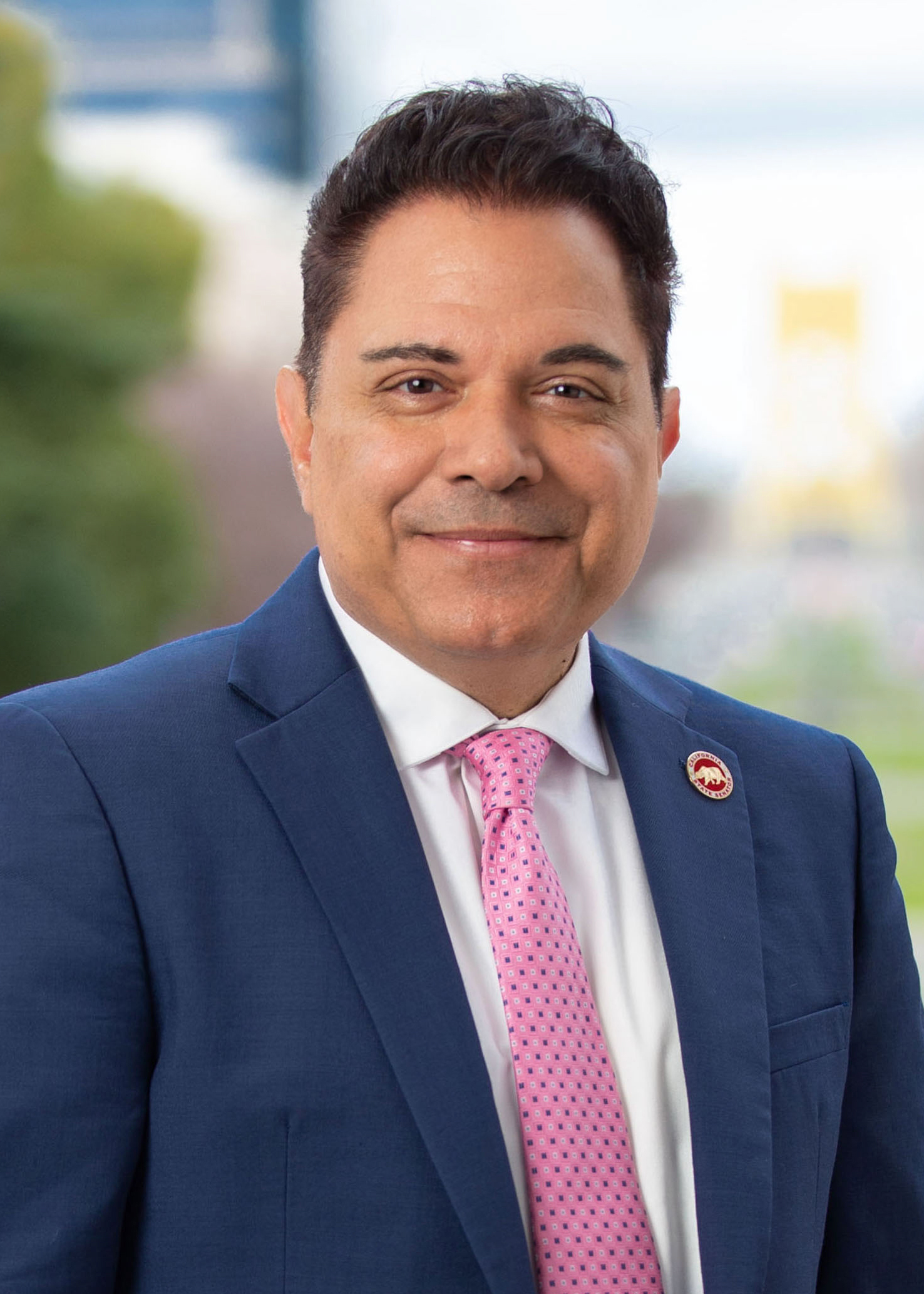
(1) Existing law establishes the State Water Pollution Control Revolving Fund program, pursuant to which state and federal funds are continuously appropriated from the State Water Pollution Control Revolving Fund to the State Water Resources Control Board for loans and other financial assistance for purposes related to the federal Clean Water Act. Existing law establishes the State Water Pollution Control Revolving Fund Administration Fund (administration fund) to provide funds, upon appropriation by the Legislature, to be expended by the state board for payment of the reasonable costs of administering the State Water Pollution Control Revolving Fund. Existing law authorizes the state board to assess an annual charge for financial assistance services, not to exceed 1% of the financial assistance repayment amount and computed according to the true interest cost method, as provided, and requires those annual charges to be deposited into the administration fund. Existing law authorizes the financial service rate to be applied at any time during the term of the financial assistance and requires the rate to remain unchanged for the duration of the financial assistance. Existing law prohibits the financial assistance rate from increasing the financial assistance repayment amount after being applied. Existing law requires the state board to, at least once each fiscal year, adjust the financial assistance service rate. Existing law requires the state board to set the total amount of revenue collected each year through the annual charges at an amount that is equal as practicable to the appropriation amount set forth in the annual Budget Act. This bill would additionally authorize the state board to assess fees in place of an annual charge for financial assistance and would authorize the fees or annual charge to be assessed at any rate as permitted by federal law. The bill would delete the provision prohibiting the changing of the financial assistance rate during the financial assistance and the increasing of the financial assistance repayment amount. The bill would delete the requirement relating to the appropriation amount set forth in the annual Budget Act. (2) Existing law authorizes moneys in the State Water Pollution Control Revolving Fund to be used for loans that meet specified requirements, including that the loans be made at or below market interest rates and, to the extent permitted by federal law, requiring that the combined interest and loan service rate be set at a rate not to exceed 50% of the interest rate paid by the state on the most recent sale of state general obligation bonds, as provided. Existing law requires the combined interest and loan service rate to be 0% for certain applicants who provide matching funds. This bill would delete the provision requiring that the combined interest and loan service rate be set at a rate not to exceed 50% of the interest rate paid by the state on the most recent sale of state general obligation bonds. The bill would require the loans to be made at below market interest rates. (3) Existing law prohibits a person or public agency, including a state agency, city, county, city and county, district, or any other political subdivision of the state, from using water from any source of quality suitable for potable domestic use for nonpotable uses, including, among other locations, parks, if suitable recycled water is available, as provided. Existing law provides that incidental amounts of spray, mist, or runoff are to be permitted to enter outdoor eating areas of parks and open spaces when irrigated with disinfected tertiary treated recycled water that complies with a specified regulation regarding irrigation. This bill would instead provide that incidental runoff is allowed to enter outdoor eating areas of parks and open spaces when irrigated with disinfected tertiary treated recycled water that complies with a specified regulation regarding irrigation. The bill would define "incidental runoff" as unintended amounts of runoff, such as unintended, minimal overspray from sprinklers that escapes the area of intended use.
Existing law establishes the Expanded Learning Opportunities Program and requires the Superintendent to allocate $2,750 per unit of average daily attendance, as specified, to local educational agencies with a prior fiscal year unduplicated pupil percentage of 55% or more, and requires those local educational agencies, as a condition of receiving that funding, to offer access to expanded learning opportunity programs to all pupils and to provide access to any pupil whose parent or guardian requests their placement in a program. Existing law defines unduplicated pupils for these purposes to mean a pupil who is classified as an English learner, eligible for a free or reduced-price meal, or a foster youth, as specified. This bill would require local educational agencies, for purposes of offering access to expanded learning opportunity programs pursuant to those provisions, to prioritize offering access to unduplicated pupils, which the bill would authorize to include, but not be limited to, specialized outreach to the parents and guardians of unduplicated pupils and providing assistance with enrollment of unduplicated pupils.
The Personal Income Tax Law and the Corporation Tax Law allow a credit against the taxes imposed by those laws, for taxable years beginning on or after January 1, 2021, and before January 1, 2027, for rehabilitation of certified historic structures, as defined, and, under the Personal Income Tax Law, for a qualified residence, as defined. Existing law allows an increased credit of 25% of the qualified rehabilitation expenditures with respect to a certified historic structure meeting any of certain criteria, including a rehabilitated structure that includes affordable housing for lower income households. Existing law requires a taxpayer to receive an allocation from the California Tax Credit Allocation Committee (CTCAC) to be eligible for the credit. Existing law limits the aggregate amount of money that can be allocated for these credits per calendar year. Existing law requires, on an annual basis beginning January 1, 2021, until January 1, 2027, the Legislative Analyst to collaborate with the CTCAC and the State Office of Historic Preservation to review the effectiveness of these tax credits, as described. This bill would require the Legislative Analyst to submit a review of the effectiveness of the tax credits for taxable years beginning on or after January 1, 2025, and before January 1, 2027, to the Legislature, as specified. This bill, for taxable years beginning on or after January 1, 2027, and before January 1, 2032, would enact a similar credit against the taxes imposed by the Personal Income Tax Law and the Corporation Tax Law for the rehabilitation of certified historic structures, as provided. The bill, for tax credits allocated for those taxable years, would remove the above-described increased credit of 25% and would remove the credit for a qualified residence. The bill would also remove the limit on the amount of money that can be allocated per calendar year, and would instead require the limit to be set by the Legislature in the annual Budget Act or another measure. The bill would provide additional requirements relating to the manner in which the credits are allocated. Existing law requires any bill authorizing a new tax expenditure, as defined, to include exclusions from income, to contain, among other things, specific goals, purposes, and objectives that the tax credit will achieve, detailed performance indicators, and data collection requirements. This bill would include findings and reporting requirements in compliance with this requirement. This bill would take effect immediately as a tax levy.
(1) The Personal Income Tax Law and the Corporation Tax Law allow various credits against the taxes imposed by those laws, including, for taxable years beginning on or after January 1, 2017, and before January 1, 2027, a credit for qualified taxpayers in an amount equal to 15% of the qualified value of fresh fruits or vegetables and specified raw agricultural products or processed foods donated to a food bank. This bill would extend the authorization for those tax credits for taxable years beginning before January 1, 2032. Existing law requires any bill authorizing a new tax expenditure to contain, among other things, specific goals that the tax expenditure will achieve, detailed performance indicators, and data collection requirements. For purposes of complying with these requirements, existing law requires the Franchise Tax Board to submit a report to the Legislature regarding the utilization of the above-described credit on or before December 1 of each year until January 1, 2026. This bill would extend that reporting requirement to January 1, 2031. The bill would make related findings and declarations. (2) Existing law authorizes individuals to contribute amounts in excess of their personal income tax liability for the support of specified funds, including the Emergency Food for Families Voluntary Tax Contribution Fund. Under existing law, the provisions governing that voluntary contribution fund are in effect until January 1, 2026, and are repealed as of December 1 of that year. This bill would extend the provisions that apply to the Emergency Food for Families Voluntary Tax Contribution Fund until January 1, 2033, as provided. The bill would additionally make a nonsubstantive change reflective of existing law. By extending the term of a continuously appropriated fund, the bill would make an appropriation. (3) This bill would declare that it is to take effect immediately as an urgency statute.
Existing law requires, within 7 months after the close of each fiscal year or within the time prescribed by the Controller, whichever is later, the officer of each local agency, as defined, who has charge of the financial records to furnish to the Controller a report of all the financial transactions of the local agency during the preceding fiscal year, as specified. Existing law requires the report to contain underlying data from audited financial statements prepared in accordance with generally accepted accounting principles, as specified, and to state certain information, including the aggregate income during the preceding fiscal year. Existing law requires the legislative body, upon completion of the report, to either post the report in a conspicuous location on its internet website or to cause copies of the report to be prepared and the clerk of the legislative body to furnish a copy to any person requesting it, as specified. This bill would require a local agency, as defined, that maintains an internet website to post its audited financial statements, or its annual comprehensive financial report, on its internet website within 30 days of the date that the statements or report are completed by the local agency, as specified. The bill would make its provisions operative on January 1, 2028. By imposing additional duties on local agencies, the bill would impose a state-mandated local program. The bill would include findings and declarations related to these provisions. The bill would include findings that changes proposed by this bill address a matter of statewide concern rather than a municipal affair and, therefore, apply to all cities, including charter cities. The California Constitution requires the state to reimburse local agencies and school districts for certain costs mandated by the state. Statutory provisions establish procedures for making that reimbursement. This bill would provide that, if the Commission on State Mandates determines that the bill contains costs mandated by the state, reimbursement for those costs shall be made pursuant to the statutory provisions noted above.
Existing law prohibits the Golden Gate Bridge, Highway and Transportation District from issuing general obligation or revenue bonds, or any other form of long-term indebtedness, except to finance an interim system of buses and ferries or to finance capital improvements or modifications relating to seismic safety of the Golden Gate Bridge. This bill would authorize the district to accept contributions and loans from this state and the United States for the purpose of financing capital improvements or modifications related to seismic safety on the Golden Gate Bridge, as specified.
This measure would call on the state's Representatives in Congress to continue to support investments in the federal Local Food for Schools and Child Care program and would call on the President of the United States to work with Congress to support family farmers who produce fresh, locally sourced food for school meals.
(1) Existing law, the Ortiz-Pacheco-Poochigian-Vasconcellos Cal Grant Program, provides awards to certain California postsecondary students to help pay the costs of postsecondary education. Existing law sets the maximum Cal Grant A and B tuition award amount for new recipients in the 2023–24 award year at $9,358 for students attending independent institutions of higher education. Existing law authorizes community colleges to award an associate degree for transfer, and provides that the Cal Grant A and B tuition award amount for future years for students attending independent institutions of higher education depends on the number of commitments those institutions make to accept associate degrees for transfer. Beginning with the 2024–25 award year, existing law sets the maximum tuition award amount for new Cal Grant A and B recipients at either $9,358 or $8,056, depending upon whether the number of new unduplicated transfer students accepted by those institutions who have been given associate degree for transfer commitments in the prior award year exceeds statutory targets. This bill would set, beginning with the 2026–27 award year, and subject to an appropriation for this purpose, the maximum tuition award amount for new Cal Grant A and B recipients at either $9,708 or $8,056, with the higher amount conditioned on the achievement of the target numbers for associate degree for transfer commitments that apply for the prior award year. (2) Existing law establishes a California Community College Expanded Entitlement Award for students who were not awarded a Cal Grant A or B award at the time of the student's high school graduation but who will be enrolled at a California community college during the award year and meet other criteria. Existing law authorizes a student who receives a California Community College Expanded Entitlement Award to subsequently transfer to a University of California or California State University campus and remain eligible to receive the award. Existing law also authorizes a student who receives a California Community College Expanded Entitlement Award and who subsequently transfers to an independent institution of higher education to remain eligible to receive the award, but only if General Fund moneys over the multiyear forecasts beginning in the 2024–25 fiscal year are available to support ongoing augmentations and actions, and if funding is provided in the annual Budget Act to implement the Cal Grant Reform Act. This bill would instead authorize a student who receives a California Community College Expanded Entitlement Award and who subsequently transfers to an independent institution of higher education to remain eligible to receive the award without the above-described conditions.
Existing law, the Governor's Reorganization Plan No. 1 of 2025, beginning July 1, 2026, eliminates the Business, Consumer Services, and Housing Agency and instead establishes the Business and Consumer Services Agency and the California Housing and Homelessness Agency (agency) . Existing law requires the agency to coordinate with the California Health and Human Services Agency and the California Consumer Protection Agency on various state policies, including housing. This bill would require the agency to create a study on issues impacting pregnant people experiencing homelessness and report the results of the study, as well as recommendations to establish a PINK Alert, to the Legislature by July 1, 2028. The bill would require the recommendations to include how the PINK Alert can meet specified conditions, including that it be a system that nonprofits can opt in to in order to get notifications if there is a pregnant person in need of emergency housing or prenatal services.
(1) Existing law requires the Wildlife Conservation Board to establish and administer, through the Department of Fish and Wildlife, the California Riparian Habitat Conservation Program with the purpose and goal of protecting, preserving, and restoring riparian habitats throughout the state, as specified. Existing law authorizes the board to authorize the department to award grants and loans for the purposes of the program to specified entities. This bill would authorize the board to authorize the department to make those awards to federally recognized tribes. (2) Existing law establishes the Inland Wetlands Conservation Program under the board with the purpose and goal of carrying out the programs of the Central Valley Habitat Joint Venture. Existing law authorizes the board to make grants or loans for the purpose of wetland and associated upland habitat acquisition, restoration, or enhancement to specified entities. This bill would authorize the board to make those grants or loans to federally recognized tribes. (3) Existing law authorizes the department to enter into contracts or other agreements with nonprofit conservation groups or resource conservation districts for the management and operation of department-managed lands. This bill would authorize the department to also enter into those contracts or other agreements with federally recognized tribes.