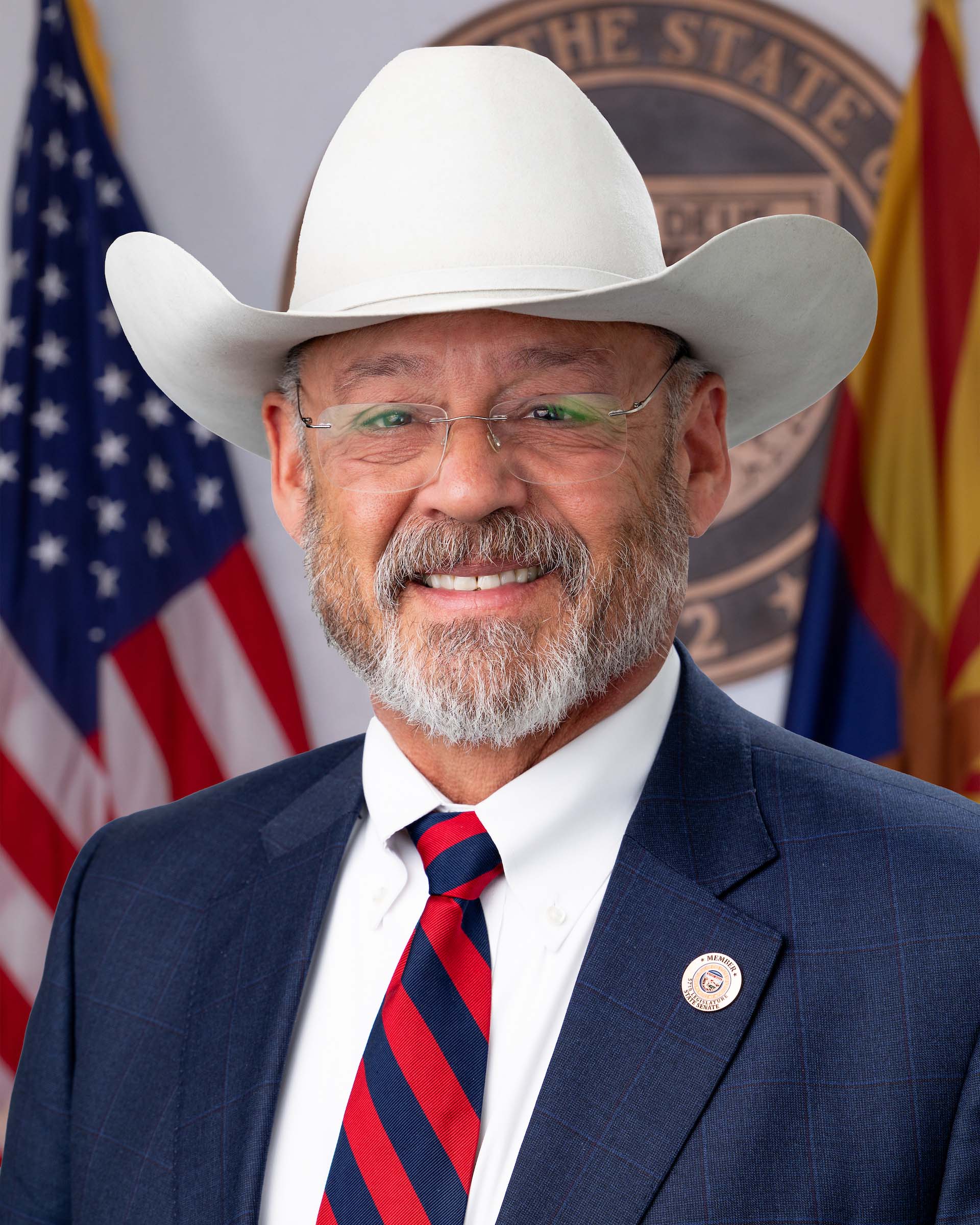
Photo of Mark Finchem
R Arizona Senate · District 1 On the 2026 ballot

Sen. Mark Finchem

Compare
Total votes
4,576
all sessions
Attendance
97%
117 missed
Near the chamber average
With party
94%
of cast votes
Near the chamber average
Bipartisan score
4%
crosses aisle rarely
Near the chamber average
Sponsored
447
bills & resolutions
Near the chamber average
Committees
6
assignments
447 bills and resolutions

Sponsored bills

Total
447
Primary
176
Co-sponsor
271
This page
447
matching current filters
Primary SCR 1008
Introduced · Arizona Senate · Lead sponsor
technical correction; marriage

Maddy summarySCR 1008 is a proposed constitutional amendment (requiring voter approval) that would amend Arizona law regarding surrogate parentage contracts. It would prohibit such contracts (where a woman agrees to carry a child for others), establish the surrogate as the legal mother with custody rights, and create a legal presumption that the husband of a married surrogate is the child's father. This change would directly affect surrogates, intended parents, and the legal process for determining parental rights in surrogacy arrangements. The amendment must be approved by voters at the next general election to become law.

Introduced Jun 12, 2026 0 co-sponsors
Primary SB 1093
Failed · Arizona Senate · Lead sponsor
riot; planning; participation; racketeering

Maddy summarySB 1093 amends Arizona's conspiracy statute (A.R.S. § 13-1003) and defines key terms for extortion and criminal activity (A.R.S. § 13-2301). It clarifies that conspiracy to commit a class 1 felony carries a life sentence without parole for 25 years, expands conspiracy liability when co-conspirators collaborate with others, and adds definitions like "extortionate extension of credit" (involving threats of violence for debt repayment) and "animal or ecological terrorism" (requiring property damage over $10,000 and three-person coordination). The bill directly affects individuals accused of conspiracy, extortion, or property crimes involving animal facilities. It is a procedural statute updating legal definitions and penalties, not a new policy on public order or riots.

Failed Jun 11, 2026 0 co-sponsors
Co-sponsor SB 1424
Failed · Arizona Senate · Co-sponsor
firearm safety instruction; public schools

Maddy summarySB 1424 requires Arizona public schools to provide annual, age-appropriate firearm safety instruction to students in kindergarten through 12th grade starting in the 2027-2028 school year. The instruction must focus solely on accident prevention and personal safety - covering safe storage, actions to take if encountering a firearm, and risks of unsafe handling - while explicitly prohibiting live firearms, ammunition, or any training on firearm use. The Arizona Department of Education will develop neutral, fact-based instructional materials in collaboration with public safety agencies, and schools must make all materials available for parental review. The bill does not regulate firearm ownership or possession, nor does it promote or discourage firearm ownership.

Failed Jun 11, 2026 1 co-sponsor
Primary SB 1649
Failed · Arizona Senate · Lead sponsor
digital assets strategic reserve fund

Maddy summarySB 1649 establishes Arizona's Digital Assets Strategic Reserve Fund to hold digital assets the state confiscates or receives (like Bitcoin, XRP, or NFTs). It requires holders of abandoned digital assets to deliver them in "native form" to the state within 30 days, with staking rewards or airdrops from unclaimed assets after three years flowing into the fund. The bill mandates strict security standards for storing these assets, including hardware-based keys in two secure data centers, regular audits, and no smartphone access. This directly affects state agencies managing seized digital assets and businesses holding abandoned digital property under Arizona's abandoned property laws.

Failed Jun 9, 2026 0 co-sponsors
Co-sponsor SB 1426
Signed into law · Arizona Senate · Co-sponsor
unlawful occupants; forcible entry; detainer

Maddy summarySB 1426 amends Arizona law to clarify and expedite eviction procedures for unauthorized occupants in residential properties. It defines "forcible detainer" when someone unlawfully occupies a home without prior agreement, family ties, or legal rights, and requires landlords to provide written demand before seeking eviction. The bill mandates courts to issue immediate writs of restitution (eviction orders) after judgment in these cases, skipping standard wait periods. It directly affects landlords and unauthorized occupants in residential dwellings, excluding current/family tenants or those with existing agreements. The key change is creating a faster legal process for removing unlawful occupants through written demand and expedited court action.

Signed into law May 29, 2026 1 co-sponsor
Co-sponsor HCR 2047
Passed · Arizona House · Co-sponsor
legitimacy; Judea and Samaria; recognition

Maddy summaryHCR 2047 is a symbolic Arizona legislative resolution recognizing the historical and biblical significance of "Judea and Samaria" as the ancestral homeland of the Jewish people. It formally rejects the term "West Bank" as a political construct and mandates that Arizona state government use "Judea and Samaria" in all official communications and documents regarding the territory. The resolution cites biblical references, historical claims, and legal arguments (including the San Remo Resolution and League of Nations Mandate) to support its position. As a concurrent resolution, it has no legal effect on international borders or U.S. policy but reflects Arizona's official stance on terminology. It does not alter any existing laws or policies related to the region.

Passed Apr 21, 2026 1 co-sponsor
Primary SB 1754
Passed · Arizona Senate · Lead sponsor
ADE; special education; parent complaints

Maddy summarySB 1754 clarifies Arizona's process for handling parent complaints about school districts' special education services. It requires the state education department to post complaint investigation reports online within 60 days (after redacting personal information), excluding them from "student level data" rules. The bill defines when complaints are "does-not-qualify" (e.g., if the student isn't a child with a disability or allegations don't violate special education laws). It also mandates that department policies for complaint handling include public comment periods starting December 2026. This directly affects parents filing complaints, school districts responding to them, and the state education department managing the process.

Passed Apr 16, 2026 0 co-sponsors
Primary SB 1148
Vetoed · Arizona Senate · Lead sponsor
supreme court; attorney licensing

Maddy summarySB 1148 clarifies that Arizona's Supreme Court, not any other organization, must handle attorney licensing and set the rules. It requires the court to establish minimum qualifications, testing, background checks, and disciplinary procedures for lawyers. The bill also explicitly prohibits requiring attorneys to join any non-governmental group to maintain their license. This directly affects all current and future licensed attorneys in Arizona by defining the court's exclusive authority over licensing standards.

Vetoed Apr 13, 2026 0 co-sponsors
Primary SB 1654
Passed · Arizona Senate · Lead sponsor
appropriations; end-point monitoring; elections

Maddy summarySB 1654 appropriates $100,000 from Arizona's state general fund for fiscal year 2026-2027 to reimburse counties for election security measures. Specifically, it funds end-point monitoring of election systems and interception of malicious signals that could disrupt voting. This bill directly affects Arizona counties responsible for administering elections, providing financial support for these security protocols. The measure is currently in early legislative stages (Senate First and Second Readings) and does not alter election procedures or voting rules.

Passed Mar 31, 2026 0 co-sponsors
Co-sponsor HB 2446
Passed · Arizona House · Co-sponsor
motor carriers; English proficiency

Maddy summaryHB 2446 requires all motor carriers operating in Arizona to demonstrate English proficiency during roadside inspections, directly affecting commercial drivers and trucking companies. The bill mandates that inspectors conduct all inspections in English without using interpreters, translation tools, or other communication aids. If a motor carrier cannot prove sufficient English skills - such as understanding verbal questions or electronic traffic signs - an inspector may issue an out-of-service order. This law aims to ensure clear communication during safety checks but does not change existing safety standards beyond the language requirement.

Passed Mar 31, 2026 1 co-sponsor
Showing 21 to 30 of 447 bills
Previous 1 2 3 4 45 Next