

Maddy summaryHB 2960 establishes a grant program to fund specialized veterans' courts in Arizona counties and municipalities. It creates a "veterans' treatment court fund" using state appropriations, providing money to local governments to set up courts that address veterans' justice-involved behavior through individualized treatment plans for issues like PTSD, substance abuse, and traumatic brain injury. The program requires grantees to report annually on participant demographics, recidivism, treatment use, and program outcomes, with the Attorney General compiling statewide data and recommendations for improvement. This directly affects veterans involved in the criminal justice system by connecting them to targeted support services rather than standard court processing.
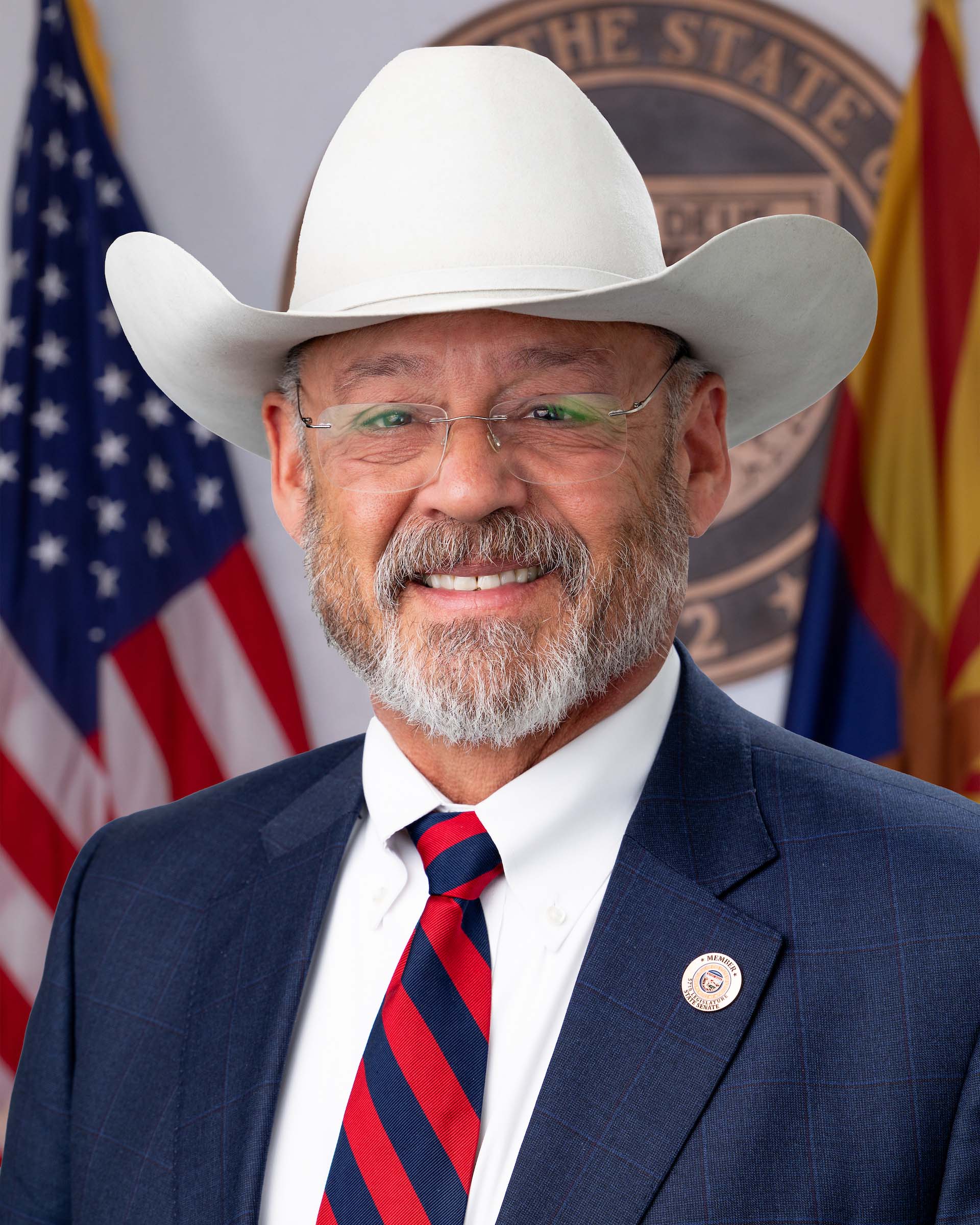
Sen. Mark Finchem
Sponsored bills
Maddy summarySB 1630 establishes a new Arizona Medicaid program providing home and community-based services for adults with serious mental illness, replacing institutional care when possible. It sets eligibility based on clinical criteria (like recent hospitalizations, medication complexity, or safety risks) and income limits (300% of federal SSI), with options for a qualified income trust to meet financial requirements. Covered services include personal care, medication management, supervised community living, adult day health, and nonemergency transportation. The program requires federal approval by 2027 and aims to support individuals in community settings while avoiding psychiatric hospital or residential facility placement.
Maddy summarySB 1475 prohibits Arizona students from participating in school-sponsored sports or activities if they have been convicted of, admitted to, or pleaded no contest to certain serious criminal offenses - including aggravated assault, sexual exploitation of minors, domestic violence, or stalking - or are charged with such offenses while awaiting trial. School districts must require students to certify their criminal history using a provided form and bar participation during pending cases for these offenses. The bill directly affects students facing these specific legal consequences and mandates school districts to implement these eligibility rules. It does not change criminal sentencing but modifies school participation policies based on defined criminal conduct.
Maddy summarySB 1421 restricts financial services for undocumented immigrants in Arizona. It prohibits banks and check cashers from accepting identification cards issued exclusively to undocumented immigrants or cards marked as not proving legal presence. The bill also bans using an Individual Taxpayer Identification Number (ITIN) as primary ID for loans and requires businesses sending money abroad to verify customers are not undocumented immigrants. These rules apply to all financial institutions, check cashers, and foreign remittance services operating in Arizona.
Maddy summarySB 1520 requires Arizona state agencies to share any requested data with the U.S. government about undocumented immigrants or individuals who overstayed their visas. It directly affects state agencies responsible for collecting such data and individuals in these immigration categories. The law mandates that agencies provide this information upon federal request, overriding other state laws. The requirement expires on December 31, 2028, as specified in the bill's sunset provision.
Maddy summarySB 1095 prohibits health professionals in Arizona from providing gender transition procedures, irreversible gender reassignment surgery, or referrals for such procedures to individuals under 18 years old. The bill allows exceptions for medical conditions like disorders of sex development (e.g., XX virilization or XY undervirilization) or treatments for infections, injuries, or life-threatening conditions. It also bans the use of public funds for gender transition procedures for minors in state-run facilities or by state-employed health professionals. The law establishes disciplinary action for violations and allows individuals to seek legal remedies for noncompliance.
Maddy summarySB 1572 requires Arizona public schools to observe "Celebrate Freedom Week" annually, mandating specific civics instruction for all grades 1-12. It directs schools to teach the original intent of founding documents (Declaration of Independence, U.S. Constitution/Bill of Rights) and their historical context, including connections to U.S. history topics like immigration, the American Revolution, and the abolitionist movement. For grades 3-12, students must recite a designated passage from the Declaration of Independence unless they or their parent request an exemption (e.g., for religious objections, parental request, or diplomatic immunity). The bill prohibits schools from censoring religious references in these documents and gives the state board authority to implement rules. This affects all Arizona public school students and curriculum content.
Maddy summarySB 1573 prohibits Arizona courts from using religious sectarian laws (such as Sharia, Canon Law, or Halacha) in legal decisions. It states that any court ruling based on such religious laws is void, appealable, and grounds for judicial removal. The bill specifically excludes Anglo-American legal traditions and traditional marriage recognition from this prohibition. It directly affects Arizona judges and courts by requiring them to base rulings solely on state or U.S. law, not religious legal systems. The law applies to all courts in Arizona, including federal courts sitting in diversity jurisdiction.
Maddy summarySB 1445 modifies Arizona's water quality regulations to allow small municipalities (with populations between 1,000 and 10,000) to use EPA-approved on-site equipment for bacteriological testing of wastewater. It updates permit requirements for facilities discharging pollutants, including specifying that small towns may conduct this testing on-site instead of sending samples to external labs. The bill directly affects local governments and wastewater facilities in smaller communities by streamlining testing procedures while maintaining EPA standards. It also clarifies permit processes for aquifer protection and aligns with federal Clean Water Act requirements.
Maddy summarySB 1040 requires Arizona county recorders to provide electronic copies of voter registration lists to political parties without charge. Specifically, it mandates that recorders deliver standardized electronic data within eight days after registration closes for primary and general elections, and within ten business days for other elections. The electronic copies must include voter details like name, address, party preference, registration date, and voting history from the past four years. The secretary of state must establish a uniform format to ensure consistent data sharing across all counties. This affects how political parties access voter information for campaign and election activities.