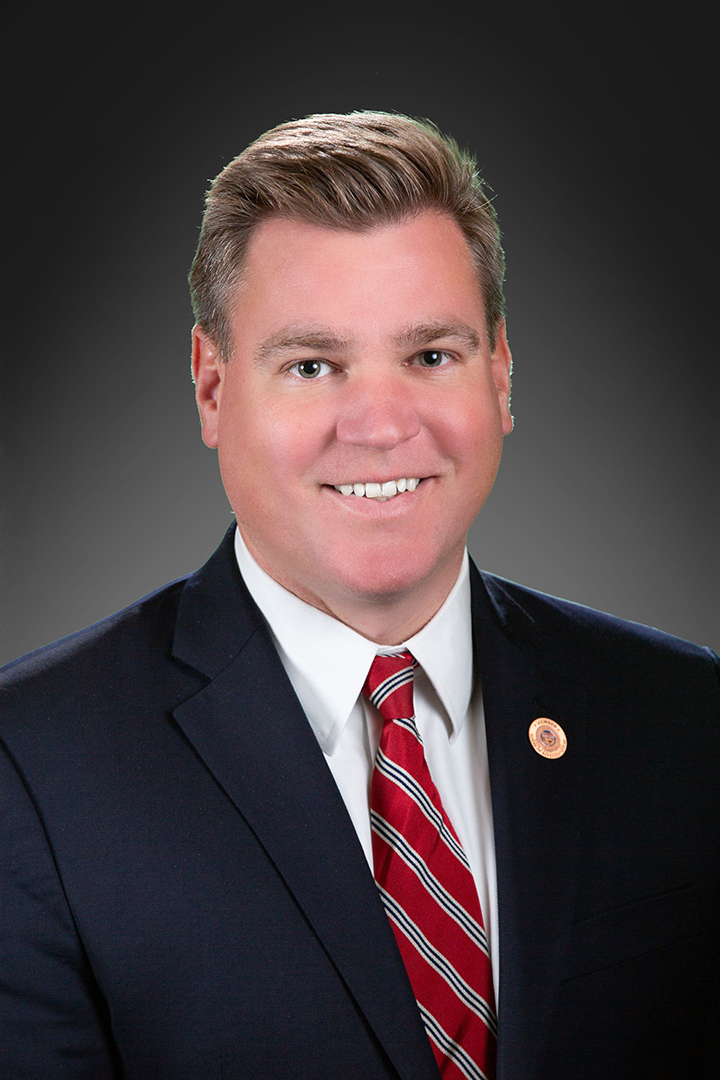
Photo of Neal Carter
R Arizona House · District 15 On the 2026 ballot

Rep. Neal Carter

Compare
Total votes
3,594
all sessions
Attendance
100%
6 missed
Near the chamber average
With party
87%
of cast votes
Lower than 81% of chamber peers
Bipartisan score
9%
crosses aisle rarely
Higher than 80% of chamber peers
Sponsored
337
bills & resolutions
Near the chamber average
Committees
3
assignments
337 bills and resolutions

Sponsored bills

Total
337
Primary
80
Co-sponsor
257
This page
337
matching current filters
Co-sponsor HB 4155
Signed into law · Arizona House · Co-sponsor
amusements; 2026-2027

Maddy summaryThis Arizona bill updates regulations for liquor licenses, boxing, and fantasy sports to ensure proper tax collection and fund management. It requires boxing promoters to pay a four percent tax on gross receipts and mandates financial audits for these events, with unspent funds reverting to the state general fund if they exceed a specific limit. The legislation also establishes a fee for fantasy sports operators based on tribal gaming revenue shares and allows the boxing commission to withhold prize money from participants involved in sham contests. Additionally, the bill clarifies license renewal timelines and medical exam expiration dates for combat sports while repealing an outdated section related to fantasy sports funds.

Signed into law Jun 13, 2026 1 co-sponsor
Co-sponsor HB 4168
Signed into law · Arizona House · Co-sponsor
taxation; omnibus; 2026-2027

Maddy summaryHB 4168 updates Arizona's insurance premium tax rates and reporting requirements for the 2026-2027 period. The bill mandates that insurers file annual reports by March 1 detailing their direct premium income and pay corresponding taxes, which vary by insurance type and location. Fire insurance premiums on properties in towns with private fire companies are taxed at 0.66 percent, while other fire insurance is taxed at 2.2 percent, and taxes on other insurance categories gradually decrease to 1.70 percent for premiums received in 2021 and later. Eighty-five percent of the fire insurance tax collected is allocated to municipal and fire district funds to support public safety personnel retirement systems. Additionally, the bill requires larger insurers to make monthly tax payments throughout the year and allows for electronic submission of reports and payments.

Signed into law Jun 13, 2026 1 co-sponsor
Co-sponsor HB 4160
Signed into law · Arizona House · Co-sponsor
health care; 2026-2027

Maddy summaryThis bill establishes rules for overdose and disease prevention programs in Arizona, allowing cities, counties, and local health departments to operate services that provide free needles, naloxone for overdose reversal, and referrals to treatment. The legislation requires these programs to offer educational materials on preventing infections and injuries while mandating that the number of needles disposed of equals the number distributed to ensure safety. Additionally, the bill creates a new fund to support rural health initiatives, requiring the state to hold public meetings in major metropolitan areas to gather community input before spending the allocated money. Finally, it explicitly prohibits the use of opioid settlement funds to finance safer smoking equipment, clarifying that such funds cannot be used for tools designed to reduce health risks associated with inhaling drugs.

Signed into law Jun 13, 2026 1 co-sponsor
Co-sponsor HB 4162
Signed into law · Arizona House · Co-sponsor
human services; 2026-2027

Maddy summaryThis bill extends the Arizona Military Family Relief Fund through December 31, 2031, and creates two separate subaccounts to manage funds for veterans served before and after the September 11, 2001 attacks. It establishes two advisory committees, one for each subaccount, to set criteria for financial assistance, manage the application process, and evaluate requests for aid. The committees will consist of state officials and community members, including widows, widowers, military retirees, and veterans with service-connected disabilities, who will be appointed by the governor. Additionally, any unspent money in these subaccounts at the end of the funding period will be transferred to the state's veterans' donations fund.

Signed into law Jun 13, 2026 1 co-sponsor
Co-sponsor HB 2839
Introduced · Arizona House · Co-sponsor
municipal tax; exemption; food

Maddy summaryHB 2839 (Arizona) requires cities and towns to apply municipal sales taxes uniformly to all food items, prohibiting extra charges for specific foods. It exempts food manufacturing, distribution, and packaging containers from these taxes, and removes taxes on food purchased with SNAP benefits (food stamps) or low-cost food sold to eligible elderly, homeless, or disabled individuals through approved programs. The law affects local governments imposing food taxes, food businesses, and SNAP recipients by standardizing tax treatment and expanding certain exemptions. It applies retroactively to taxable periods after its effective date.

Introduced Jun 13, 2026 1 co-sponsor
Co-sponsor HCR 2044
Passed · Arizona House · Co-sponsor
preferential treatment; discrimination; prohibited acts

Maddy summaryThis proposed constitutional amendment (HCR 2044) would prohibit Arizona state and local governments from granting preferential treatment or discrimination based on race, sex, color, ethnicity, or national origin in public employment, education, or contracting. It specifically bans requiring individuals to endorse race-based policies, spending public funds on offices promoting such policies, or implementing disciplinary actions based on race/ethnicity. The amendment directly affects public schools, universities, government agencies, and contractors operating under state authority. If approved by voters, it would become part of Arizona's Constitution, replacing existing antidiscrimination laws in these specific areas.

Passed Jun 12, 2026 1 co-sponsor
Co-sponsor HB 2676
Passed · Arizona House · Co-sponsor
juvenile restoration; rights; firearms; civil

Maddy summaryHB 2676 allows individuals adjudicated delinquent as juveniles in Arizona to petition a court for restored firearm rights after meeting specific conditions. It directly affects people who were minors when convicted of certain offenses but not adults. The bill establishes two waiting periods: 25 years for those convicted of serious offenses like burglary or arson, or a two-year wait for other felonies after completing probation or court-ordered conditions. The process requires a court application with no filing fee, served to the county attorney, and is handled by juvenile court judges. This changes the legal pathway for juvenile offenders to regain firearm rights under defined circumstances.

Passed Jun 12, 2026 1 co-sponsor
Co-sponsor HB 4154
In committee · Arizona House · Co-sponsor
general appropriations act; 2026-2027

Maddy summaryThis bill establishes the 2026-2027 budget for Arizona's Department of Corrections, allocating approximately $1.6 billion to fund state prisons, private prisons, and correctional programs. It mandates that the department submit detailed monthly and annual reports to the legislature regarding spending, staffing levels, bed capacity, and inmate healthcare performance. The legislation also requires that any plans to open or close one hundred or more prison beds be reviewed by the joint legislative budget committee before implementation. Additionally, it sets specific rules for how funds from various correctional funds must be used and transferred to support the department's operations and retirement contributions.

In committee Jun 11, 2026 1 co-sponsor
Primary HB 2120
Signed into law · Arizona House · Lead sponsor
property tax exemption; disability; determination

Maddy summaryHB 2120 amends Arizona's property tax law to expand exemptions for specific groups: widows/widowers, people with total permanent disabilities, and veterans with disabilities. It provides full tax exemption for veterans with 100% service-connected disability (and surviving spouses using the home as primary residence), and a partial exemption of $4,188 for others based on their disability rating percentage. To qualify, applicants must meet income limits ($34,901-$41,870 depending on children) and file annual affidavits with county assessors. The exemption amounts and income thresholds will adjust annually based on GDP and housing index changes. This directly affects eligible Arizona residents seeking relief on their primary residence property taxes.

Signed into law Jun 4, 2026 0 co-sponsors
Primary HB 2574
Signed into law · Arizona House · Lead sponsor
traffic penalties; appeal; stay

Maddy summaryHB 2574 amends Arizona law to clarify the process for appealing traffic penalty judgments. It directly affects drivers who face traffic fines and wish to appeal court decisions. The bill requires courts to report stays (pauses) in enforcement to the state department, prevents the department from taking action during an appeal, and states that posting an appeal bond automatically pauses enforcement. It also allows superior court commissioners to handle these appeals, streamlining the process. The changes apply to all traffic penalty cases where a judgment is under appeal.

Signed into law Jun 4, 2026 0 co-sponsors
Showing 21 to 30 of 337 bills
Previous 1 2 3 4 34 Next