Maddy summaryThis joint resolution seeks to disapprove a Bureau of Consumer Financial Protection rule that would have withdrawn whistleblower protections previously established under Consumer Financial Protection Circular 2024-04. The bill directly affects financial institutions and employees who report violations of consumer financial laws by preventing the removal of existing whistleblower safeguards. If enacted, the resolution would keep the original whistleblower protections in place and nullify the proposed withdrawal rule. The measure uses the Congressional Review Act process to formally reject the agency's regulatory action.
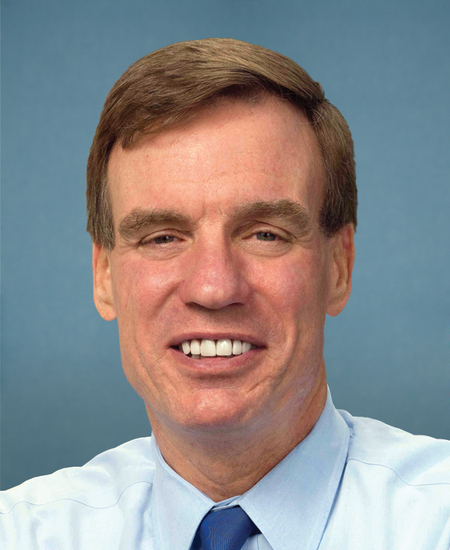
Sen. Mark R. Warner
Sponsored bills
Maddy summaryThis resolution honors the life and legacy of Dirk Kempthorne, a former U.S. Senator, Governor of Idaho, and Secretary of the Interior. It formally acknowledges his public service across various roles, including his work on environmental conservation, veterans' support, and economic development in Idaho. The Senate expresses its sorrow over his death and directs that a copy of the resolution be sent to his family. Additionally, the Senate stands in adjournment as a final mark of respect to his memory.
Maddy summaryThe GUARD Act requires companies providing AI chatbots to verify users' ages using reliable methods (like government IDs, not just self-reported birth dates) and prohibits minors under 18 from accessing "AI companions" designed for emotional interaction. It mandates clear disclosures that chatbots are not human and cannot falsely claim to be licensed professionals (e.g., therapists), while banning features that solicit minors for explicit content or promote violence. Covered entities must implement secure age verification processes for all accounts, including periodic checks, and face civil penalties up to $100,000 per violation for noncompliance. The law directly affects tech companies operating AI chatbots in the U.S. and aims to reduce minors' exposure to harmful AI interactions.
Maddy summaryThis bill amends federal carjacking law to change how the offense is defined and prosecuted. It removes the requirement that a carjacking must involve "intent to cause death or serious bodily harm" for it to be considered a federal offense (now only requiring the act to be done "knowingly"). For cases where death occurs, it now requires prosecutors to prove both the intent to cause death *and* that death actually resulted, rather than just showing death occurred. This directly affects federal prosecutors, carjacking defendants, and the legal standards used in such cases.
Maddy summaryThis resolution honors the life and legacy of Robert S. Mueller III, who served as the Director of the FBI and a distinguished Marine Corps veteran. The bill formally commends Mueller for his public service and defense of American democracy, while also extending condolences to his family. It does not create new laws or funding but serves as a ceremonial acknowledgment of his career and achievements. The Senate will transmit a copy of this resolution to Mueller's family as a gesture of respect.
Maddy summaryThe Federal Worker Credit Protection Act of 2026 prevents credit reporting agencies from including unpaid federal employee debts in credit reports during government shutdowns. It defines a shutdown period as any time when federal funding lapses for more than 24 hours and lasts up to 30 days after funding resumes. During this time, agencies must remove these specific debt items from reports upon request and cannot share them with anyone. The bill also requires the Office of Management and Budget to notify credit agencies when a shutdown begins and ends. These rules apply to federal employees and D.C. workers whose agencies are affected by funding lapses starting on or after February 1, 2026.
Maddy summaryThe Workforce Transparency Act of 2026 establishes a voluntary federal framework for companies developing artificial intelligence systems to share aggregated, privacy-protected data about how their tools are used in the workplace. Participating providers and enterprise customers can submit statistical information regarding task usage, geographic distribution, and trends over time to the Department of Labor without revealing individual identities, trade secrets, or proprietary code. The Department of Labor will maintain a public database of this data and issue annual reports to Congress to support evidence-based workforce and economic policymaking. The legislation explicitly prohibits federal agencies from penalizing companies that choose not to participate and ensures that all shared data remains exempt from public disclosure under the Freedom of Information Act.
Ensuring Seniors' Access to Quality Care Act This bill repeals certain restrictions under Medicare and Medicaid that prohibit the approval of nurse-aide training and competency evaluation programs in skilled nursing facilities that have been subject to specified regulatory actions (e.g., civil penalties) for substandard quality of care. The Centers for Medicare & Medicaid Services (CMS) must still disapprove such programs for up to two years; however, the CMS must rescind the disapproval upon completion of corrective action and may require additional oversight of the program for purposes of rescission. The bill also allows Medicaid and Medicare providers (e.g., skilled nursing facilities) to access, through the National Practitioner Data Bank, disciplinary information for affiliated physicians and other health care practitioners, as reported by state licensing authorities.
This act extends the authorities of Title VII of the Foreign Intelligence Surveillance Act (FISA) until June 12, 2026. Title VII of FISA generally addresses electronic surveillance and other methods of acquiring foreign intelligence information that are directed at targets outside the United States. Title VII includes surveillance under Section 702, which concerns acquiring communications of non-U.S. persons believed to be outside the United States to obtain foreign intelligence information. Information about U.S. persons may incidentally be acquired by this type of surveillance and subsequently queried (searched) under certain circumstances. For additional information see CRS In Focus, IF11451 Foreign Intelligence Surveillance Act (FISA) ; and CRS Report, R48592 FISA Section 702 and the 2024 Reforming Intelligence and Securing America Act .
Maddy summaryThis Senate resolution formally recognizes the week of May 3 through May 9, 2026, as National Small Business Week to honor the contributions of small business owners and entrepreneurs across the United States. The measure expresses appreciation for the economic role these businesses play and acknowledges the resilience of their owners and employees. By adopting this designation, the Senate aims to celebrate the entrepreneurial spirit within every community without imposing any new laws or regulations.