Issue · Labor & Employment

Labor & Employment

Every labor & employment bill, vote, and legislator stance in Alabama, automatically classified by Maddy, our AI policy reader.

Total bills
132
119th Congress
Top supporter
Terri A. Sewell
67% support rate
Top opponent
Mike Rogers
33% support rate
Ranked legislators
9
4 support · 5 oppose
Key legislators

Who's moving labor & employment in Alabama

Legislators moving labor & employment in Alabama
Legislator Party Stance Support rate Votes
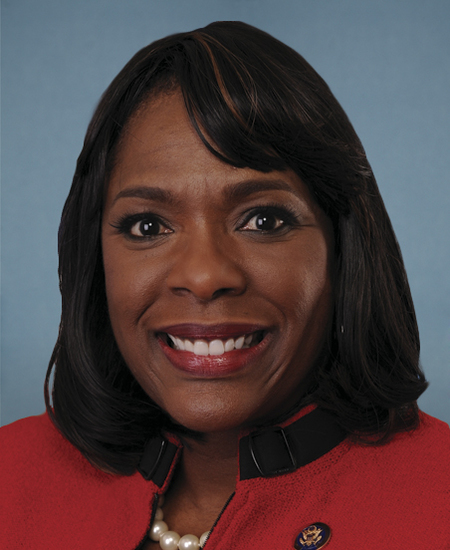
Terri A. Sewell
Terri A. Sewell House · District 7
D
Support
67% 195
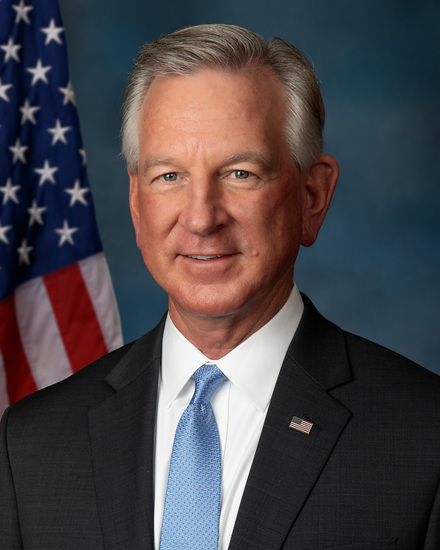
Tommy Tuberville
Tommy Tuberville Senate
R
Support
67% 205
Katie Boyd Britt
Katie Boyd Britt Senate
R
Support
62% 211
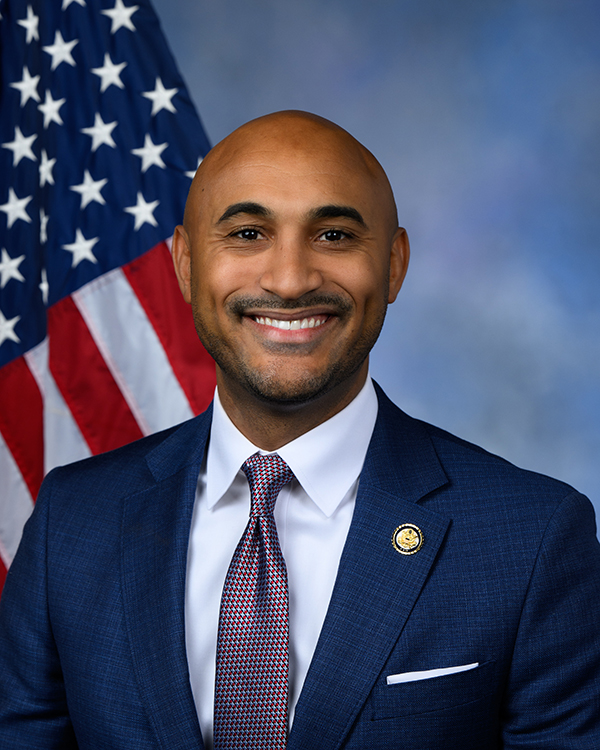
Shomari Figures
Shomari Figures House · District 2
D
Support
62% 196
Mike Rogers
Mike Rogers House · District 3
R
Oppose
33% 194
Robert B. Aderholt
Robert B. Aderholt House · District 4
R
Oppose
38% 195
Gary J. Palmer
Gary J. Palmer House · District 6
R
Mixed −
42% 197
Dale W. Strong
Dale W. Strong House · District 5
R
Mixed −
42% 191
Barry Moore
Barry Moore House · District 1
R
Mixed −
46% 191
Showing 1–10 of 132 bills

All labor & employment bills

in committee · United States · House Jul 13, 2026

HRES 1427: Expressing support for the designation of July 10th as Journeyman Lineworkers Recognition Day.

This resolution expresses support for designating July 10th as Journeyman Lineworkers Recognition Day to honor the workers who maintain the nation's electrical grid. The bill specifically recognizes the dangerous conditions these employees face, such as working at heights near live power lines and responding to disasters like hurricanes and wildfires. It also commemorates Henry Miller, the first president of the International Brotherhood of Electrical Workers, who died on July 10, 1896, while performing his duties. Ultimately, the measure encourages the public to observe this day with reflection on the contributions of lineworkers.
Sub-Topics Apprenticeships
in committee · United States · House Jul 21, 2026

HCONRES 114: Recognizing the significance of equal pay and the disparity in wages paid to men and to Black women.

This concurrent resolution formally recognizes the persistent wage gap between Black women and white, non-Hispanic men in the United States. It highlights data showing that Black women earn significantly less than their male counterparts and reaffirms Congress's support for existing laws that prohibit pay discrimination based on sex or race. The document does not create new laws or change policy but serves as a symbolic statement to raise awareness about the economic disparities faced by Black women.
in committee · United States · House Jul 6, 2026

HR 9596: Federal Jobs for STARs Act of 2026

The Federal Jobs for STARs Act of 2026 aims to increase hiring opportunities for individuals in the federal workforce who have gained skills through alternative routes like military service, apprenticeships, or community colleges rather than traditional four-year degrees. It requires the Office of Personnel Management to restrict agencies from mandating bachelor's degrees unless absolutely necessary and to create a specific section on federal job websites dedicated to these candidates. Additionally, the bill mandates a study to explore funding options, such as scholarships and tuition assistance, to help current federal employees with these backgrounds pursue further education.
in committee · United States · House Jun 30, 2026

HR 9535: Securing Agriculture's Workforce Act of 2026

The Securing Agriculture's Workforce Act of 2026 modernizes the H-2A visa program by transferring administrative authority to the Department of Homeland Security and introducing a unified online platform to streamline applications for employers and workers. Key provisions include establishing new housing standards with mandatory inspections, creating a system for staggered worker entry and exit, and allowing workers to transfer between employers without losing their status. The bill also defines specific job classifications for wage calculations, expands the scope of covered agricultural activities, and provides legal protections for employers who document the employment of workers seeking visa status. Additionally, it requires agencies to develop a heat illness prevention plan and allows for contract termination due to natural disasters.
in committee · United States · Senate Jun 16, 2026

S 4793: Foreign-Trade Zone Export Enhancement Act of 2026

The Foreign-Trade Zone Export Enhancement Act of 2026 aims to support U.S. manufacturing and job creation by allowing specific goods to enter foreign-trade zones without paying import duties. This change applies to items classified under a specific tariff heading that are manufactured or altered within these zones and then exported directly to countries in the USMCA trade agreement. To put this into effect, U.S. Customs and Border Protection must issue new regulations within 90 days of the bill becoming law.
in committee · United States · House Jun 11, 2026

HR 9260: Departments of Labor, Health and Human Services, and Education, and Related Agencies Appropriations Act, 2027

Departments of Labor, Health and Human Services, and Education, and Related Agencies Appropriations Act, 2027 This bill provides FY2027 appropriations to the Departments of Labor, Health and Human Services, and Education; and related agencies. The bill provides appropriations to the Department of Labor for the Employment and Training Administration, the Veterans' Employment and Training Service, the Employee Benefits Security Administration, the Pension Benefit Guaranty Corporation, the Wage and Hour Division, the Office of Labor-Management Standards, the Office of Workers' Compensation Programs, the Occupational Safety and Health Administration, the Mine Safety and Health Administration, the Bureau of Labor Statistics, the Office of Disability Employment Policy, and Departmental Management. The bill provides appropriations to the Department of Health and Human Services for the Health Resources and Services Administration, the Centers for Disease Control and Prevention, the National Institutes of Health, the Substance Abuse and Mental Health Services Administration, the Centers for Medicare and Medicaid Services, the Administration for Children and Families, the Administration for Community Living, the Administration for Strategic Preparedness and Response, and the Office of the Secretary. The bill provides appropriations to the Department of Education for the Office of Elementary and Secondary Education; the Office of Special Education and Rehabilitative Services; the Office of Career, Technical, and Adult Education; the Office of Federal Student Aid; the Office of Postsecondary Education; the Institute of Education Sciences; and Departmental Management. The bill also provides appropriations to several related agencies, including the Committee for Purchase From People Who Are Blind or Severely Disabled, the Corporation for National and Community Service, the Federal Mediation and Conciliation Service, the Federal Mine Safety and Health Review Commission, the Institute of Museum and Library Services, the Medicaid and CHIP Payment and Access Commission, the Medicare Payment Advisory Commission, the National Council on Disability, the National Labor Relations Board, the National Mediation Board, the Occupational Safety and Health Review Commission, the Railroad Retirement Board, and the Social Security Administration. The bill also sets forth requirements and restrictions for using funds provided by this and other appropriations acts.
in committee · United States · House Apr 22, 2026

HR 8443: End H–1B Visa Abuse Act of 2026

This bill proposes a comprehensive overhaul of the H-1B visa program by pausing new issuances for three years and capping the annual limit at 25,000 visas. It would eliminate the current lottery system, replacing it with a process that prioritizes employers offering the highest wages, while also restricting visa holders to a maximum stay of three years and banning them from holding multiple jobs simultaneously. The legislation further mandates that all H-1B workers be paid at least $200,000 annually, prohibits staffing agencies from sponsoring these visas, and bars federal agencies from hiring or petitioning for H-1B workers. Additionally, the bill would end employment authorization for foreign students and interns, and generally prevent most nonimmigrants from adjusting their status to become permanent residents while in the United States.
Sub-Topics Work Authorization
in committee · United States · Senate Apr 16, 2026

S 4335: HERO Child Care for Military Families Act

The HERO Child Care for Military Families Act aims to improve child care availability and workforce stability for military families by expanding eligibility for military child development centers and introducing new hiring and benefit structures. Key provisions allow the Department of Defense to hire national service volunteers as child care employees and establish a preclearance program that conducts background checks and health screenings on potential hires regardless of whether a job opening currently exists. The bill also authorizes job-sharing arrangements where two part-time employees share one full-time position to reduce vacancies and offers limited benefits, such as commissary access and tuition assistance, to help recruit and retain staff. To better track progress, the legislation requires the creation of a unified data system to monitor child care capacity and waitlists, along with specific reports on how child care availability impacts military readiness and family retention.
Sub-Topics Military Families
in committee · United States · Senate Apr 21, 2026

S 4360: INSIGHT Act

The INSIGHT Act requires the Department of Labor to submit annual reports to Congress detailing the status of active pension plan investigations, including timelines, reasons for delays, and estimated completion dates while protecting the privacy of private parties involved. It also mandates transparency regarding "adverse assistance" provided to attorneys by requiring written agreements that outline the scope of help and sharing copies of these agreements with potentially affected employers and plan sponsors. Additionally, the bill adds a formal statement to existing pension laws declaring that promoting voluntary pension plans is a key policy goal to ensure employee retirement security. These measures aim to increase accountability and public understanding of how the government oversees and supports employee benefit plans without revealing sensitive private information.
Sub-Topics Retirement Benefits
in committee · United States · House Apr 29, 2026

HR 8586: Americans First Immigration Act

This bill fundamentally restructures the U.S. immigration system by replacing the current employment-based visa categories with a new points-based program that prioritizes applicants with high salaries, advanced degrees, English proficiency, and U.S. military service. Under this new system, employers must attest that they have attempted to hire qualified American workers first and guarantee that hiring an immigrant will not result in layoffs of existing U.S. employees. Additionally, the bill eliminates the Diversity Lottery program, restricts certain family sponsorship categories for citizens, and imposes conditional permanent resident status on new immigrants who must prove they are not receiving public benefits and remain employed within two years. The legislation also mandates that undocumented students pay out-of-state tuition rates at colleges and requires immigrants to sign statements affirming their loyalty to U.S. constitutional principles and opposition to specific forms of persecution.
Showing 1 to 10 of 132 bills
1 2 3 14 Next