Issue · Criminal Justice

Criminal Justice

Every criminal justice bill, vote, and legislator stance in Wyoming, automatically classified by Maddy, our AI policy reader.

Total bills
27
2026 Regular Session
Top supporter
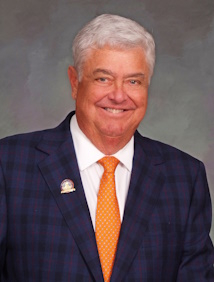
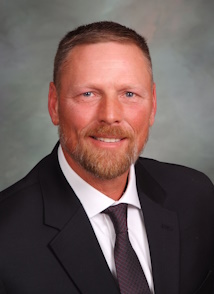
Jeremy Haroldson
88% support rate
Top opponent
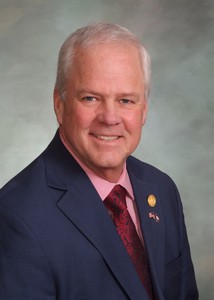
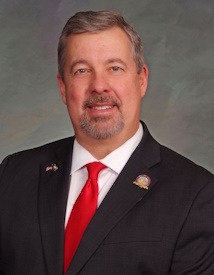
Art Washut
27% support rate
Ranked legislators
10
5 support · 5 oppose
Key legislators

Who's moving criminal justice in Wyoming

Legislators moving criminal justice in Wyoming
Legislator Party Stance Support rate Votes
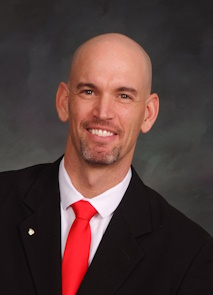
Jeremy Haroldson
Jeremy Haroldson House · District 4
R
Strong +
88% 47
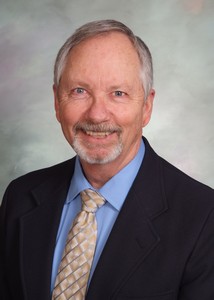
Mike Gierau
Mike Gierau Senate · District 17
D
Strong +
80% 65
Dan Laursen
Dan Laursen Senate · District 19
R
Strong +
80% 65
Joel Guggenmos
Joel Guggenmos House · District 55
R
Support
75% 50
Tomi Strock
Tomi Strock House · District 6
R
Support
75% 48
Art Washut
Art Washut House · District 36
R
Oppose
27% 53
Lee Filer
Lee Filer House · District 44
R
Oppose
36% 52
J.T. Larson
J.T. Larson House · District 17
R
Oppose
38% 47
Ken Clouston
Ken Clouston House · District 32
R
Oppose
38% 49
Cody Wylie
Cody Wylie House · District 39
R
Oppose
38% 45
Showing 11–20 of 27 bills

All criminal justice bills

signed · Wyoming · House Mar 8, 2026

HB 98: Prohibit Red Flag Gun Seizure Act-penalty amendments.

HB 98 amends Wyoming law to add criminal penalties for violating the Prohibit Red Flag Gun Seizure Act. It makes knowingly violating this law a misdemeanor punishable by up to one year in jail, a $2,000 fine, or both. The bill directly affects individuals who improperly seize firearms under the red flag law, such as law enforcement or officials acting outside legal authority. The law takes effect on July 1, 2026, and does not change the underlying red flag seizure procedures.
introduced · Wyoming · House Feb 14, 2026

HB 181: Biometric data and license plate readers-regulation.

Wyoming's HB 181 prohibits all state and local government entities from using biometric data (like facial recognition or fingerprints) to identify people or verify identities, geolocation data to track individuals or vehicles, and automatic license plate reader systems for vehicle identification or toll collection. The bill requires governments to adopt compliance policies, creates a civil lawsuit option for violations, and amends the Wyoming Governmental Claims Act to address liability. It specifically excludes school bus cameras, anonymized health data, and certain utility infrastructure from the restrictions. The law directly affects all state agencies, counties, cities, and law enforcement entities by restricting their use of these surveillance technologies. The bill is currently in early procedural stages and has not advanced beyond introduction.
signed · Wyoming · House Mar 8, 2026

HB 92: Registered sex offenders prohibited from public office.

Wyoming's HB 92 prohibits individuals convicted of sex offenses from holding specific public offices. The bill bars registered sex offenders (as defined by Wyoming law) from running for or serving as school district trustees, community college board members, county/district attorneys, county commissioners, city/town governing body members, mayors, or county sheriffs. Election officials must refuse to certify ineligible candidates, and those already in office would be deemed vacant. The law takes effect July 1, 2026, applying to all offices filled on or after that date.
Sub-Topics Higher Education
signed · Wyoming · House Mar 6, 2026

SF 88: Sex offenders-residence near child care facilities.

SF 88 prohibits registered sex offenders (18+ years old) from residing within 1,000 feet of child care facilities, measured from the exterior wall of their home to the facility's property line. The bill defines "child care facility" to include government-administered programs (excluding schools), licensed facilities caring for three or more unrelated children, and facilities under existing state definitions. It includes an exception for residences established before July 1, 2026, or before the facility opened, and takes effect on that date. This law directly affects registered sex offenders seeking housing near child care services, creating a new residency restriction under Wyoming law.
Sub-Topics Law Enforcement
died · Wyoming · House Mar 3, 2026

SF 87: Felony interference with a police officer-amendments.

Wyoming's SF 87 creates a new felony offense for intentionally causing bodily injury to a police officer while the officer is performing lawful duties. This amendment specifically targets individuals who assault officers during the course of their work, making such acts punishable by up to 10 years in prison. The bill directly affects people who physically harm officers in the line of duty, strengthening penalties for this specific conduct. It amends existing law (W.S. 6-5-204(b)) to clarify that causing bodily injury during officer engagement constitutes a felony. The bill takes effect on July 1, 2026.
died · Wyoming · House Feb 23, 2026

HB 42: Duty to stop vehicle during accidents-amendments.

HB 42 amends Wyoming law to make failing to stop after a vehicle accident causing death or serious injury a felony, rather than a misdemeanor. Drivers involved in accidents resulting in death or "serious bodily injury" (as defined in state law) would face up to 5 years in prison or a $10,000 fine, compared to the current maximum of 1 year or $5,000 for injuries alone. The bill directly affects drivers involved in collisions with fatal or severe injury outcomes, increasing legal consequences for hit-and-run behavior. It takes effect on July 1, 2026.
Sub-Topics Corrections
signed · Wyoming · House Mar 8, 2026

HB 43: Anti-money laundering.

HB 43 creates new criminal offenses for money laundering and illegal investments in Wyoming. It defines money laundering as moving property derived from crime (like drug trafficking or fraud) or structuring transactions to hide illegal money, and illegal investment as intentionally evading reporting rules for financial transactions. The bill directly affects financial institutions (such as banks, casinos, and money transmitters) and individuals handling large sums, requiring them to comply with reporting laws. Violations are punishable as felonies with up to 10 years in prison or $10,000 fines. The law takes effect July 1, 2026.
Sub-Topics Corrections
failed · Wyoming · House Feb 11, 2026

HB 47: Duty to assist during emergencies.

HB 47 requires any person who reasonably believes another person faces immediate risk of serious injury or death to attempt to contact emergency services (like 911) if doing so doesn't endanger themselves or the other person. It directly affects all Wyoming residents who witness such emergencies. The law creates a misdemeanor offense for failing to assist under these conditions, with penalties of up to 6 months in jail and $750 for causing serious injury, or up to 1 year and $2,000 if death occurs. Exemptions include those who provide assistance under other laws or would self-incriminate by reporting. The law takes effect July 1, 2026.
Sub-Topics Corrections Tags Public Safety
signed · Wyoming · House Feb 27, 2026

SF 9: Fentanyl to minors-enhanced penalty.

Wyoming's SF 9 bill increases penalties for distributing fentanyl to minors under 18. It makes it a felony to distribute fentanyl (including all its isomers, esters, and salts) to anyone under 18, punishable by a fine and up to double the standard prison term for such offenses. The law specifically targets fentanyl distribution to minors, distinguishing it from penalties for other controlled substances. This bill affects individuals who distribute fentanyl to minors and will take effect July 1, 2026.
Sub-Topics Corrections
failed · Wyoming · House Feb 9, 2026

SF 3: Protection of nuclear facilities.

This Wyoming bill (SF 3) makes trespassing at commercial nuclear facilities a felony punishable by up to five years in prison or a $1,000 fine. It creates legal protections for security guards at these facilities, allowing them to use defensive force - including deadly force - to prevent specific crimes like burglary, radiological sabotage, or assaults within protected areas. Guards may also detain suspected violators for law enforcement. The law applies to licensed nuclear facilities (like power plants) and their security personnel, defining "protected areas" as zones within physical barriers posted as restricted. The bill takes effect July 1, 2026.
Showing 11 to 20 of 27 bills