Issue · Budget & Taxes

Budget & Taxes (State Budget)

Every budget & taxes bill, vote, and legislator stance in Wyoming, automatically classified by Maddy, our AI policy reader.

Total bills
17
2026 Regular Session
Top supporter
Mike Schmid
100% support rate
Top opponent
Tim French
33% support rate
Ranked legislators
10
5 support · 5 oppose
Key legislators

Who's moving state budget in Wyoming

Legislators moving state budget in Wyoming
Legislator Party Stance Support rate Votes
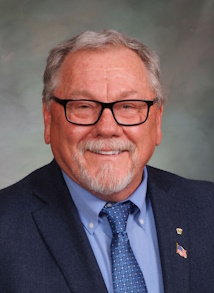
Mike Schmid
Mike Schmid House · District 20
R
Strong +
100% 10
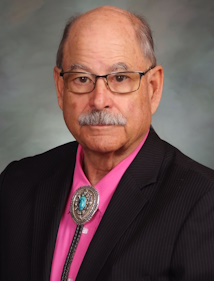
Evie Brennan
Evie Brennan Senate · District 31
R
Strong +
87% 39
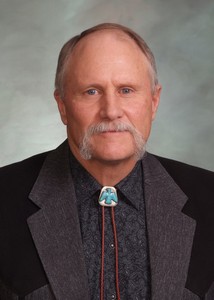
Ogden Driskill
Ogden Driskill Senate · District 1
R
Strong +
84% 37
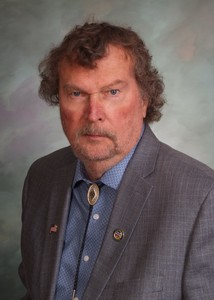
Larry Hicks
Larry Hicks Senate · District 11
R
Strong +
82% 40
Wendy Schuler
Wendy Schuler Senate · District 15
R
Strong +
82% 39
Tim French
Tim French Senate · District 18
R
Oppose
33% 42
Bob Ide
Bob Ide Senate · District 29
R
Oppose
33% 39
Cale Case
Cale Case Senate · District 25
R
Oppose
36% 39
Daniel Singh
Daniel Singh House · District 61
R
Oppose
38% 8
Bob Nicholas
Bob Nicholas House · District 7
R
Mixed −
42% 12
Showing 1–10 of 17 bills

All budget & taxes bills

introduced · Wyoming · House Feb 14, 2026

HB 164: Wyoming generational investment account.

HB 164 creates the Wyoming Generational Investment Account, a permanent trust fund designed to save state money for future generations. Starting July 1, 2026, the state will transfer $100 million annually from the legislative stabilization reserve into this account, with funds invested per specific rules (85% private equity, 15% private credit). Investment earnings from these transfers cannot be withdrawn for 20 years; after that, half the earnings go to the general fund and half to the stabilization reserve. The bill directly affects state budgeting by redirecting annual transfers and setting long-term investment rules for these funds.
Sub-Topics State Budget
signed · Wyoming · House Mar 6, 2026

SF 67: Wyoming state guard-amendments.

This bill amends Wyoming's state guard laws to remove the requirement that the National Guard must be activated into federal service before the state guard can be organized. It allows the governor to directly establish and maintain the Wyoming state guard without federal involvement, specifying that state funds - not federal - will cover personnel costs. Eligibility is updated to include Wyoming residents aged 17-65, and the bill appropriates $25,000 from the state general fund to establish the state guard and council of defense through June 2028. The changes take effect July 1, 2026.
Sub-Topics State Budget
introduced · Wyoming · House Feb 14, 2026

HB 171: Funds for problem gaming treatment-amendments.

HB 171 amends Wyoming's online sports wagering revenue distribution to fund gambling treatment programs. It requires sports wagering operators to remit 10% of monthly revenue to the state commission, with the first $300,000 annually allocated directly to the Department of Health for county-level programs preventing and treating problematic gambling behavior. The remaining revenue from this 10% goes to the state general fund. This bill specifically targets funding for gambling-related health services, directing resources to counties through the Department of Health. The bill takes effect July 1, 2026, pending legislative approval.
Sub-Topics State Budget
signed · Wyoming · House Mar 8, 2026

SF 85: RAVEN Act.

Wyoming's SF 85 (RAVEN Act) creates a dedicated funding account for the state's Internet Crimes Against Children (ICAC) task force, directly supporting law enforcement efforts to investigate and combat online child exploitation. The bill appropriates $1.6 million from the general fund (2026-2028) to sustain the ICAC program, with funds continuously available for investigations, victim assistance, and public education on internet safety. All money in the account must be used solely by the Division of Criminal Investigation to address internet crimes against children, with no funds allowed to lapse or transfer to other purposes. The account will accept additional grants or donations, ensuring stable, long-term resources for this critical law enforcement work.
introduced · Wyoming · House Feb 14, 2026

HB 190: Sale of lands to the department of state parks.

Wyoming's HB 190 directs the Board of Land Commissioners to transfer specific parcels of land (totaling approximately 3,000 acres in Natrona County) to the Department of State Parks and Cultural Resources for development as a state park. The bill requires the transfer to occur by July 1, 2027, after completing a site criteria process, with lands sold at fair market value (funds going to the common school account). It appropriates $6.5 million from the general fund specifically for land procurement and resolving mineral leases on the properties. The department must report on the site criteria process to a legislative committee by October 2027.
signed · Wyoming · House Mar 9, 2026

SF 1: General government appropriations.

SF 1 is a funding bill that allocates state resources for Wyoming's government operations during the 2026-2028 fiscal biennium. It provides specific funding amounts for state agencies, including $9.1 million for the Governor's Office administration and $22.9 million for Homeland Security, with all funds to be spent within the two-year budget period. The bill includes a $250,000 provision specifically for gubernatorial transition costs if a new governor is elected in 2026, and it specifies how funds from various accounts (like school foundation programs) will be used. This is a standard appropriations bill that sets funding levels for state operations, not a policy change.
signed · Wyoming · House Mar 6, 2026

HB 106: Smokebuster module leaders.

This bill authorizes two new full-time positions within Wyoming's state forestry division (one effective April 2026, one April 2027) to support the forestry conservation inmate crew program. It appropriates $499,709 from the general fund specifically for these positions, associated equipment/supplies, and program costs through June 2028. The funding is tied to coordination with the Department of Corrections and includes specific budgeting instructions for the state's next fiscal biennium. The bill directly affects the state forestry division, the inmate crew program, and the Department of Corrections.
signed · Wyoming · House Mar 8, 2026

HB 78: Forest health grant program.

Wyoming's HB 78 creates a state-administered Forest Health Grant Program to fund projects improving forest conditions on public and private lands. The program covers up to 75% of eligible project costs (50% on federal land), requiring matching funds from other sources, with projects focused on water quality, wildfire risk reduction, forest product production, or wildlife habitat. Grants require attorney general approval and annual reporting to the Agriculture Committee, with a $3 million appropriation from the general fund starting July 2026. The program expires on July 1, 2030, after which unobligated funds will be returned to non-state donors or reverted to the general fund. It directly affects landowners and forest managers seeking funding for public-benefit forest health initiatives.
failed · Wyoming · House Feb 9, 2026

HB 33: Strategic investments and projects account-repeal.

HB 33 repeals Wyoming's Strategic Investments and Projects Account (SIPA), ending its use for state investments. The bill requires all remaining SIPA funds (except those for the Wyoming State Penitentiary Capital Construction Account) to be transferred to the state general fund by July 1, 2026. It preserves annual $10 million transfers from SIPA to the penitentiary account until 2038, while ending all other SIPA operations. The law takes effect July 1, 2026, with reporting requirements for the state auditor. This directly affects state treasury operations and the penitentiary's capital funding, but does not alter existing general fund budgeting.
signed · Wyoming · House Mar 4, 2026

SF 2: Legislative budget.

This bill appropriates $26.1 million from Wyoming's general fund to cover the operational costs of the state legislature through June 2028. It directly funds salaries for legislative staff and lawmakers, travel expenses (including per diem for in-state and out-of-state meetings), office supplies, technology, and other administrative needs. Key provisions include allowing the Management Council to shift funds between categories as needed, permitting unspent funds from prior budgets to carry forward for K-12 education support and equipment replacement, and creating a new $34,000 line item to cover mileage, per diem, and daily salary compensation for legislators attending training or interim committee meetings after the 2026 election. The bill ensures ongoing funding for legislative operations while adding specific flexibility for budget management and new legislator support.
Showing 1 to 10 of 17 bills
1 2 Next