

Maddy summaryAB 80 would allow social workers, marriage and family therapists, and professional counselors licensed in this state to practice in other states that join the Social Work Licensure Compact without needing separate state licenses. The bill amends existing statutes to align state definitions and requirements with the compact framework, ensuring professionals certified under Chapter 457 can work across participating states. It directly affects licensed social work professionals seeking to practice in multiple states and changes how their credentials are recognized in statutes related to child welfare, mental health, and professional practice. The compact aims to streamline licensure for these professionals while maintaining state-specific standards.
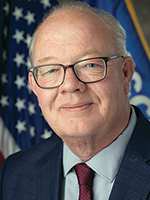
Rep. Todd Novak
Sponsored bills
Maddy summaryAB 956 exempts specific agricultural warehouses storing crop protection products (like fertilizers and pesticides) from mandatory automatic fire sprinkler systems. It applies to warehouses designed primarily for storing these chemicals, provided they meet conditions such as using secondary containment for liquid products or using dry bulk storage. Owners must notify local fire departments about stored chemicals and update this information if changes occur. The exemption does not apply to office areas within the warehouse, changes in warehouse use, or other fire safety requirements beyond sprinklers. This bill directly affects agricultural businesses storing these products in qualifying facilities.
Maddy summaryAB 241 amends Wisconsin statute 106.015(1) to prohibit requiring more than one journeyworker for every two apprentices in apprenticeship programs or contracts. This directly affects apprenticeship programs, particularly those governed by collective bargaining agreements, by limiting the minimum journeyworker-to-apprentice ratio. The bill prevents state agencies from enforcing or authorizing stricter ratios (e.g., requiring two journeyworkers per apprentice) through rules, program approvals, or contracts. It takes effect for collective bargaining agreements when they expire or are modified, renewed, or extended. The legislation aims to standardize ratio requirements across apprenticeship programs statewide.
Maddy summaryAB 1 standardizes how Wisconsin schools and districts are evaluated by requiring consistent assessment metrics. It mandates that the state department use the same cut scores and performance categories for English/language arts and math tests in grades 3-8 that align with national National Assessment of Educational Progress (NAEP) standards. For high school grades 9-11, it requires using the same metrics applied in the 2021-22 school year. This directly affects all public schools and districts in Wisconsin by changing how their accountability reports are calculated. The bill aims to create uniformity in school performance evaluations across the state.
Maddy summaryAB 326 creates a program providing grants to small local governments (populations under 7,500) to cover costs for grant writing and compliance assistance services. Grants up to $5,000 can be used for securing funding related to public works, transportation infrastructure, public safety, utility costs, or cybersecurity projects. The program requires a simple application listing only basic details (project purpose, contact info, and estimated costs) and prioritizes first-time applicants. A report evaluating the program must be submitted by December 2028.
Maddy summaryAB 968 would require virtual currency kiosks (machines exchanging cash for digital currency or vice versa) to obtain state licenses, display mandatory fraud warnings, and verify customer identities using government ID and photos. It sets a $500 daily transaction limit, caps fees at 3% or $5 per transaction, and mandates detailed receipts showing all transaction details. The bill directly affects kiosk operators and customers, aiming to prevent fraud through identity checks and clear transaction records. Currently under review in the Financial Institutions committee.
Maddy summaryAB 969 creates a formal drug donation program to redistribute unused medications to eligible patients. It defines key terms like "donor" (including pharmacies, hospitals, and individuals), "eligible patient" (indigent, uninsured, or underinsured individuals), and "recipient" (medical facilities or pharmacies that can receive donations). The bill allows donors to contribute drugs to participating facilities, with recipients permitted to charge a handling fee covering actual costs (e.g., storage, shipping), while prohibiting donations of certain FDA-regulated drugs requiring patient enrollment. This program aims to provide access to medications for underserved patients through a structured, safe, and cost-transparent system.
Maddy summaryAB 759 allows individuals with deferred action under the federal DACA program to obtain state occupational licenses (like nursing or cosmetology credentials) if they have valid federal work permits. It requires state licensing agencies to verify DACA recipients' federal work authorization through official systems before issuing licenses. Licenses issued under this law expire when the federal work permit expires, and recipients must renew both simultaneously. The bill explicitly states it does not grant eligibility for public benefits beyond occupational credentials.
Maddy summaryAB 194 modifies Wisconsin's housing programs under the Wisconsin Housing and Economic Development Authority. It redefines "developer" to include tribal housing authorities (Section 3) and clarifies "residential housing" to include tax-exempt reservation or trust lands (Section 4). The bill reduces maximum loan limits for housing projects from 33% to 20% of development costs (Section 10) and from 25% to 10% (Section 11). It also requires local governments to submit cost-reduction analyses showing how zoning or fee changes lowered housing costs (Section 7), directly affecting developers, tribal entities, and local governments administering housing programs.
Maddy summaryAB 445 updates procedures for county registers of deeds regarding property records and transportation project maps (plats). It revises how documents are numbered, indexed, and recorded - requiring unique sequential numbers for each document and clarifying "legal description" definitions for property records. These changes directly affect county offices handling property deeds, mortgages, and transportation project plats, streamlining administrative processes without altering fees or substantive rights. The bill focuses on procedural consistency in record-keeping across statutes.